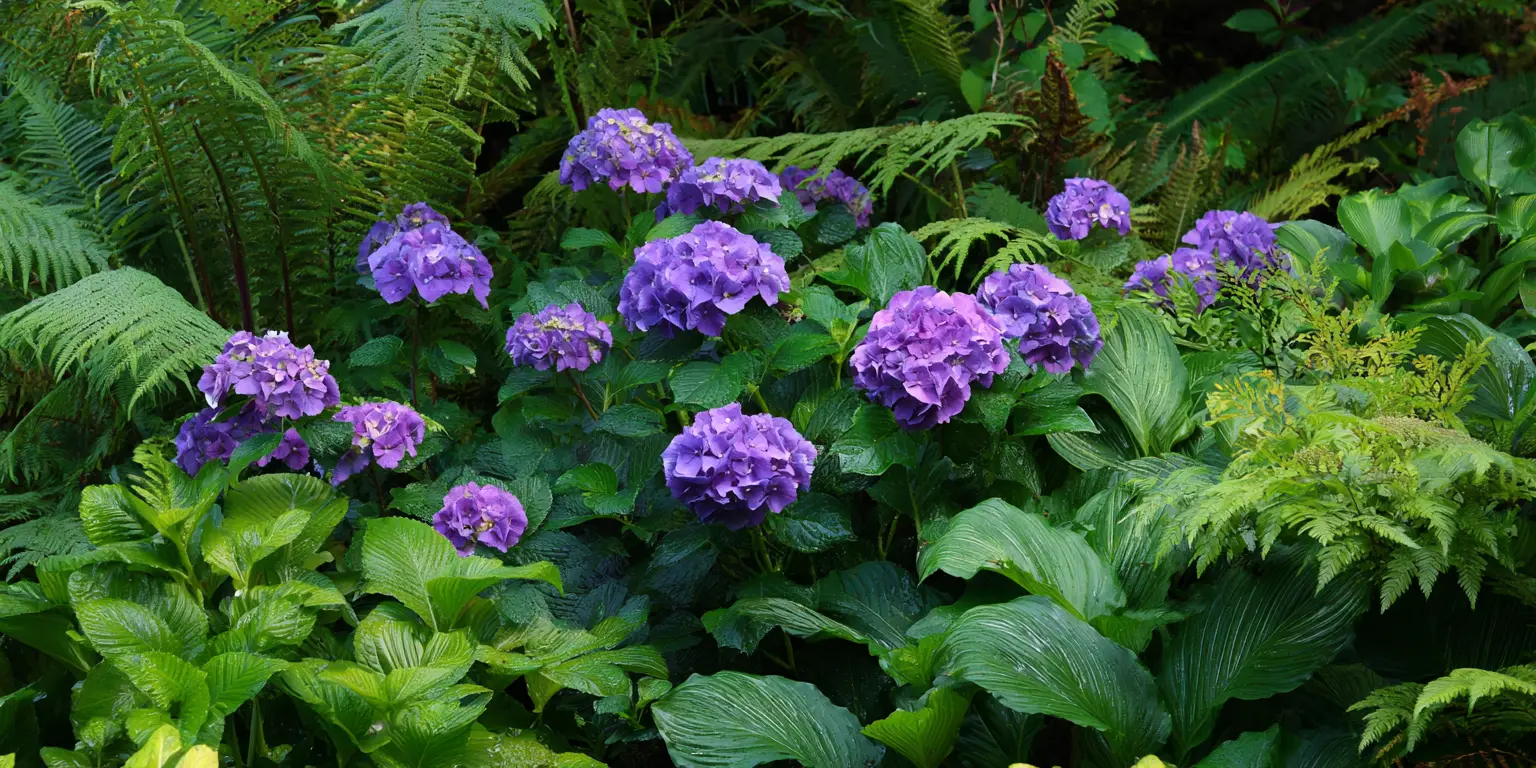
Hydrangea macrophylla

When a bigleaf hydrangea turns blue or pink, the soil decided it. Hydrangea macrophylla flowers run blue in acidic ground where the roots can reach aluminum, and pink in neutral-to-alkaline ground where that aluminum stays locked away, while white cultivars hold their color no matter what. The other thing owners come here to fix is a plant that leafs out beautifully and never flowers, which almost always traces back to pruning at the wrong time.

This bigleaf or French hydrangea is the rounded shrub with big leaves and either dome-shaped mophead clusters or flat-topped lacecap heads ringed with showy florets around tiny fertile centers. It blooms on old wood, prefers morning sun with afternoon shade, drinks steadily through summer, and survives roughly USDA zones 5 to 9, with the flower buds being the part most at risk in cold winters. Get the soil chemistry, the pruning timing, and the watering right, and the rest of its care is forgiving.

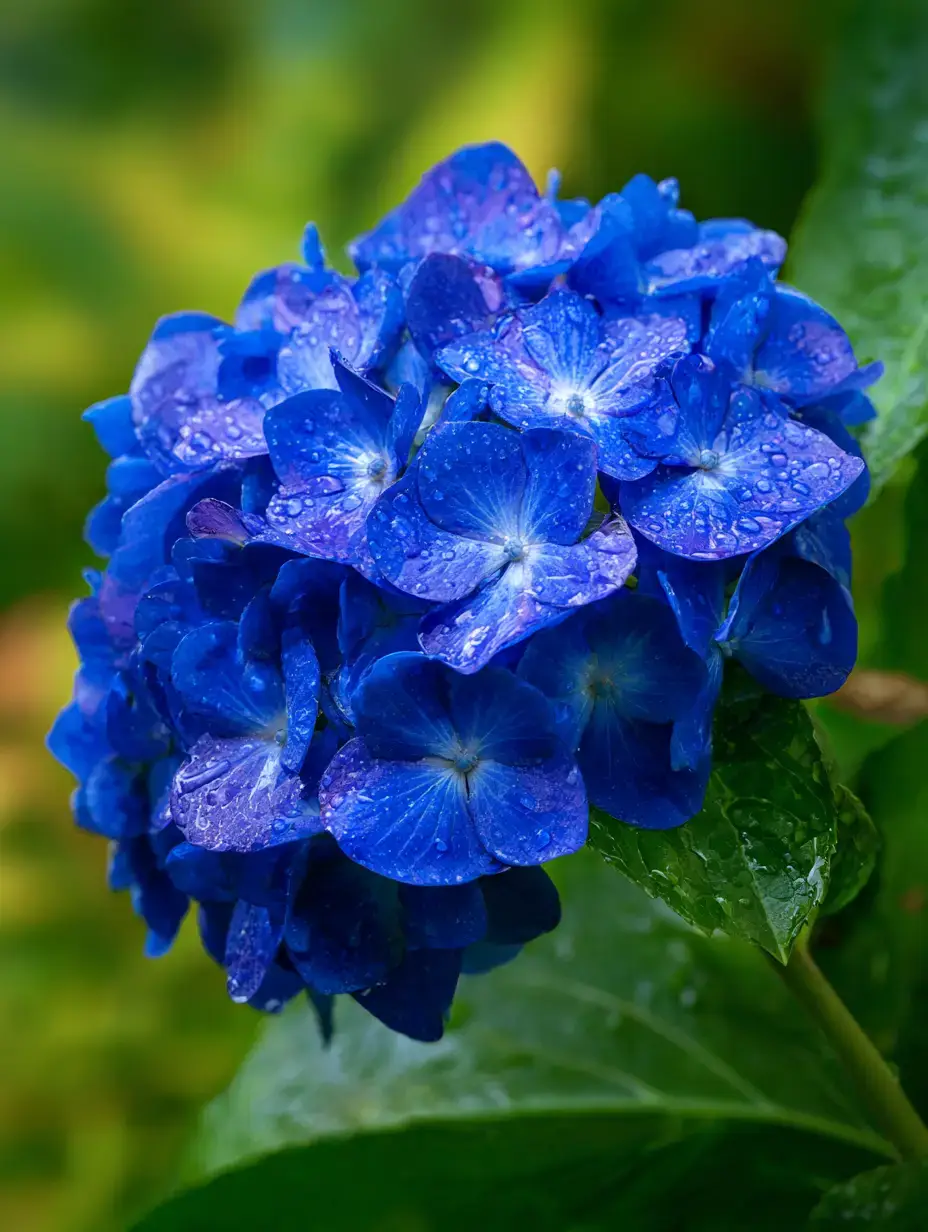
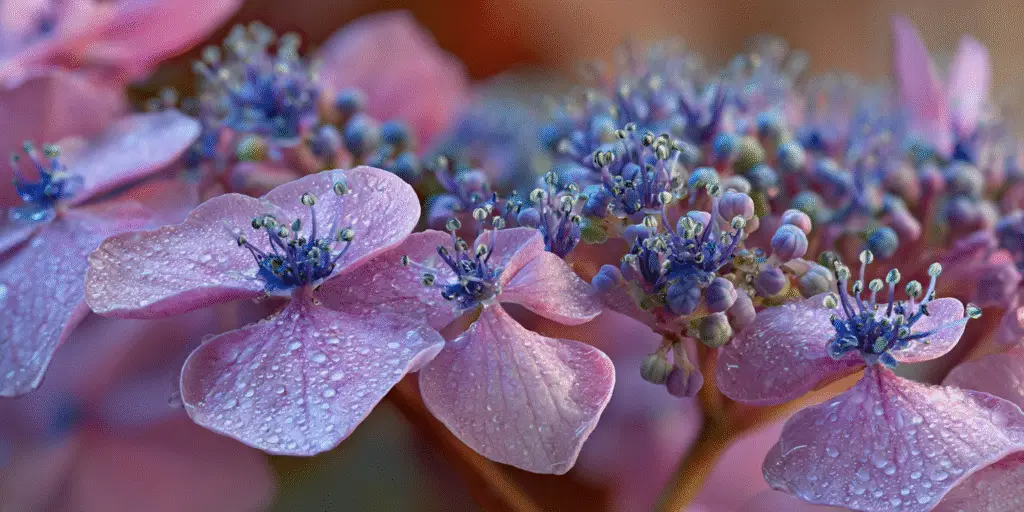
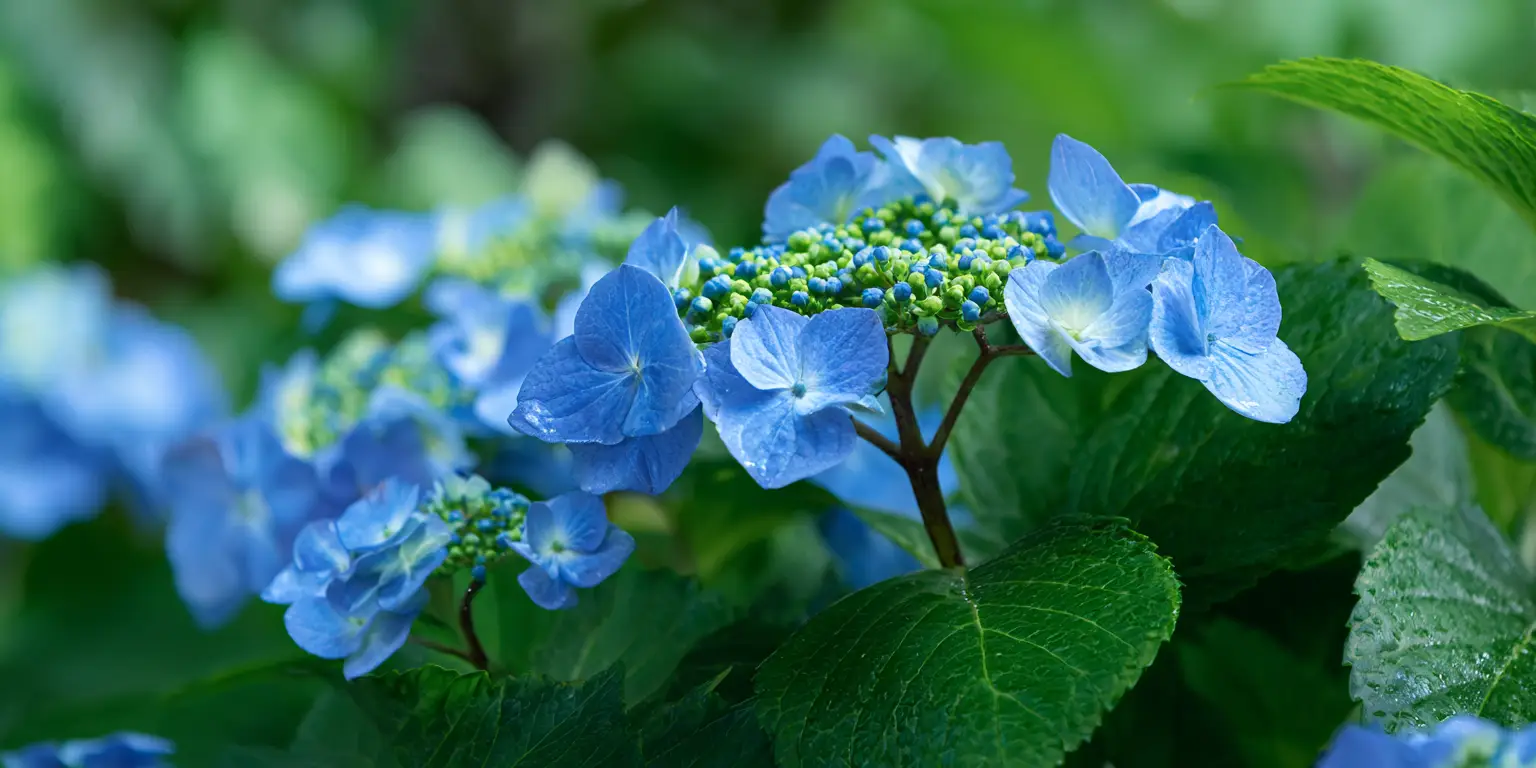
Blue hydrangea bloom with raindrops, macro close-up
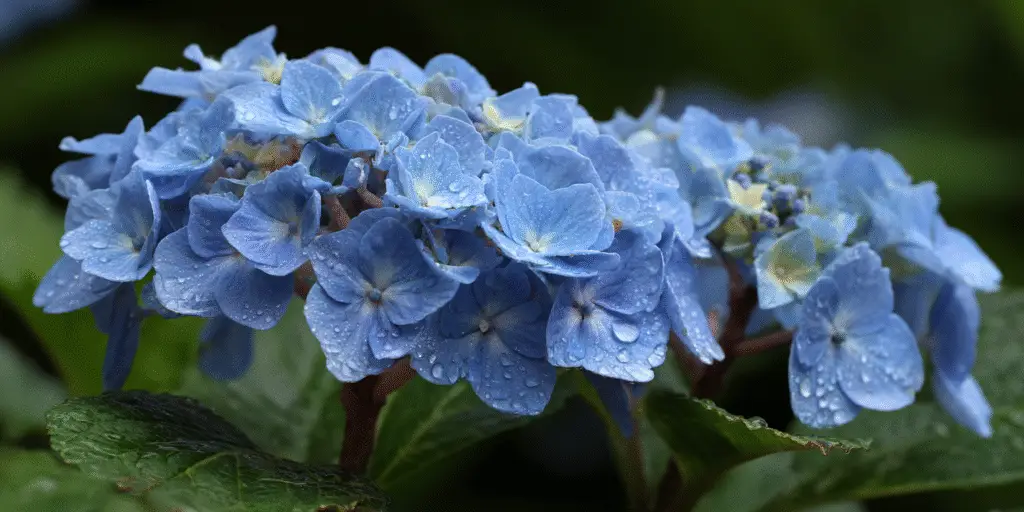
Hydrangea macrophylla

A clear, step-by-step guide to soil, planting, watering, feeding, pruning, and winter care. Includes zone timing, container tips, companions, and quick fixes for common problems.

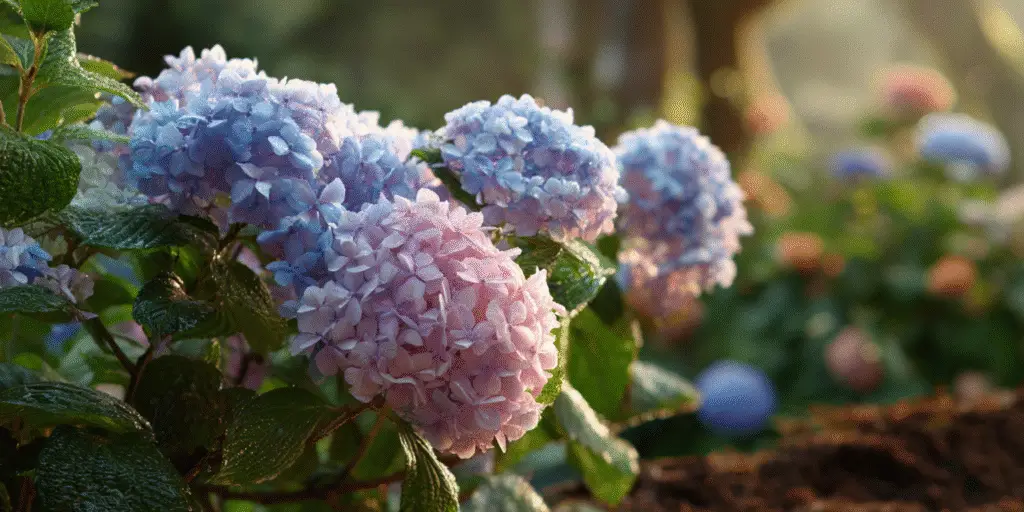
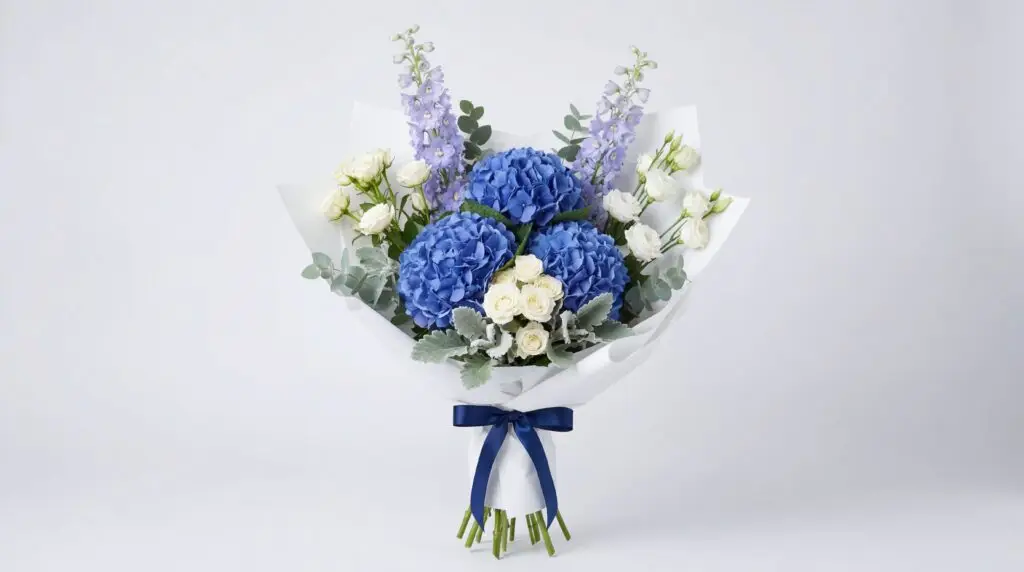
Coastal Blue Hydrangea Breeze

Explore simple, beautiful bouquet ideas for the home, gifts, and special occasions from romantic mixes to clean, minimal styles. Each idea includes suggested flower combinations, color palettes, and sizes, with photos for quick inspiration.

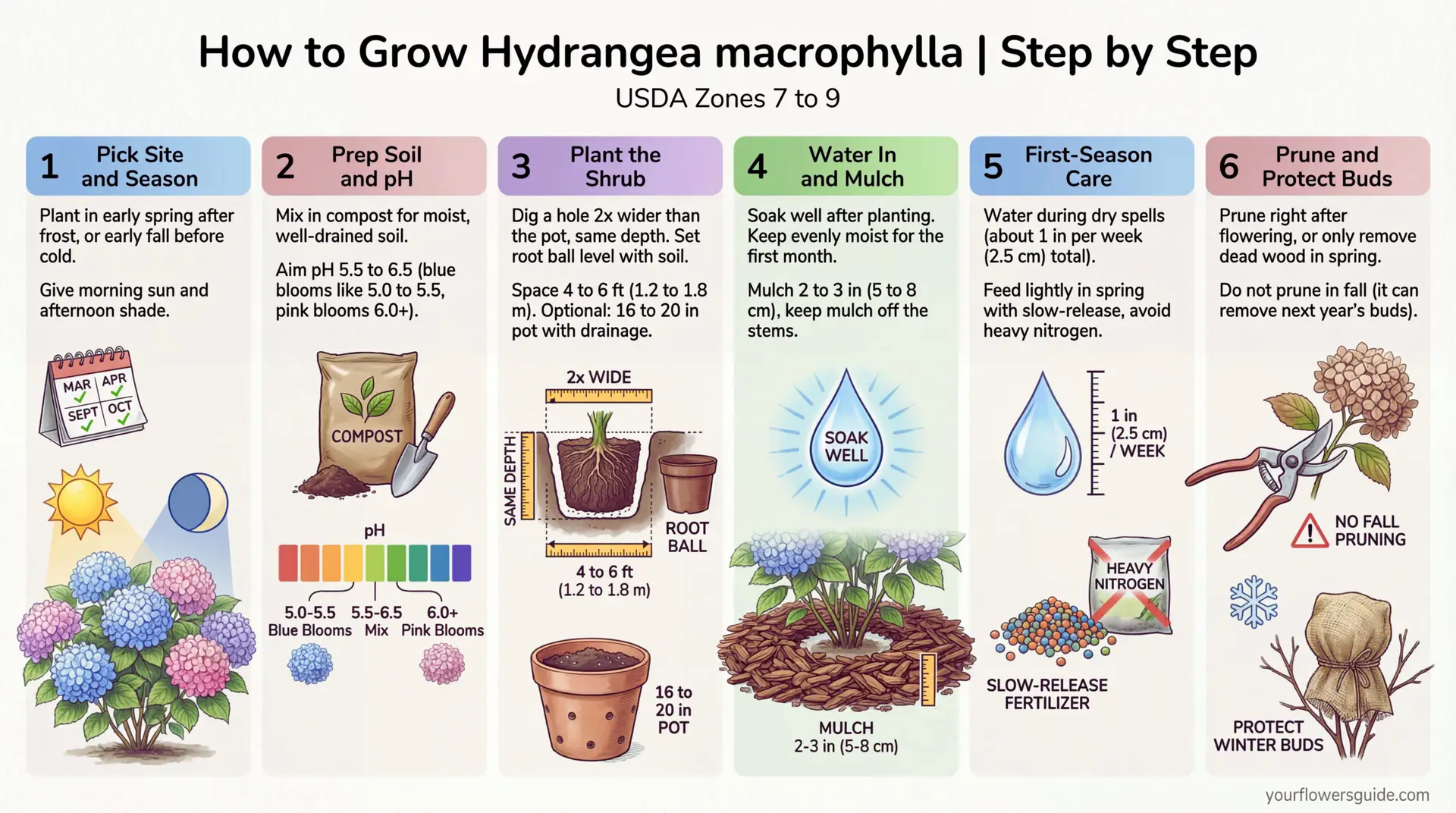
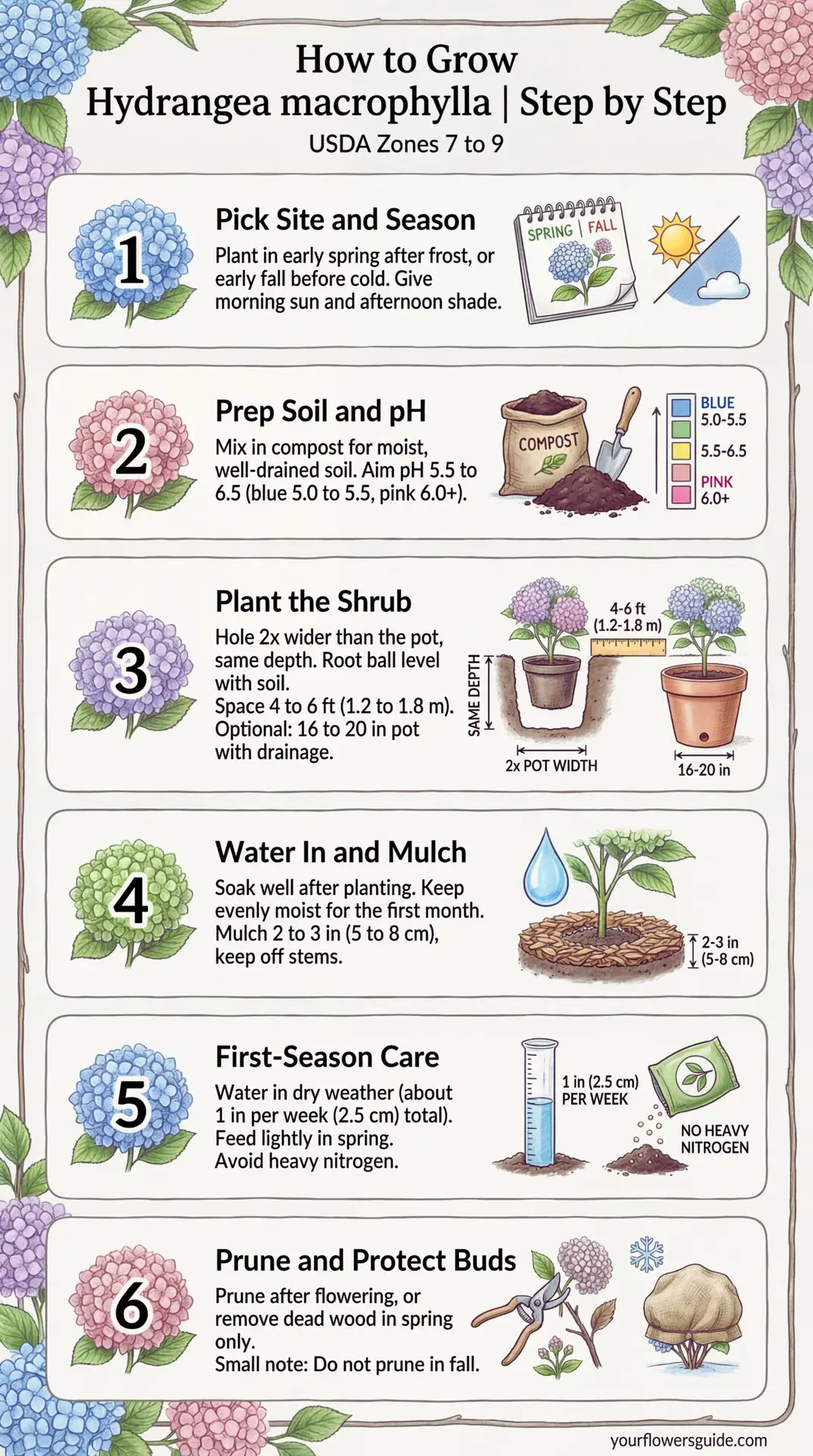
This infographic shows how to plant and grow Hydrangea macrophylla in US gardens, starting from USDA Zone 7. Follow simple steps for timing, spacing, soil pH, watering, and pruning so your shrub stays healthy and blooms well.

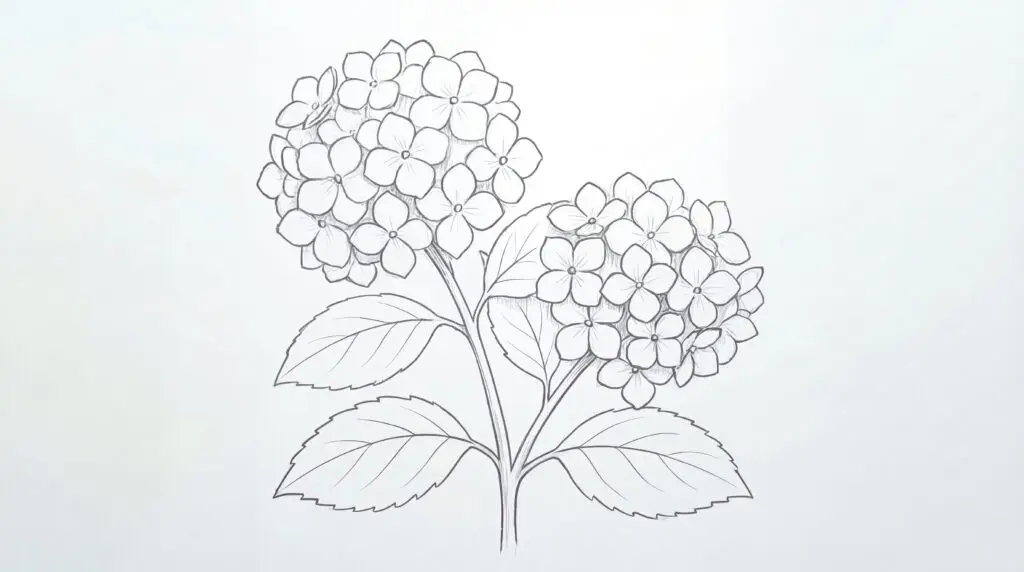
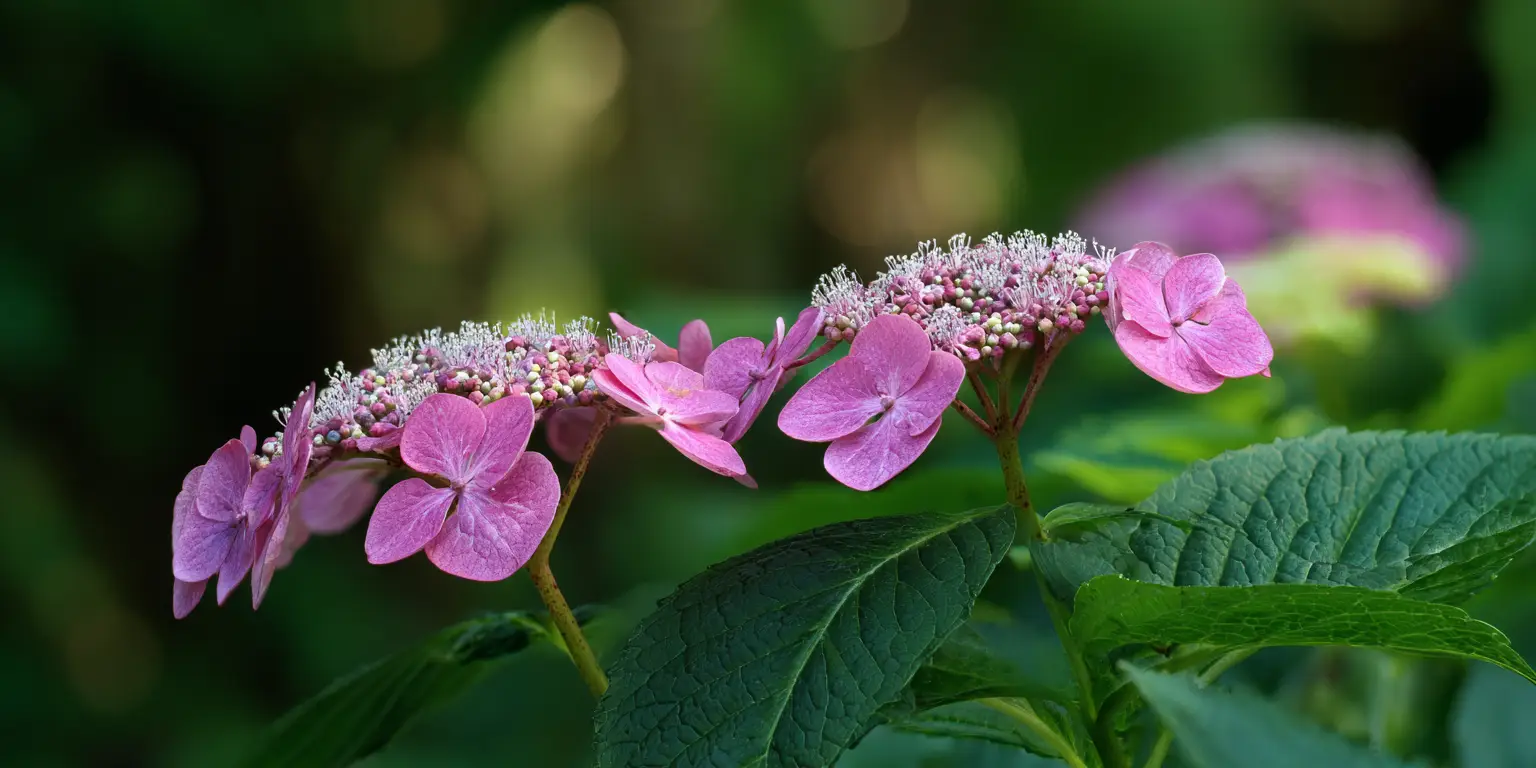
Hydrangea macrophylla is native to Japan and East Asia, where it grows along moist woodland edges and shaded slopes. The genus name comes from the Greek words for water and vessel, a reference to the cup-shaped seed capsules, while the species name macrophylla means large leaf. It reached Europe in the 1700s and was bred heavily from there, which is why it picked up the common name French hydrangea despite not originating in France. That woodland ancestry is the single most useful fact about its care: it expects bright shade, rich soil that never bakes dry, and consistent moisture, and most growing problems come from giving it harsh sun or letting the roots dry out. The shrub splits into two flower forms that look very different. Mopheads carry rounded, ball-shaped clusters of mostly sterile florets and are the classic florist hydrangea. Lacecaps carry a flat outer ring of large showy florets around a center of small fertile flowers, a more delicate look that pollinators visit. Both are the same species and want the same care, so the choice between them is purely visual.

🌸 Bloom time

Bigleaf hydrangea flowers from late spring through summer, with the heaviest show in early to midsummer on stems that grew the year before. The blooms hold their shape for weeks and slowly age into softer, antiqued tones as the season cools, which is part of why they cut and dry so well. The detail that governs everything is that most cultivars set their flower buds on old wood: the buds for next year form in late summer on the current season’s stems, then wait through winter to open. Cutting the plant back in fall, winter, or spring removes those waiting buds, which is the leading reason a healthy-looking hydrangea produces only leaves. Cold is the other bud killer, since a hard winter or a late spring frost can destroy buds that already formed even when the stems survive. Reblooming cultivars such as Endless Summer change this math because they flower on both old and new wood, so they can recover and still bloom in a season after a rough winter or a badly timed cut.

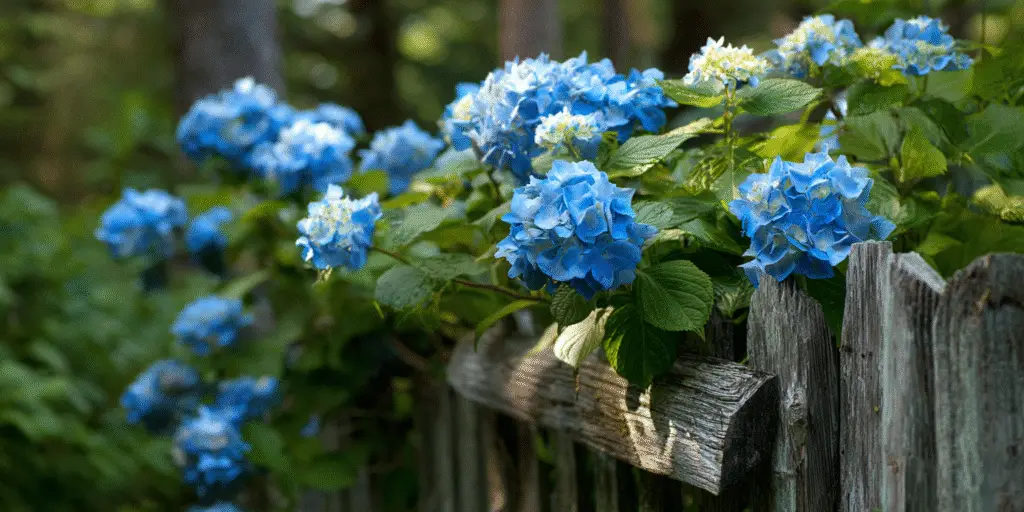
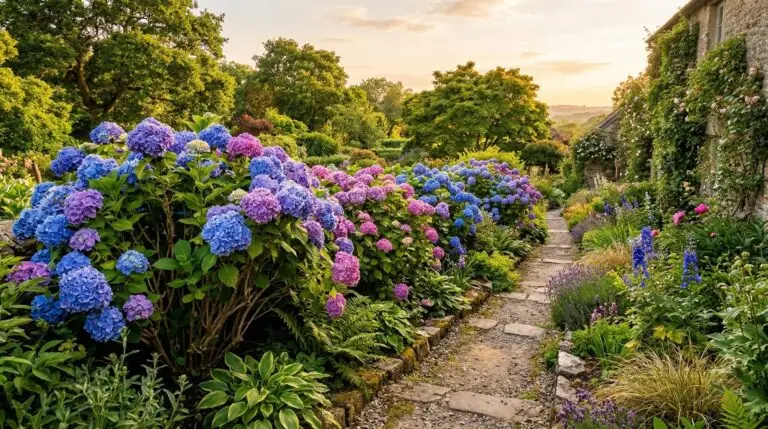
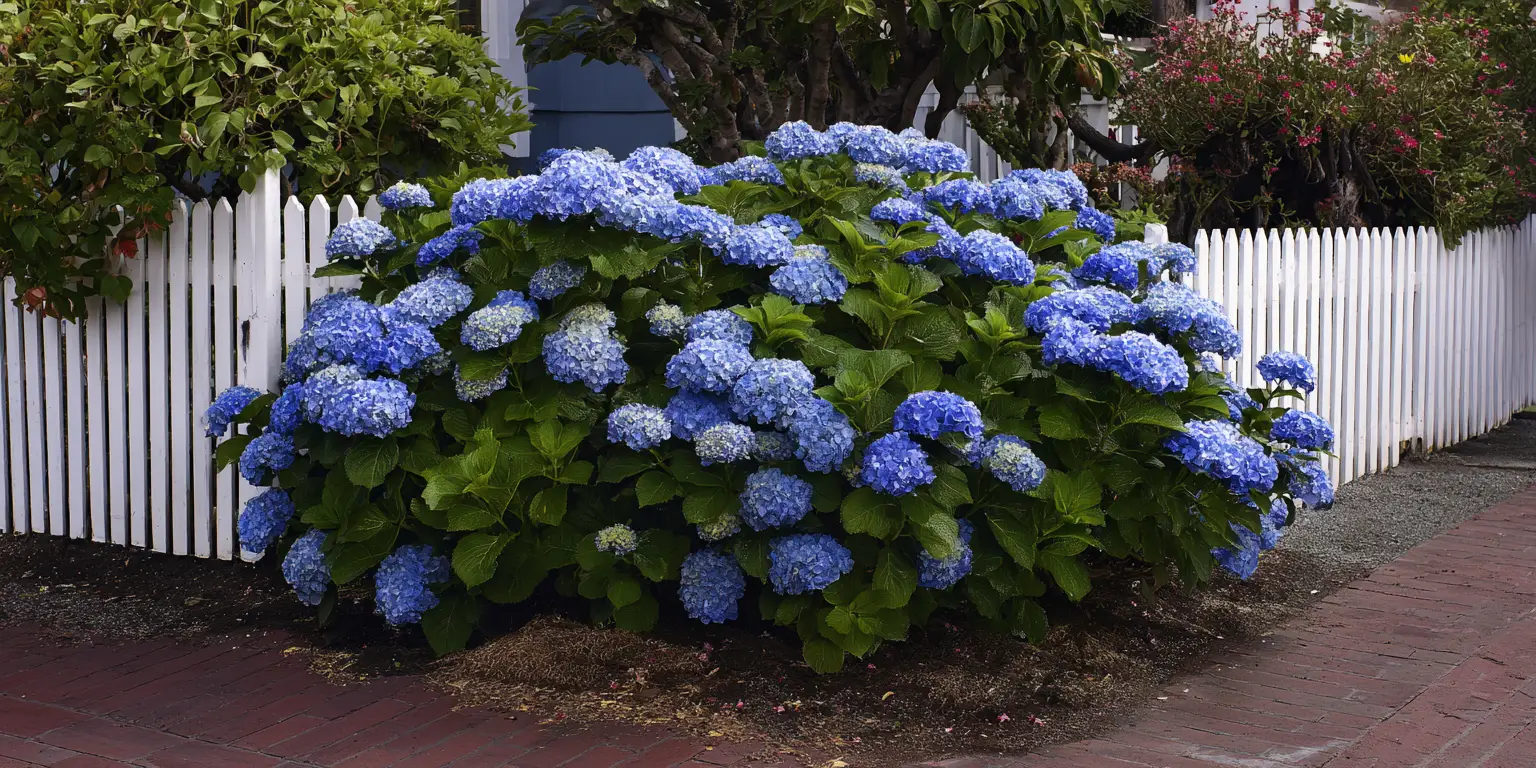
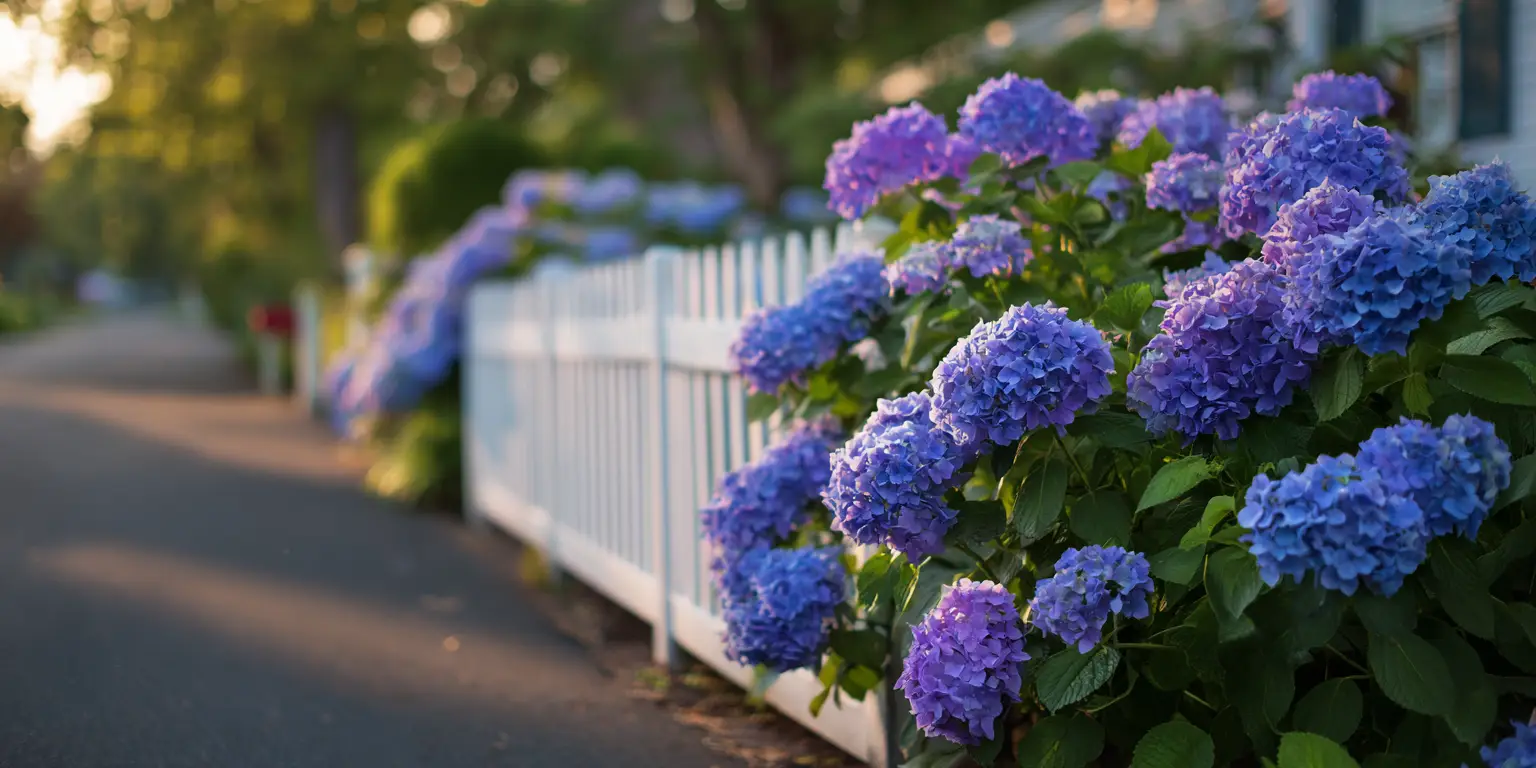
Bigleaf hydrangea hedge by white picket fence, blooming.

📏 Height and spread

At maturity a typical bigleaf hydrangea reaches about 3 to 6 feet tall and 3 to 6 feet wide, forming a rounded, mounding shrub. Compact and dwarf selections stay smaller, often closer to 2 to 3 feet, which suits containers and tight borders. Because the plant blooms on old wood, trying to control size with hard pruning backfires by stripping off the very buds you want. The better approach is to choose a cultivar sized for the space from the start, then shape lightly right after bloom rather than fighting an oversized plant every year.

☀️ Light

Bigleaf hydrangea performs best with morning sun and afternoon shade, or with the dappled light found under high-canopy trees. In hot climates, strong afternoon sun scorches the leaves and makes the whole plant droop hard by midday. That midday wilting in heat is normal and usually corrects itself by evening as temperatures drop, so it is worth checking the soil before reacting; if the leaves stay limp into the cool of the night, the roots are genuinely dry or the spot gets too much sun. In cooler and coastal regions with mild summers, the plant tolerates more sun as long as the soil stays consistently moist. Deep shade is the opposite error, producing few flowers and weak, leggy stems that stretch toward the light. For more options in low-light spots, our guide to flowers that grow in shade covers companions that share these conditions.

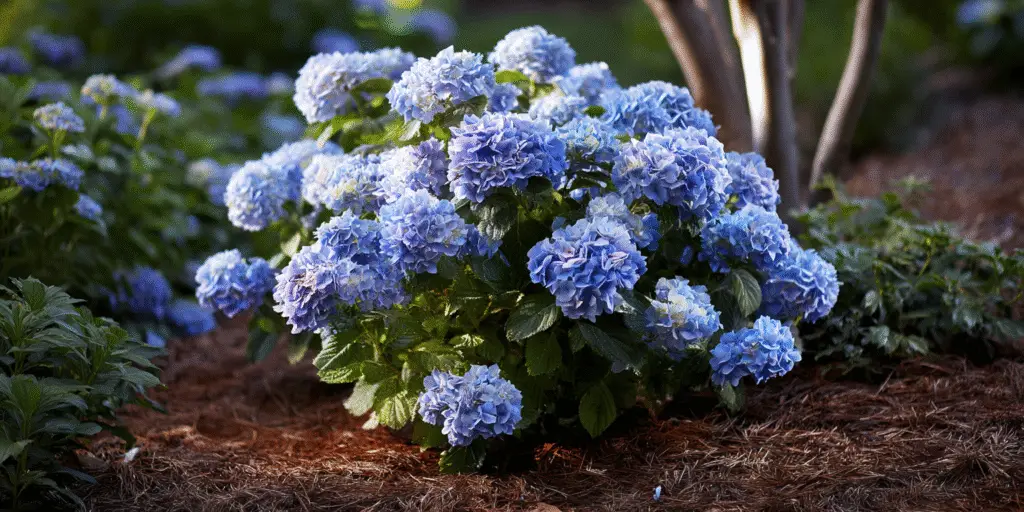
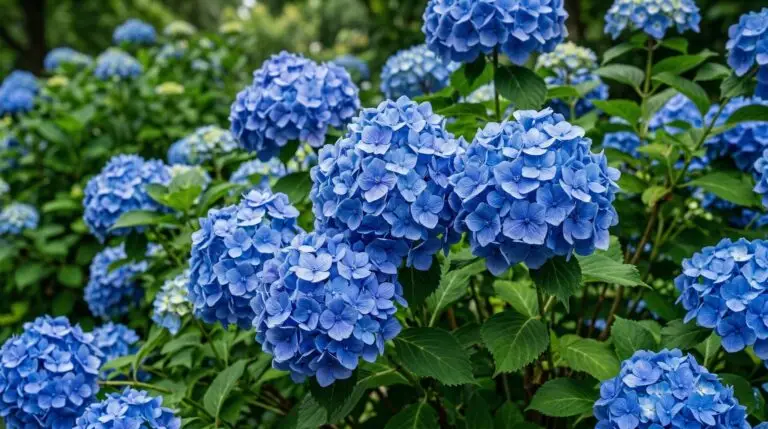
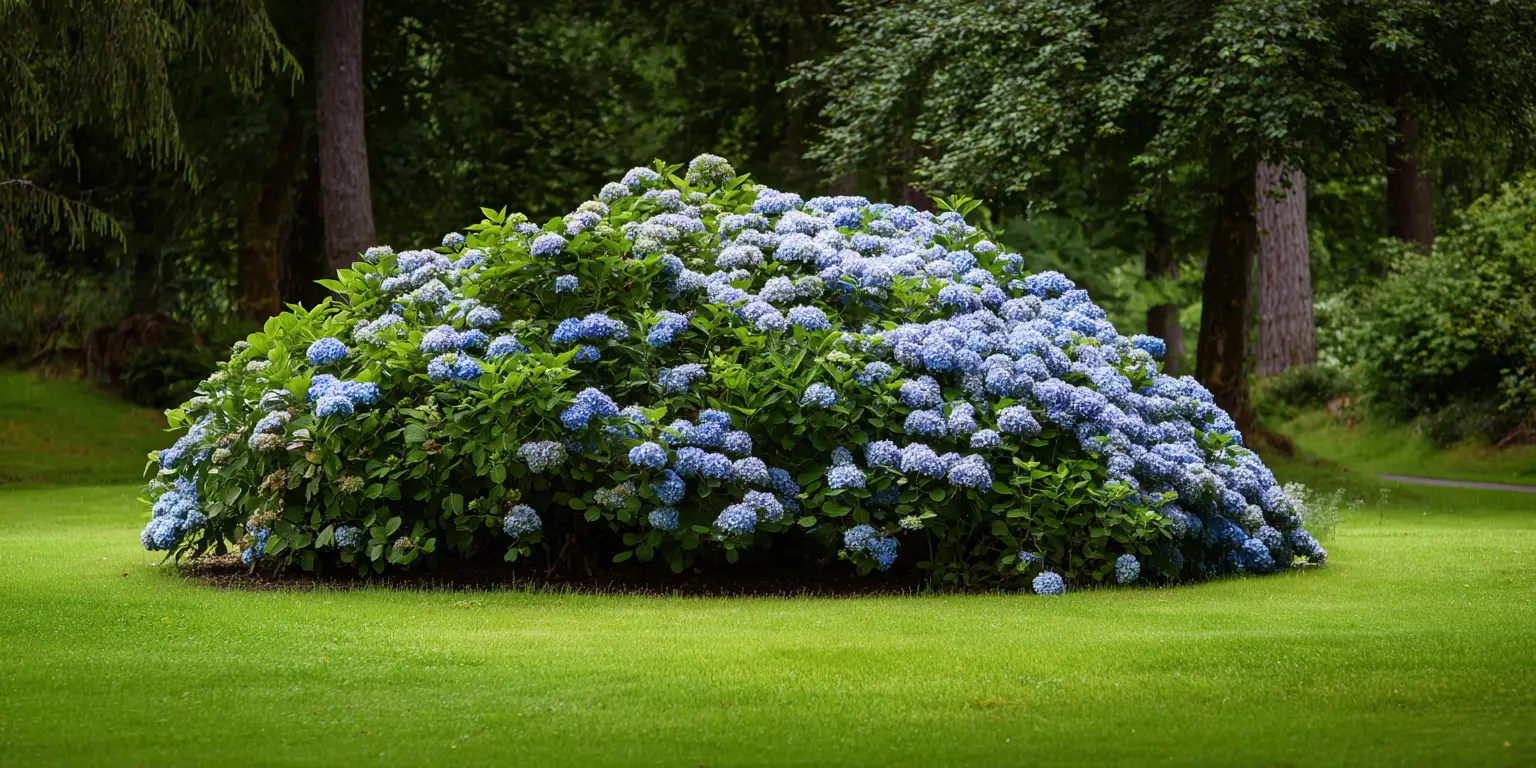
Large blue hydrangea mound in park lawn, summer.

💧 Water

Bigleaf hydrangea likes evenly moist soil and shows stress quickly when it dries out. Water deeply once the top inch or two of soil begins to dry, and water more often during heat waves and for any plant in a container, where roots dry far faster. A 2 to 3 inch layer of organic mulch over the root zone holds moisture and keeps the soil cool, which reduces the midday wilting that hot sites cause. Steady moisture matters more than frequent shallow sprinkling, so a slow, thorough soak that wets the full root zone beats a daily splash. At the same time the plant dislikes standing water, so the soil must drain; roots sitting in waterlogged ground are the fastest route to root rot.

🌍 Soil and pH

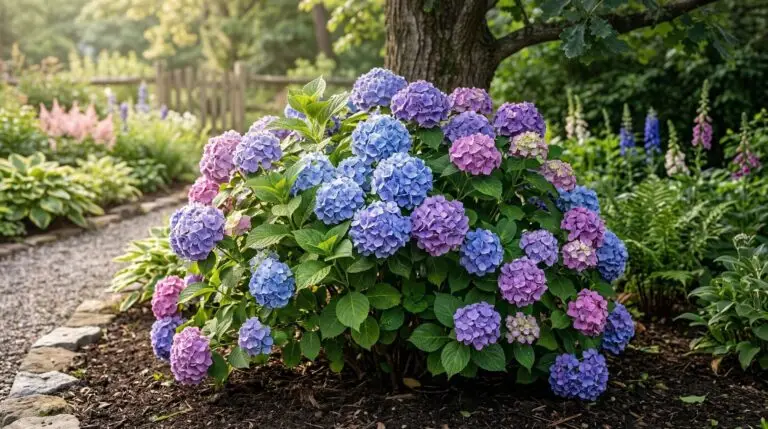
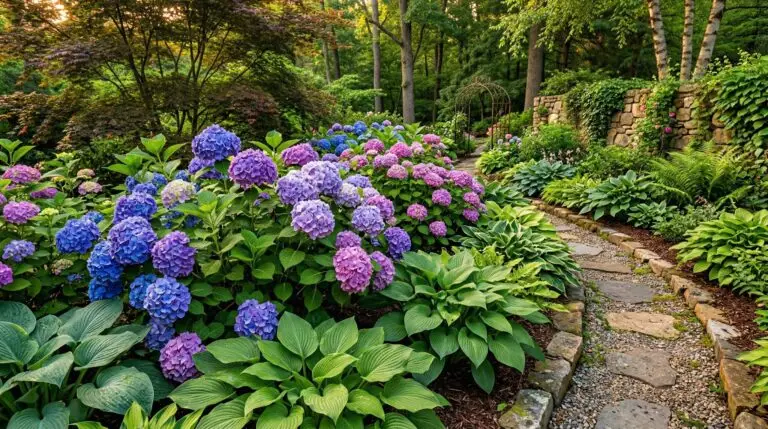
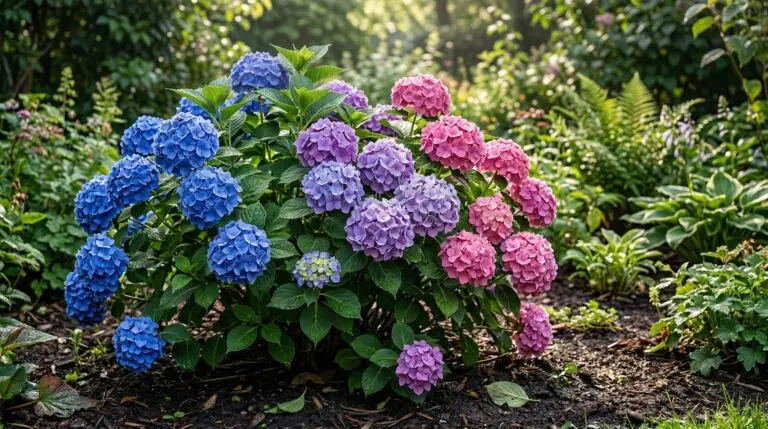
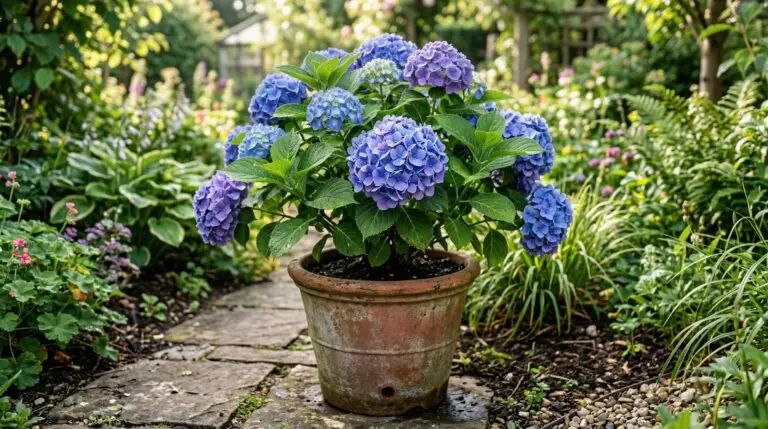
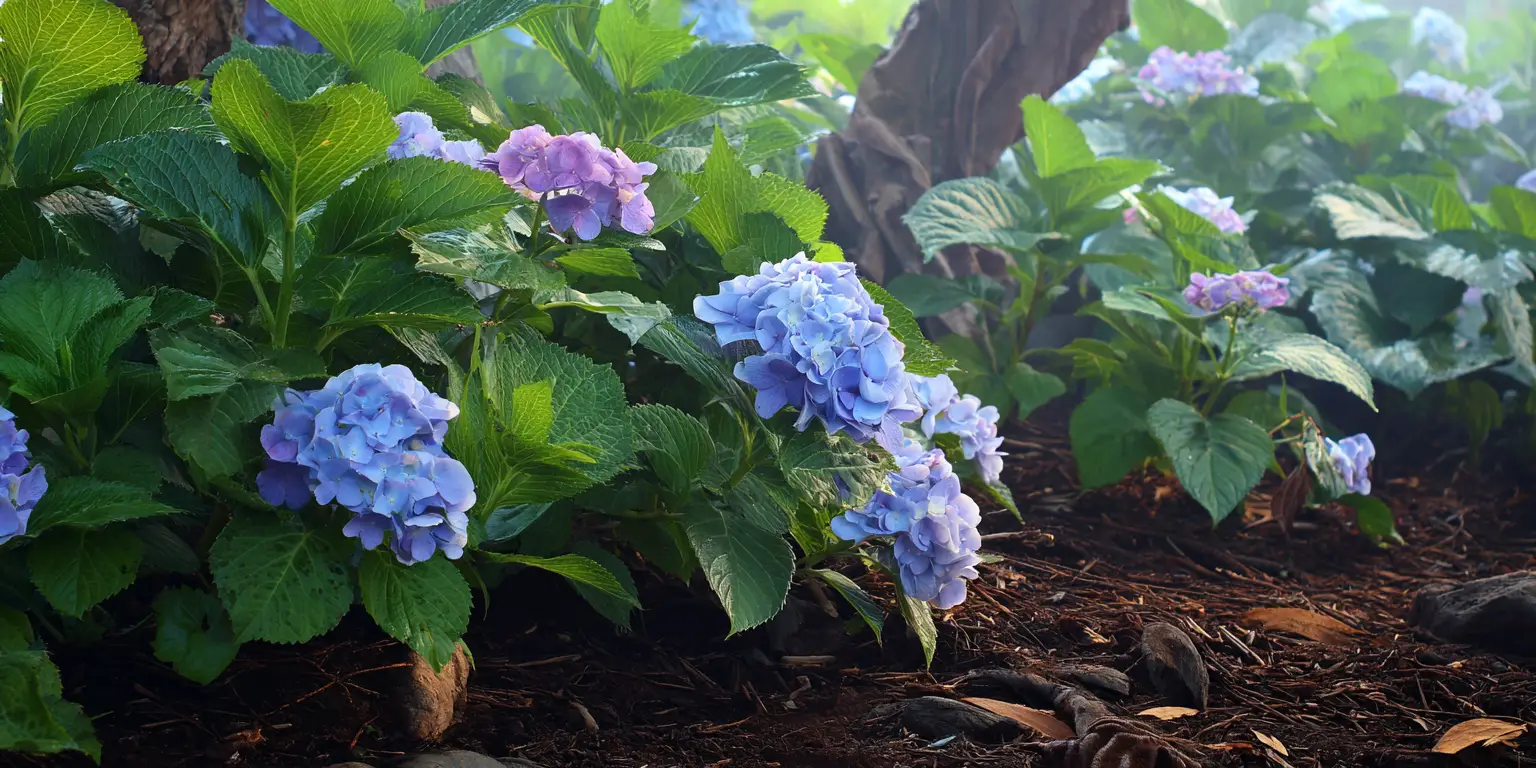
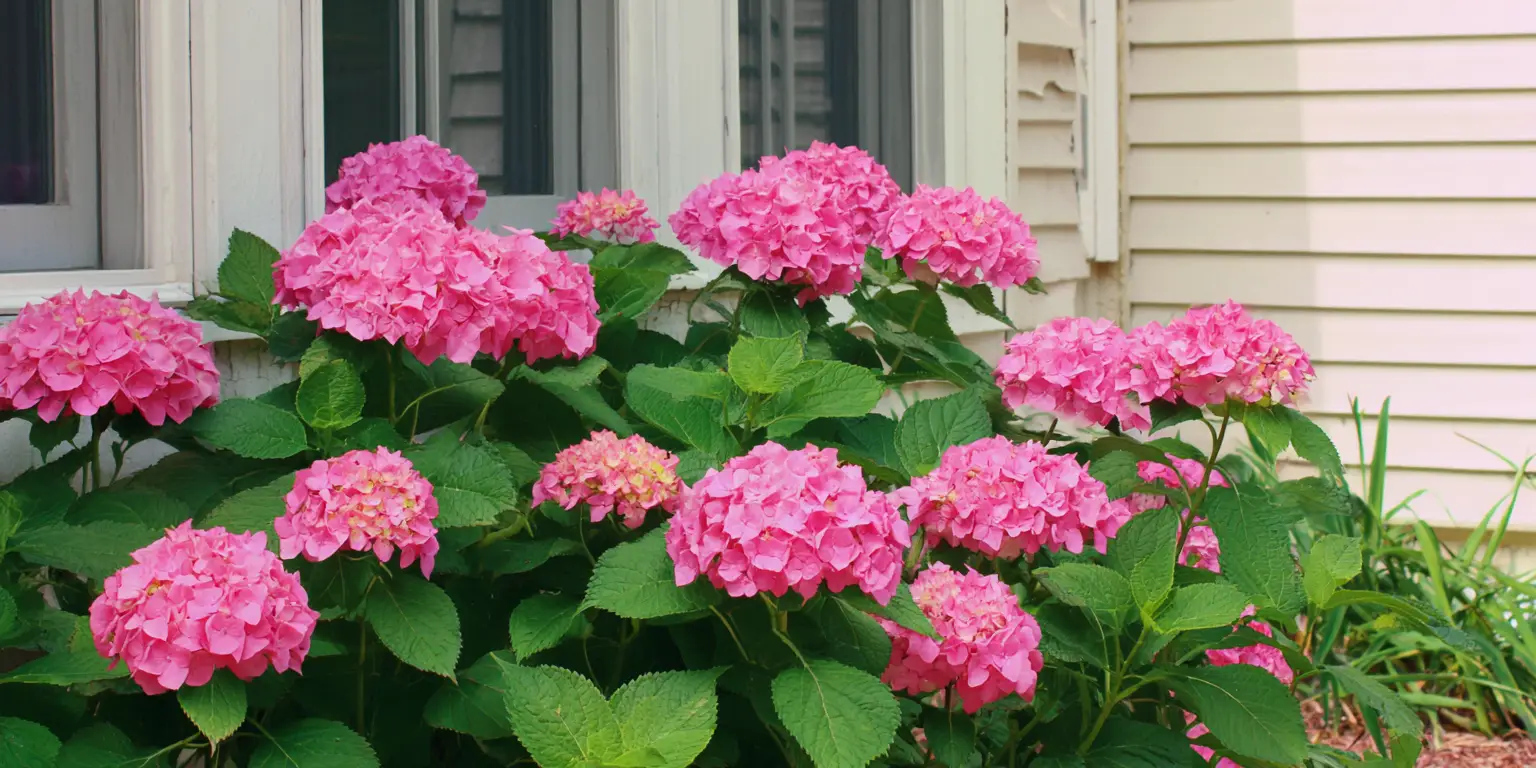
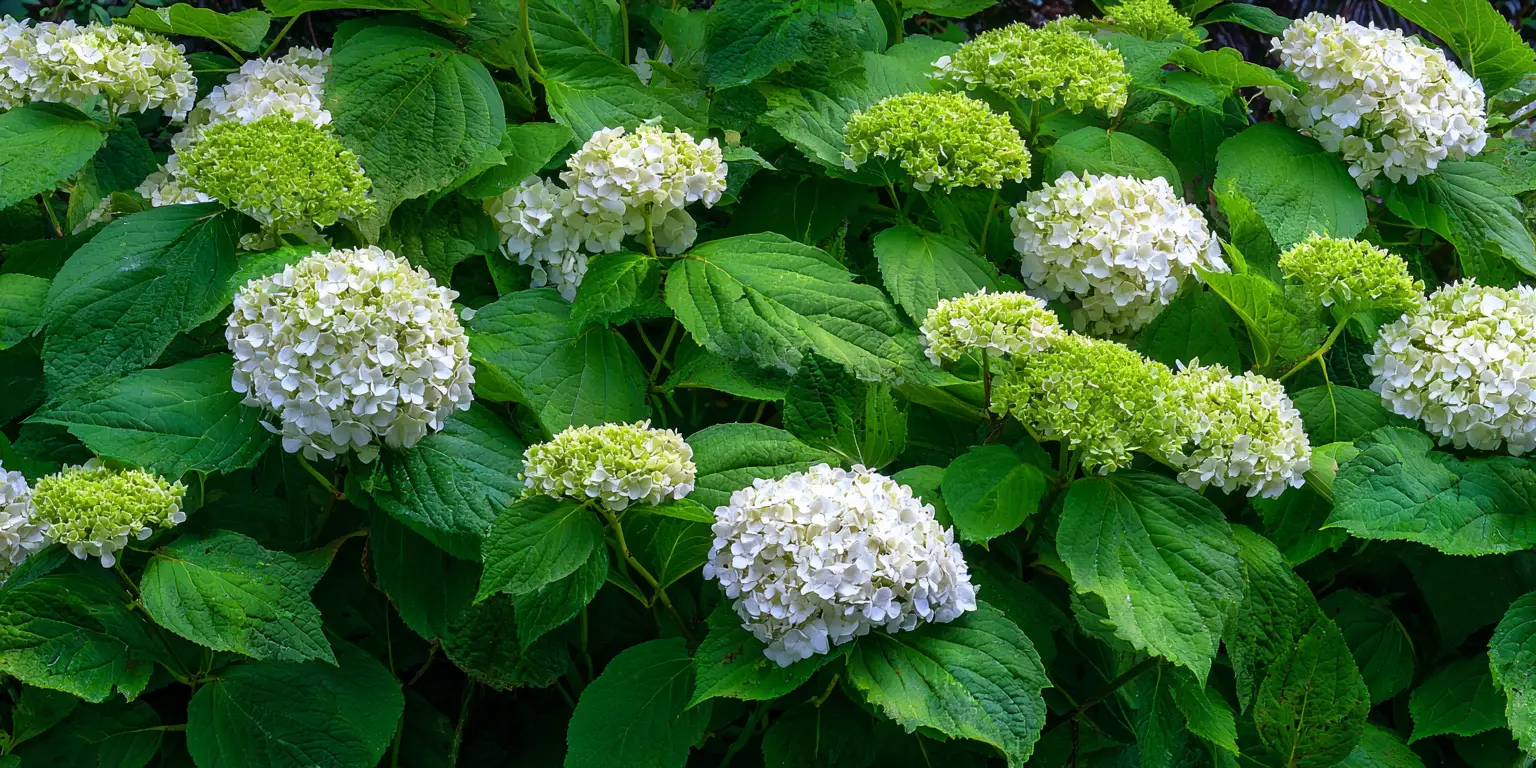
Plant bigleaf hydrangea in rich, well-drained soil with plenty of organic matter, and this is also where flower color is decided. The color is not set by pH directly but by whether aluminum in the soil is available to the roots, and pH is the lever that controls that availability. In acidic soil, around pH 5.0 to 5.5, aluminum dissolves into a form the plant can take up, and the flowers turn blue. In neutral-to-alkaline soil, around pH 6.5 and above, aluminum gets locked into compounds the roots cannot reach, and the flowers turn pink. White-flowered cultivars carry no pigment that responds to aluminum, so they stay white whatever the soil does. To push flowers toward blue, lower the pH with elemental sulfur and add aluminum sulfate so there is aluminum to take up; to push them toward pink, raise the pH with garden lime and withhold aluminum. Test the soil first to get a real starting number, make changes gradually rather than in extreme swings, and expect the shift to take a full season or more, since the chemistry has to move through the root zone before new blooms reflect it. Growing the plant in a large container makes this far easier, because the potting mix is a small, controllable volume rather than a whole bed of heavy clay.

Target colorSoil pHWhat to addNote
BlueAbout 5.0 to 5.5 (acidic)Elemental sulfur to lower pH, plus aluminum sulfateAluminum must be available; effect builds over a season
PinkAbout 6.5 and up (neutral to alkaline)Garden lime to raise pH; withhold aluminumLocks aluminum away from the roots
WhiteAnyNothing changes the colorWhite cultivars hold their color regardless

The same chemistry makes these plants a natural fit for a cool-toned border, and for ideas on pairing them with true blues our blue flowers hub collects partners that read in the same range.

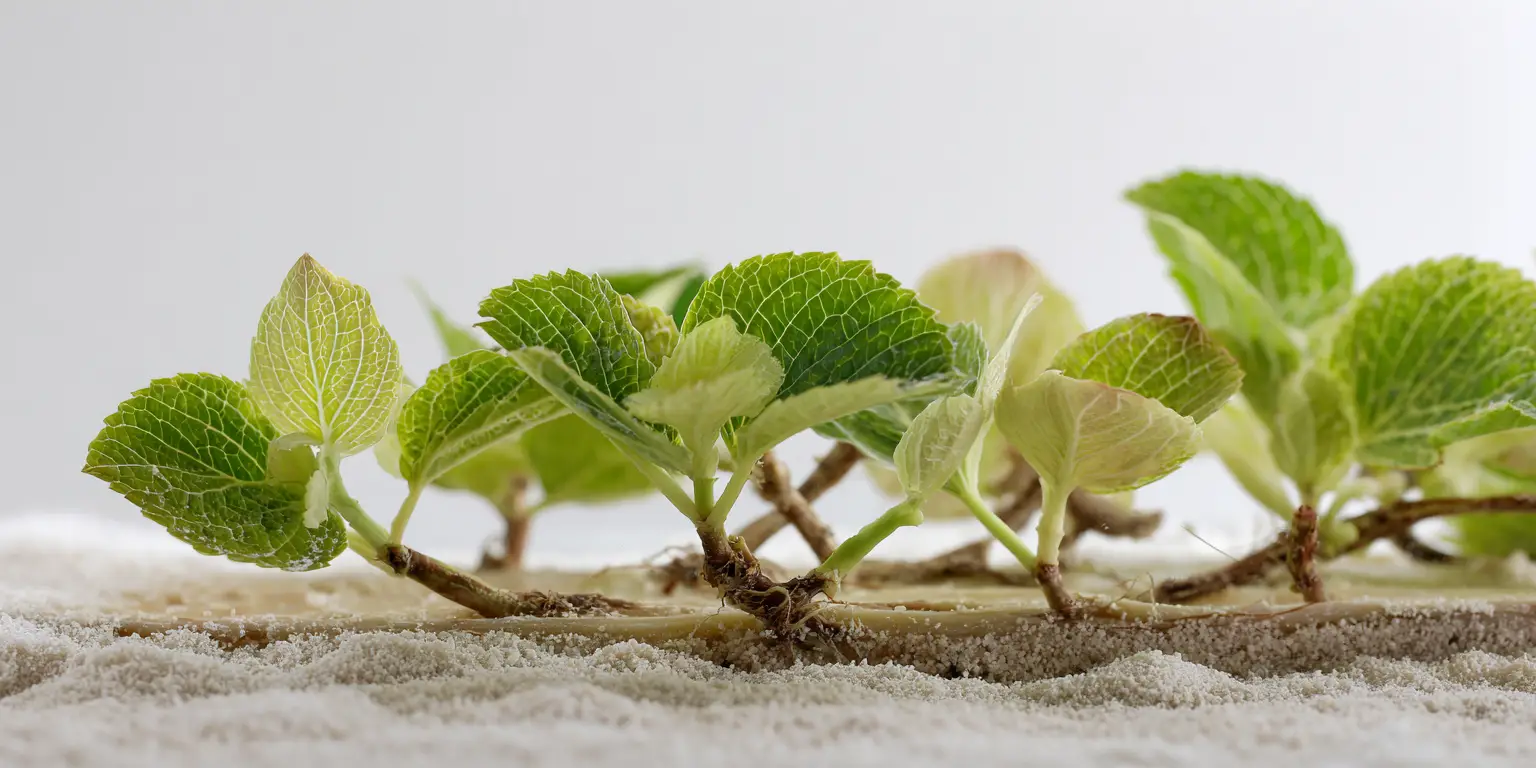
Hydrangea stem cuttings rooting in sand, propagation.

❄️ USDA hardiness

Bigleaf hydrangea is generally hardy in USDA zones 5 to 9, though the more reliable working range for bloom is zone 6 and warmer. In zone 6 and up the shrub usually comes through winter with little dieback and flowers dependably. In zone 5 the plant itself often survives, but the flower buds set the previous summer are vulnerable to a cold snap or late spring freeze, so the plant leafs out without blooming. This is why the buds, not the stems, are the real hardiness limit for this species in cold regions, and why a reblooming cultivar plus thick mulch and stem protection can make the difference between a green shrub and a blooming one.

🌼 Propagation and longevity

Bigleaf hydrangea is propagated vegetatively so the new plant matches the parent, since seed-grown plants do not come true. Softwood cuttings are taken in late spring or early summer from non-flowering shoots, and they root best in a moist medium under high humidity, with rooting hormone speeding the process. Layering is even simpler: bend a low, flexible branch down to the soil, pin it in place, and cover the contact point, and it will root while still attached to the parent before being severed. With reasonable care the shrub lives for many years, often decades, especially when a couple of the oldest canes are thinned out periodically to keep new growth coming. That renewal pruning is the only cutting these plants need on a schedule, and it is done right after bloom so it never costs next year’s flowers.

Lacecap hydrangea flowers, pink sepals, clustered buds.

👃 Fragrance

Most bigleaf hydrangeas have little to no fragrance. Up close the foliage may give off a faint green scent, but the flower heads are essentially neutral, and a few cultivars are reported to carry a light scent only at very close range. Fragrance is not a reason people grow this plant; the draw is the size, color, and long-holding form of the blooms rather than any perfume.

⚠️ Toxicity and pet safety

Hydrangea is toxic to cats, dogs, and horses according to the ASPCA. The leaves, buds, and flowers contain a cyanogenic glycoside, and an animal that chews on the plant can show vomiting, diarrhea, and depression. Most cases stay mild because a pet rarely eats enough to cause severe poisoning, but larger amounts are more dangerous, so a shrub is best sited where pets and small children are unlikely to nibble it, and a vet should be called if an animal eats a significant quantity. Households that want planting with no such risk can start from our guide to flowers safe for cats and dogs when choosing what to grow nearby.

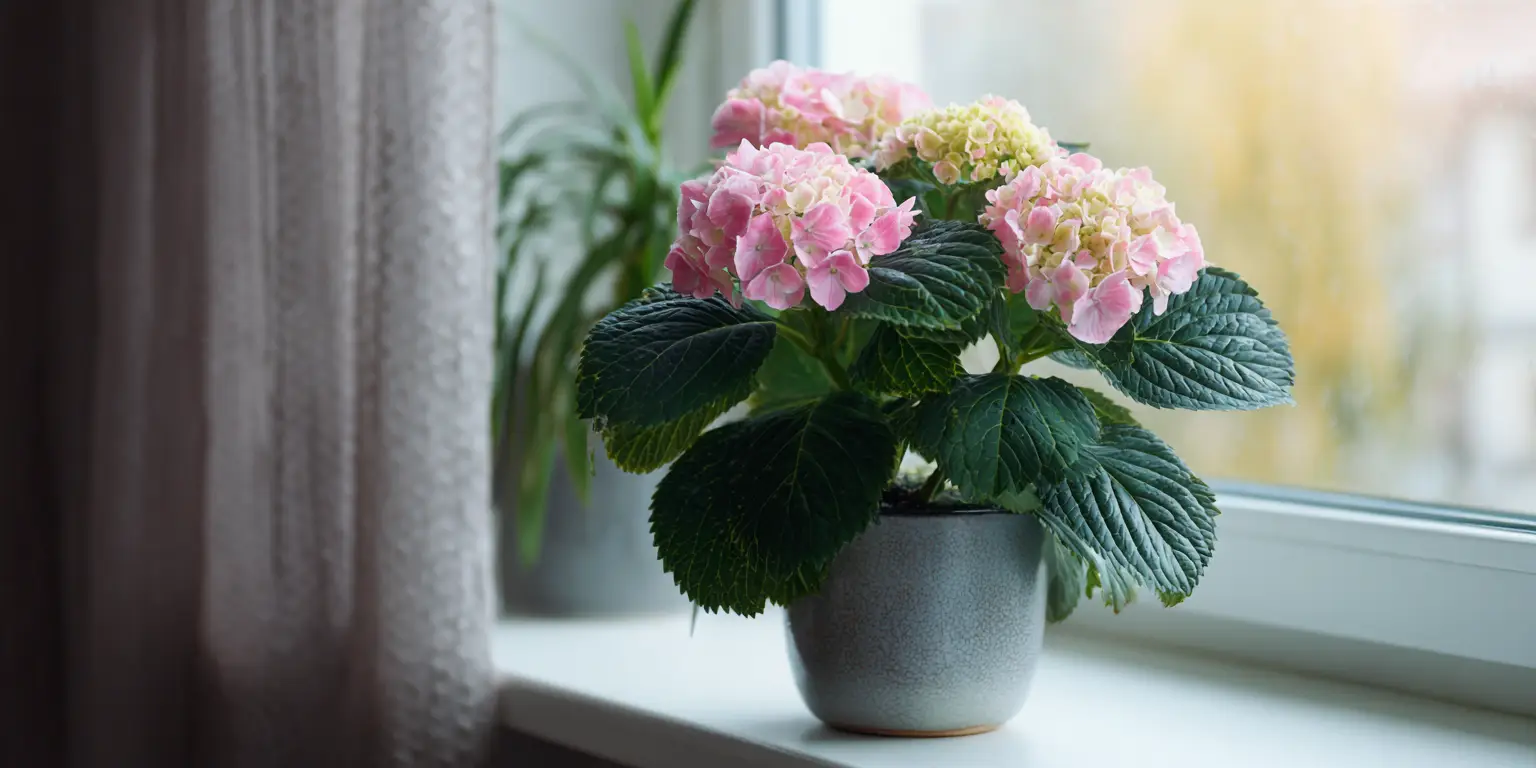
Potted pink hydrangea on windowsill, dark textured leaves.

🌿 Vase life

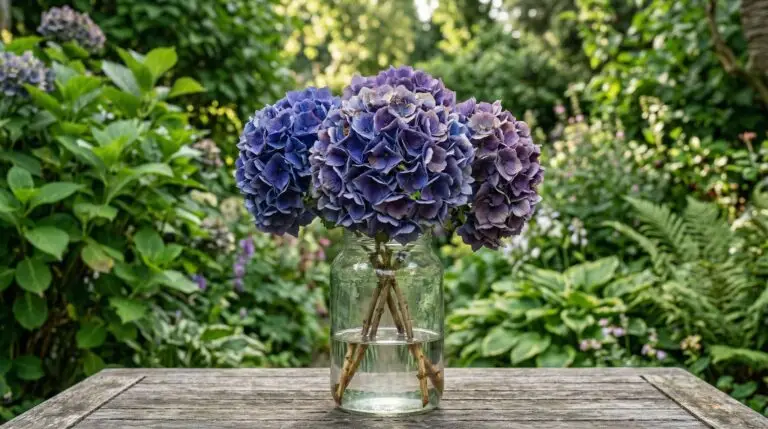
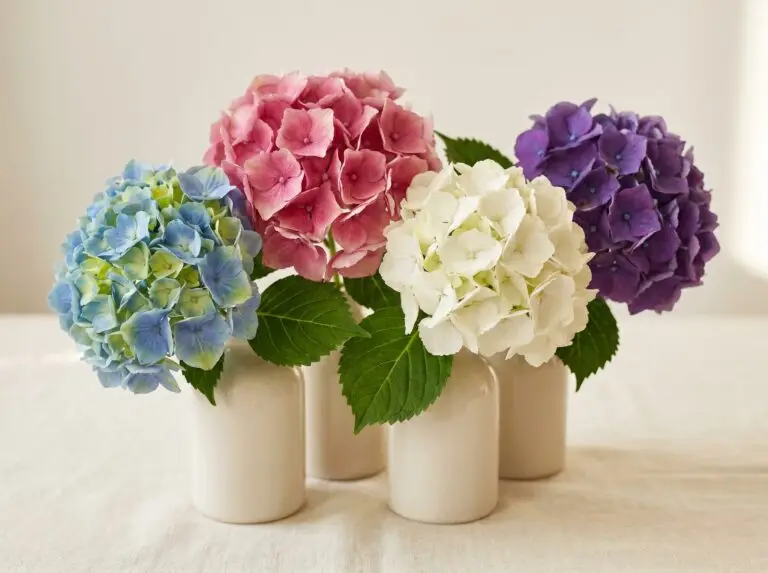
With good conditioning, cut hydrangeas hold in a vase for about 5 to 9 days and sometimes longer. Cut the stems in the morning when they are fully hydrated, choosing heads that have firmed up rather than very young ones, and strip the leaves that would sit below the water line. Hydrangeas are prone to wilting because the woody stems struggle to draw water, so florists dip the cut ends in alum powder or give them a brief dip in hot water to open the uptake, then move them into fresh, room-temperature water. Keep the vase full, change the water every couple of days, and recut the stems at an angle each time. The well-known revival trick is to submerge a wilted flower head in cool water for an hour or more, letting it drink through the florets, which often brings a drooping bloom back to life. These flowers also dry beautifully: leave them on the plant until the heads feel papery before cutting, or stand cut stems in a little water and let them dry slowly indoors, and they keep their shape and faded color for months.

🐛 Pests and diseases

Bigleaf hydrangea is fairly tough, and most trouble appears only when the plant is stressed. Aphids cluster on soft new growth and wash off with a strong water spray or insecticidal soap, while spider mites show up in hot, dry spells as fine pale speckling on the leaves and are kept down by steady watering and rinsing the foliage. Scale insects look like small bumps on the stems and usually yield to horticultural oil, and deer will browse leaves and buds where they are common. On the disease side, leaf spots such as Cercospora are common late in the season in humid weather, and raking up fallen leaves reduces how much carries over to the next year. Powdery mildew coats leaves in white where shade and still air meet, so spacing shrubs, thinning stems, and avoiding late-day watering all help, and botrytis can brown the flower heads during long wet stretches. The most serious threat is root rot in heavy, waterlogged soil, which good drainage prevents. Across the board, the right light, even watering, and a clean base are far easier than treating problems after they take hold.

Flower photos

FAQ

For blue, keep the soil acidic at about pH 5.0 to 5.5 and add elemental sulfur to lower pH along with aluminum sulfate so there is aluminum for the roots to take up. For pink, raise the pH toward neutral or slightly alkaline, around pH 6.5 and above, with garden lime and withhold aluminum. Test the soil first, make changes gradually, and expect the shift to take a season or two. White cultivars do not change.

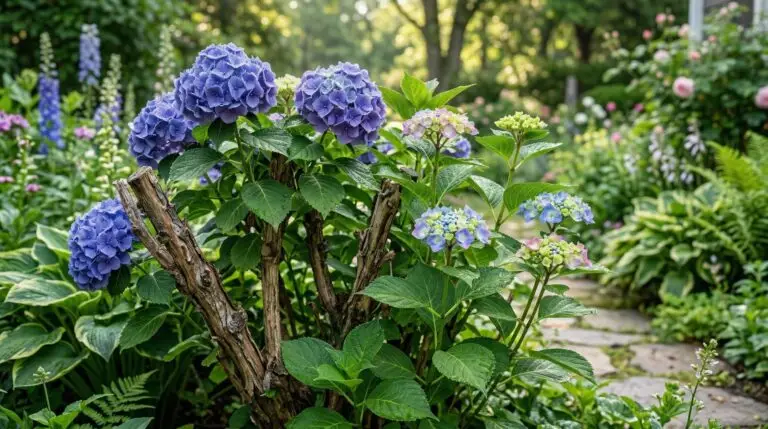
Prune right after flowering, usually by mid to late summer, so the plant has the rest of the season to form next year’s buds on this season’s stems. Pruning in fall, winter, or spring removes those buds and costs the next round of flowers. In most years the work is light: deadhead spent blooms, cut out dead or damaged stems at the base, and thin one or two of the oldest canes every few years with clean, sharp pruners.

CauseFix
Pruned at the wrong timePrune only right after bloom; never cut in fall, winter, or spring
Winter or late-frost bud killProtect buds over winter; consider a reblooming cultivar
Too much shadeMove to a spot with morning sun and afternoon shade
Too much nitrogen fertilizerEase off high-nitrogen feed that pushes leaves over flowers
Recently planted or movedGive it a year or two to settle before expecting bloom

It can in the right conditions. In cooler or coastal areas with mild summers, full sun works as long as the soil stays consistently moist. In hot climates, full afternoon sun usually scorches the leaves and causes daily wilting, so morning sun with afternoon shade is the safer choice. Where full sun is the only option, mulch heavily and plan on frequent deep watering.

It depends on zone and exposure. In zone 6 and warmer, a layer of mulch over the roots is often enough. In colder areas, protecting the buds is what separates a leaf-only year from a blooming one, so some gardeners wrap the shrub in burlap or build a wire cage filled with dry leaves for insulation. Potted plants need more help because their roots freeze faster, so move containers to a sheltered, unheated space or insulate the pot, and avoid fall pruning since the standing stems shelter the buds.

Interesting tips

A color-changing hydrangea doubles as a rough soil-pH indicator: blue blooms point to acidic ground and pink to more alkaline ground, though a soil test gives the real number to work from. For arrangements, conditioning the stems the moment they are cut makes the biggest difference, since the alum or hot-water dip opens up water uptake before the heads have a chance to wilt. Growing in a large container is worth considering where the ground is heavy clay or very alkaline, because a pot lets the soil type and pH be controlled directly, with the trade-off of more frequent watering and winter protection for the roots. Dried flower heads left standing through winter look good and give the buds below a little shelter, and they are best snipped off in late winter or early spring before new growth starts. As a shade-loving shrub it blends naturally with azaleas, hostas, and ferns, with spring bulbs adding early color before the hydrangeas carry the garden through summer.

Related Guides & Flowers
References

Written by: Your Flowers Guide editorial team
We are a small independent group of flower lovers who research and review each guide using trusted horticultural and educational sources. Learn more about us