A fall bouquet cut from your own garden comes down to two questions answered before the pruners come out: which of your late-season plants hold up as cut stems, and how each one has to be handled so it does not collapse by dinner. Garden mums and dahlias carry the weight of an autumn arrangement, New England asters and zinnias fill in around them, and celosia plumes, goldenrod, and flat sedum heads supply the texture that keeps the whole thing from reading as a bunch of round flowers in a jar.
The second question is where most gardeners get caught, because a late border does not hand you one kind of stem. Dahlias are hollow and trap an air pocket that shuts off water within an hour or two, which is why a bloom that looked fine at the sink is face down before the table is set. Stems that bleed milky sap seal their own cut ends. Woody stems draw slowly through their bark. Soft herbaceous stems foul the water as soon as a leaf sits below the waterline. Mums, dahlias, and zinnias add one more catch: cut in tight bud, they never open at all. What follows covers which fall flowers play which role in a vase, when and at what stage to cut them, the fix for each stem type, how to build the arrangement, how to hold it together on the table, and what to leave standing outside.
On this page 7 sections
What’s actually blooming that’s worth cutting
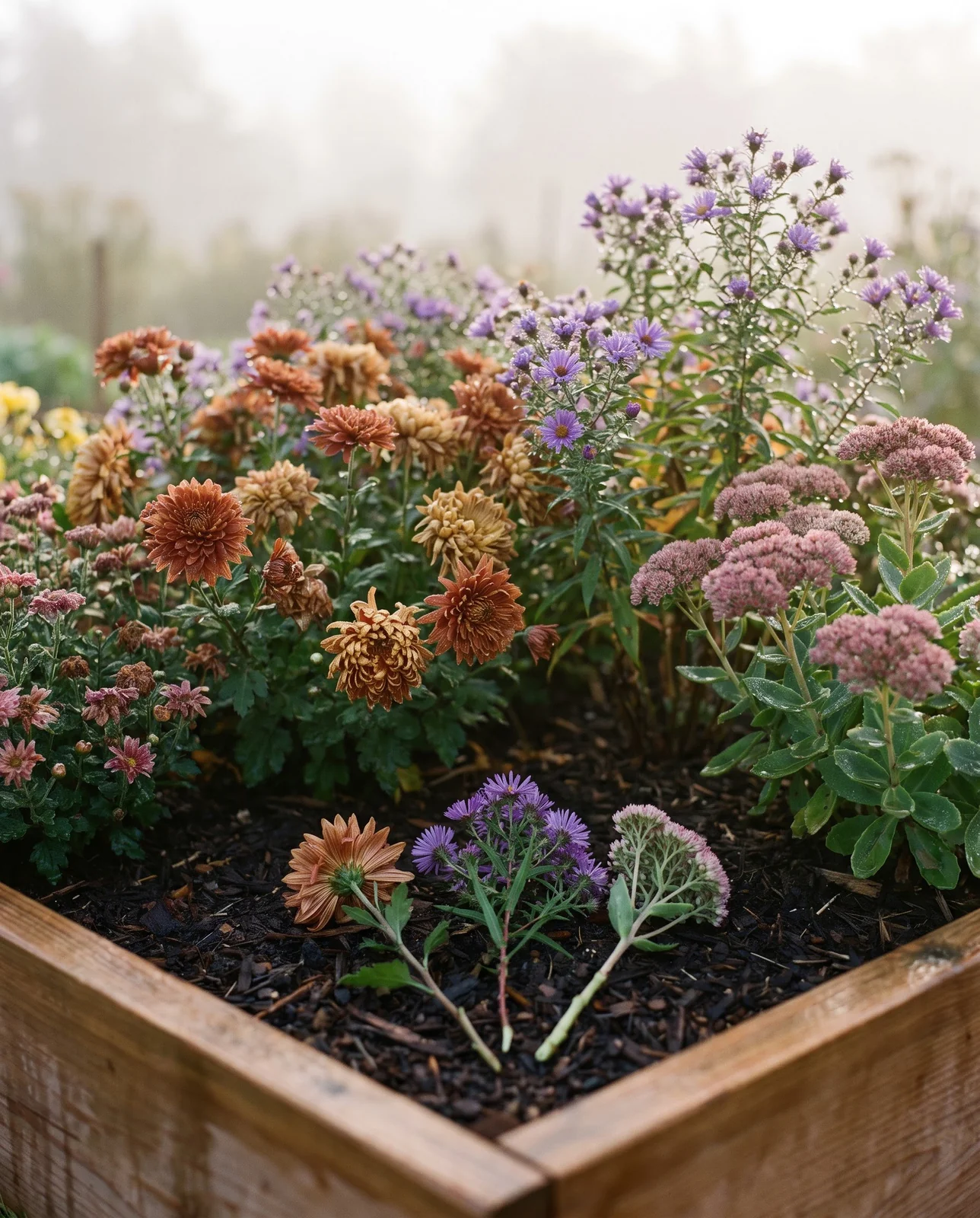
An arrangement holds together when the stems in it are doing different jobs. Focal flowers set the mass and hold the center of the vessel. Garden chrysanthemum (Chrysanthemum x morifolium) is the obvious anchor, a plant that grows all spring and summer and does not flower until autumn. NC State Extension puts it at 1 to 3 feet tall and 1 to 2 feet wide across USDA Plant Hardiness Zones 5a through 9b, in erect mounds that give up cutting stems without falling apart. Broad, layered dahlia blooms do the same work with a different shape and a different weight. Supporting flowers sit between those anchors and the outer edge and frame the larger heads. New England aster (Symphyotrichum novae-angliae) is built for that job: bushy clumps 3 to 6 feet tall, flowering August to October in zones 4a through 8b, carrying 1.5-inch composite heads with as many as 100 purple rays around a yellow center, and it holds an official good cut rating in the same plant files. Warm zinnias bridge the gap between darker focal heads.
Textural stems do the rest of the work: vertical lines, seed heads, and something in the arrangement that is not a round petal face. Plumed celosia (Celosia argentea) throws upright feathery spires from late spring until the first frost, and it is rated good both cut and dried, so it is the one stem here that keeps its shape after it dries. Goldenrod (Solidago) species run anywhere from 1 to 8 feet, carrying club-shaped terminal clusters from July through October, and deer leave them alone in the bed. Showy stonecrop (Hylotelephium spectabile, also listed as Sedum spectabile) adds dense, plate-like heads on clumping mounds 1 to 2 feet high and wide, and cut stems hold water well. NC State Extension makes a point of the intact seed heads carrying visual structure in the bed all winter, so stripping a clump for the vase costs you that. Cut a few heads for the table, leave the rest of the stand where it is, and both uses survive.
Seven fall garden flowers, sorted by the role each plays in a cut arrangement
Focal flowers anchor the arrangement, supporting flowers fill the body, and textural flowers add shape and contrast. Grouping this way, rather than by species alone, is what makes a fall bouquet read as composed instead of just gathered.
Cut it right: timing and stage
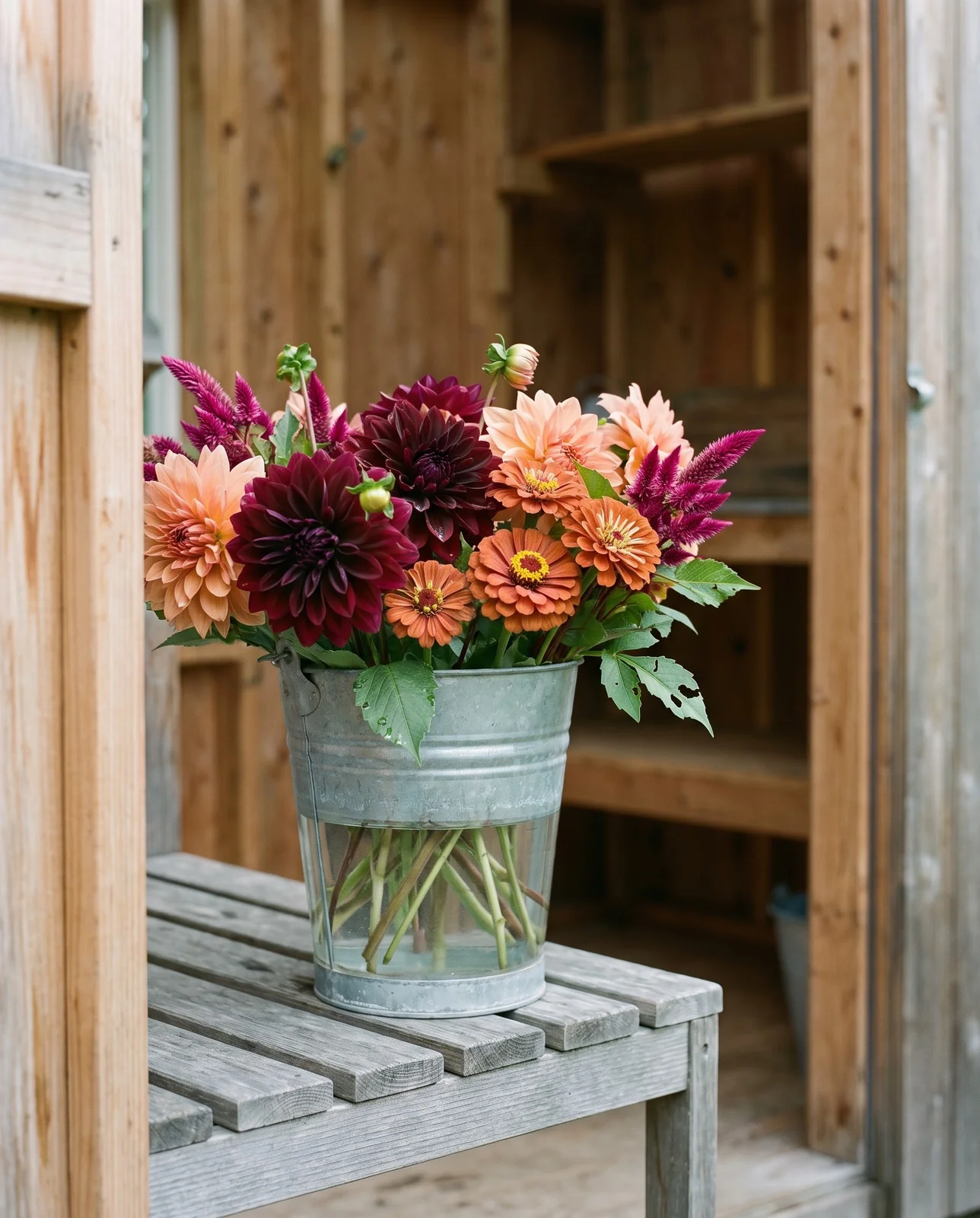
Cut in the morning. Iowa State University Extension is blunt about the reason: flowers are most turgid early, before the heat and stress of the day pull moisture out of the tissue, and stems taken near sunrise go indoors with the largest internal water reserve they will ever have. Carry a clean bucket of water out to the bed and drop each stem into it the moment it is cut, so no air gets pulled into the open channels during the walk back. Use bypass shears sharp enough to slice the stem cleanly without crushing it, and cut on a 45-degree angle, which opens more surface to the water and keeps the base from sitting flat against the bottom of the container. Then strip every leaf off the lower half of each stem before it goes anywhere near the vase. Submerged leaves rot and discolor the water quickly, Iowa State warns, and that clouded water carries the bacteria that plug stem ends from the inside.
Stage at harvest splits the list in two. Most garden flowers can be cut as soon as the buds show color and will finish opening in water, and non-composite stems taken at the colored bud stage open steadily indoors without petal drop. The New York Botanical Garden names the exceptions, and they are exactly the flowers this bouquet is built on: dahlias, zinnias, marigolds, phlox, and chrysanthemums have to be cut fully open. Cut in tight bud, they lack the stored carbohydrates needed to keep pushing petals open in plain water, so they stall at the stage they were cut, which is the quiet reason a jar of hard little mum buds never turns into a bouquet. There is one way to move the whole harvest later, though it belongs to spring: pinching asters, chrysanthemums, and sedum back early in the season delays autumn flowering and produces stockier, better-branched plants, which pushes usable stems further into the fall.
Condition it right: the stem-by-stem fixes
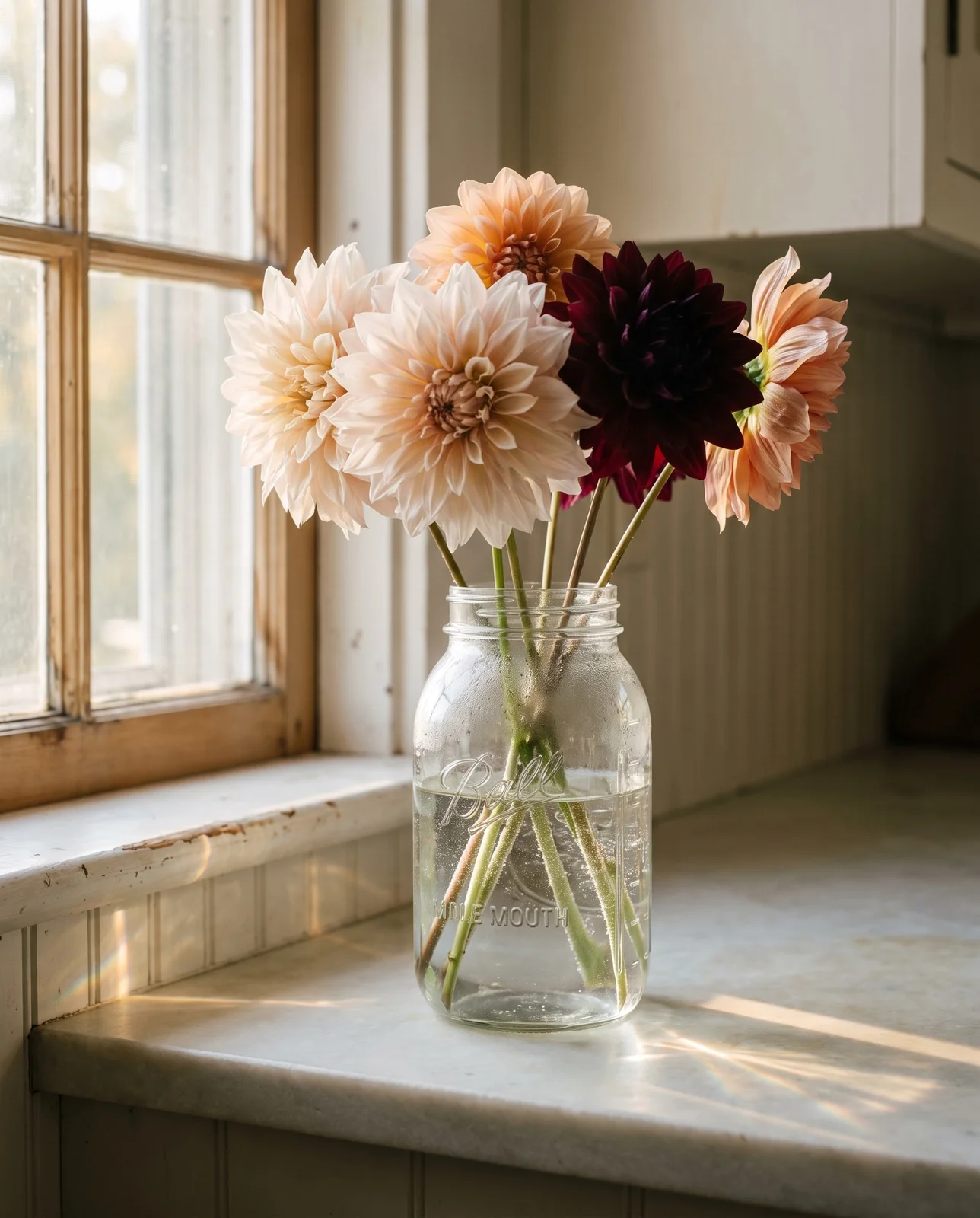
Conditioning is the pause between cutting and arranging, and skipping it is the most common reason a garden bouquet looks tired by evening. Stand the cut stems in tepid water in a cool, shaded spot for several hours, overnight if you can manage it, before anything gets arranged. Recut an extra inch off each base right before it goes into that water, which takes off whatever dry seal or air bubble formed on the walk in. Tepid water moves up a stem faster than cold tap water and will bring a limp stem partway back. Dahlias are the ones that send people looking for help. Gardeners on forums like Dave’s Garden report cut dahlias collapsing within two hours of going into a vase, and the cause is mechanical: the stem is hollow, an air pocket lodges inside it, and water stops reaching a flower head that was heavy to begin with. The New York Botanical Garden gives two structural fixes. Push a thick wire or a wooden stick up the hollow cavity so the stem has physical support, or fill that cavity with water and cap the cut base with a cotton ball held on by a rubber band. NC State Extension’s cut-flower program found that combined plant growth regulator treatments held cut dahlia quality through day 4 against a plain tap-water control.
The rest of the fall border sorts into two more stem types. Anything that bleeds milky sap seals its own cut end, and the flow has to be stopped before the stem goes into water: hold the cut end over a candle or match flame for a few seconds, or dip the bottom inch into boiling water for fifteen seconds, then move it into tepid water. Woody stems, whether from a flowering shrub or the hard base of an old perennial, draw slowly through dense bark, so cut the bottom inch a second time, crosswise, right before vasing. Water chemistry also decides how long the arrangement lasts. Iowa State University Extension puts the whole kitchen-cabinet list, aspirin, vinegar, tea, copper pennies, and bleach on its own, below a commercial floral preservative, and warns that some of it shortens vase life outright. The New York Botanical Garden publishes a home recipe for when there is no packet in the drawer: 1 tablespoon of sugar, 1 teaspoon of household bleach, and 2 teaspoons of lemon juice dissolved in 1 quart of lukewarm water. Buy the preservative if you can, mix the recipe if you cannot, and change the water often either way.
Four stem types, four different vase failures
A cut flower fails at the vase for a stem-mechanics reason, not a mystery one. Matching the stem type below to the failure it produces points straight at the fix.
Building the arrangement
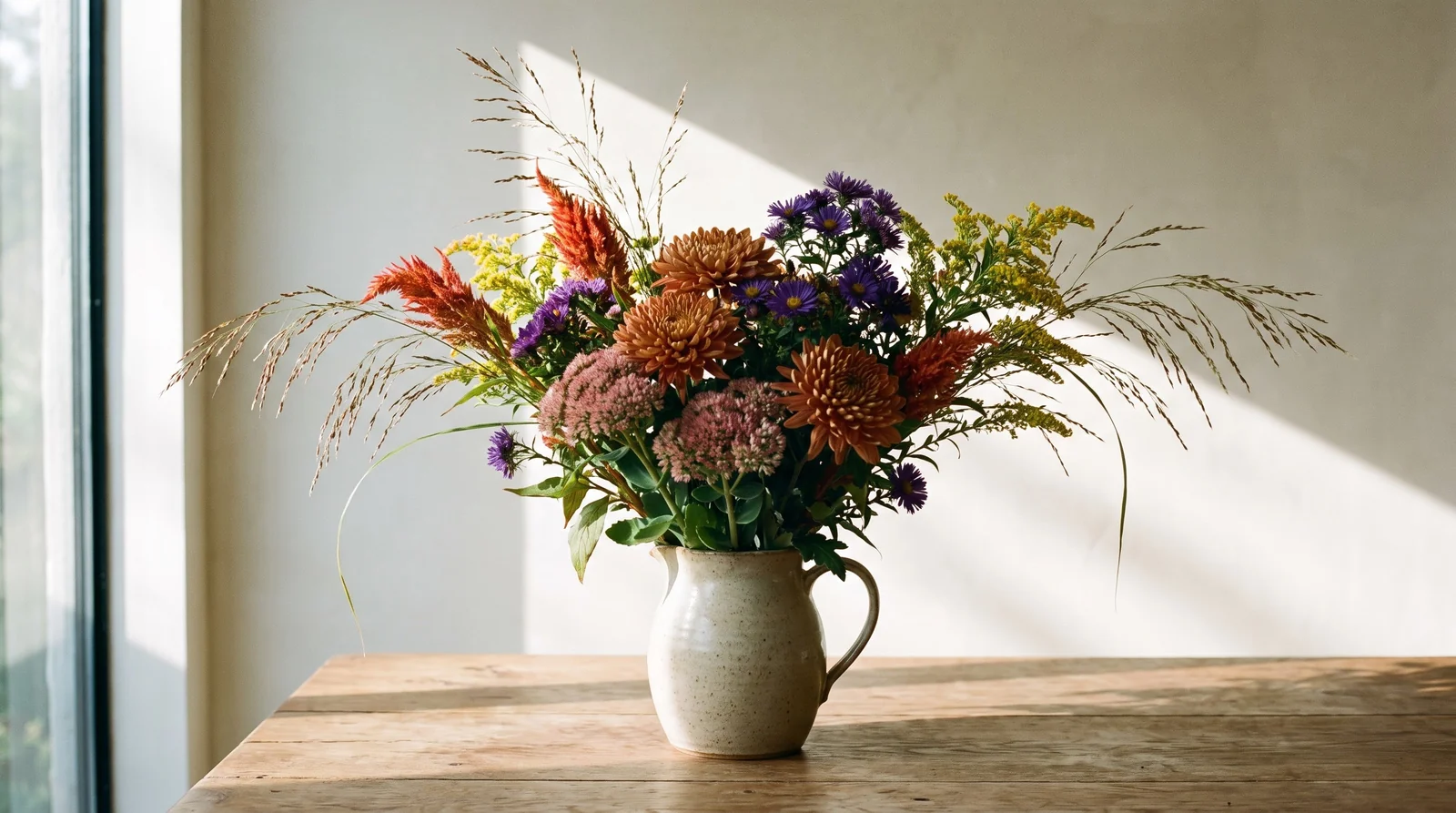
Start with a clean container. Wash the vase, crock, or stoneware pitcher in hot water and dish soap, because whatever bacteria the last bouquet left behind goes straight to work on this one. Skip the floral foam and build a grid instead: lay branching New England aster stems, woody twigs, or stiff foliage across the mouth of the vessel so they cross at opposing angles and lock into a lattice. Softer stems pushed down into that lattice stay where you put them. Once the grid is set, place the heavy flowers. Set the fully open chrysanthemums and dahlias at staggered heights with the biggest heads low, near the rim and slightly off-center, so the weight in the arrangement reads as deliberate rather than as a flower that slid.
Then work outward. Thread purple asters and warm zinnias through the grid between the focal heads, spreading color across the face of the arrangement and hiding the mechanics underneath. Bring the vertical lines in last: celosia plumes, goldenrod sprays, and broad stonecrop plates around the perimeter and over the crown. Keep the outline loose and a little lopsided, closer to how the plants grow than to a florist’s dome. Leaving air between the heads is not only a matter of looks. Crowded petals bruise against each other, dense heads hold damp air between them, and a stem jammed into a wall of other stems cannot draw freely from the water below.
Keeping it fresh after it’s on the table
Where the vase sits decides most of what happens next. The New York Botanical Garden puts placement first: out of direct sun and away from radiators, wood stoves, and heating vents, because warmth pulls water out of the petals faster than the stems can pull it up. Keep it clear of the fruit bowl as well, since ripening fruit gives off ethylene, and ethylene pushes composite flowers to drop petals and age early. The other half of the job is the water. Empty the vase completely every two days, rinse the inside, and refill it with fresh water and preservative, commercial or homemade.
Recut the base of each stem every time you change the water. A film builds on the cut end between changes and seals it as effectively as a scab, and taking a slice off reopens the channel. Temperature does the rest of the work while nobody is looking at the flowers. Iowa State University Extension puts the holding range at 40°F to 60°F for an arrangement that is off display, and 33°F to 35°F for anything being held more than a day or two, which is the range that matters if you cut and arrange several days ahead of a holiday table.
What not to strip bare
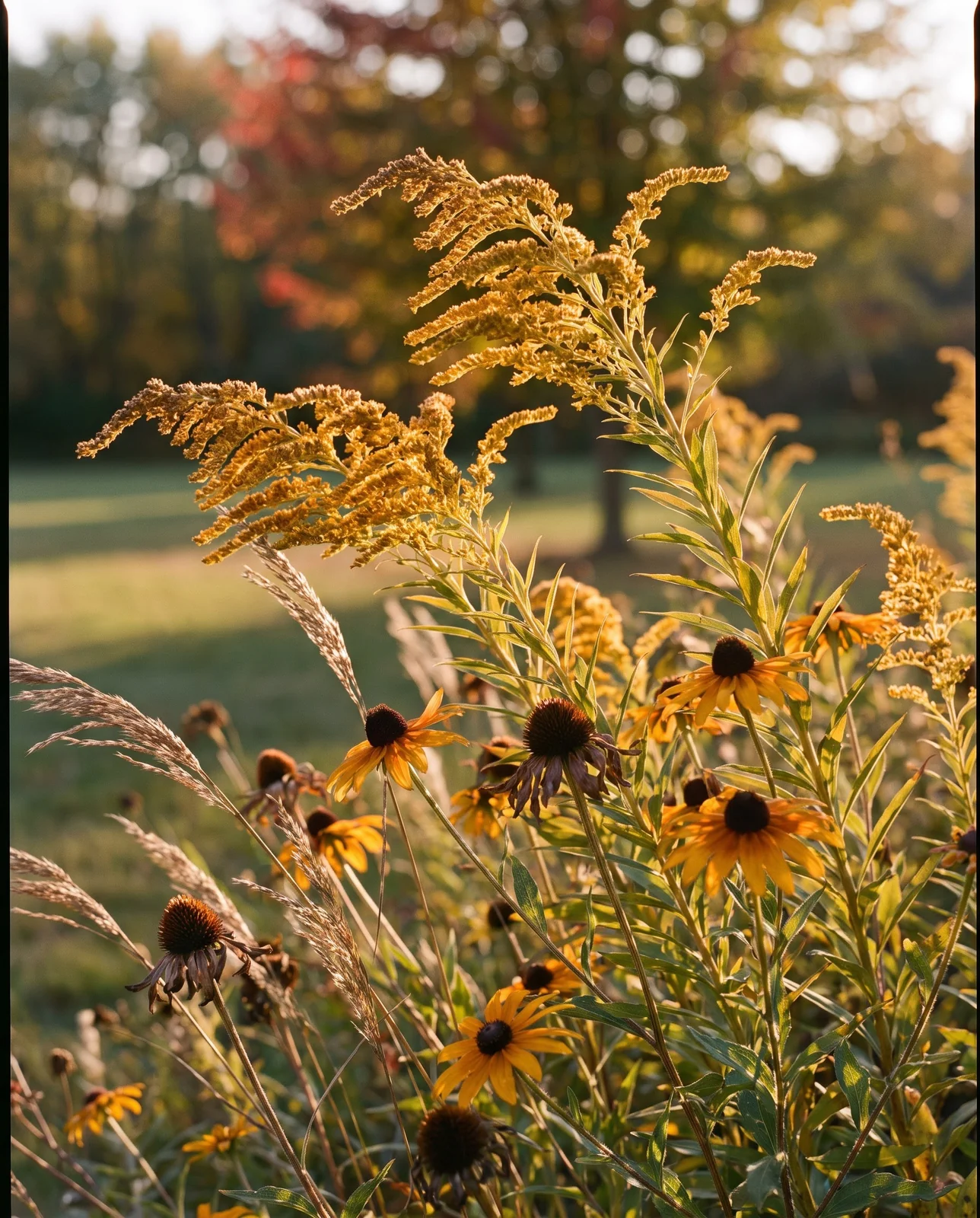
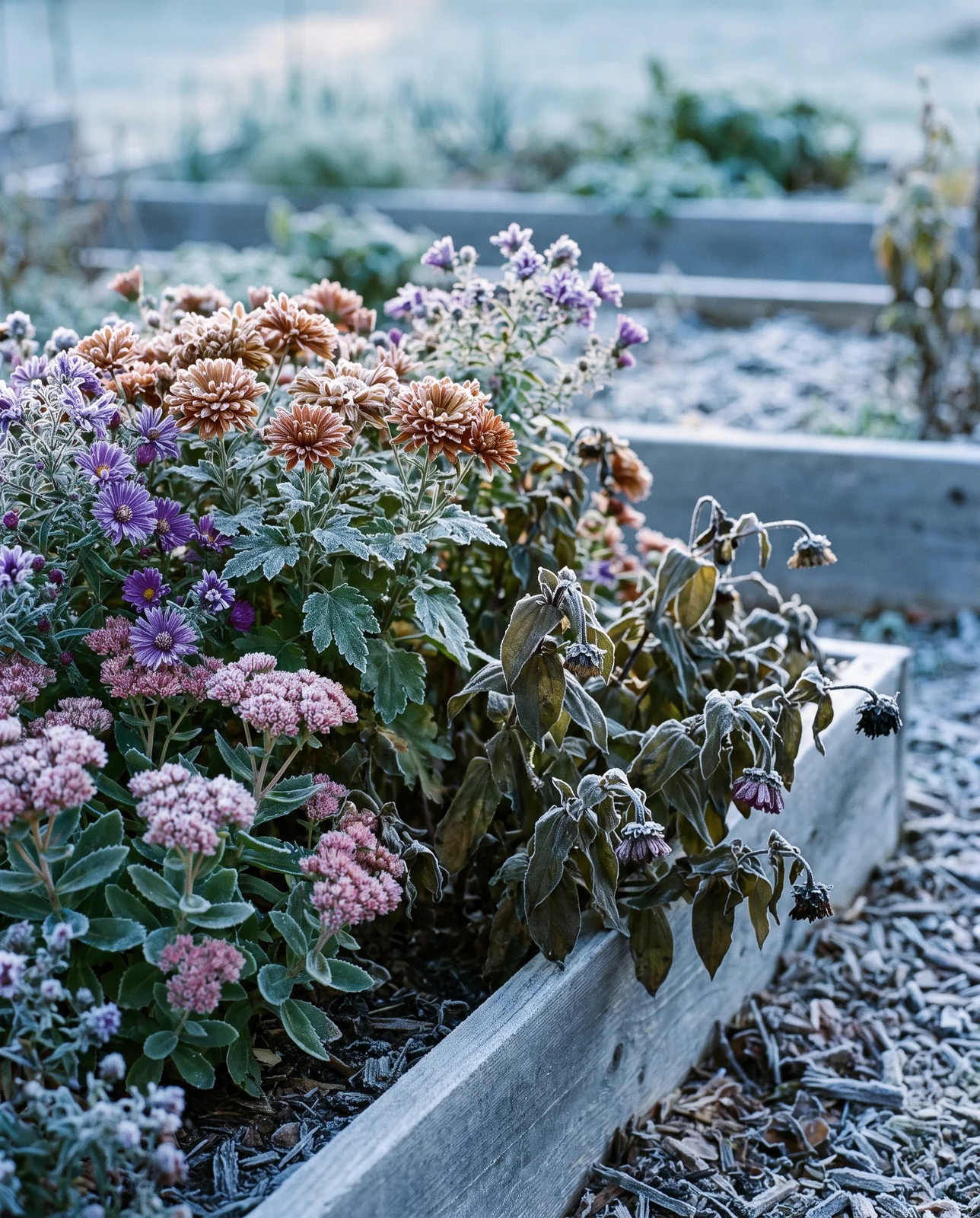
A late border is feeding two audiences at once. Whatever is still open is nectar for the insects still flying, and the seed heads that follow are what birds work over going into the cold. NC State Extension notes plainly that birds are fond of the seed, so a stand of goldenrod left standing after bloom is a food supply. Take a moderate share of the blossoms and leave the bulk of every stand where it is; that is enough for a table and enough for the garden. A few stems of black-eyed Susan (Rudbeckia) mixed into the bouquet work the same way, adding a dark-centered contrast indoors while the rest of the patch keeps its seed heads outside.
One fall stem gets left outdoors for the wrong reason. Goldenrod (Solidago) is insect-pollinated, and NC State Extension is direct about the mix-up: it is confused with ragweed and wrongly accused of carrying the wind-borne pollen behind hay fever and allergies. Its pollen travels on insects rather than on air currents, so a vase of it in the living room is not what makes anyone sneeze. The caution that is real is a different one. The same plant files list garden chrysanthemum (Chrysanthemum x morifolium) as a problem for cats, dogs, and horses if it is chewed or swallowed, and contact with the foliage raises a mild rash on some people. Put a mum arrangement on a mantel or a high shelf a cat cannot reach, and wear gloves stripping the stems if your skin reacts to plants.
FAQ
What garden flowers are good for a fall bouquet?
Garden chrysanthemums and dahlias give you the focal blooms, New England asters and zinnias the supporting color, and plumed celosia, goldenrod, and showy stonecrop the texture. Pick stems stiff enough to stand on their own, and strip every leaf that would sit below the waterline before vasing.
Why do my cut dahlias wilt within an hour or two?
The stem is hollow, and an air pocket lodged inside it stops water from reaching a heavy flower head. Slide a stick or a wire up the cavity for support, or fill the hollow stem with water and cap the cut base with a cotton ball and a rubber band before it goes into the vase.
Will cutting goldenrod for an indoor bouquet trigger hay fever?
No. Goldenrod is insect-pollinated, and NC State Extension notes that it gets confused with ragweed and wrongly blamed for the wind-borne pollen behind seasonal allergies. It does not release pollen into the air indoors.
Should I cut sedum flower heads or leave them in the garden?
Do some of both. Cut a portion of the heads for vase texture and leave the rest of the clump standing: NC State Extension notes that intact stonecrop seed heads hold their shape and give the bed visual structure through winter.
Does harvesting fall flowers harm garden pollinators and birds?
A moderate harvest does not. Take some blooms and leave the rest of the stand, seed heads included, in place. NC State Extension notes that standing goldenrod supplies birds with seed food late in the season, and whatever is still in flower out there is feeding insects.
How long do fall garden flowers actually last in a vase?
It varies by species, how open the flower was when cut, and how it was conditioned. In NC State Extension research trials, post-harvest treatments held cut dahlia quality through day 4 in water. Conditioning in tepid water, recutting the base at an angle, and changing the water every two days are what keep a stem from failing early.
Which fall flowers continue blooming through a light frost?
Garden chrysanthemums (USDA Zones 5a to 9b) and New England asters (Zones 4a to 8b) are hardy perennials and keep flowering through light autumn frost. Celosia is a tender annual, and dahlias and zinnias are frost-sensitive, so a freeze ends all three.
More About Occasion flowers
Thanksgiving flowers: centerpieces you build yourself
Diwali flowers: marigold garlands and DIY toran
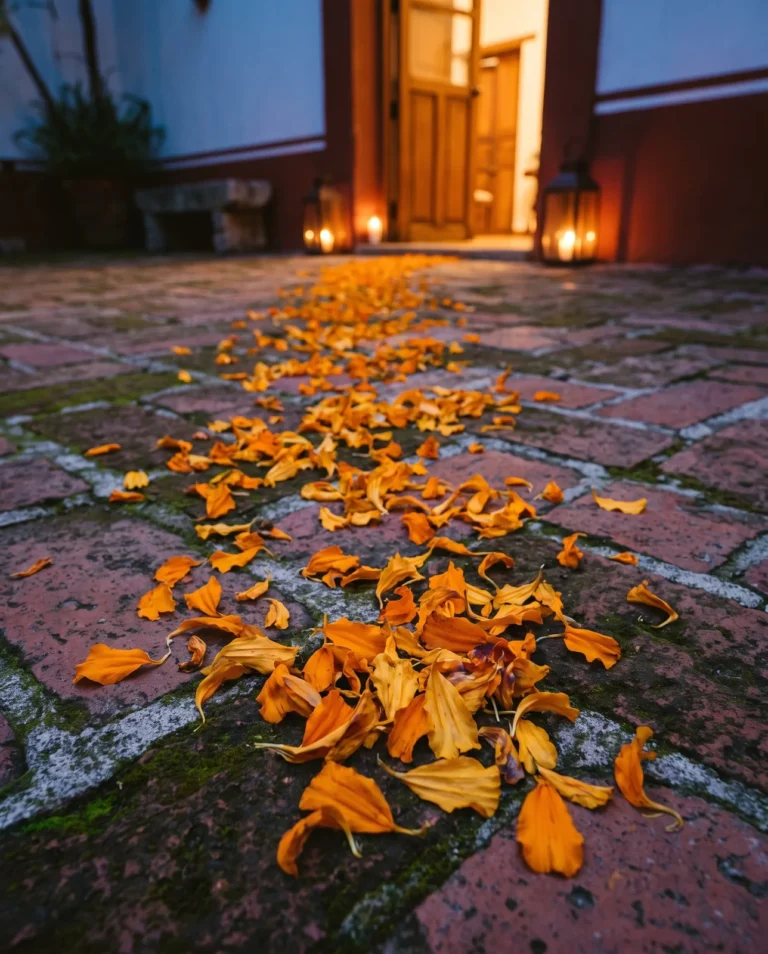
Dia de los Muertos flowers and what each bloom means
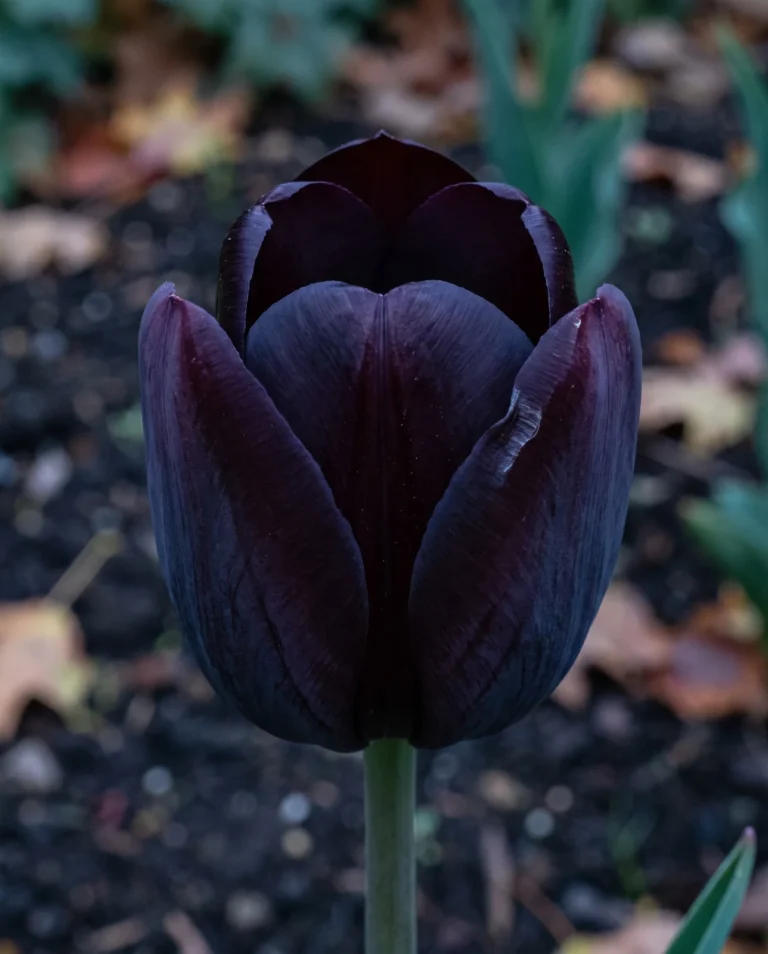
Halloween flowers: real black blooms and safe DIY builds
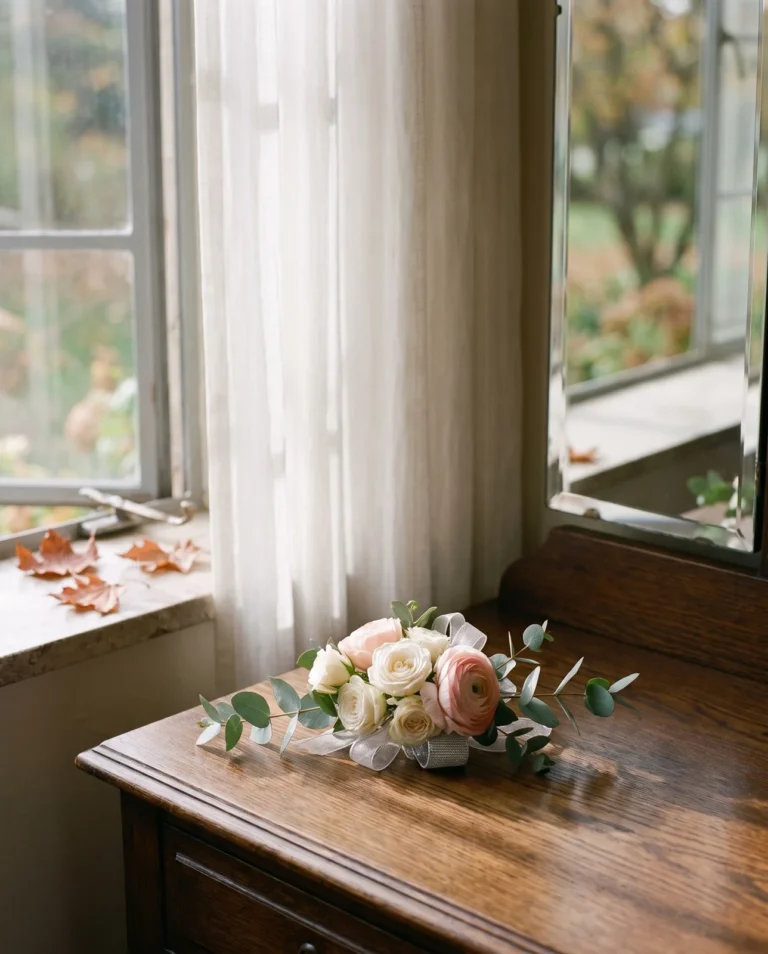
Homecoming corsage and boutonniere guide
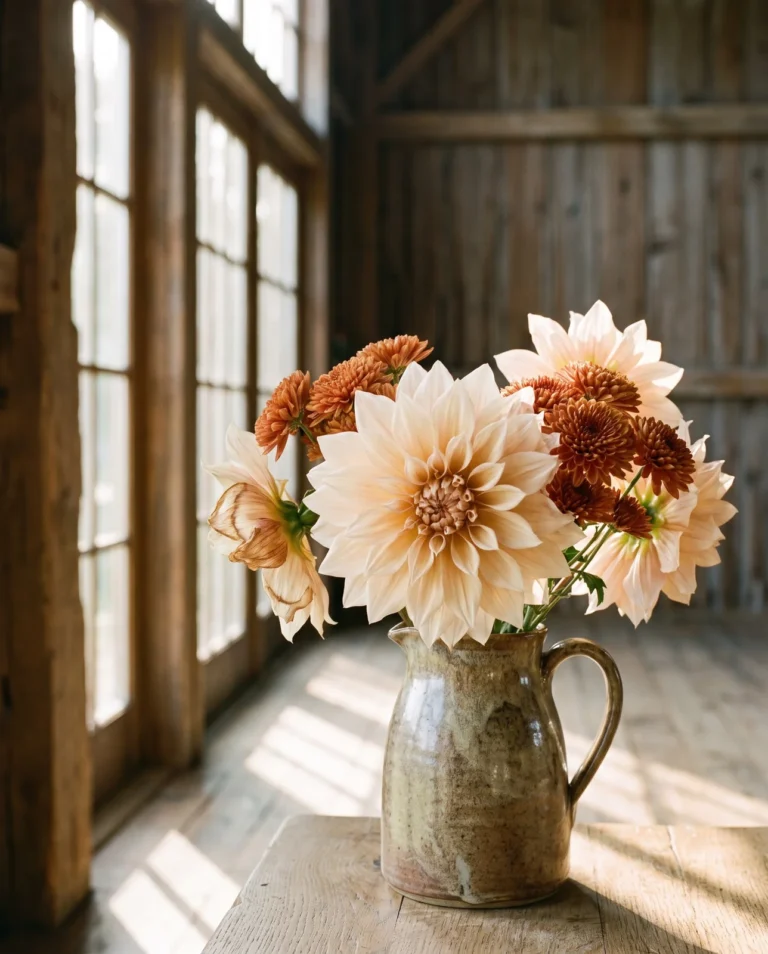
Fall wedding flowers by month, color, and budget
Friendship flowers

Thank you flowers
Get well flowers
Enjoying our flower guides? Add YourFlowersGuide as a preferred source on Google. It helps more readers find us.
Add to Preferred Sources