Thanksgiving flowers have to do three things at once: survive a four-day holiday gathering without wilting, cost less than a florist order, and sit low enough that guests can see and talk across the table. A shop centerpiece handles the first and the third, and charges accordingly. A handful of grocery stems, a shallow bowl, waterproof tape, and correct conditioning handle all three for far less, and the work happens days ahead of the kitchen rush instead of on the morning of the meal.
Chrysanthemums, dahlias, garden roses, hydrangea, and celosia all carry the harvest palette, but they do not last the same length of time, and that single fact decides how a Thanksgiving arrangement gets built and when. Hardy stems and foliage go in first, days early; the fragile focal flowers go in last. A tape grid stretched across the mouth of a bowl holds everything without floral foam, and a sealed liner does the same job inside a hollow gourd or a woven cornucopia. What follows covers the flowers and colors that read as autumn, three costed builds from a mason jar to a compote, the assembly steps, container choices, candle clearances, how long each flower really lasts, a day-by-day countdown for building or ordering, and the foraged material to leave outdoors. The directory of occasion flowers carries the same styling questions across every other major holiday.
On this page 9 sections
- Flowers and colors that read as Thanksgiving
- Three centerpiece builds by budget
- Step-by-step DIY assembly protocol
- Container styles: cornucopia, pumpkin vase, low basket
- Candle safety in a floral centerpiece
- How long it actually lasts (vase-life honesty)
- Timeline: DIY vs. ordering, counted back from Thanksgiving (November 26, 2026)
- What not to forage: invasive and toxic material
- FAQ
Flowers and colors that read as Thanksgiving
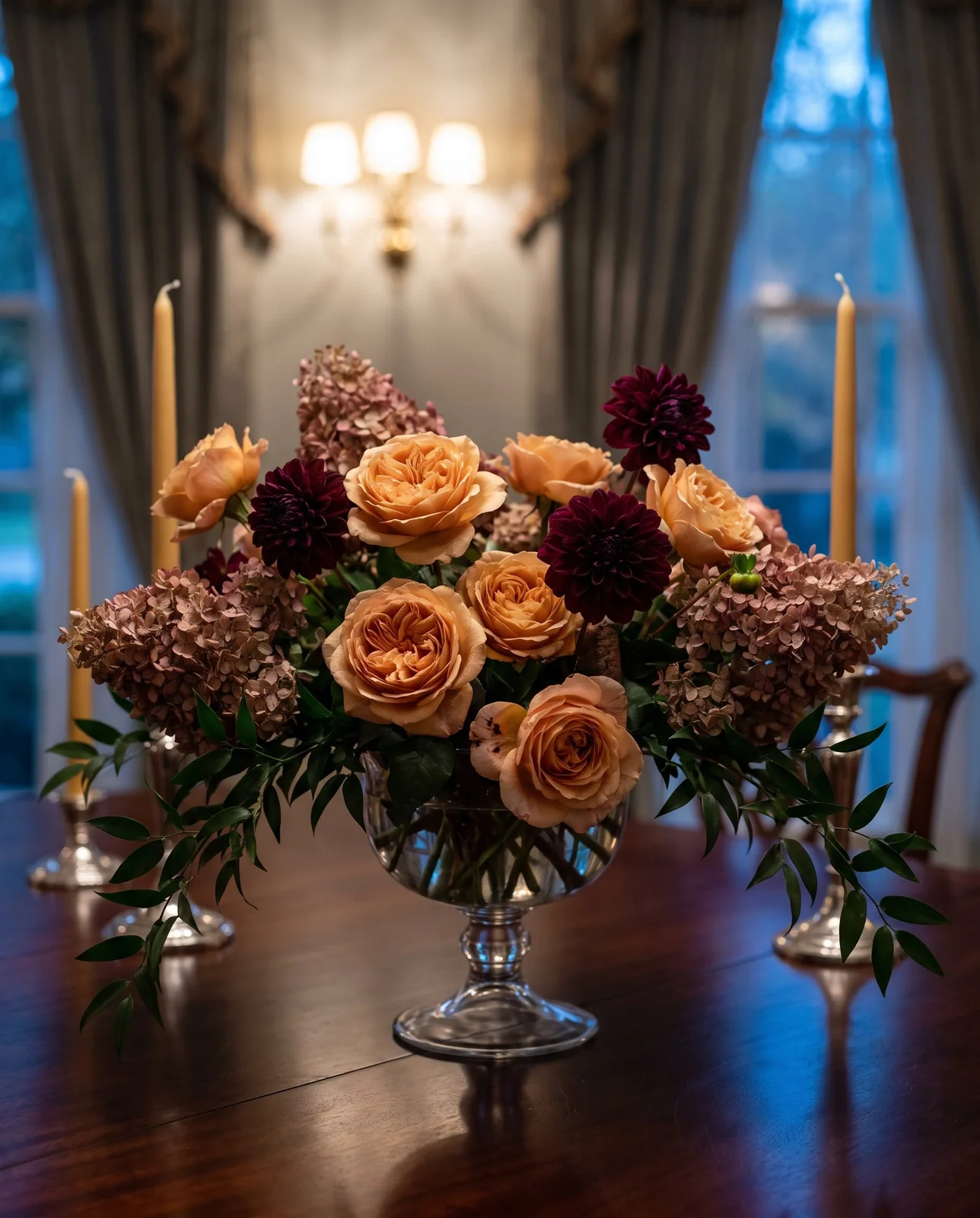
Thanksgiving color runs warm and saturated: deep burgundy, bronze, golden yellow, burnt orange, plum, and copper. Those shades read as late-season foliage and ripening orchard fruit, which is why a bowl of pastels on the same table looks like it wandered in from spring. The one adjustment worth making is a lightener. Under evening dining room light, a scheme built only from dark burgundy and plum goes muddy, so a few stems of cream or dusty peach keep the arrangement legible once the candles are lit. To compare varieties in the copper and bronze end of that range, the guide to orange flowers is the place to look.
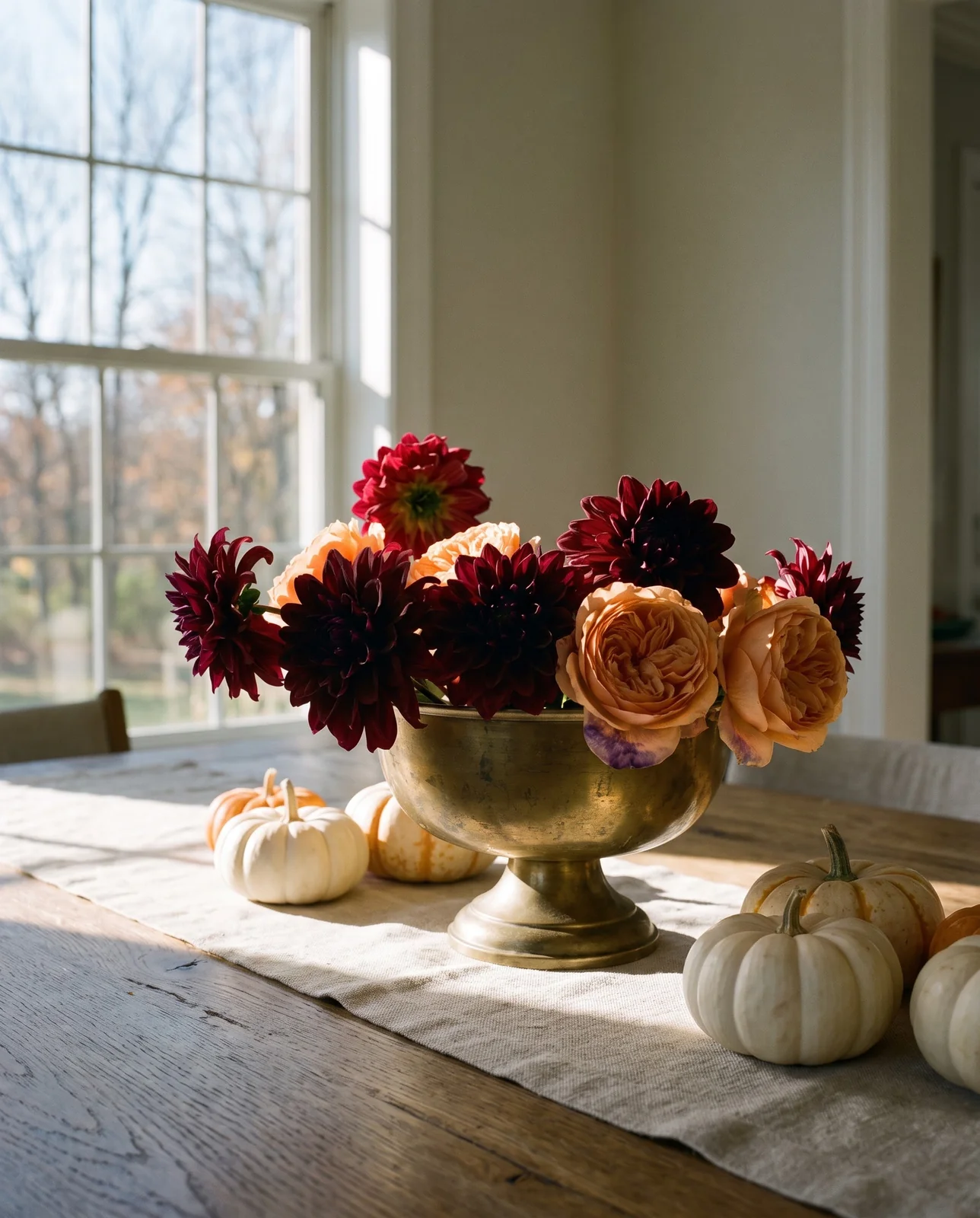
Chrysanthemums do most of the work in a Thanksgiving arrangement: dense petal counts, rust and bronze colorways, and a vase life nothing else on the list matches. Dahlias and full-petaled garden roses supply the broad focal heads that make a home build look like a florist’s, and bronze-tinted hydrangea heads, golden sunflowers, and feathery orange or burgundy celosia plumes fill the space between them. Combining woody branches, filler greenery, and focal blooms in one vessel takes careful stem sorting, because each flower carries its own water requirement. The postharvest floriculture program at NC State University has developed handling recommendations for nearly 300 specialty cut flower cultivars.
Three centerpiece builds by budget
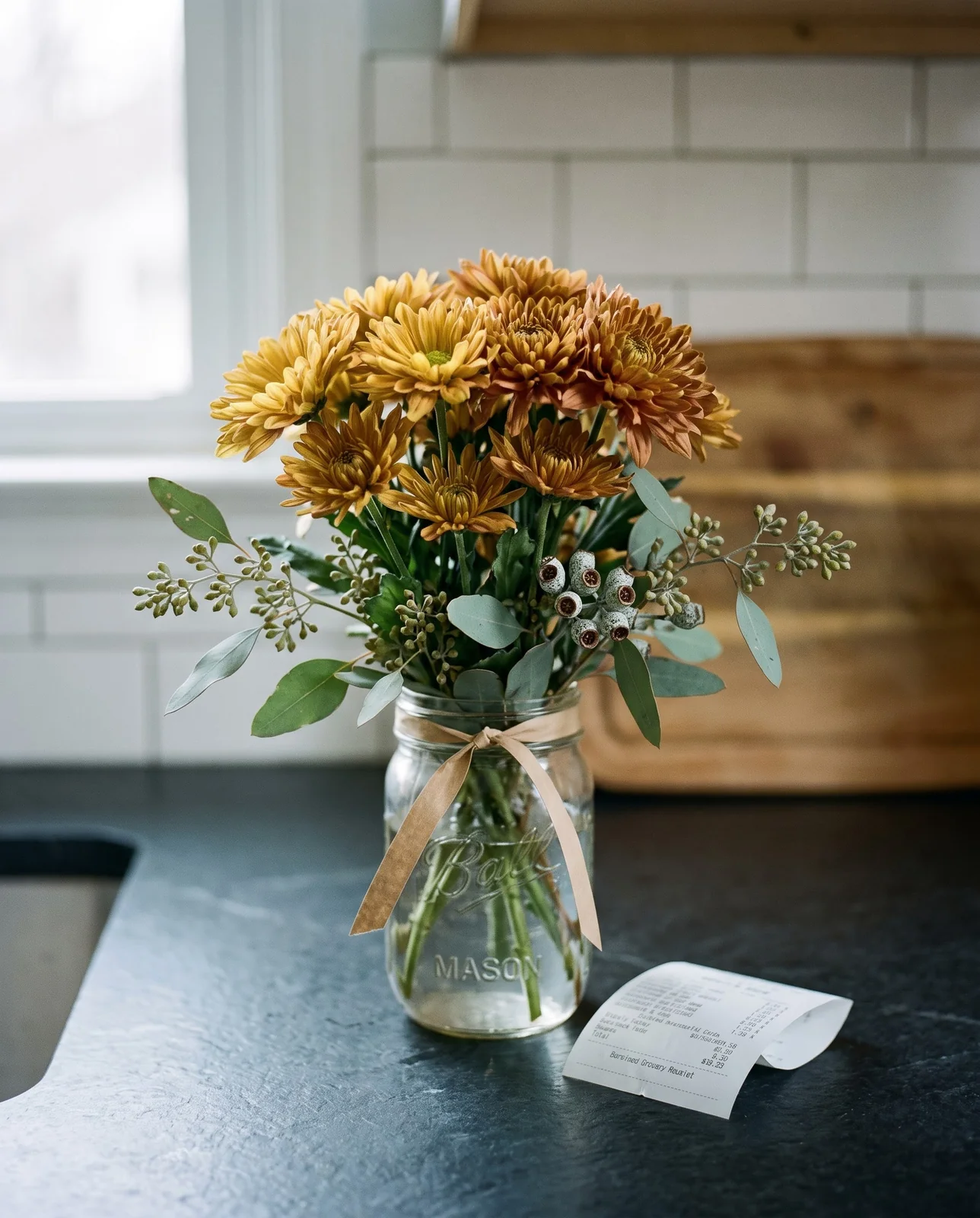
Retail florists commonly ask $90 to $175 for a standard Thanksgiving centerpiece, and compote arrangements pass $200 once holiday delivery surcharges land on the order. The same three looks, built at home from mixed grocery bunches or a flower market run, come in well under half of that.
Thanksgiving centerpiece builds by budget
Three ways to build a Thanksgiving centerpiece, priced from a grocery-store mason jar to a florist-style compote, each checked against what the same look costs from a shop.
Step-by-step DIY assembly protocol
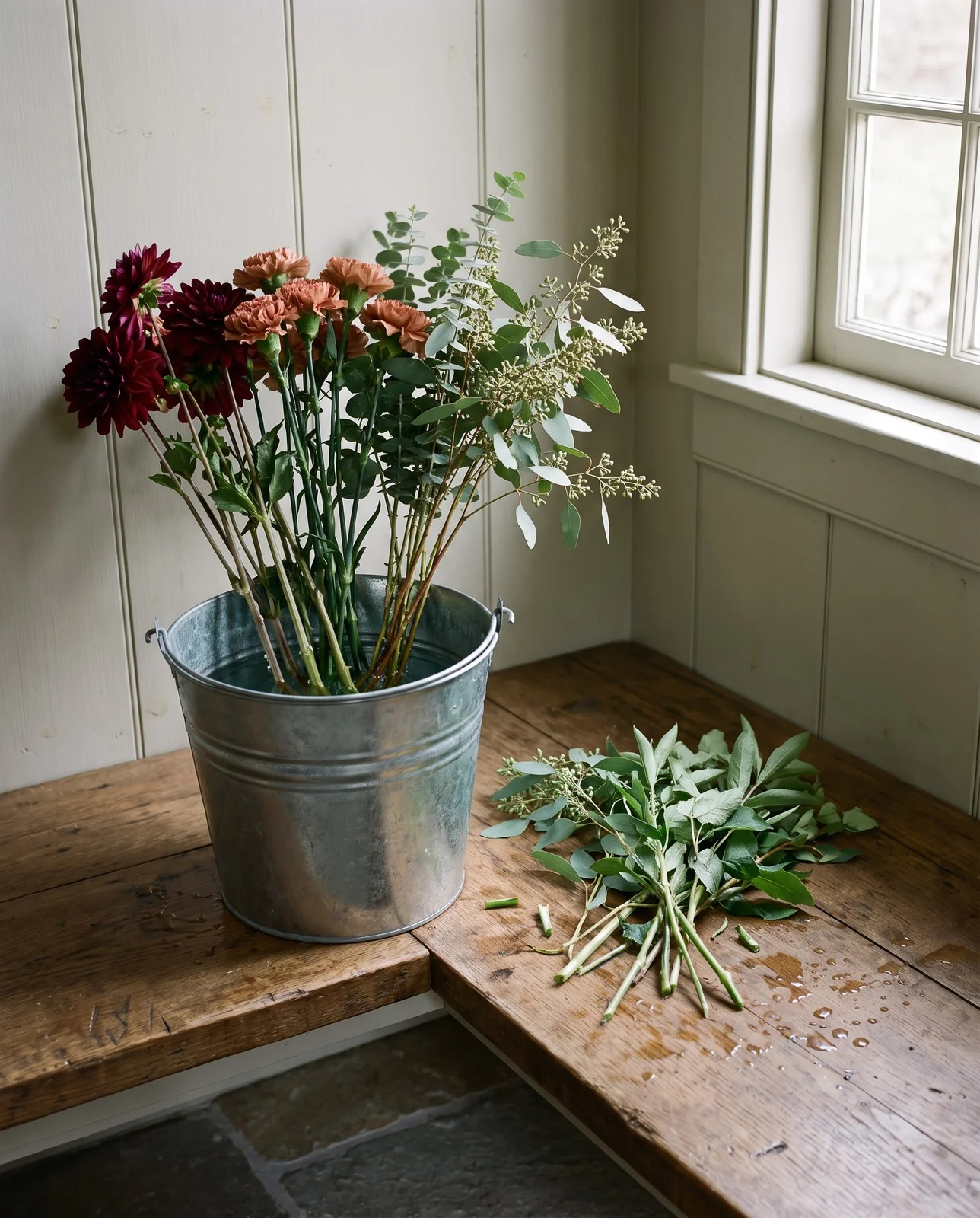
Conditioning is what separates a centerpiece that holds through Saturday from one that flags by dessert. Living plant tissue in a fresh cut flower is at least 95 percent water, as documented by Oklahoma State University Extension, so every step here is about getting water into the stem and keeping it moving. The best cutting window is near sunrise, when stems are fully hydrated, and grocery bunches should come out of their sleeves the moment they reach the kitchen. University of Illinois Extension recommends filling a clean sink or a deep bowl, holding each stem under the surface, and taking at least an inch off the bottom with sharp pruners, because a cut made in open air draws an air bubble into the xylem that blocks uptake from then on. Woody branches and thick rose stems want a clean crosswise cut on the bottom inch. Then move everything into warm water, about 110°F (43°C) and acidic at pH 3 to 4, held in a cool room, which is what pulls that first drink up the stem fastest. Strip every leaf that will sit below the waterline, because submerged foliage rots fast and releases the bacteria that plug stem ends.
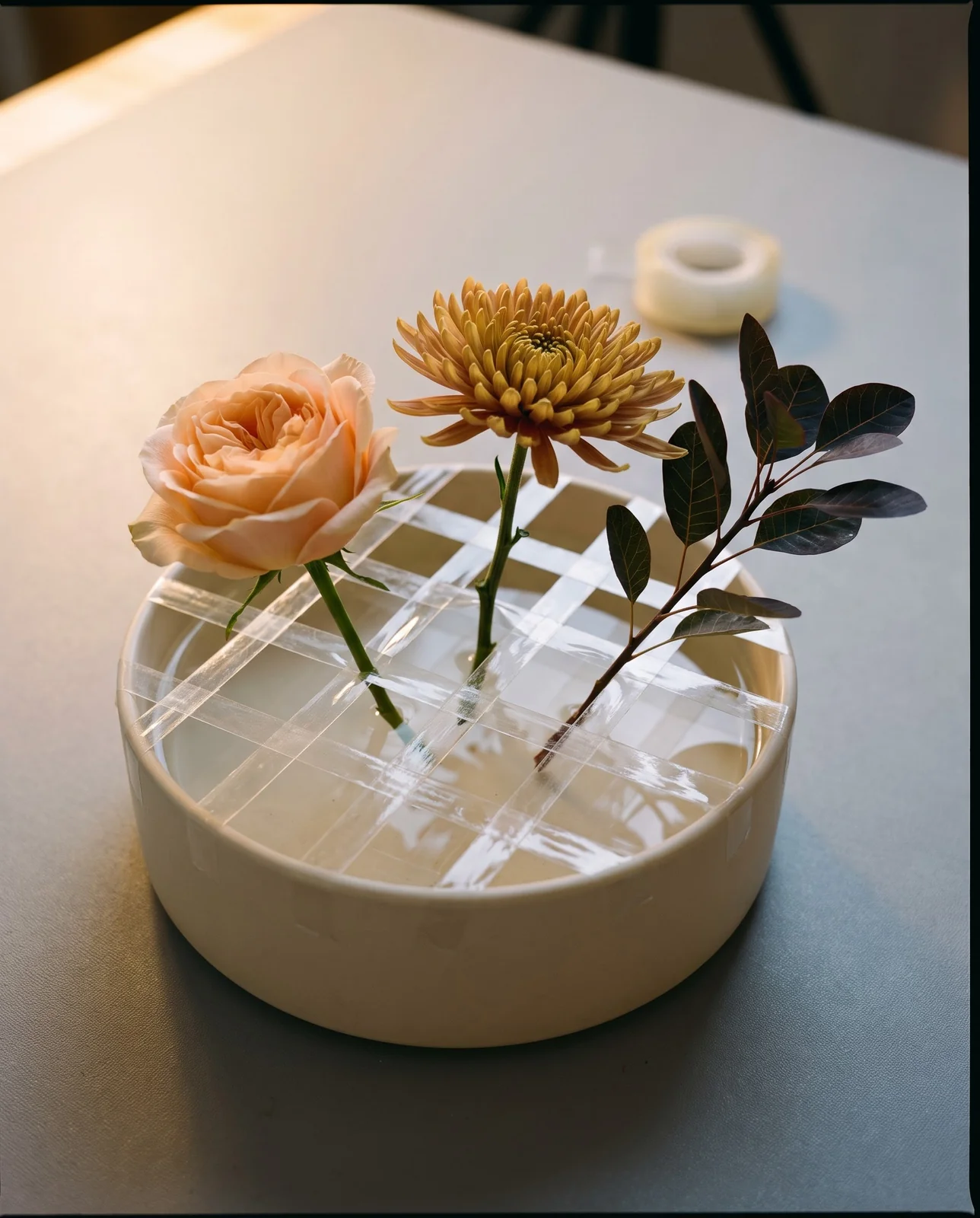
Floral foam is not needed for a table piece and is not worth the mess. Pick a wide container 3 to 5 inches deep, dry the rim completely, and stretch clear waterproof floral tape across the opening in a crosshatch with squares roughly 0.5 to 0.75 inches across. Press the tape ends down over the outside of the rim so the grid does not lift when stems push against it, then fill the vessel three-quarters full with conditioned water. The standard proportion for a vase, flowers about 1.5 times its height, comes from University of Illinois Extension and works everywhere except a dinner table, where sightlines win: keep the finished piece under 10 to 12 inches above the tabletop. Set foliage into the outer squares first to build a collar that hides the rim and the tape. Drop the broad foundation blooms, hydrangea heads or open roses, low into the framework next. Finish with the vertical textures, celosia, mum clusters, berries, spaced across the open center squares rather than bunched in the middle.
Container styles: cornucopia, pumpkin vase, low basket
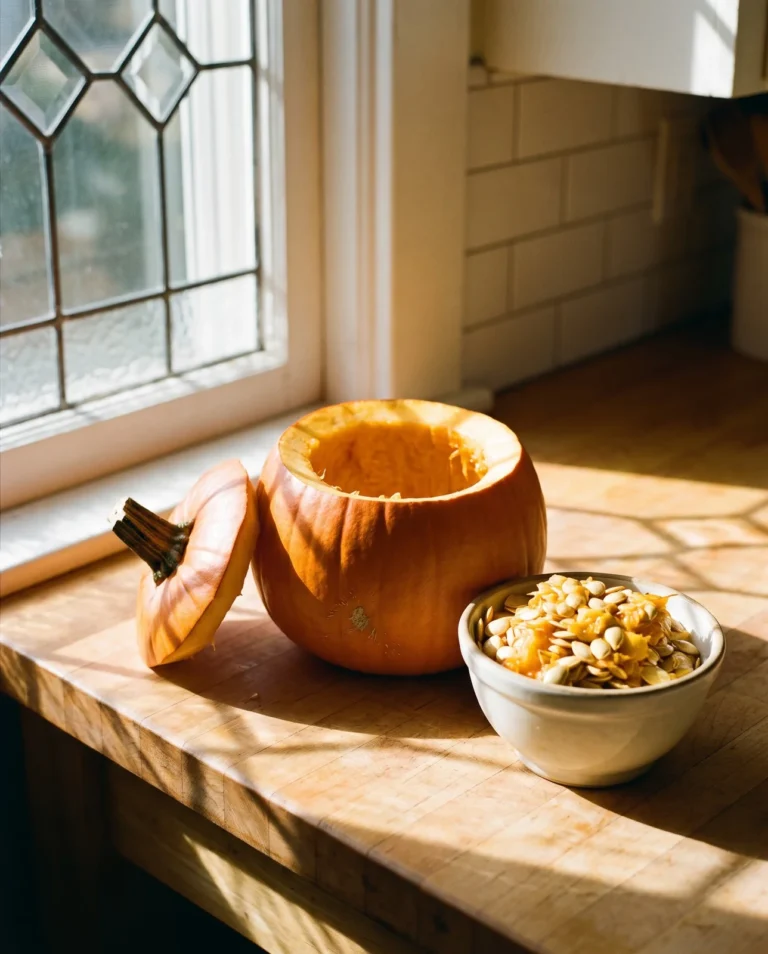
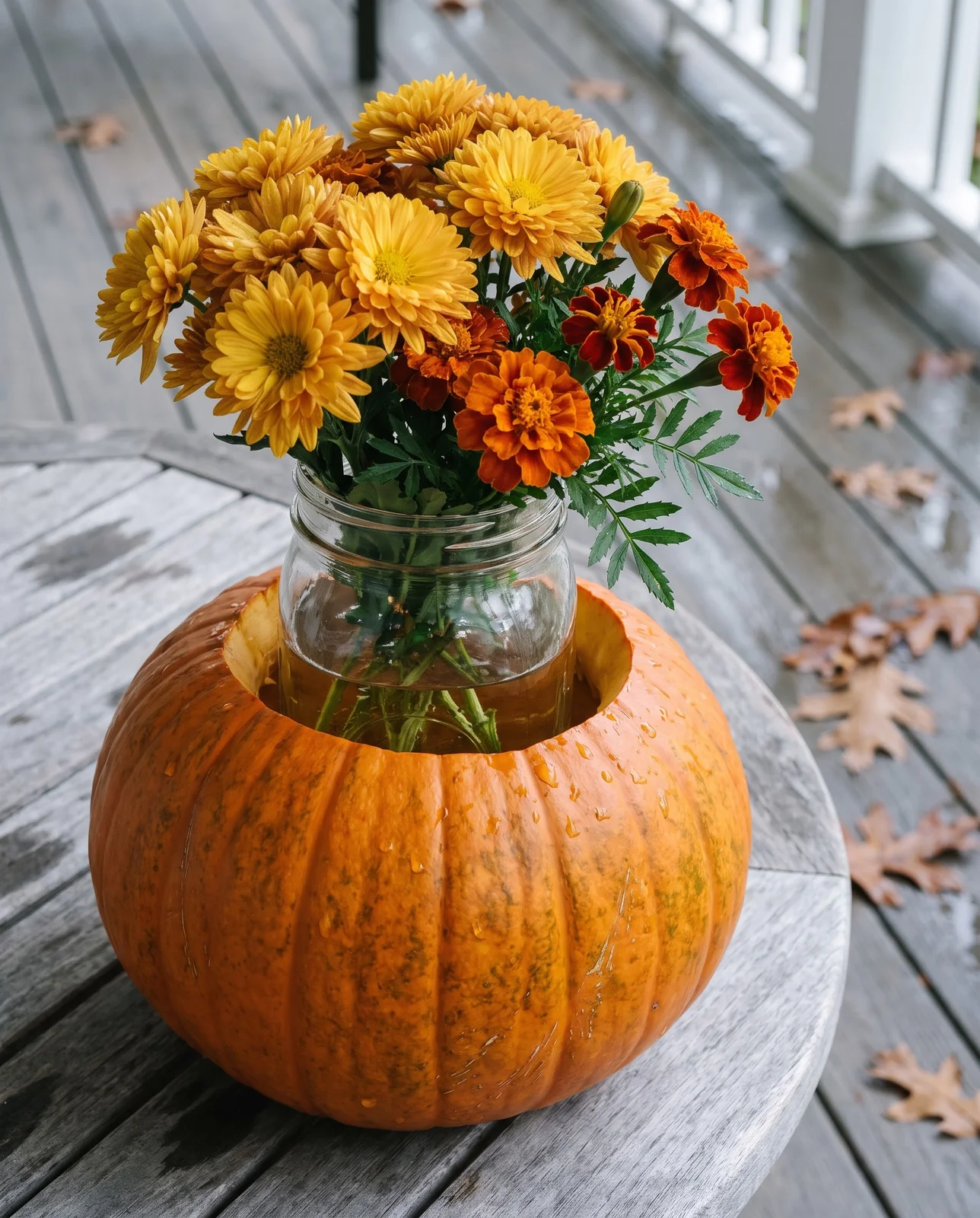
A cornucopia, a hollowed pumpkin, and a low basket all ask for the same thing: a waterproof liner. Britannica traces the motif to ancient Greece, where it stood for abundance and was understood as the curved goat horn of the nymph Amalthaea, nurse to the infant Zeus, which could fill with whatever its owner wished. Woven wicker holds none of that abundance in liquid form, so a narrow plastic liner or a shallow rectangular container slips into the horn opening to carry the water. Sugar pumpkins and flat heirloom gourds work the same way. Raw pumpkin flesh softens and rots where it meets standing water, and the leak reaches the tablecloth before the meal does. Cut off the top quarter, scrape the cavity clean of pulp and seeds, and drop a watertight glass jar or plastic container inside. Water goes in the jar, stems go in the jar, and the carved walls stay dry.
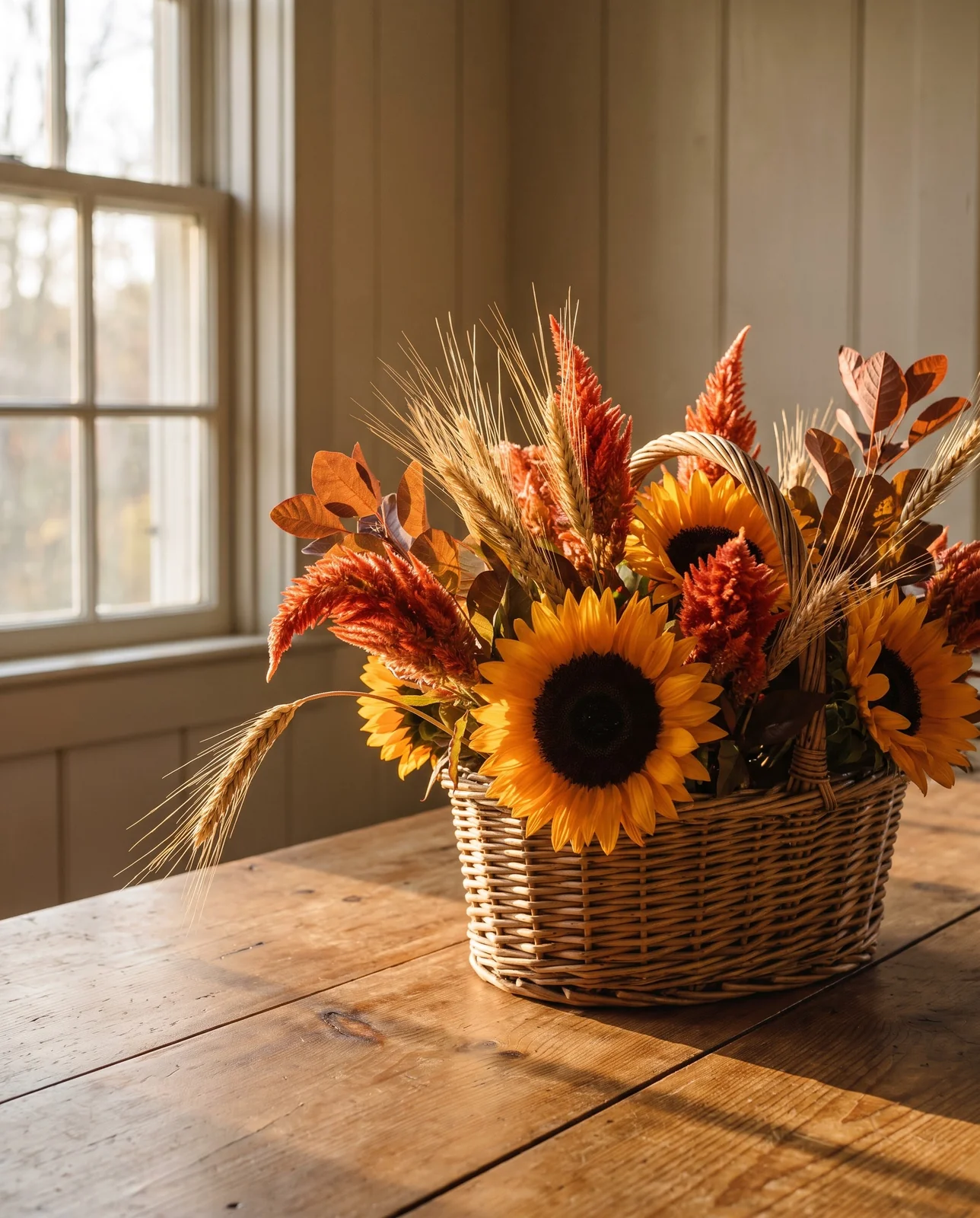
Low ceramic compotes and shallow oval baskets suit a crowded holiday table better than anything tall. A broad base sits the weight low, so the piece survives a platter being passed over it, and a wide mouth lets stems run outward instead of upward, filling a long table without climbing into anyone’s line of sight. A basket needs heavy florist plastic or a shallow plastic tray under the grid before any water goes in, or the weave will wick it straight onto the wood.
Candle safety in a floral centerpiece
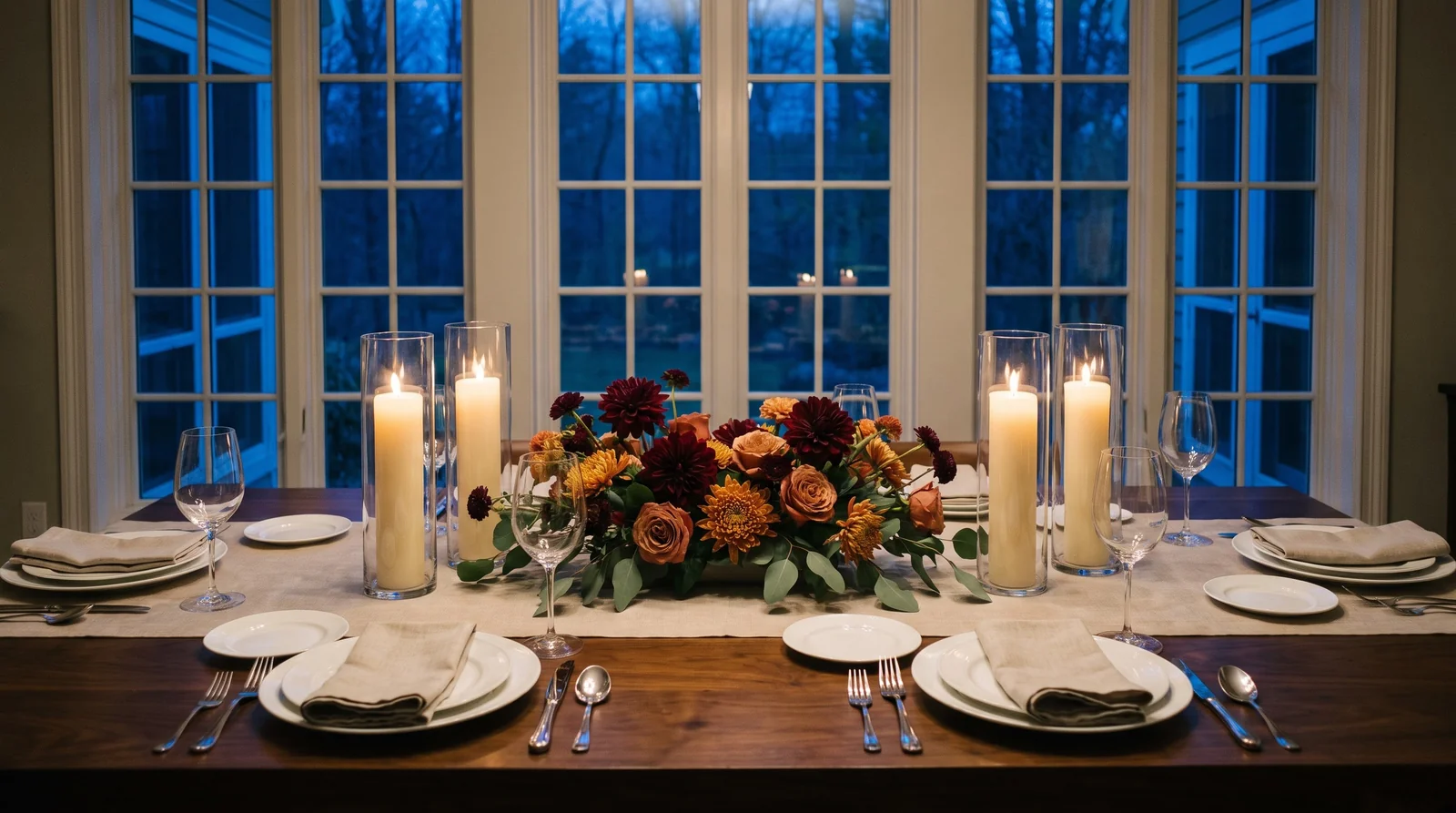
Dry foliage burns. Eucalyptus sprigs, wheat, and any dried element in the arrangement give up more moisture over an evening under a warm chandelier, and a taper burning down toward them is a genuine fire risk. Keep every flame 4 to 6 inches clear of leaves, sprigs, and dried material, and put a candle out before it burns down within 2 inches of any plant material; a taper that reaches the tape grid or the foliage collar has already gone too far. Pillar candles sitting right against the arrangement belong inside tall glass hurricanes, which block drafts and stop a leaf from tipping onto the wick. Then sit down in a dining chair before anyone else does. If a flame or a tall branch lines up with the eyes of the person across from you, the stem gets trimmed or the candle gets moved.
How long it actually lasts (vase-life honesty)
Shop copy tends to promise two weeks from a mixed arrangement. The individual species do not cooperate. University of Illinois Extension puts hardy stems like chrysanthemums and carnations at a full two weeks in a vase, while delicate ones like garden roses and gerbera daisies give less than a week. Dahlias sit at the short end as well, dropping petals and softening at the neck within 3 to 7 days of harvest.
Thanksgiving cut flower longevity and care realities
A mixed centerpiece only lasts as long as its shortest-lived stem. The figures below separate the reliable fillers from the flowers that need to go in last.
A mixed Thanksgiving floral centerpiece will stay fresh for two weeks on the dining table.
The reality: False. The arrangement looks finished when its focal flowers go, not when the last filler gives out: hardy chrysanthemums hold for up to 14 days, while dahlias and garden roses start fading in 3 to 7. Build the base of mums and foliage 2 to 3 days ahead, and add the dahlias or garden roses no earlier than the evening before Thanksgiving.
University of Illinois Extension recommends changing the vase water every two to three days, and right away if it clouds. Cloudy water means bacteria, and bacteria plug the stem ends that are doing the drinking. Softened water is the one supply to avoid outright, and Oklahoma State University Extension rules out chemically softened water at every stage of cut flower handling.
Extension services disagree about what else belongs in the water, which is worth knowing before you reach into the pantry. Iowa State University Extension states that sugar, aspirin, tea, bleach, and pennies all underperform a commercial floral preservative and can shorten vase life, and it advises plain clean water when no preservative packet is on hand. University of Illinois Extension takes the other side: 3 parts cool water to 1 part lemon-lime soda, which supplies sugar and the citric acid that lowers pH, plus 1 tablespoon of household bleach per gallon to hold bacteria down. Neither source is guessing, so pick one approach and stay with it for the week. Plain water changed every 48 hours is the safe default if measuring bleach into a dinner-table centerpiece holds no appeal.
Timeline: DIY vs. ordering, counted back from Thanksgiving (November 26, 2026)
The point of counting backward is that the fragile flowers and the durable ones do not go in on the same day. A florist order runs on a different clock, where the only real deadline is the shop’s holiday cutoff and the safest move is to book early.
The week before Thanksgiving: DIY build vs. florist delivery
For a Thanksgiving Day target of November 26, 2026, the DIY build starts a week out. On Thursday, November 19, gather the vessel, the waterproof floral tape and the scissors, and measure the dining table. Buy grocery stems and greenery on Tuesday, November 24, two days out; cut them underwater, strip the lower foliage, and stand everything in deep buckets of cool water. On Wednesday, November 25, tape the grid across the container, assemble the foliage, chrysanthemums and filler branches, and hold the piece in a cool room overnight. On Thanksgiving morning the fresh focal dahlias or garden roses go in last, the container gets topped off with water, and the arrangement moves to the dining table. Two days later, on Saturday, November 28, check the water level, pluck the spent dahlia petals, and pour fresh water for the chrysanthemums that are still going.
A florist order runs on a longer clock. Place it two weeks out, on Thursday, November 12, to hold a holiday delivery date. Monday, November 23, three days before Thanksgiving, is the last call for standard pre-orders and the moment to confirm the delivery address and contact details. Wednesday, November 25 is the delivery day to ask for: unbox on arrival, look the stems over, and give the florist’s container fresh water. On Thanksgiving Day itself the arrangement moves to the dining table, with candle clearances and sightlines checked before guests sit down.
Temperature governs how fast that countdown runs. Iowa State University Extension puts short-term holding at 40°F to 60°F for flowers that will not be displayed straight away, and drops that to 33°F to 35°F for anything waiting more than a day or two. The gap matters more than it looks: Oklahoma State University Extension reports that stems held at 41°F can deteriorate up to four times faster than the same stems at 32°F, so cooling early buys days later. Aim for relative humidity above 90 percent and below 100, high enough to stop moisture loss and short of the saturation that invites botrytis.
Keep the conditioning buckets away from the fruit bowl. Ethylene at 100 parts per billion, one hundred-thousandth of a percent of the air, is enough to damage sensitive flowers, triggering rapid petal drop and premature wilting; apples, pears, and bananas ripening on a holiday counter put out plenty of it. A cool mudroom, laundry room, or unheated garage keeps the stems well clear of the produce.
What not to forage: invasive and toxic material
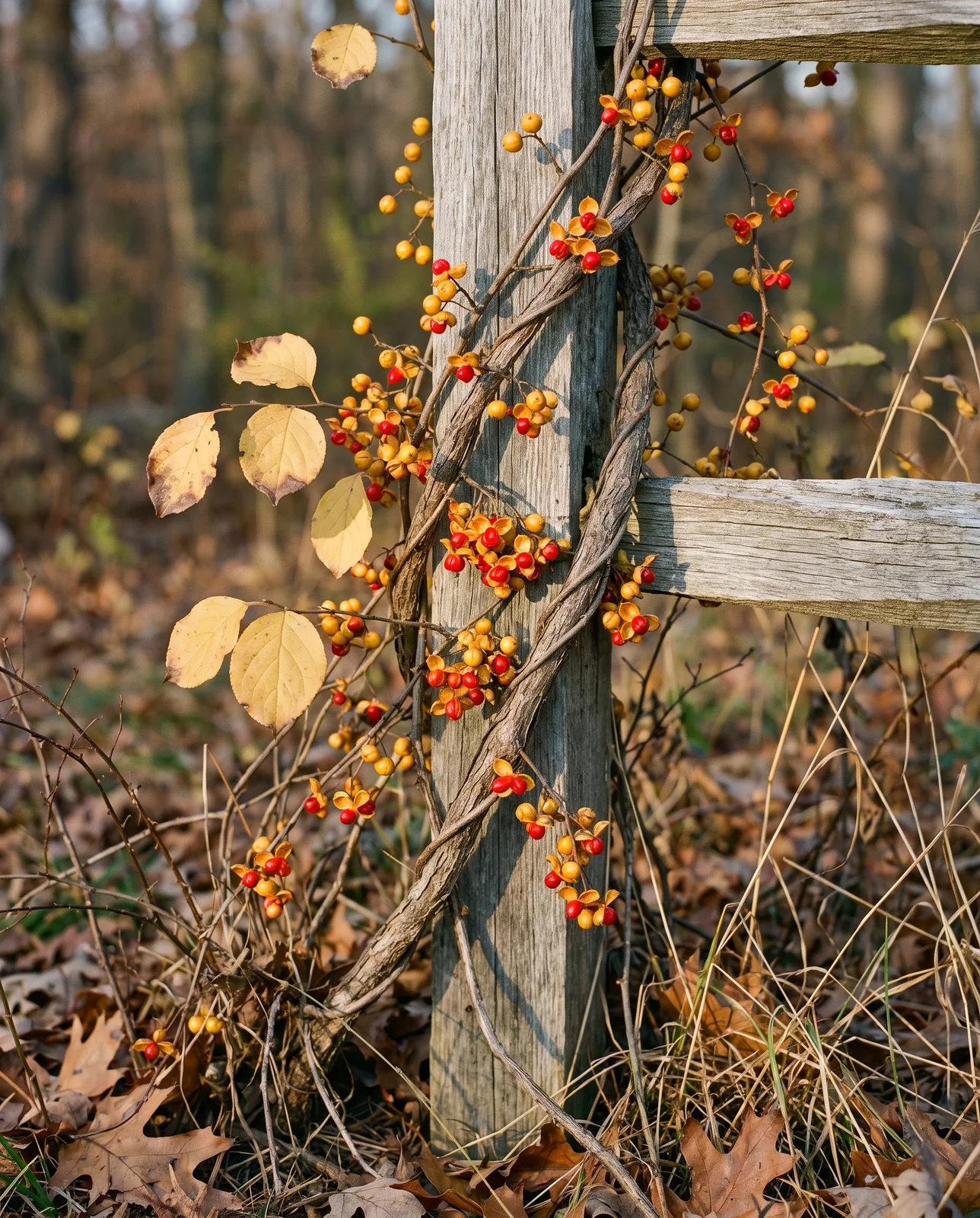
Free material off a fence line is the cheapest texture in any fall arrangement, and one common pick should stay where it is. Oriental bittersweet (Celastrus orbiculatus) hangs its bright orange and red berries along roadsides across eastern North America and gets gathered widely for fall arrangements. University of Maryland Extension classes it as an aggressive invasive species, introduced in the mid-1800s for ornamental planting and erosion control, whose climbing stems reach 60 feet or more up a tall tree and choke out the native canopy underneath.
Cutting it for home decor is part of how it travels: trimmings that are not disposed of properly drop seed where they land, and the vine regrows from a cut stump or from root pieces left in the ground. Telling it from native American bittersweet (Celastrus scandens) takes one look at the fruit. The oriental species carries 3 to 7 fruits per cluster scattered along the leaf axils, while the native carries clusters of more than 7 held at the branch tips. Its berries are toxic if a pet or a child swallows them.
For safe texture, cut bare native winterberry holly (Ilex verticillata), dried oak branches, or the seed heads of garden perennials instead. If bittersweet is already in the house, keep it indoors and away from pets. When the centerpiece comes apart after the holiday, seal every cutting and berry inside a heavy plastic trash bag for landfill pickup. Compost piles, brush piles, and yard waste bins are how the next thicket starts.
FAQ
How much does it cost to make your own Thanksgiving centerpiece?
Between $10 and $60, depending on what goes into it. A mason jar of grocery store chrysanthemums and greenery runs about $10 to $20, while a larger basket or ceramic compote with garden roses and textural fillers runs $40 to $60. Professional florists charge $90 to $175 for holiday centerpieces of comparable size.
Can I use a real pumpkin as a vase without it leaking?
Yes, as long as a watertight glass jar or plastic cup goes inside the carved cavity. Raw pumpkin flesh softens and leaks where it meets standing water. Scrape out the seeds and interior pulp, fit a snug glass liner, and pour water into the liner only, never into the shell.
Do I need floral foam to keep Thanksgiving centerpiece stems in place?
No. Waterproof floral tape stretched in a 0.5-inch crosshatch grid across the dry rim of a shallow bowl or compote dish holds stems at any angle, lets you top off the water without dismantling anything, and leaves no single-use foam block to throw away.
When should I buy fresh flowers for Thanksgiving dinner?
Buy your grocery stems on the Tuesday before Thanksgiving, two days ahead. That leaves 24 hours to recut the stems and condition them in deep buckets of cool water so they go into the arrangement fully hydrated. Assemble the taped greenery and the hardy mum base on Wednesday, then add fragile focal flowers like dahlias or garden roses on Thanksgiving morning.
How do I prevent a Thanksgiving centerpiece from blocking conversation at the table?
Keep the finished arrangement under 10 to 12 inches from the tabletop to the highest bloom. Use a container 3 to 5 inches deep and trim the stems so they sit close to the rim in a wide, horizontal spread. Then sit down in a dining chair and look across: if you cannot see the eyes of the person seated opposite, the center stems are too long.
More About Occasion flowers
Diwali flowers: marigold garlands and DIY toran
Dia de los Muertos flowers and what each bloom means
Halloween flowers: real black blooms and safe DIY builds
Homecoming corsage and boutonniere guide
Fall bouquet from your garden: what to cut and how
Fall wedding flowers by month, color, and budget
Friendship flowers
Thank you flowers
Get well flowers
Enjoying our flower guides? Add YourFlowersGuide as a preferred source on Google. It helps more readers find us.
Add to Preferred Sources