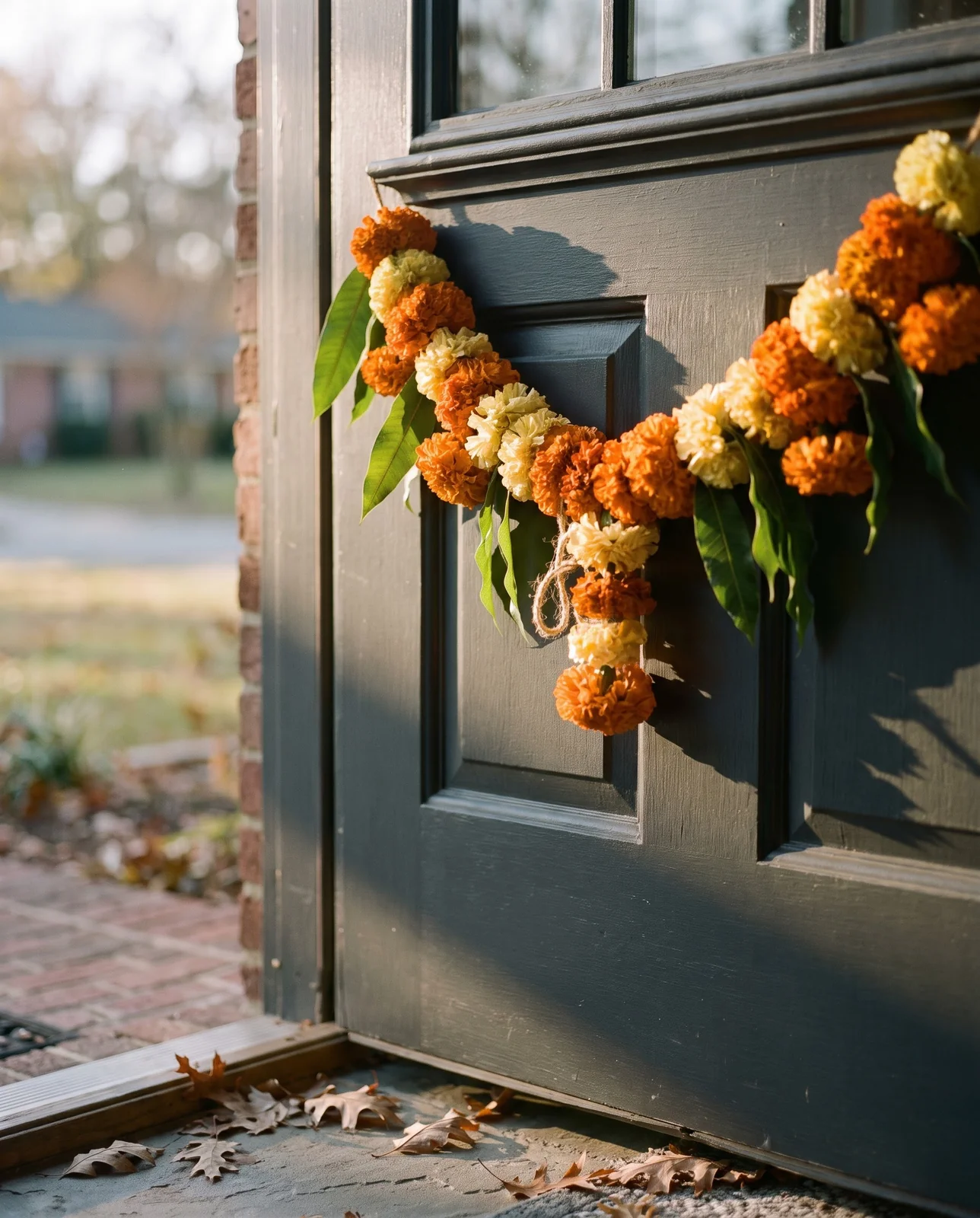
Diwali flowers are led by the marigold, strung head to head into the door garland called a toran, and by the lotus, the flower Goddess Lakshmi is shown seated on in classical images. Roses and jasmine fill in around them at the altar. The festival runs five days in late October or early November, with the main day, Lakshmi Puja, at its center. Marigold does most of the visible work: on the doorframe, in the floor pattern at the threshold, in bowls on the table, and at the altar itself.
The hard part in the United States is rarely the craft. It is the flowers themselves. Fresh marigold heads by the box are ordinary in South Asia and scarce in most American towns, and a strand cut away from its stems dries out quickly once it hangs in a heated house. Both problems have answers, and neither answer means paying florist prices for imported blooms. What follows covers what each flower means and why marigold and lotus carry the festival, how the five days fall and which one is the decorating day, a toran you can string in half an hour, a petal rangoli for the threshold, centerpieces at three budgets, where fresh marigolds actually turn up in the US, how long a strung garland holds, and a day by day flower schedule.
On this page 9 sections
What Diwali flowers mean
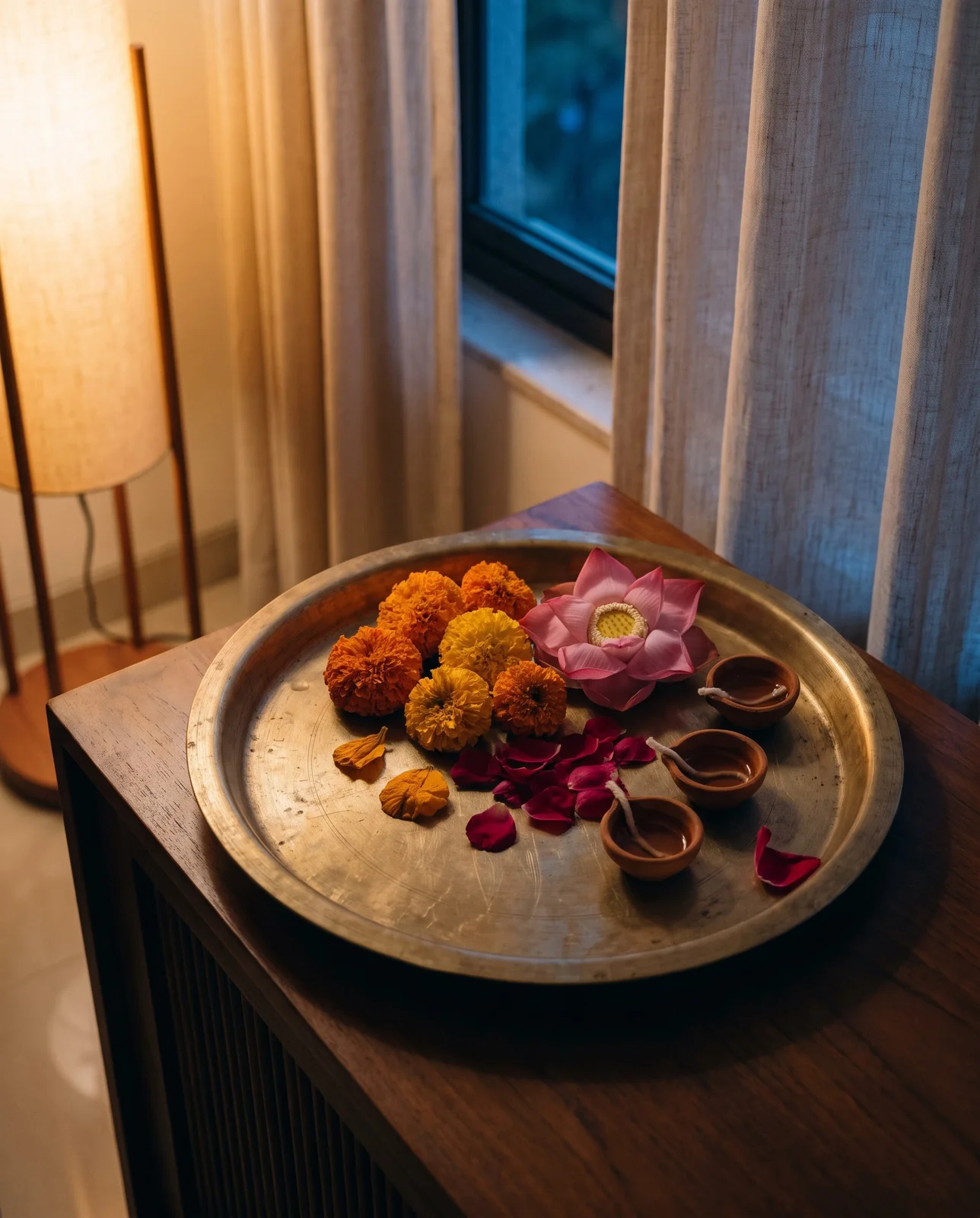
In Hindu worship, presenting fresh blossoms is a formal act. Classical texts count it among the sixteen upacaras, the services of hospitality offered to a deity, and Clemson University researchers writing on the fall festival season describe Indian flower markets flooding with freshly cut marigold, rose, and lotus ahead of Diwali, Dussehra, and Durga Puja. At a home puja the blossoms are laid on the altar at the feet of the sacred image, with the stems turned toward the worshiper as a sign of submission. Garlands and loose petals are offered to Ganesha, the remover of obstacles, to Durga, and above all to Lakshmi, goddess of wealth and auspiciousness, who visits homes lit with oil lamps in her honor.
The marigold (Tagetes erecta) carries the visible weight of the festival. It stands for success, prosperity, and favorable outcomes, and its deep golden and saffron tones signify surrender to a higher power. Its standing reaches past a single deity: the Shiva Purana tells anyone who wants wealth to worship Shiva with petals of marigold, chrysanthemum, or lotus, and holds that a hundred flowers offered this way multiply prosperity and wash away accumulated spiritual debts. Jasmine has its own rank, since for the worship of Vishnu the Skandha Purana sets the sweet jasmine flower above every other bloom. The lotus belongs to Lakshmi more literally. Classical iconography seats her on an expanded lotus throne with a blooming lotus in her hand, and the flower itself stands for purity, fortune, and spiritual enlightenment, which is what the lotus flower meaning makes plain: fresh lotus or golden marigold on the altar is the spiritual heart of the festival.
When Diwali falls in 2026 and why it matters for flowers
Diwali follows the lunar calendar, so its five days land in late October or early November. The main day, Lakshmi Puja, is when families gather at dusk for prayers, sweets, and the lighting of clay oil lamps. That calendar matters for flowers because a marigold behaves in two different ways depending on whether it still has its stem. Whole stems standing in clean water hold their freshness for a week or more. A head cut off at the calyx and threaded onto a string has no water reaching it at all, and it begins drying the moment the furnace comes on.
The second day, Naraka Chaturdashi, usually called Choti Diwali, falls on Saturday, November 7 and serves as the decorating day in most households. Stringing door torans and altar garlands on Saturday afternoon, then laying the petal rangoli, puts every petal at its crispest for Sunday evening. Flowers bought earlier, on Dhanteras, Friday, November 6, stay in prime condition until assembly if they go into cold storage as soon as they come home.
DIY marigold toran, step by step
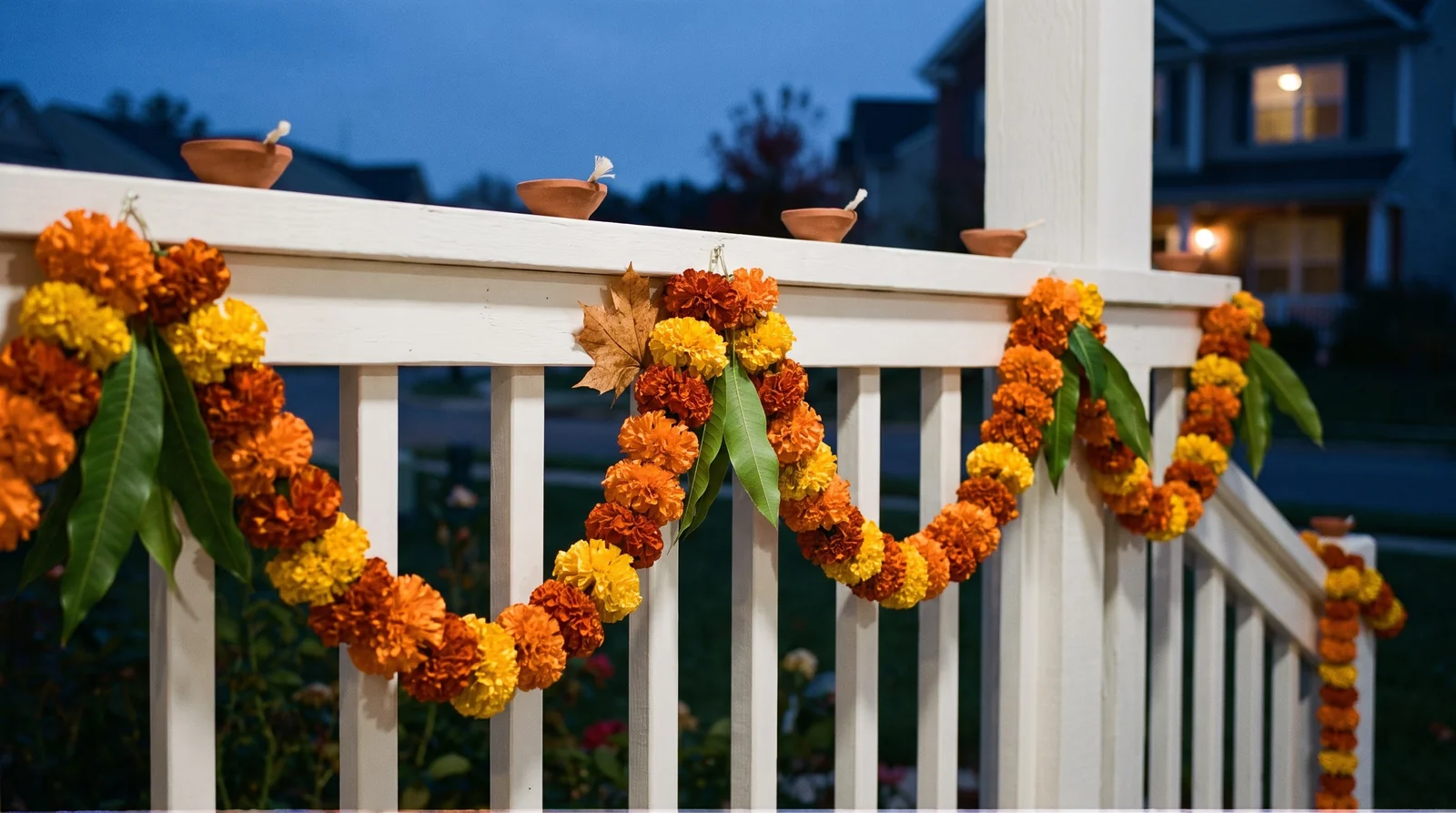
A toran is a decorative hanging strung across the top of a doorway, at the entrance of a house or in front of a home shrine, put up to welcome divine energy, good fortune, and visiting family. The flowers do the work here, and their condition decides how the finished strand looks. Mississippi State University Extension, writing for cut-flower growers, puts the harvest point for cut marigolds at the moment the petals start to open, which is also the point at which a head is firm enough to take a needle without bruising or shedding its rays. Heads of roughly the same size, about three inches across, string into an even strand that hangs flat against the doorway woodwork, while a mix of sizes reads as uneven.
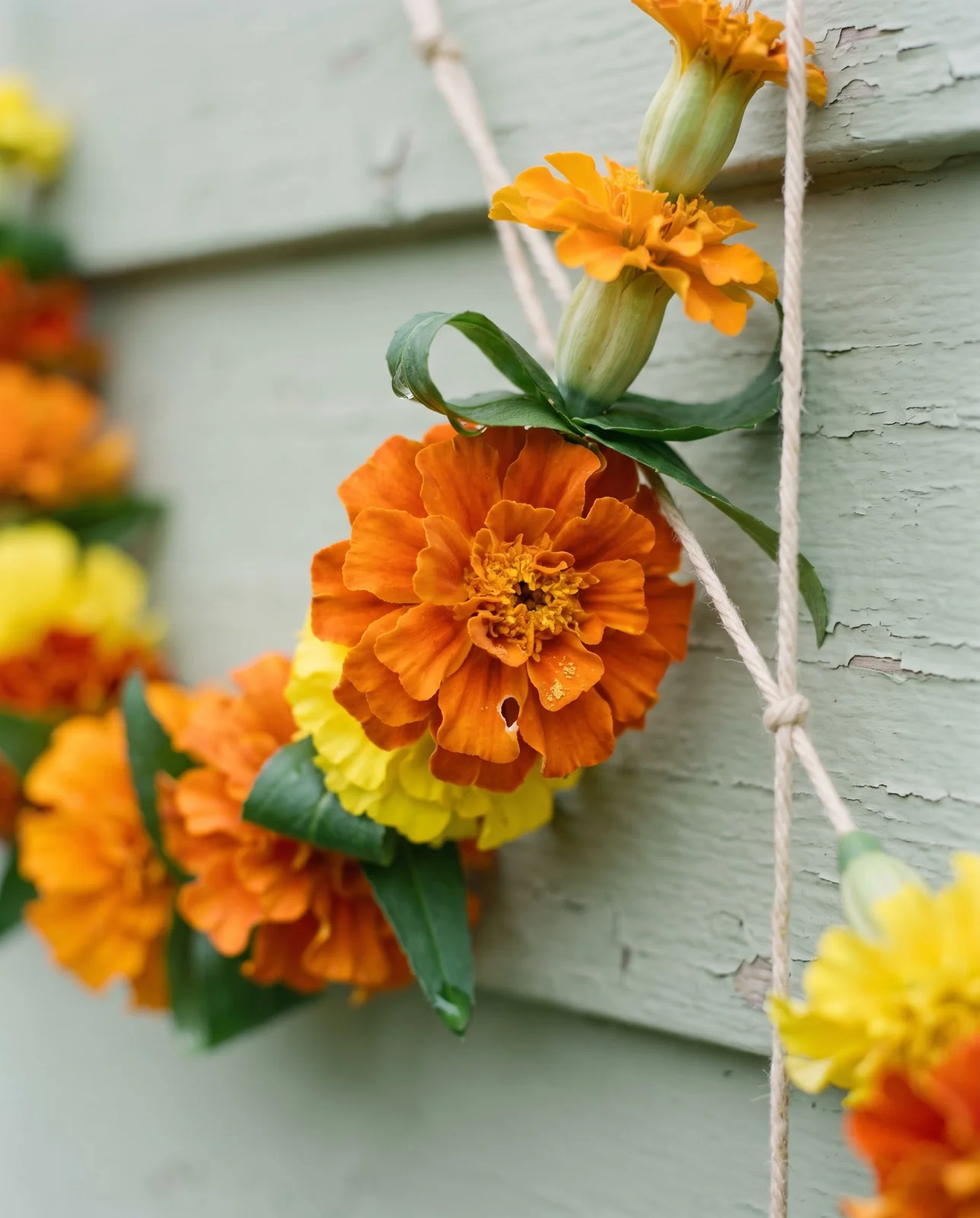
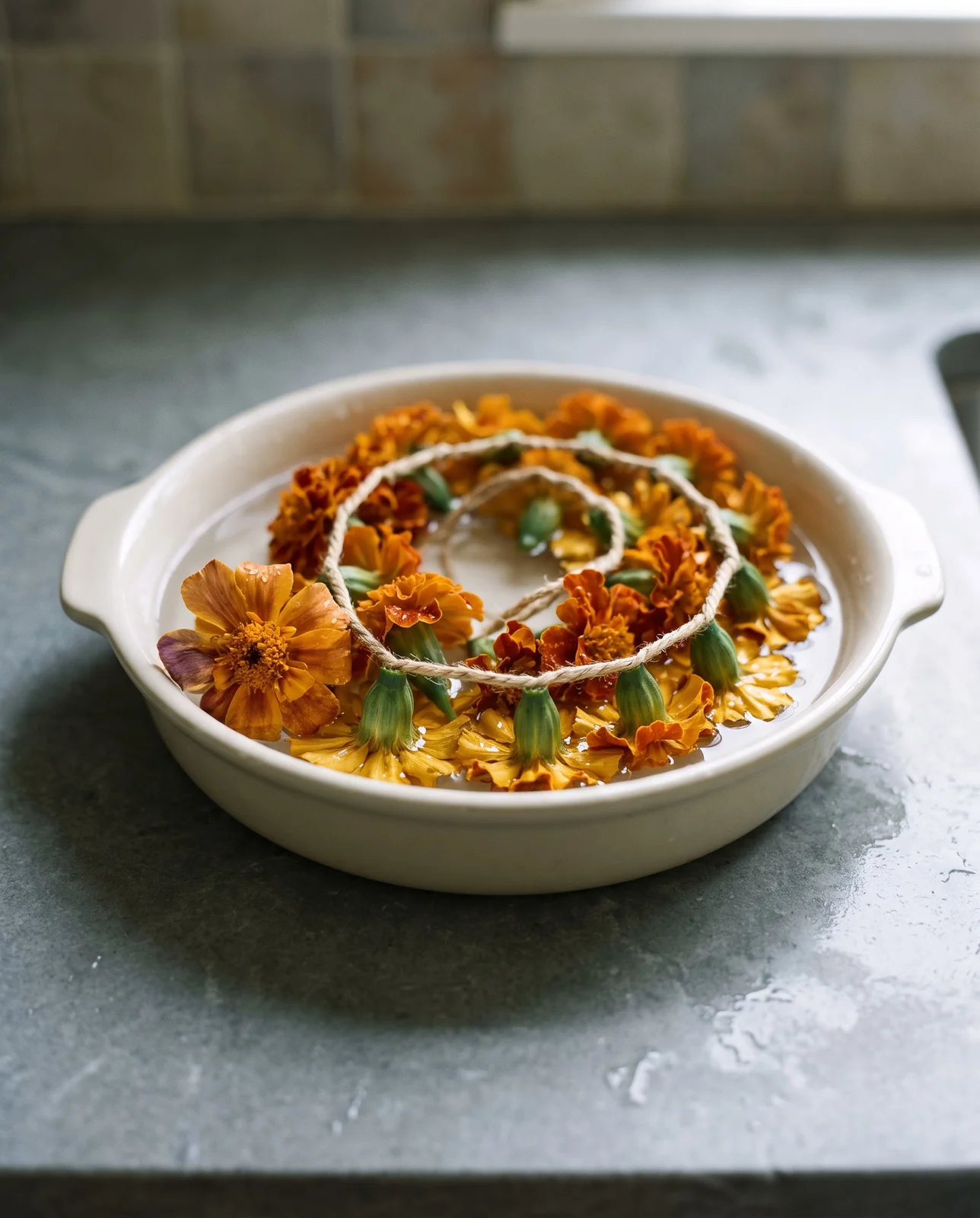
A door toran four to five feet wide takes forty to sixty fresh heads, a spool of heavy cotton craft thread or unflavored dental floss, a large two-inch embroidery needle, and sharp trimming shears. Fresh green mango or citrus leaves, if you can get them, go in between every third or fourth bloom for traditional color contrast. Thread the needle with a doubled length, leaving six inches of line spare at each end for mounting loops. The detail worth knowing before you start is where the needle goes: through the dense green calyx at the base of the head and straight up through the center of the bloom, never through the petals, which tear and pull loose under the weight of a full strand.
Assembling a traditional fresh marigold door toran
A fresh marigold door toran takes 25 to 35 minutes and suits a beginner. The materials are 40 to 60 fresh marigold heads about 3 inches wide, heavy cotton thread or unwaxed dental floss, a 2-inch dull or embroidery needle, sharp floral snips, and 8 to 12 fresh mango leaves as an optional accent.
Flower-petal rangoli, simplified
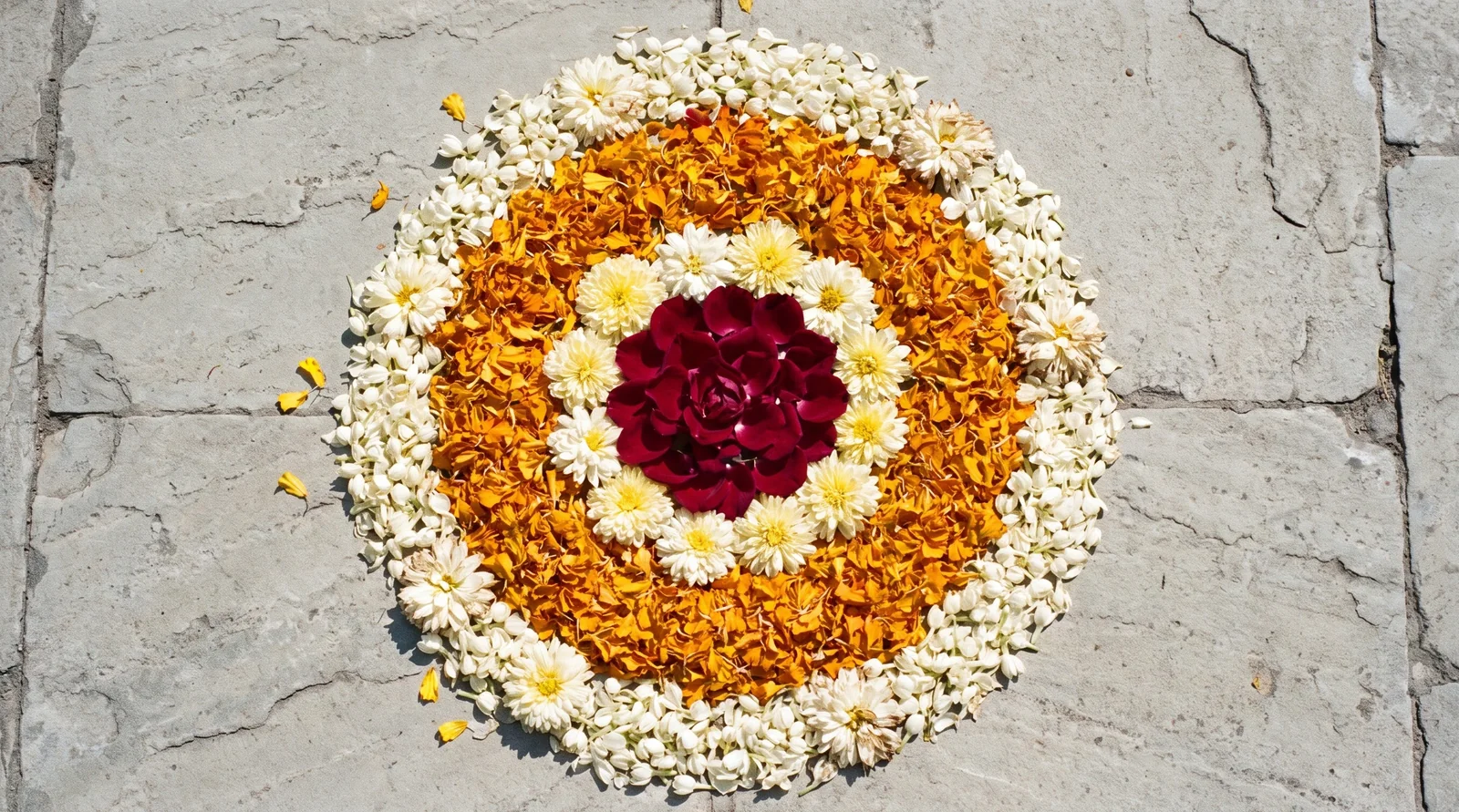
A flower-petal rangoli is a geometric pattern laid directly on the floor at the entrance or around the central puja altar, built from loose petals rather than the colored mineral powders or synthetic dyes used for the drawn version. Those powders and dyes stain flooring and usually call for a detailed stencil to come out crisp. Petals need neither, and they sweep up at the end of the evening. The pattern is also the natural home for everything left over from a stringing session: broken blooms, detached marigold florets, and stems too short to use.
Outline a circle or a simple radial figure on a clean porch or foyer floor with chalk or a strip of light masking tape. Sort the petals into bowls by color before you start: orange and gold stripped from African marigolds, crimson from fresh cut roses, white from carnations or chrysanthemums. Set a focal element at the center, an unbroken symmetrical double marigold head or a small unlit clay diya, then work outward in concentric rings, packing petals tight along the guide lines so each color band keeps a hard edge. An eighteen-inch circle takes under twenty minutes.
Centerpieces and table displays, by budget
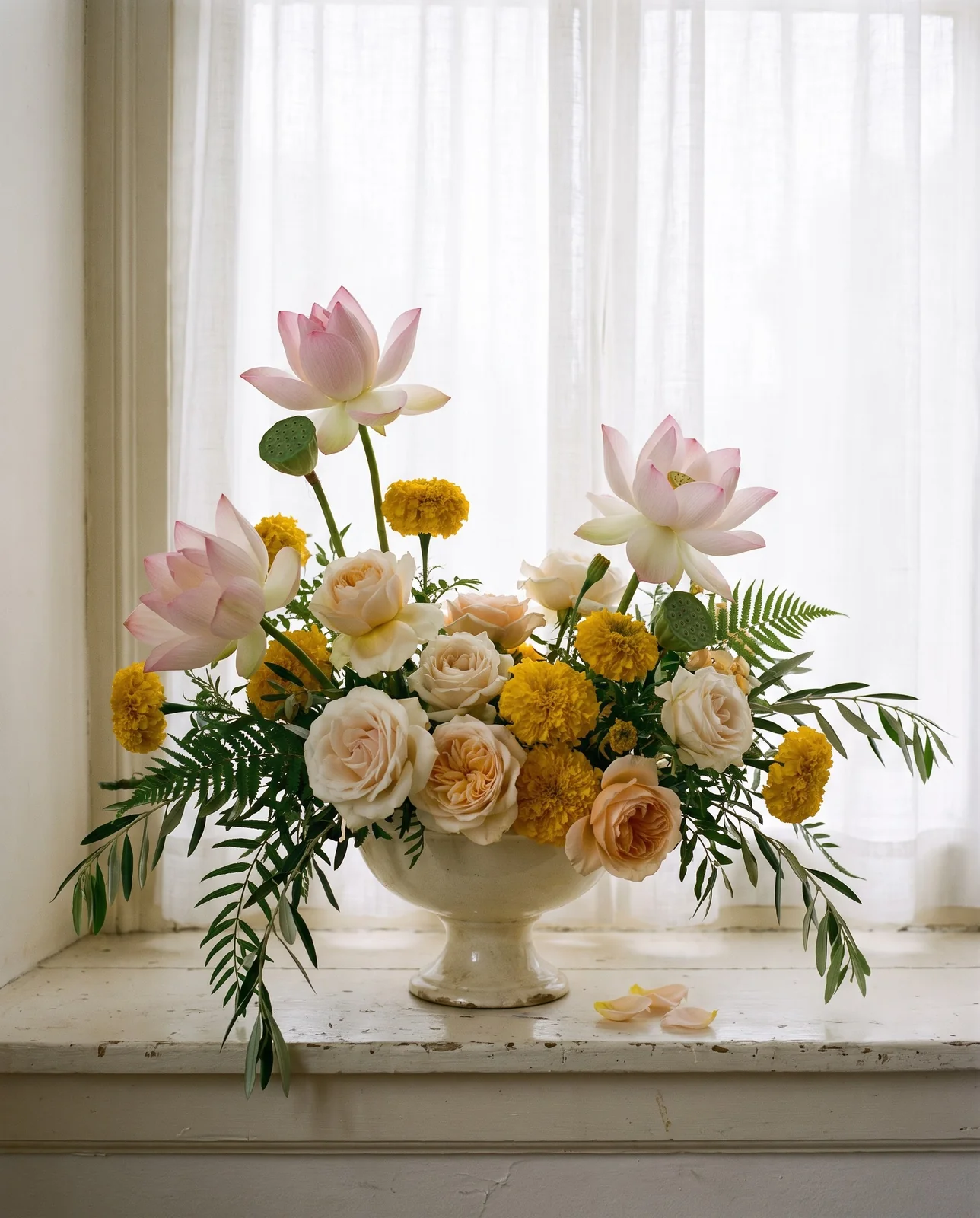
Diwali runs on shared meals and festive sweets, which makes the table the second place flowers do real work after the door. The palette is what makes a centerpiece read as festive: saffron, yellow, deep red, gold, and enough water or polished metal in the arrangement to pick up candlelight. None of that depends on expensive imported blooms. The same effect comes out of a supermarket floral department when the colors are right.
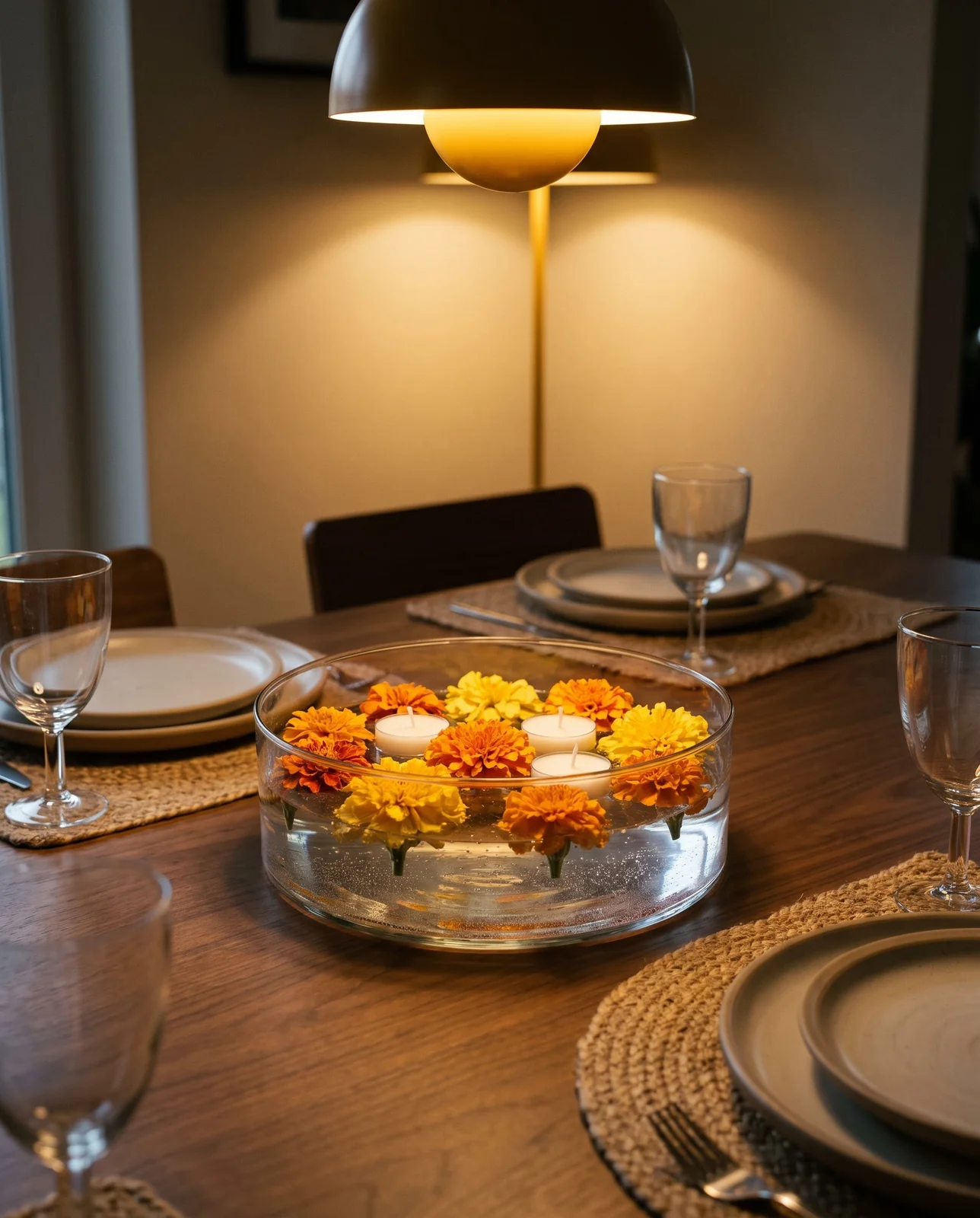
At the low end, floating heads give the most for the least. Trimmed marigold heads in a wide shallow glass bowl with floating tea lights among them mirror the offering vessels used in temples. With more to spend and a decent grocery store nearby, double-flowered chrysanthemums in bronze, amber, and gold mixed through fresh marigolds fill out a low arrangement with a density the marigolds alone do not have. At the top of the range, lotus blooms or lotus-form dahlias with deep crimson roses and a strung marigold garland coiled around the base of a polished brass urli turn the table into the focal point of the room.
Diwali floral centerpieces across three budgets
Three centerpiece builds span a wide price range, from a floating bowl assembled in minutes to a brass urli with lotus and heritage roses. Vessel and flower count move the price; the technique stays much the same at every tier.
Where to find Diwali flowers in the US
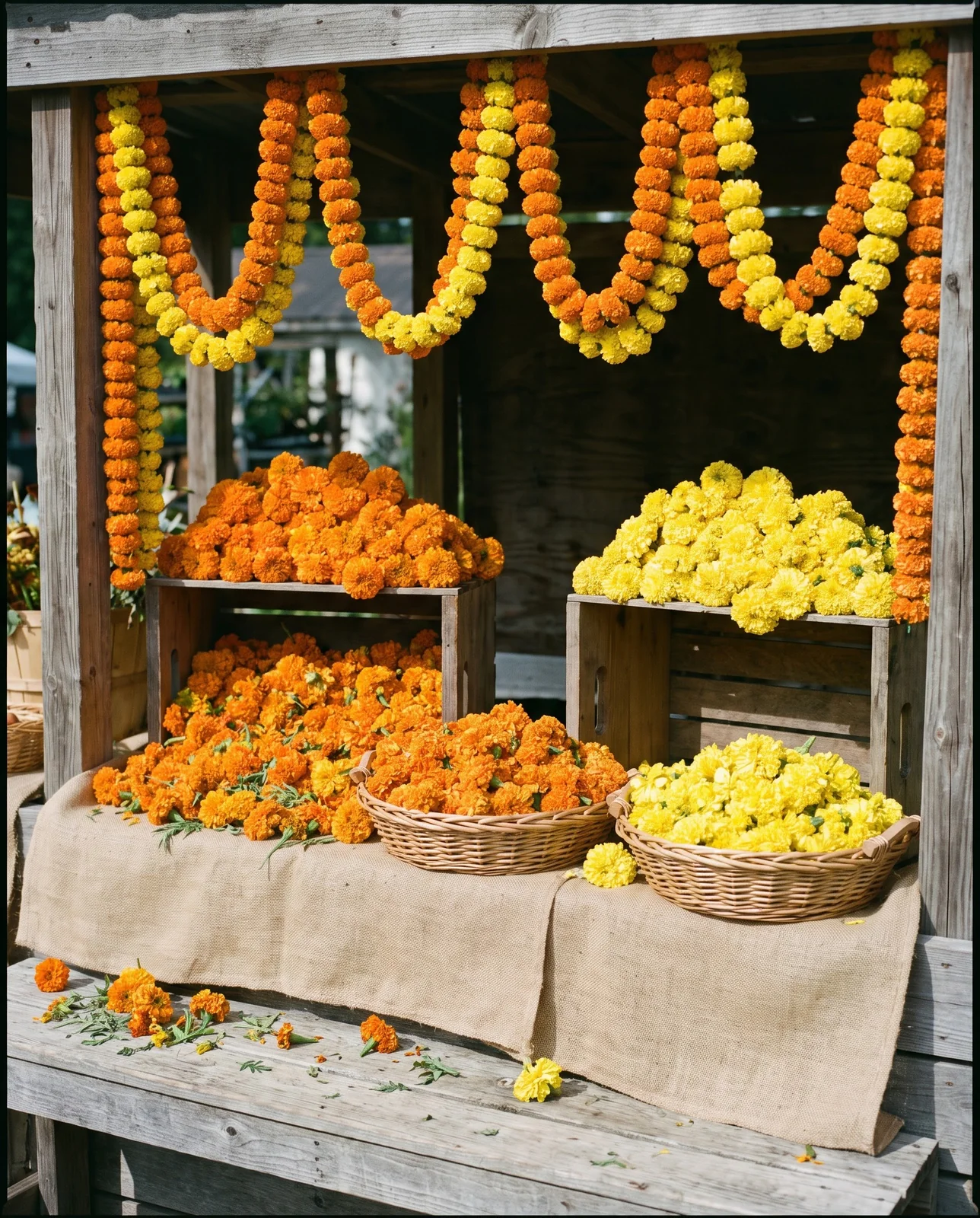
Finding fresh marigolds and ritual blooms in the United States comes down to knowing where to look two to three weeks before the festival begins. The most dependable local source is an independent Indian or South Asian grocery market. In the week before the festival many of them bring in bulk boxes of fresh marigold heads from commercial wholesale growers, and those boxes sell out within hours of arriving, which is why the useful move is asking about a reserved box ten days ahead rather than turning up on the Saturday. Indian event florists take advance orders on garlands and loose heads for the same week. Specialty online floral distributors and marketplace vendors ship chilled boxes of loose heads and pre-strung garlands overnight to a residential address, the fallback when nothing local turns up.
Growing your own is the other path, and it takes a decision in spring for a flush in fall. African marigolds (Tagetes erecta) are tender annuals, native to Mexico and Guatemala despite the common name, grown as annuals across the country. Cut-flower cultivars are the ones to look for. The Giant Series carries abundant three-inch blooms on plants thirty-six to forty inches tall in seventy to ninety days, and Jubilee Mix gives dense five-inch double flowers in gold, yellow, and orange on sturdy stems two to three feet long, which is the length a garland maker wants. Seed sown straight into the ground comes up in four to seven days once soil sits between 75°F and 80°F, and plants go twelve to eighteen inches apart in full sun.
Timing an indoor sowing is where the two extension services part ways. Mississippi State University Extension says four weeks before the last spring frost, in plug trays, with weekly feeding at 100 to 150 parts per million of 14-0-14 once true leaves show. NC State Extension says six to eight weeks. The gap comes from cell size: the 288-cell commercial plugs Mississippi State describes build enough root in four weeks, while the larger cell packs sold for home seed starting need the longer stretch. Once outdoors, African marigolds take full sun, are seldom damaged by deer, and stall through the worst of July and August heat before coming back with the heavy autumn flush that makes the whole exercise worthwhile.
Keeping marigold garlands fresh
Cut marigolds hold up better than their reputation suggests. Mississippi State University Extension gives them a vase life of a week or more on the stem under ordinary conditions, with stems cut twenty-four to thirty-two inches long, moved into clean water at once, and held between 36°F and 41°F. There is no conditioning step to worry about: extension trials are explicit that no chemical floral preservative or conditioning solution is needed or recommended for cut marigolds, and clean cold water on its own does the work.
A strand loses all of that. Stripped of stems and threaded on a string, the heads have no water supply and run on the moisture already in their tissue, which a heated house pulls out fast. Mist finished strands with cool water from a fine sprayer, seal them in a clean plastic bag lined with damp paper towels, and hold them in the refrigerator crisper drawer until the afternoon they go up. Once a toran is hanging, keep it off a south-facing wall in afternoon sun and away from heating vents. Households with pets can check the flowers going on the table against the guide to types of flowers safe for cats and dogs.
Handling dozens of stems is worth one precaution. The NC State Extension Plant Toolbox lists Tagetes erecta as a cause of contact dermatitis: cell sap from broken tissue on bare skin, followed by direct sunlight, can bring on redness, a burning sensation, and blistering, and the strong aroma of the fresh foliage irritates some people’s eyes and nose. Light nitrile gloves, long sleeves, and doing the trimming and stringing indoors out of direct sun keep it from coming up at all.
A five-day flower timeline
Five days is enough room to spread the flower work out, and that is the advantage of treating Diwali as a sequence rather than a single-day rush. Buying, hydrating, stringing, and refreshing land on different days, so nothing gets rushed on the morning of Lakshmi Puja and the entryway and prayer altar reach their peak that evening instead of arriving there already tired.
A five-day Diwali flower and garland care schedule
The schedule runs across the five days. On Dhanteras, Friday November 6, the job is to buy and hydrate: collect the pre-ordered fresh marigolds, lotus stems and roses, trim the stem ends, stand them upright in clean cold water, and hold the batch cold, between 36°F and 41°F. Choti Diwali, Saturday November 7, is for stringing and decorating: door torans and altar garlands get strung, misted, chilled if there is a wait, and hung across the doorframes by late afternoon, with the entrance petal rangoli laid the same day. Lakshmi Puja, Sunday November 8, is for the offerings: lotus blooms, fresh double marigolds and red roses go at the feet of the deity images with the stems facing the worshiper, before the dusk prayers. Govardhan Puja, Monday November 9, is a refresh day: altar vase water gets changed, the hung torans get a light misting with cool water, and wilted loose petals come off the floor displays. Bhai Dooj, Tuesday November 10, closes the run: floral blessings are shared with family, and the spent garlands come down and go on the garden compost rather than in the trash.
FAQ
What flowers are traditionally used for Diwali?
Marigolds (Tagetes erecta) and lotus are the primary flowers used during Diwali. Marigolds symbolize prosperity, success, and surrender to the divine, while the lotus represents purity and serves as the sacred seat of Goddess Lakshmi. Fresh red roses and white jasmine are also widely used for altar offerings and decorative garlands.
How do you make a marigold garland at home?
Trim the green stems flush against the calyx of uniform three-inch marigold heads. Thread a large two-inch needle with doubled heavy craft thread or unflavored dental floss, pierce straight through the base of the calyx up through the center of the blossom, and slide each bloom snugly along the line until you reach your desired length.
How long do fresh marigold garlands last?
On stem in clean water, fresh cut marigolds last a week or more. Once strung into stemless door garlands without water, blooms remain fresh for two to three days indoors if misted lightly with water and kept away from direct sunlight and heat sources.
Where can I buy fresh marigolds for Diwali in the United States?
Local Indian and South Asian grocery markets are the most dependable source, importing bulk crates of fresh marigold heads during festival week. Specialty online floral vendors also ship boxed blooms overnight, and local florists can special-order stems from wholesale flower markets with two weeks advance notice.
What flowers can I substitute if marigolds are unavailable?
Double-flowered yellow, bronze, and orange chrysanthemums from supermarket floral departments provide the closest match in color, form, and cultural fit. Dahlias, golden carnations, and yellow spray roses also make durable, respectful substitutes for table centerpieces and floor rangolis.
More About Occasion flowers
Thanksgiving flowers: centerpieces you build yourself
Dia de los Muertos flowers and what each bloom means
Halloween flowers: real black blooms and safe DIY builds
Homecoming corsage and boutonniere guide
Fall bouquet from your garden: what to cut and how
Fall wedding flowers by month, color, and budget
Friendship flowers

Thank you flowers
Get well flowers
Enjoying our flower guides? Add YourFlowersGuide as a preferred source on Google. It helps more readers find us.
Add to Preferred Sources