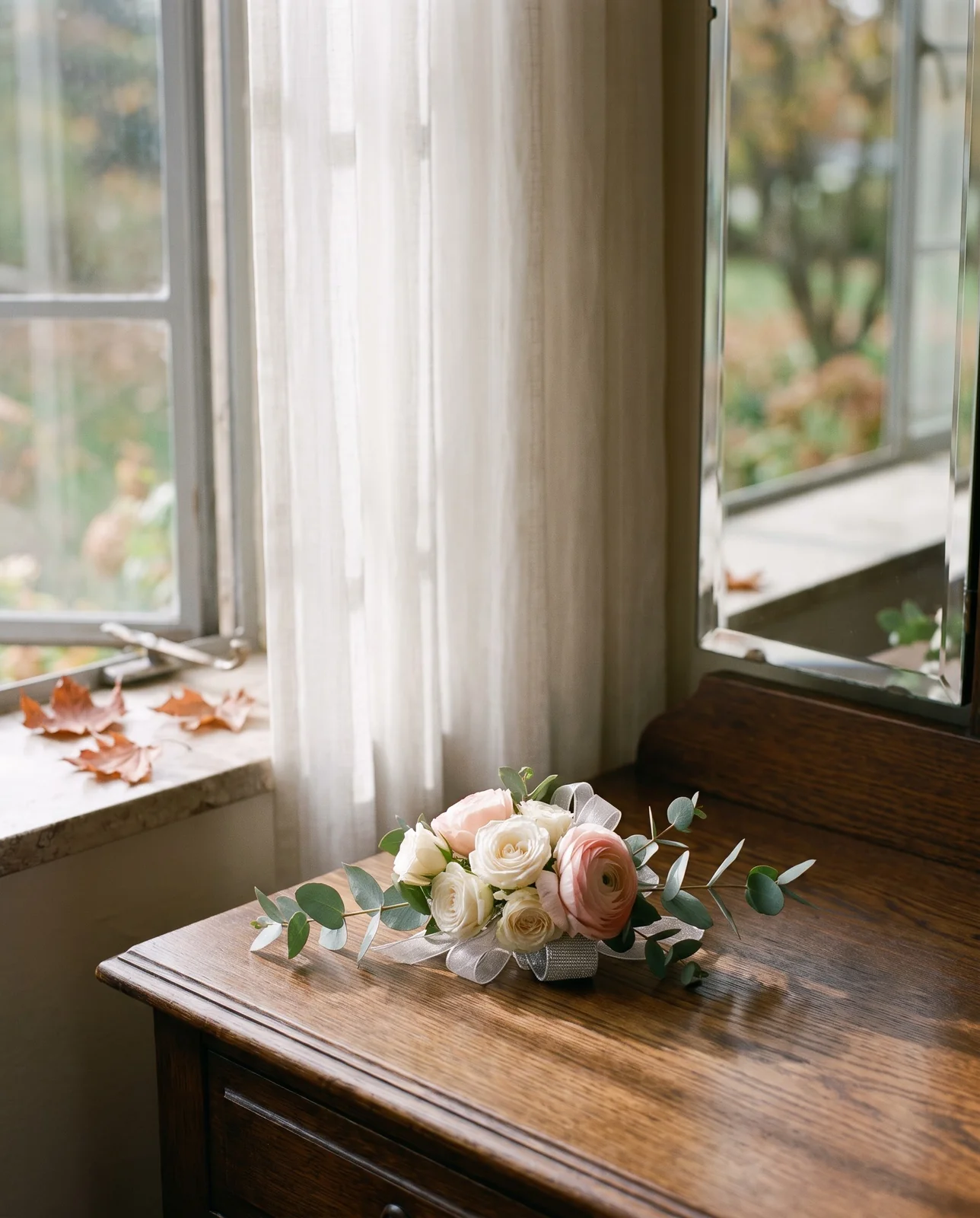
A homecoming corsage is a small flower arrangement built to be worn rather than carried, strapped to the wrist or pinned to formal attire, which is what separates it from a standard handheld bouquet. Its partner piece is the boutonniere, a single bloom or tight cluster on a suit lapel. Three or four firm flower heads, wired and taped, with ribbon covering the mechanics: that is the whole object. Unlike an arrangement standing in water on a table, it gets no water and no rest, only photographs, a football game and several hours of dancing on someone’s arm.
Most of the worry comes down to three questions: what a corsage should cost, whether it will still look right at the end of the night, and, for anyone who has seen photographs of a Texas mum, what that ribboned object actually is. A worn piece sits against warm skin all evening with nothing to drink, so the flower chosen matters as much as the ribbon wrapped around it. What follows covers who wears which piece and who pays for it now, the three price tiers, a step-by-step build for a wrist corsage, which flowers hold up under body heat, the Texas mum and its garter counterpart, and how to keep one fresh from pickup to the last dance.
On this page 7 sections
Corsage or boutonniere: who wears which
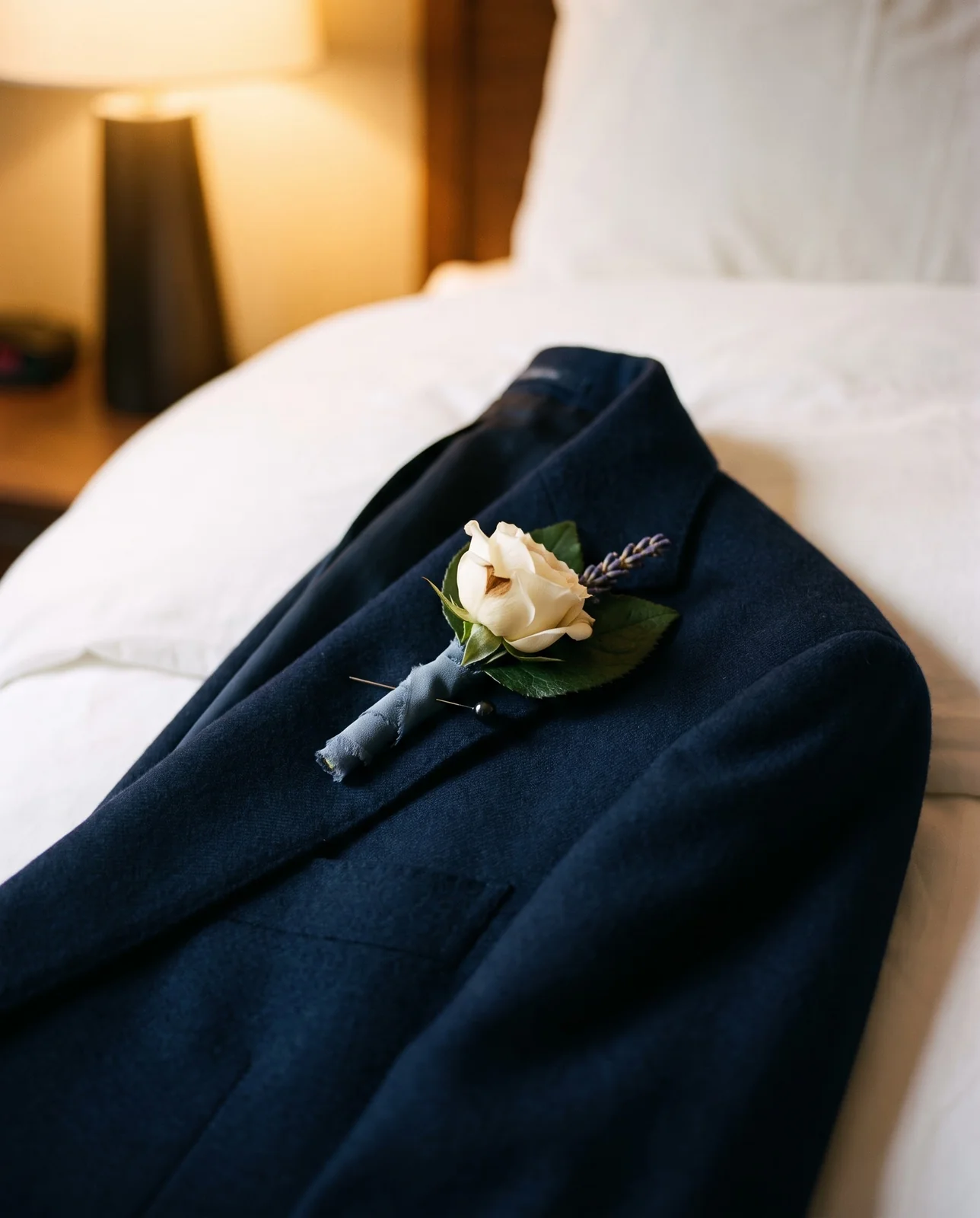
Britannica traces the corsage to a small bouquet pinned at the waist or bodice of a formal gown, which later moved up to the shoulder and out to the wrist or an evening handbag. The boutonniere is the same idea cut down to a single flower sized for the buttonhole on a suit lapel. Placement follows a settled convention: the boutonniere goes on the left lapel just above the pocket with the stem pointing down, and a pinned corsage goes on the left shoulder strap. At school dances the wrist version has largely taken over, for a mechanical reason rather than a fashion one: strapless gowns and light formal fabrics give a pin nothing solid to bite into, so a wired stem sags forward and drags at the cloth. The same two pieces turn up inside the larger order covered in the wedding flowers guide.
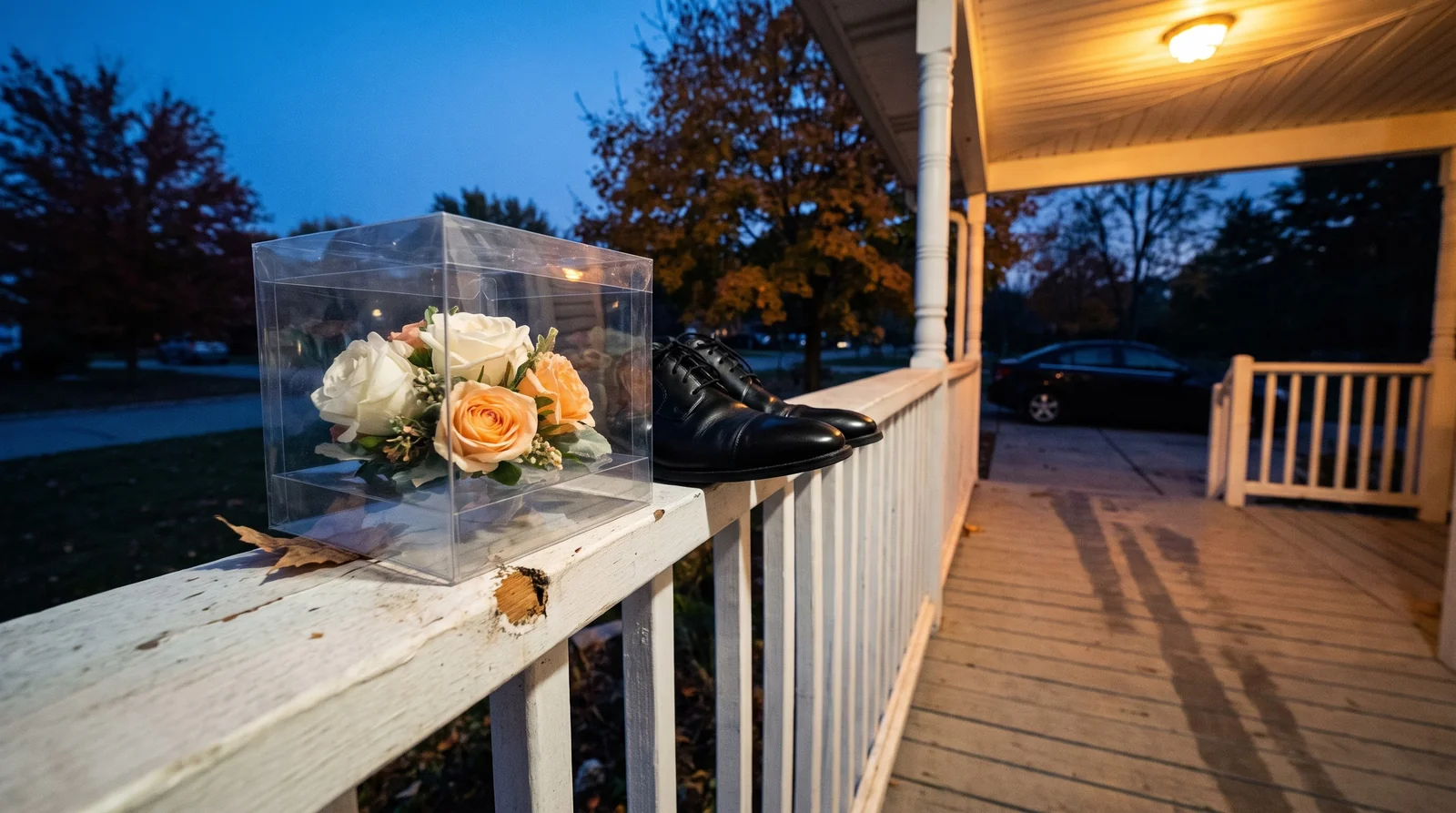
Who pays for them has loosened. The corsage was historically supplied by an escort or date, and that is still what a florist means by traditional. Practice now is far looser. Couples settle on a color together and split the bill, or one of them orders both pieces at once so the ribbons match. Students going in a group of friends, or going alone, buy their own wristlets and boutonnieres, and shops take those orders as routine rather than as a workaround. Nobody has to wait for a date to wear flowers.
Three price tiers: what a homecoming corsage actually costs
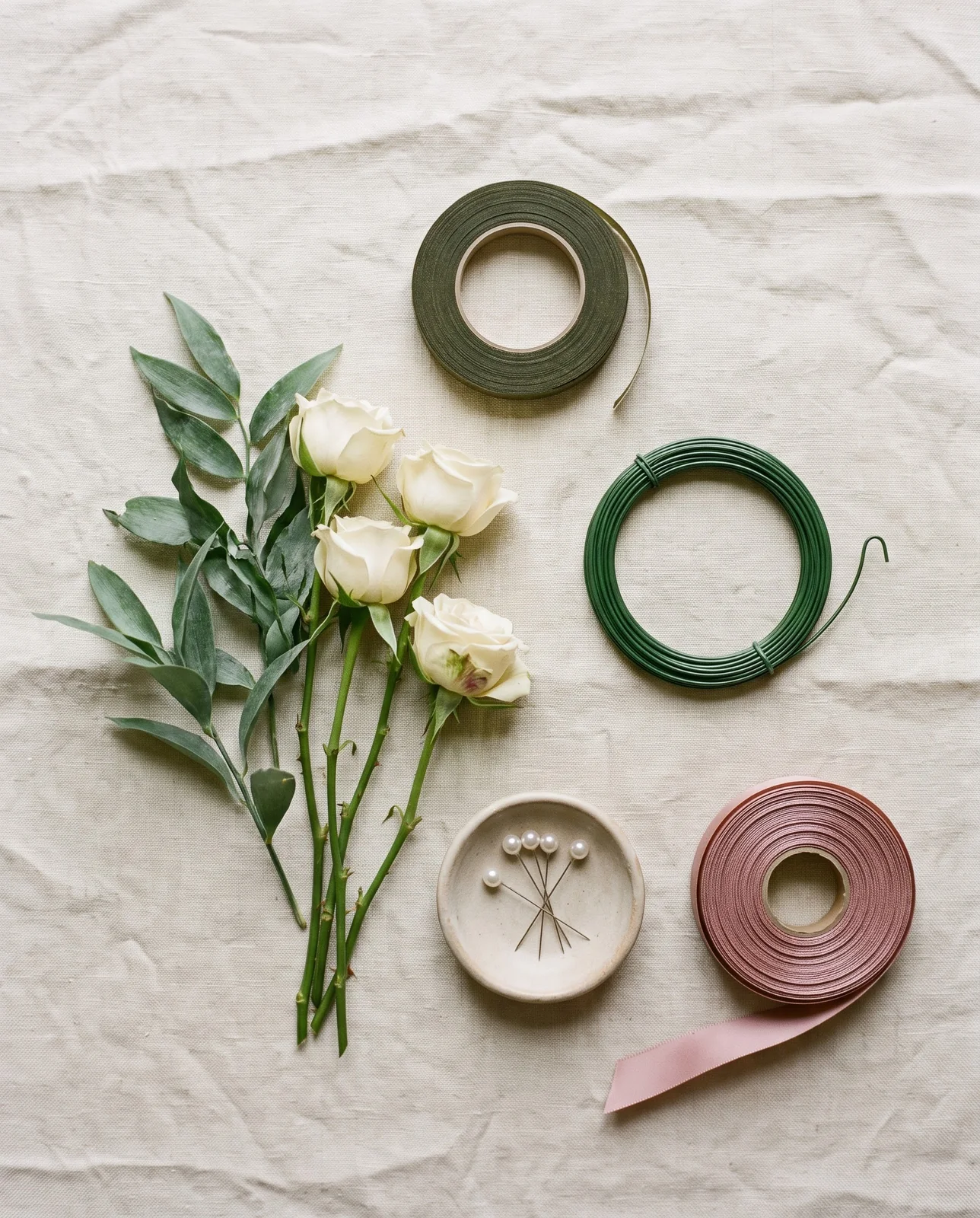
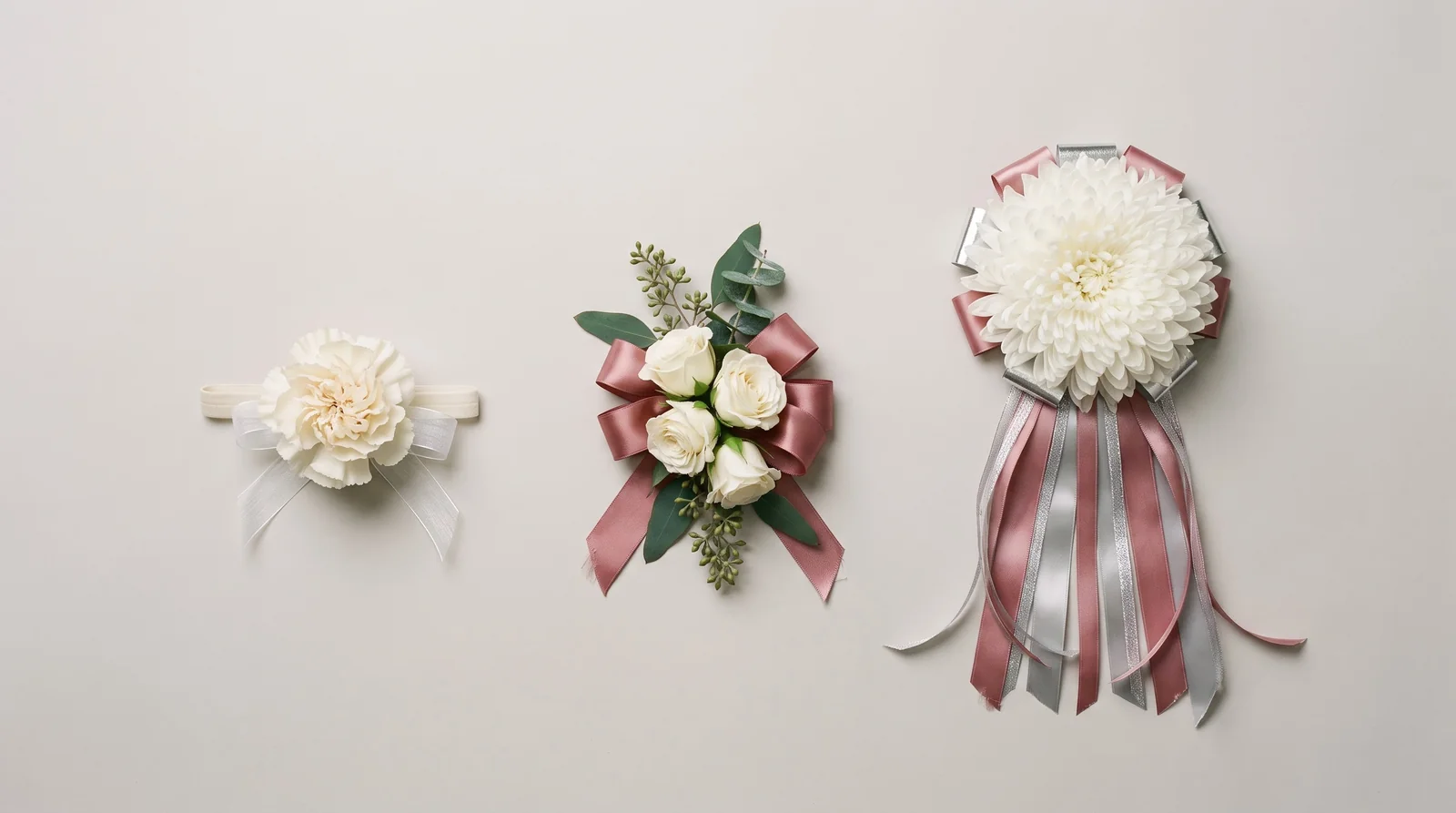
Homecoming floral costs fall into three brackets, set by whether the piece is built at home, ordered from a florist, or bought as an oversized specialty creation. A wristlet built at home from grocery store stems, floral tape, wire and ribbon costs roughly ten to twenty-five dollars in materials, and that outlay usually stretches to more than one piece. A fresh wrist corsage made to order at a local flower shop generally lands between thirty and one hundred dollars; the spread comes from labor, the wiring, whether the focal flower is a spray rose or an orchid, and whether the band is plain elastic or set with faux pearls or rhinestones. A custom Texas-style homecoming mum sits far above both, around two hundred to three hundred dollars, and most of that money buys hardware rather than flowers: printed ribbon by the yard, plush mascots, bells, charms, battery lights.
Three corsage budgets, from DIY wristlet to specialty mum
What separates the tiers is not only the price. It is who assembles the piece, how much wiring holds it together, and which tradition it belongs to.
Build your own wrist corsage, step by step
Condition the flowers before anything gets wired. Get the stems into clean, room-temperature water as soon as they come indoors. Trim one-half to one inch off each stem at a forty-five-degree angle with a sharp, clean knife, the cut UF/IFAS specifies, which opens more surface to water. The Chicago Botanic Garden adds a detail worth copying here: make that cut with the stem held under water, so no air bubble gets pulled in to block uptake. Strip off any foliage that would sit below the water line, add commercial floral food, and let the stems drink for at least two hours before you start building.
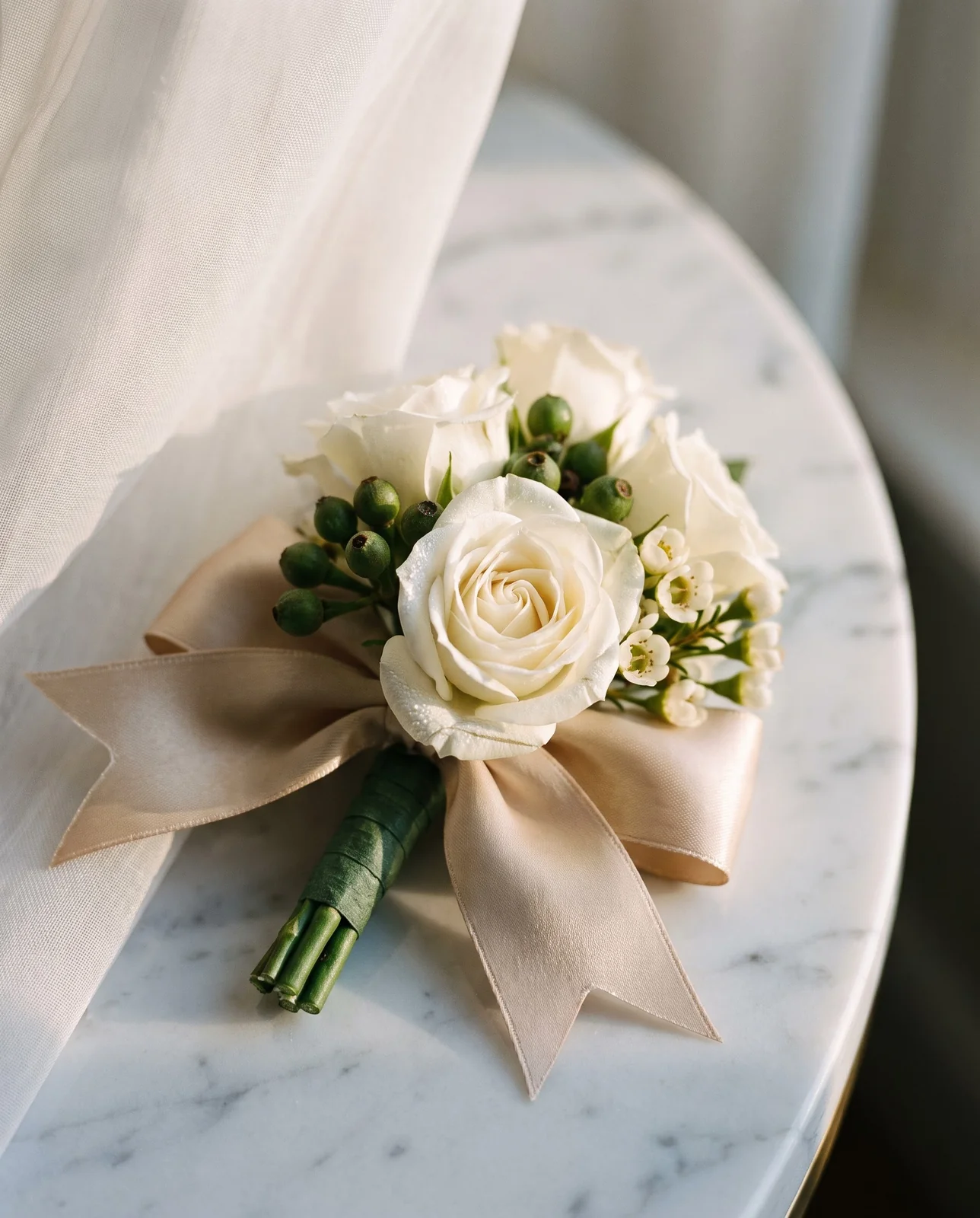
Choose three or four firm focal blooms and cut each stem to about an inch below the head. The wiring method is the one Britannica describes: push a length of floral wire through the calyx, the green cup at the base of the flower, fold both wire ends down alongside the stub of stem, and bind the assembly with self-sealing floral tape, stretching it slightly as you wrap so it releases its adhesive. Wire each bloom on its own, then gather them into a balanced cluster with a few sprigs of firm greenery tucked around the base and tape the whole group together at the bottom. Mount that taped stem to a wristlet band using its metal tabs or a turn of craft wire, and tie the ribbon bow directly beneath the flower heads so it covers every wire end and tape edge. One step remains before the piece goes into its box: hold the finished wristlet by the band and shake it gently over a table. Anything loose, a petal or a wire that never got taped down, comes off now rather than on the dance floor.
Choosing flowers that survive a night of dancing
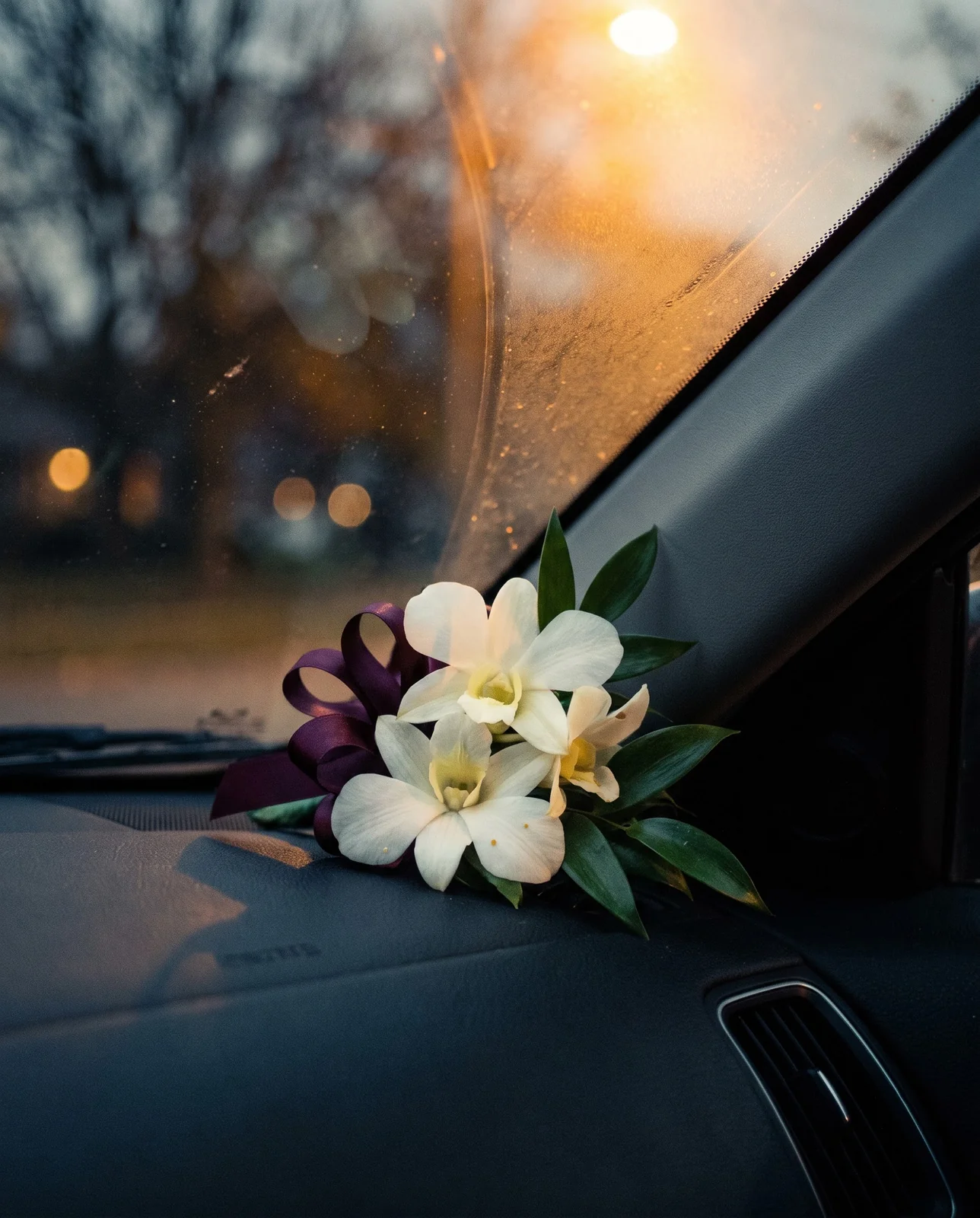
Whether a corsage still looks right at the end of the night comes down mostly to petal thickness. A worn piece has no water supply, and it rests against skin held near ninety-eight point six degrees Fahrenheit, with friction from formal wear and a warm, crowded room on top of that. Thin-petaled flowers give up quickly: hydrangea and poppy lose moisture fast and bruise wherever a hand lands. Densely built flowers with firm petals keep their shape for hours out of water. Miniature roses are the standing favorite because the overlapping petals brace each other against crushing, and they hold best if the buds are still firm when you build.
Spray carnations, which sit in the genus Dianthus, are what florists reach for when a piece has to take rough handling, and their stems are the cheapest of the common corsage flowers. UF/IFAS notes that Dianthus produces dense, ruffled heads that tolerate changing temperatures well, and on a packed dance floor that compact ruffle creases far less than a loose, open bloom. Spray orchids such as dendrobiums work on the opposite principle, a thick waxy petal surface that holds moisture in against dry indoor air and skin warmth, on a bloom light enough not to swing on the wrist. Button chrysanthemums are the third dependable choice: solid, multi-layered disks that stay firm for hours without water.
How long each flower choice holds up
Five flowers common in corsage and boutonniere work, rated by how well each stands up to skin warmth, handling and hours away from water.
The Texas mum: how a corsage became a spectacle
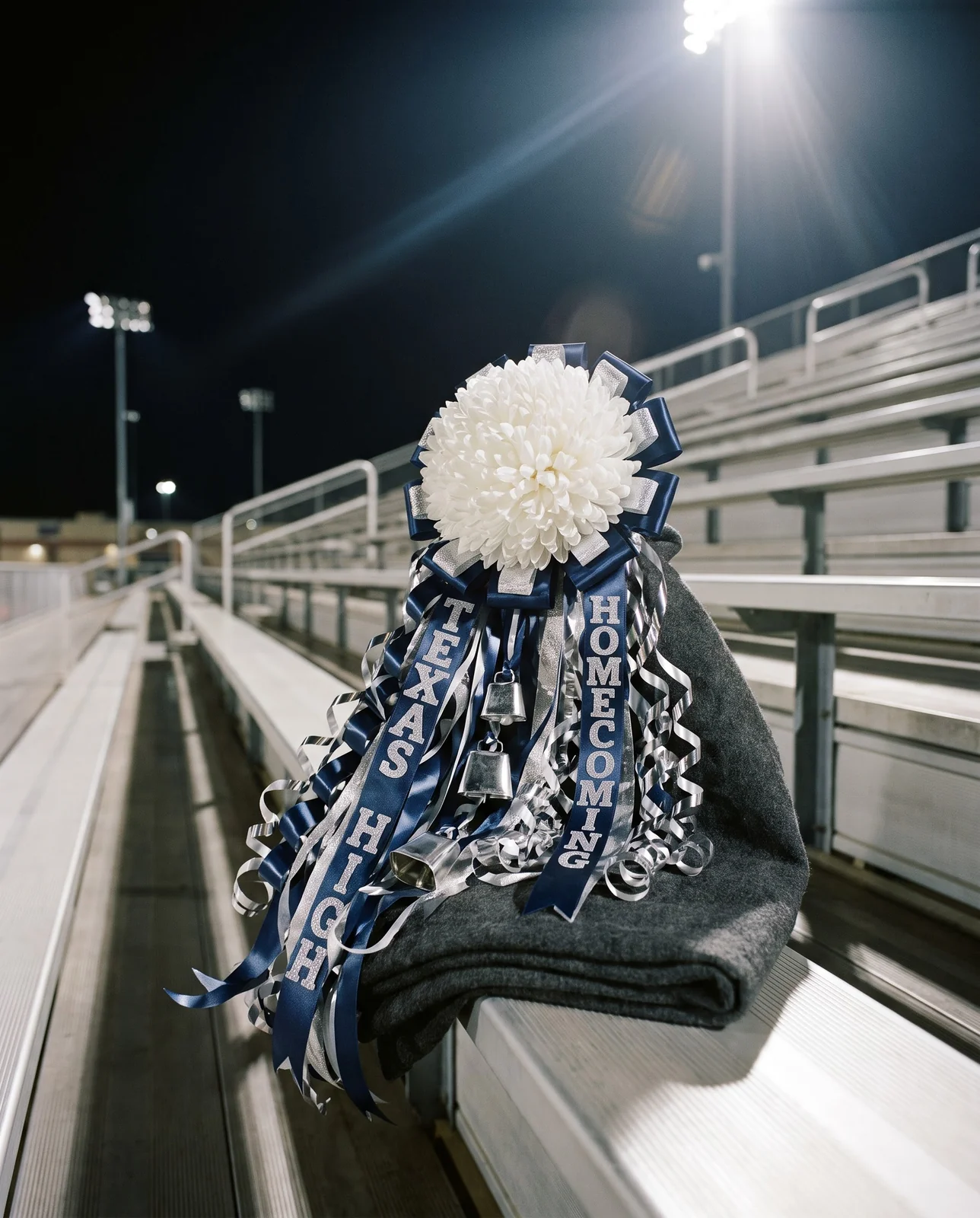
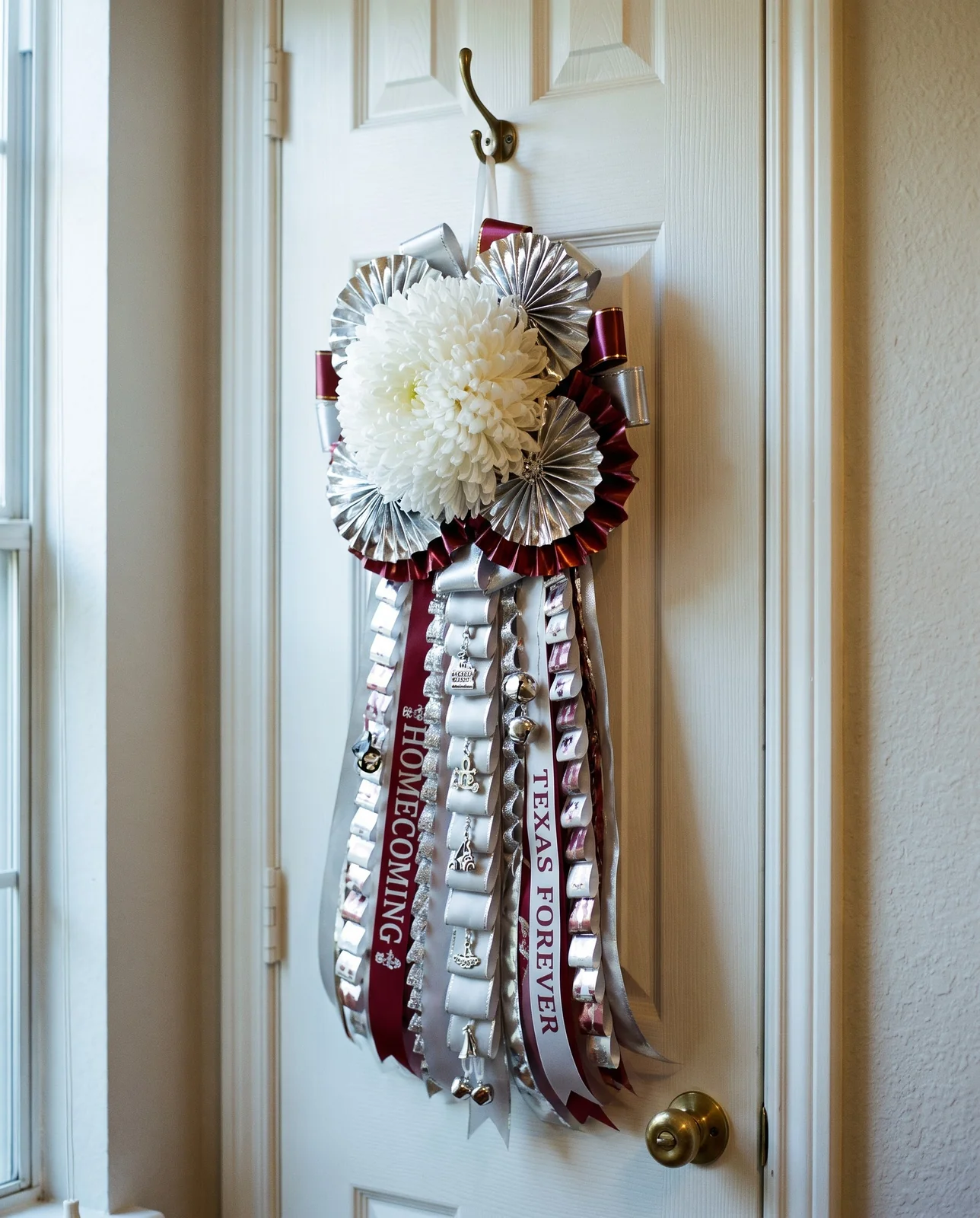
In Texas and parts of Oklahoma the homecoming corsage grew into something a visitor would not recognize as a corsage. The tradition still carries the name of the chrysanthemum, the fresh autumn bloom originally pinned to clothing for school football celebrations. Accounts vary on exactly when and where it started: regional reporting puts early collegiate mum corsages at Texas games in the first half of the twentieth century, with high schools taking up the custom in the decades after. What is clear is the direction. The single flower picked up long ribbons, then decorative charms, then school emblems, and kept growing.
Fresh flowers gave way to artificial silk chrysanthemums, which turned the piece into a permanent school keepsake. A modern Texas mum carries several silk blossoms mounted on heavy cardstock, yards of trailing acetate ribbon, metallic braid, cowbells and battery lights, and it hangs from a neck ribbon during spirit days rather than sitting on a wrist. Male students wear the counterpart, a smaller version strapped to the upper arm, called a homecoming garter. Where real Chrysanthemum spp. stems still go into a fresh corsage, a household with pets has reason for basic caution. The ASPCA warns that live chrysanthemums carry sesquiterpene lactones and pyrethrins, which bring on vomiting, diarrhea, hypersalivation, incoordination and skin irritation in a dog or cat that chews on an arrangement left within reach.
Keeping it fresh from pickup to last dance
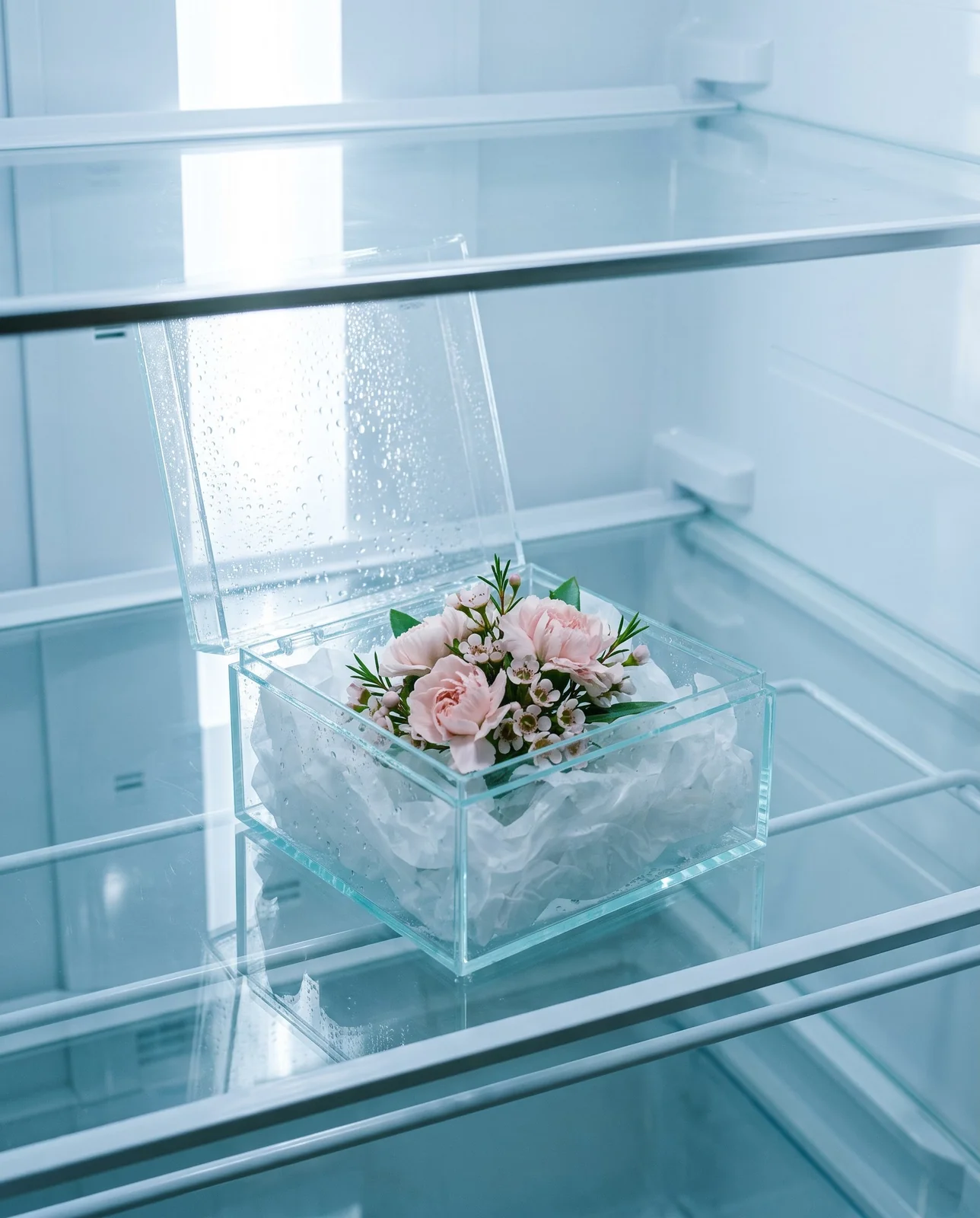
A finished corsage keeps best cool and humid, out of direct sunlight and away from heating vents and dry air currents, which in most houses means the refrigerator. Leave it in its box on a shelf until you walk out the door. What shares that shelf matters as much as the temperature. The Chicago Botanic Garden is direct about this, warning that cut flowers should never sit near a bowl of ripening fruit or vegetables, since ripening produce releases ethylene gas that damages petals and speeds wilting. Keep the sealed box away from the produce bins, and away from cigarette smoke.
Handle the piece by its mechanics and not by the flowers. A corsage travels held by the wristlet band or the taped stem base; a thumb pressed onto a petal bruises it. If a rose head droops before you have wired it, the cause is usually an air bubble blocking water uptake in the stem, as the Chicago Botanic Garden notes, and the fix still works before assembly: submerge the whole unwired stem in a sink of warm water for at least thirty minutes, which lets the vascular system clear and the head harden back into an upright posture. Timing is the last decision. Put the corsage on right before you leave for photographs, not while you are still getting ready, which keeps the total time the petals spend against body heat as short as possible.
The corsage timeline, from order to pinning
Materials come first, one to two weeks before the dance: place the florist order, or buy floral tape, wire, ribbon and a wristlet band for a home build. The piece itself comes together on the morning of the dance, either picked up ready-made from the shop or assembled at home once the stems have been conditioned in water. From there it waits in the refrigerator inside a clear box for the rest of the day, on a shelf kept clear of fresh fruit and vegetables. The wristlet stays unfastened and the boutonniere unpinned until about fifteen minutes before leaving, which keeps the flowers off warm skin for as long as the schedule allows.
FAQ
Who buys the corsage and boutonniere for homecoming?
Traditionally each date bought flowers for the other, one paying for the corsage and one for the boutonniere. That rule no longer holds. Plenty of students buy their own, or split a single order with their date so the colors match, or order wristlets for everyone when going as a group of friends. Florists treat all three as normal requests.
Which side of the body do you pin a corsage or boutonniere on?
The boutonniere goes on the left lapel of the jacket or blazer, just above the pocket, with the stem pointing straight down. A pinned corsage traditionally goes on the left shoulder strap or lapel. A wrist corsage goes on the non-dominant wrist, which keeps it comfortable through the event.
Why do corsages wilt faster than flowers in a vase?
A corsage has no continuous water source, and it sits directly against skin that holds near ninety-eight point six degrees Fahrenheit. That warmth speeds up transpiration and water loss, so delicate petals soften much faster than stems resting in water.
What is the difference between a Texas mum and a homecoming garter?
The mum is the oversized version worn by female students, hung from a neck ribbon and built from artificial chrysanthemums with long trailing ribbons. The garter is its counterpart for male students: the same idea in a smaller form, worn secured to the upper arm rather than pinned to a lapel.
Can real chrysanthemums harm pets at home?
Yes. The ASPCA lists live chrysanthemums as toxic to dogs, cats and horses, naming sesquiterpene lactones and pyrethrins as the compounds involved. A pet that chews on a fresh mum corsage can end up with vomiting, diarrhea, heavy drooling and skin irritation.
More About Occasion flowers
Thanksgiving flowers: centerpieces you build yourself

Diwali flowers: marigold garlands and DIY toran
Dia de los Muertos flowers and what each bloom means
Halloween flowers: real black blooms and safe DIY builds

Fall bouquet from your garden: what to cut and how
Fall wedding flowers by month, color, and budget
Friendship flowers
Thank you flowers
Get well flowers
Enjoying our flower guides? Add YourFlowersGuide as a preferred source on Google. It helps more readers find us.
Add to Preferred Sources