Every flower on a Día de los Muertos ofrenda is there to do a job. Marigolds, cempasúchil in Spanish, carry the color and the scent that draw a returning soul from the front door to the altar. Deep red cockscomb marks mourning. White baby’s breath goes on the altars built for children. Flowers stand for how short a life is, and no ofrenda counts as complete without them, which makes them the part of the altar most worth getting right.
In Mexico the holiday runs from the evening of October 31st through November 2nd and moves from private to public: a family ritual first, then community gatherings and a night at the graves. In the United States it is mostly the public half, an occasion for cultural affirmation and community building among urban Chicano and Latino families. The altar underneath is the same either way, a cloth-covered table holding photographs, sacred images, the food and drink a person liked in life, and flowers doing the sensory work of the whole arrangement. What follows covers how the holiday differs from Halloween, why the marigold became its national flower and the two origin stories told about it, what each bloom means and how it behaves once cut, the order to build the petal path and the arch in, and three ways to scale the flowers to what you can spend.
On this page 6 sections
Is Dia de los Muertos the same as Halloween?
The two holidays sit next to each other on the calendar and share almost nothing else. Halloween grew out of the Celtic harvest festivals, Samhain above all, and turned into a secular night of costumes, trick-or-treating, and staged horror. Día de los Muertos grew out of central and southern Mexico, where pre-Columbian rites for the dead fused with the Roman Catholic observances of All Saints’ Day and All Souls’ Day. Tone is the clearest difference: one holiday plays with fear, the other sets a table. The days from October 31st through November 2nd go to family remembrance and hospitality, to receiving the dead as guests and feeding them with dignity rather than staging them as ghosts.
Why marigolds guide the dead
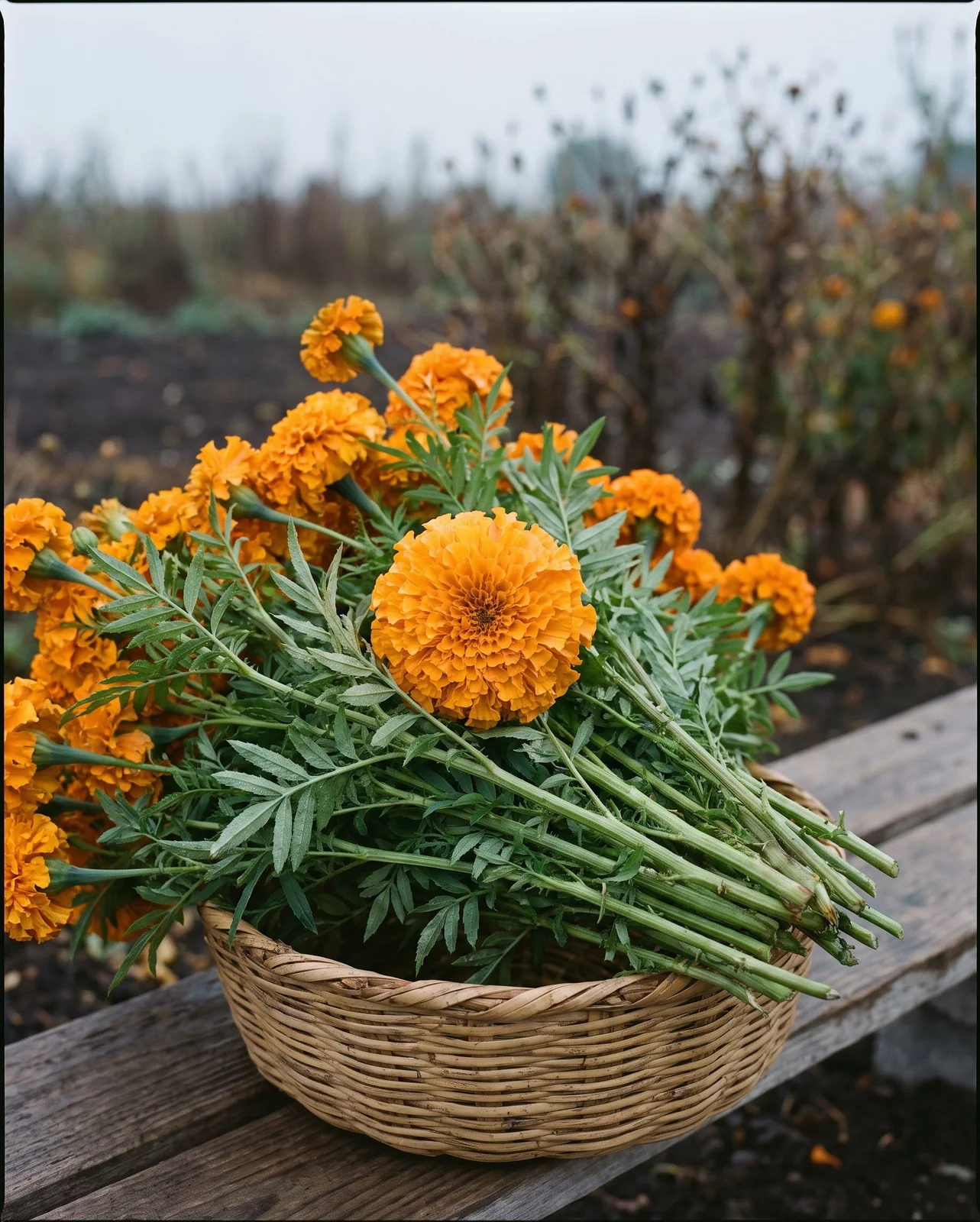
Plenty of seasonal blooms turn up on memorial altars across Mexico, but one has become the national symbol of the holiday: the marigold, Tagetes erecta, known in Spanish by its Nahuatl name cempasúchil. The word joins cemposalli, twenty, and xochitl, flower, and comes into English as the flower of twenty petals. That is a description of the dense, tightly packed head rather than a count anyone is meant to make.
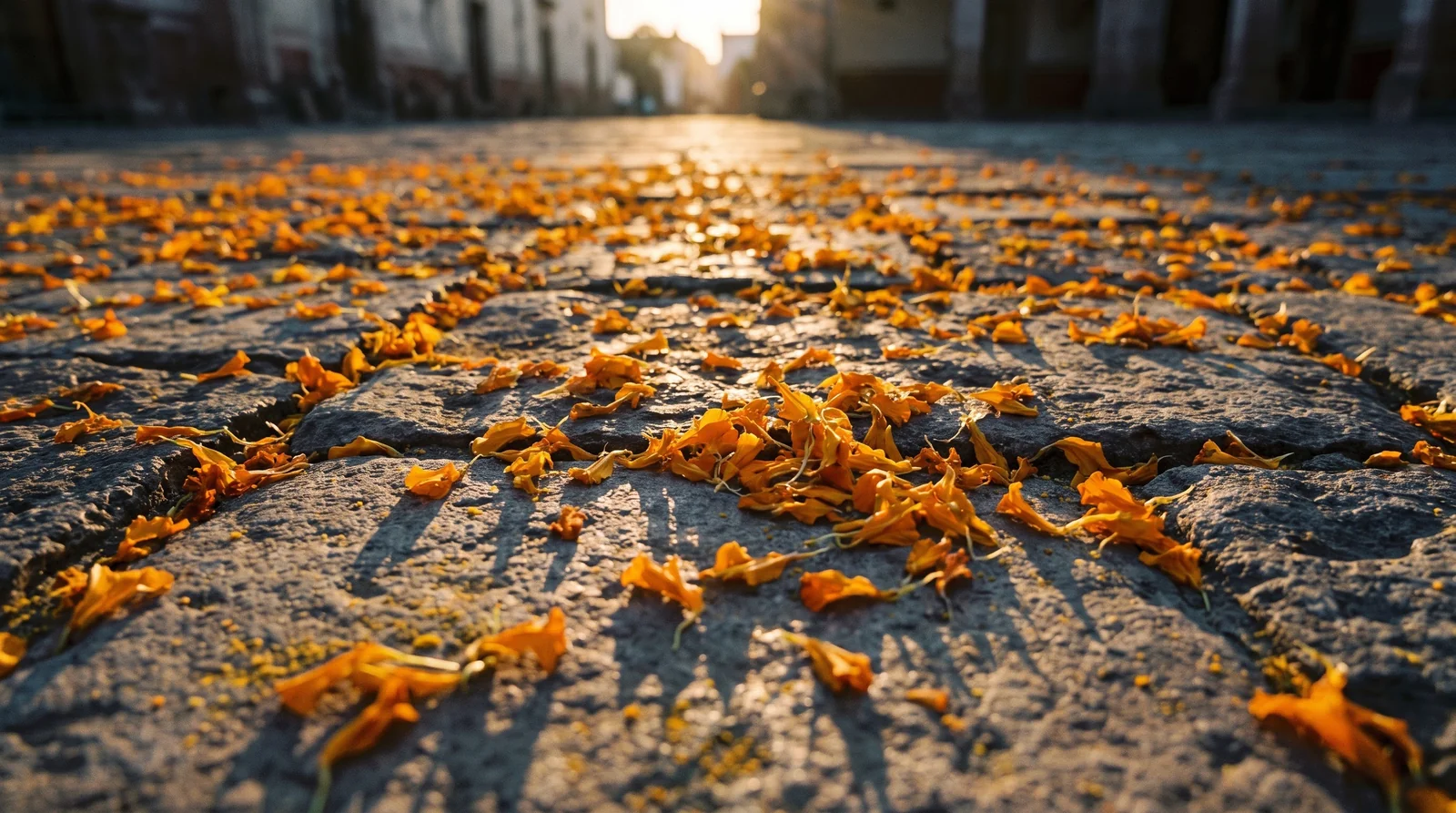
Color and scent are the working mechanism. Our Lady of the Lake University describes families relying on the bright golden-orange color and the potent fragrance of marigolds to attract souls and steer them toward the altar prepared for them. It is the musky aroma that the Desert Botanical Garden dwells on, a clear sensory trail spirits follow across the threshold between worlds. The petals are also held to be cleansing, which is why loose ones are shaped into a cross on the floor in front of the altar, where a returning soul treads across them and is freed of sin and guilt before reaching the feast. Where the flower itself came from depends on who tells it. Our Lady of the Lake University records the legend that the marigold was a gift to the Nahua from Tonatiuh, their sun god, so that they could honor their dead, while accounts cited by the Desert Botanical Garden tie the tradition instead to the deities of the underworld, Mictecacihuatl among them.
The flower guide
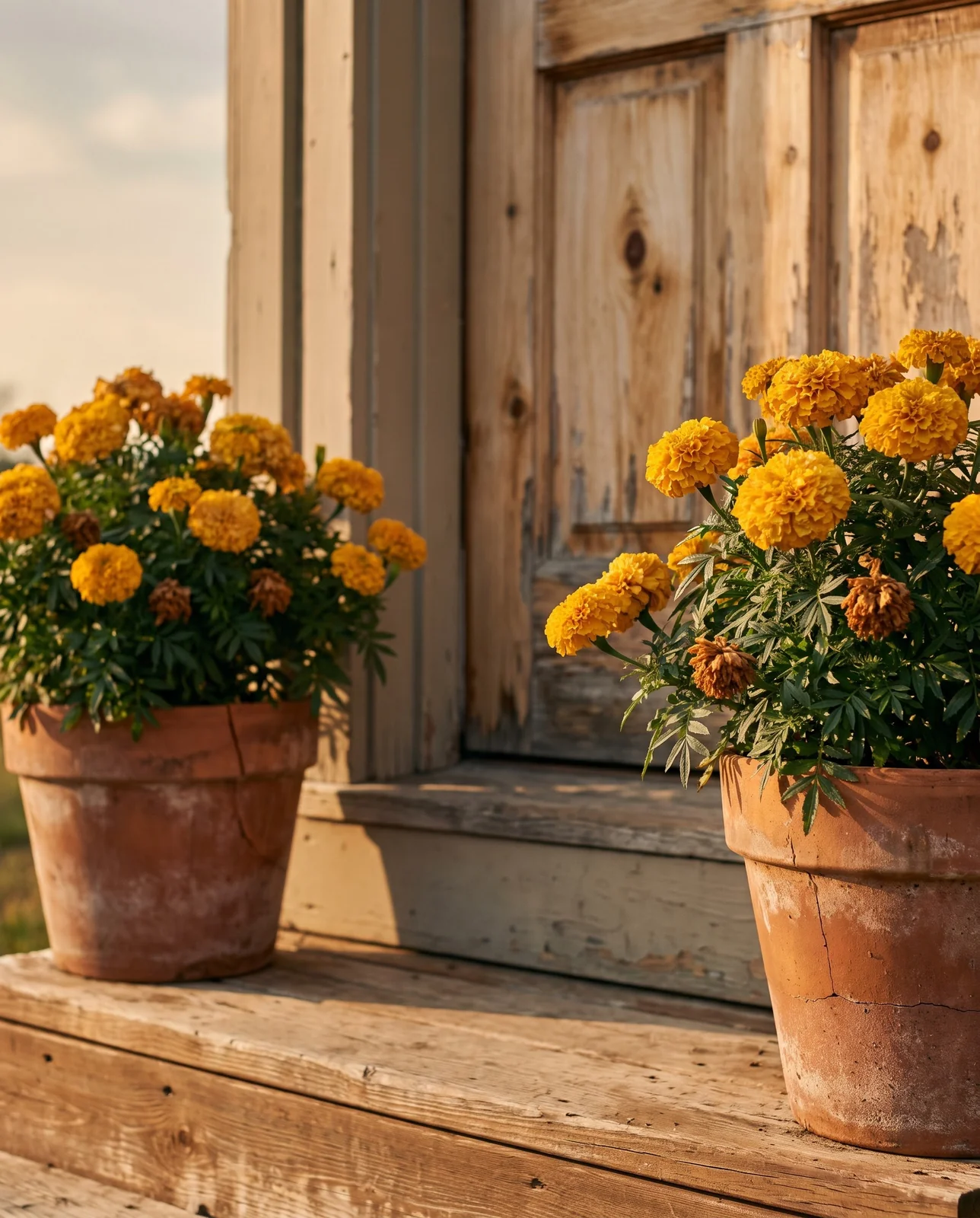
Marigold or cempasúchil (Tagetes erecta) The cempasúchil grown in Mexico and the African or American marigold stacked on a North American nursery bench are the same species. Traditional Mexican selections tend toward taller stems and a heavier scent than compact bedding hybrids, but nothing separates them botanically, so a reader who cannot find the word cempasúchil on a label has not lost the flower. UF/IFAS Extension describes the plant as large, fully double heads in bright yellow and deep orange, wanting fertile soil and at least six hours of direct sun, with seed that germinates in a week at 70°F to 75°F and plants set 10 to 14 inches apart for a solid mass of color. On the altar, marigolds go into floral arches, hanging garlands, five-point stars, and vessels of water. The practical catch is the same one that bothers gardeners: spent blooms hang on the plant instead of dropping and detract from it, and wet weather brings Botrytis blight that turns the flowers brown and rots them. Cut stems want refreshing partway through the holiday rather than being set out once and left.
Cockscomb or terciopelo (Celosia argentea) Terciopelo means velvet, which is exactly what the flower head feels like under a thumb. Cockscomb is a tropical herbaceous annual in the amaranth family, native to Africa, and NC State Extension traces the genus name Celosia to the Greek word for burning, after the fiery form and color of the blooms. The same source splits garden celosia into three groups worth telling apart at a nursery bench: the Cristata Group, with broad, flattened, convoluted heads resembling a rooster comb or a velvet brain; the Plumosa Group, with erect feathery plumes; and the Spicata Group, with slender, finger-like spikes. On the altar, deep burgundy red flowers stand for mourning, grief, and the blood of Christ in the Catholic-syncretic reading, while purple selections stand for spiritual life and sit close to the older dark flower meanings attached to those shades. Celosia performs well cut and dried, though crowding, overhead rain, and high humidity rot the dense heads quickly.
Baby’s breath or nube (Gypsophila paniculata) Nube means cloud, and the plant earns it: masses of tiny white flowers carried from early summer to early fall, the florist’s standard filler behind a bunch of roses. On the ofrenda those white sprays stand for purity, innocence, and the clouds of heaven, and they go on in quantity for los angelitos, the little angels, the children whose souls are received in the first hours of November 1st. Two notes the symbolism lists leave out, both from NC State Extension: repeated handling of the stems can irritate skin, eyes, and sinuses, which matters when a lot of stems pass through the same hands, and the species is classed as an invasive weed in California, the Pacific Northwest, and parts of the Great Lakes region. In the garden it shrugs off drought, salt, and deer.
Honorable mentions: white gladiolus and chrysanthemum White gladiolus stands for moral integrity and remembrance, and its tall spires add the vertical structure that rounder blooms cannot. Florist chrysanthemums supply durable autumn mass in white and gold and hold their form across a multi-day celebration without wilting on the first evening.
Flowers that fill a Day of the Dead ofrenda
Five flowers appear again and again across ofrenda altars, each carrying its own symbolism and its own handling quirks.
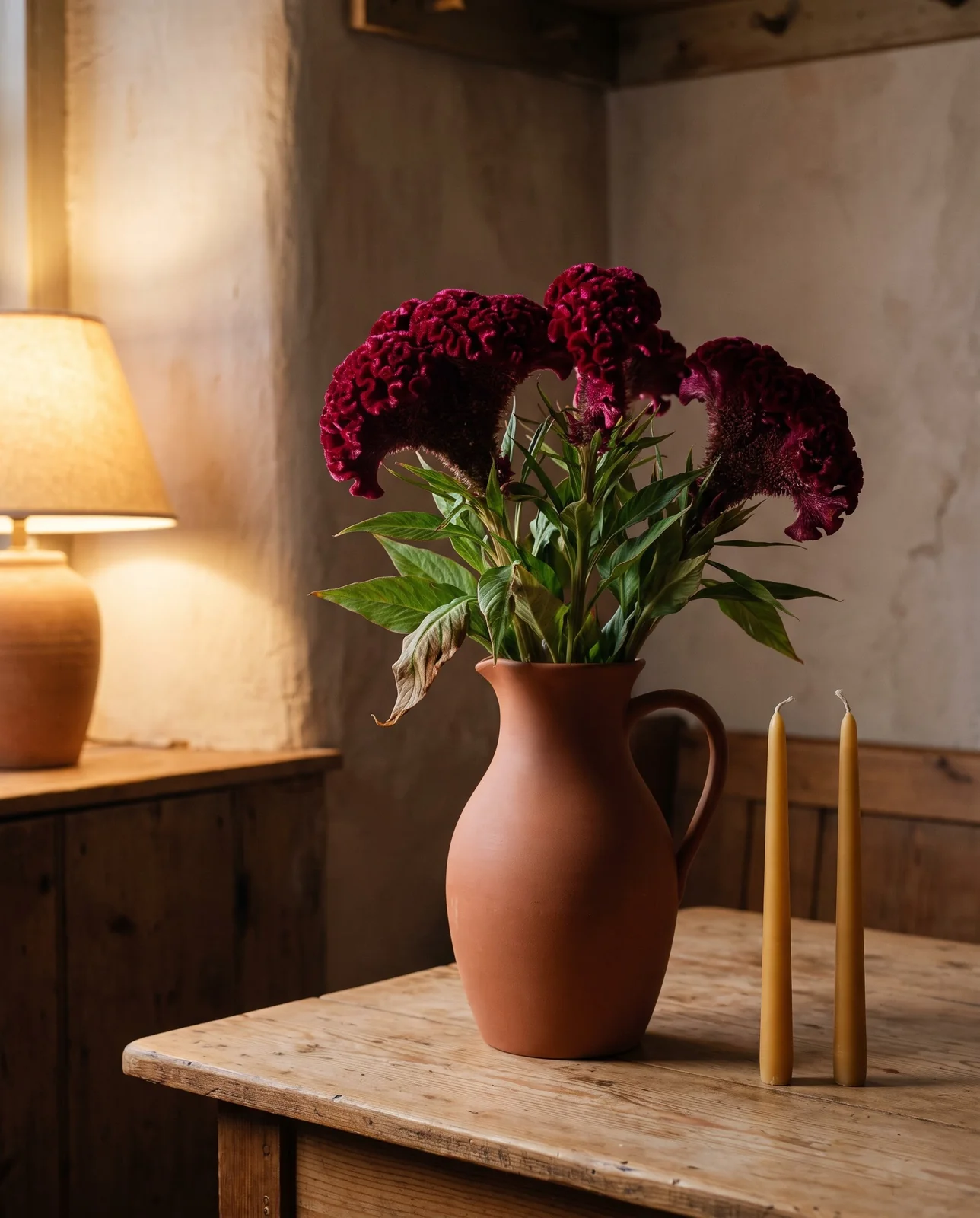
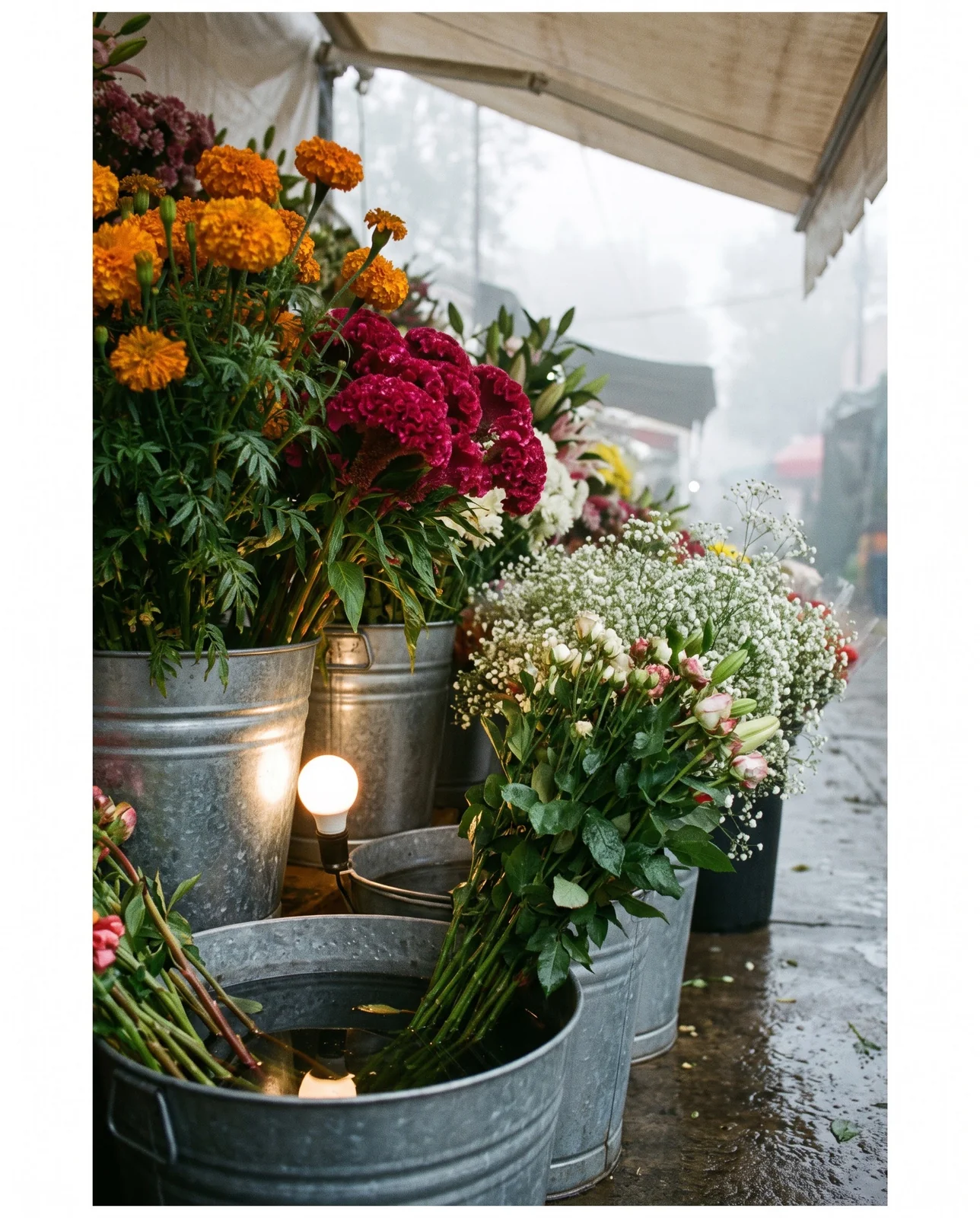
Building the flower path and altar
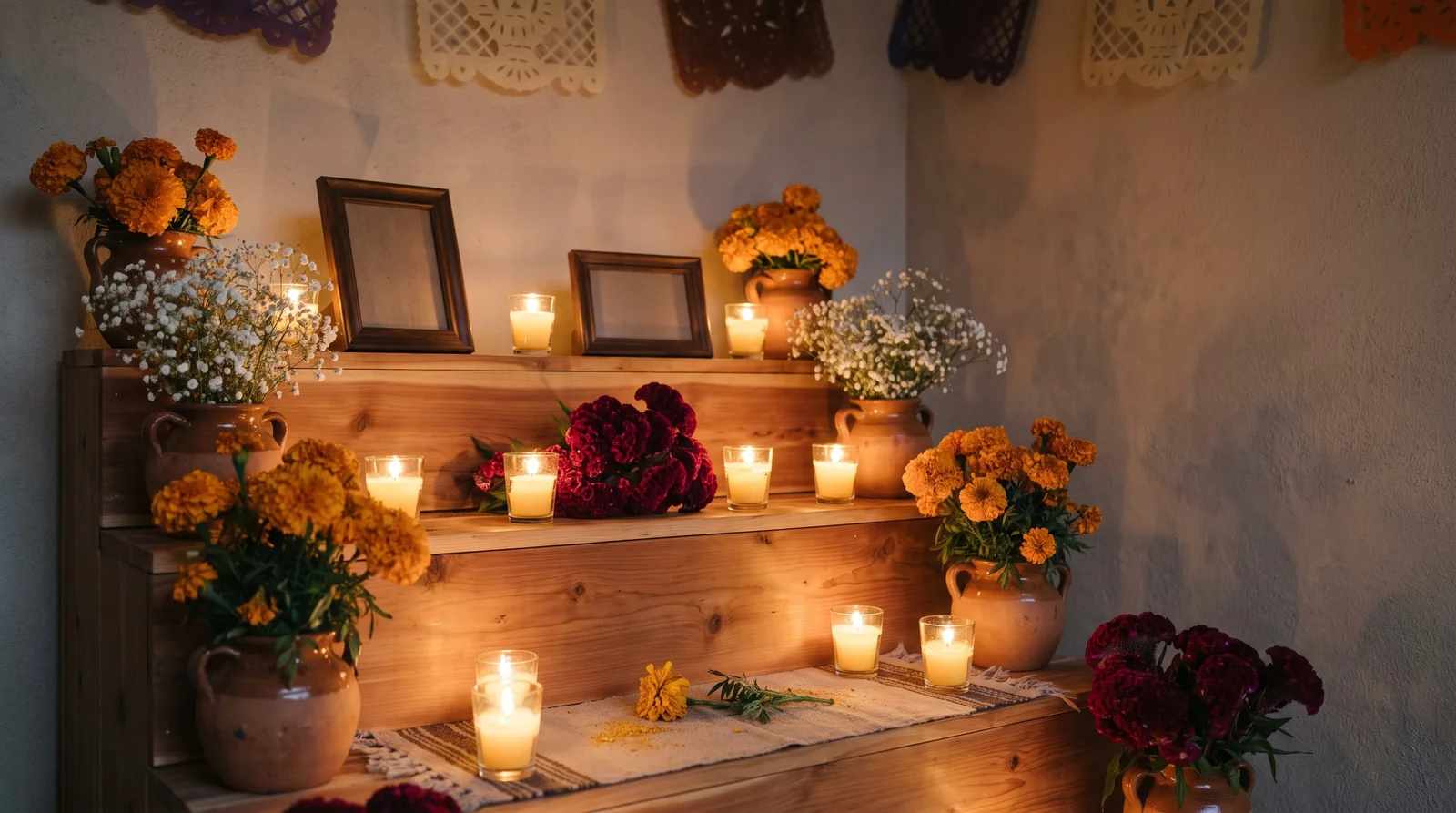
Step 1: the table and the offerings Cover the altar table with a clean cloth; Our Lady of the Lake University notes that the textile patterns vary from region to region, so no single one is the correct one. Set framed photographs of the dead alongside sacred images, a Jesus or a Virgin Mary or a patron saint such as the Virgin de Guadalupe. Put out the food offerings, including the elaborate ones: chicken mole runs to some 50 ingredients, chili peppers, peanuts, and chocolate among them. Add the small familiar things, a particular brand of cigarettes, a bottle of mescal, set out to draw one specific person back. The offerings belong to the dead first; the living eat later, once the returning spirits have taken the essence and flavor of the meal. In some towns the household fires rockets or large firecrackers to tell the dead that it is time to come.
Step 2: the arch and the altar flowers Bend flexible branches into a curved arch over the top level of the altar and bind marigolds, cockscomb, and foliage tightly along it. The arch is the doorway, the threshold between the living world and the spirit world, framed so the way in is unmistakable. Work the rest of the marigolds into garlands, wreaths, crucifixes, and five-point stars, and set them along the edges of the cloth-covered tiers. Keep cut stems in small heavy vases of fresh water instead of laying them bare on the table, which holds off the early wilting brought on by the heat of the surrounding candles.
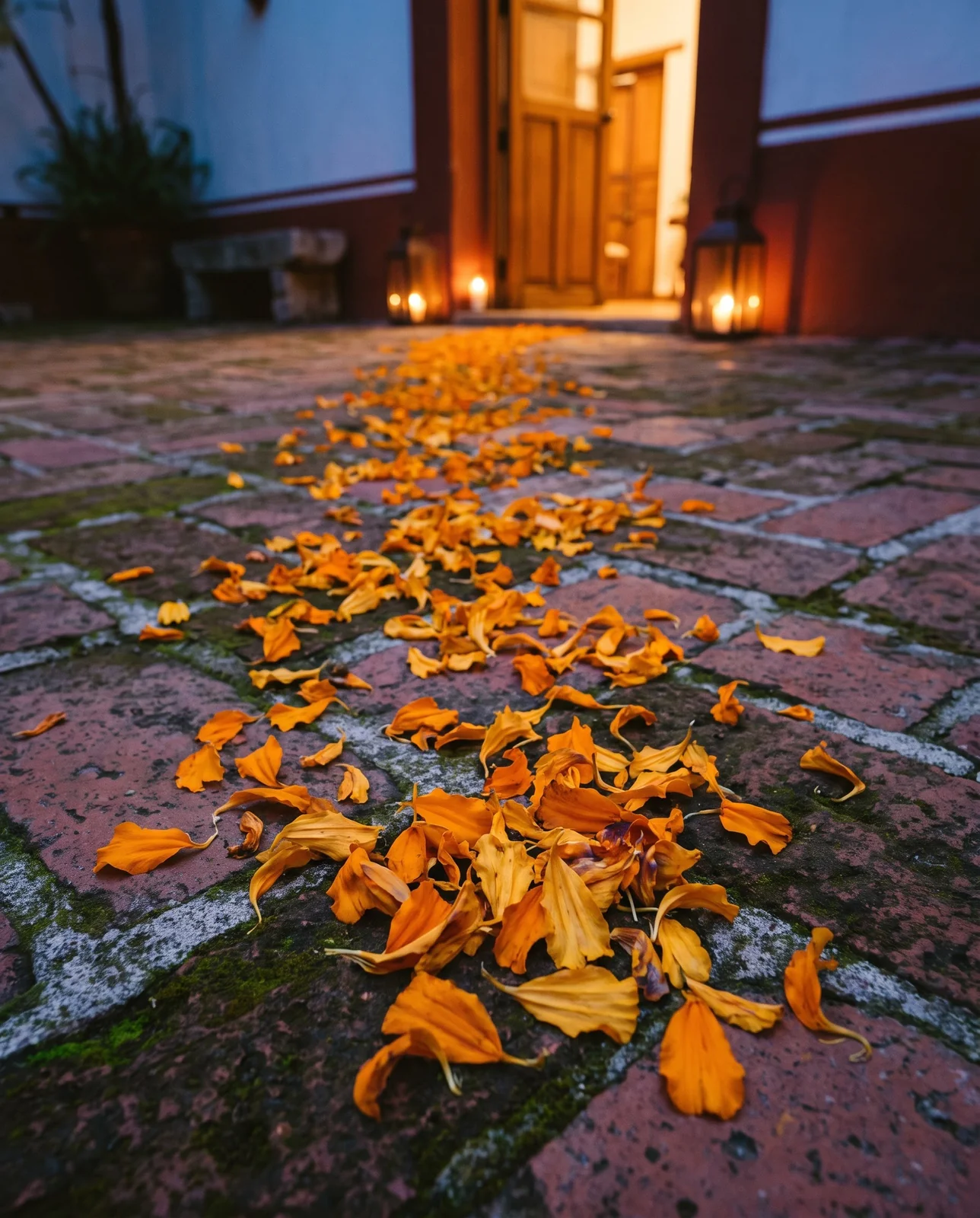
Step 3: the petal path and the cleansing cross Strip the petals from fresh Tagetes erecta heads and lay a solid, unbroken line of orange from the front door of the house to the foot of the ofrenda. In smaller Mexican towns the path often starts much further out, at the gates of the cemetery, and runs the whole way to the doorstep. At the base of the altar, shape loose petals into a distinct cross on the floor: souls are held to be cleansed of sin and guilt as they tread across it on their way to the memorial feast.
Fresh flowers or paper Fresh blooms carry the scent, and that is the whole argument for them. Paper marigolds are not a fallback: crepe and tissue flowers are an established practice across Mexico, and the Desert Botanical Garden built a public Mega Altar out of roughly 4,000 handmade paper marigolds. They also outlast the problem UF/IFAS Extension describes, since fresh blooms deteriorate quickly and hang on the stem as they go, while paper takes temperature swings and candle heat and comes back out of the box the following year. The usual answer is a split: fresh petals on the floor and in the vases where the scent does its work, paper on the arch and the high garlands that nobody can reach to refresh.
Building the altar, one step at a time
Five steps, worked in order, take an ofrenda from a bare table to a finished altar.
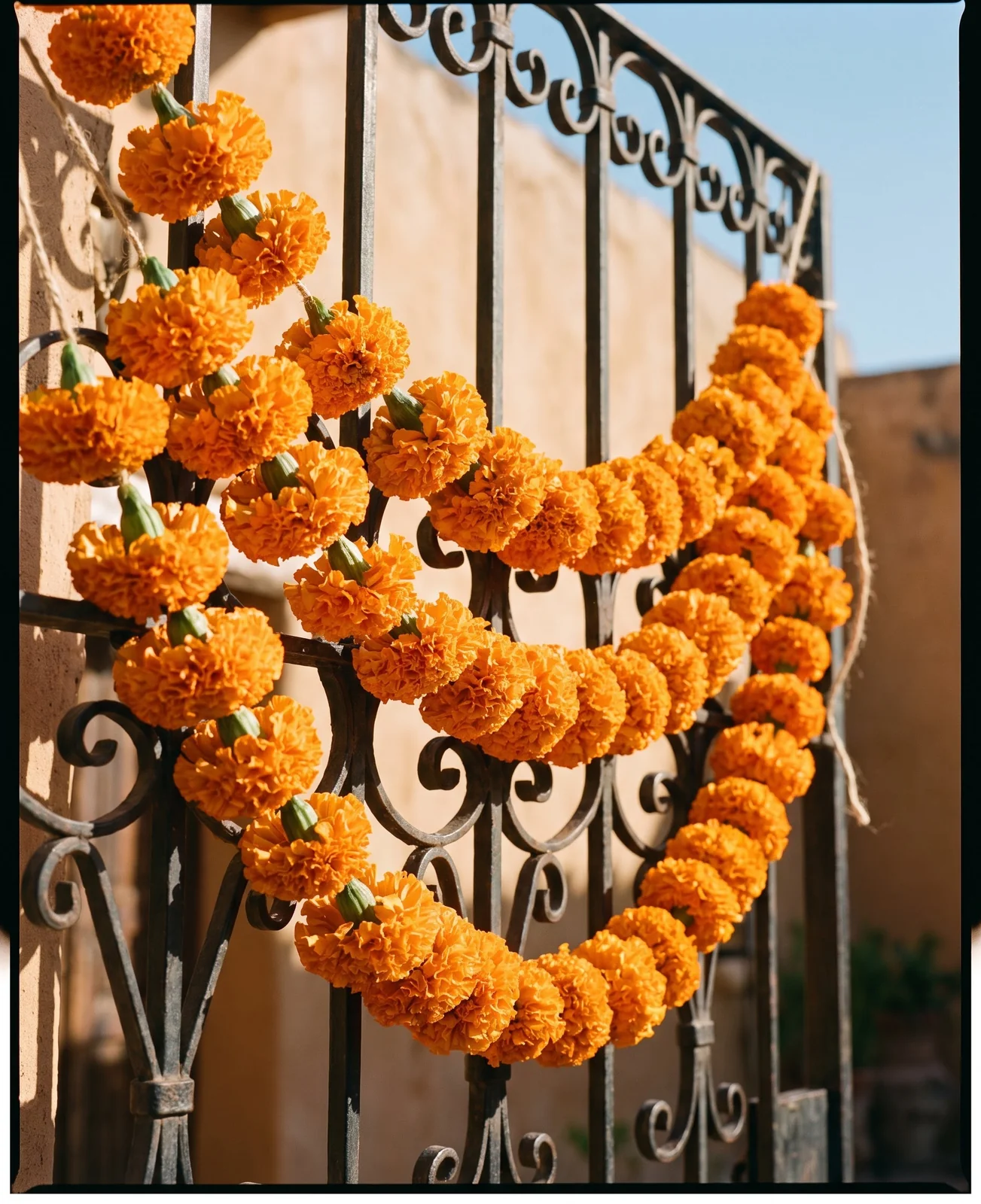
Arranging by budget
A complete floral ofrenda does not take a commercial florist package. The same arrangement scales across three tiers, on materials that are easy to get.
Tier 1: the intimate home altar For a small apartment or a modest budget: one or two potted Tagetes erecta or French marigolds (Tagetes patula) standing at the base of the table, whatever the garden still has to cut, and a single bunch of fresh marigolds from the grocery store. Petals from three or four mature heads are enough for a short doorway-to-altar trail and a small cleansing cross on the floor.
Tier 2: the traditional family altar Three to five bunches of cut Tagetes erecta, one bunch of velvety Cristata cockscomb, and a spray of white baby’s breath, standing in plain glass jars across the cloth. The mix exists for contrast: mourning burgundy against golden heads, with white filler breaking up the mass. A generous petal path leads from the entryway to the base of the altar.
Tier 3: the community or classroom installation For a large multi-tier display in a school or a public space, bulk handmade paper marigolds carry the structure, which is the economical and durable route. Crepe or tissue paper yields hundreds of bright heads for a full overhead arch and hanging garlands, and two bunches of real marigolds supply the petals for the ceremonial floor path, the one place the scent has to be real.
Three ofrenda budgets, and what each buys
The same altar scales from a single home table to a classroom installation. What changes is volume and whether the marigolds are fresh or paper.
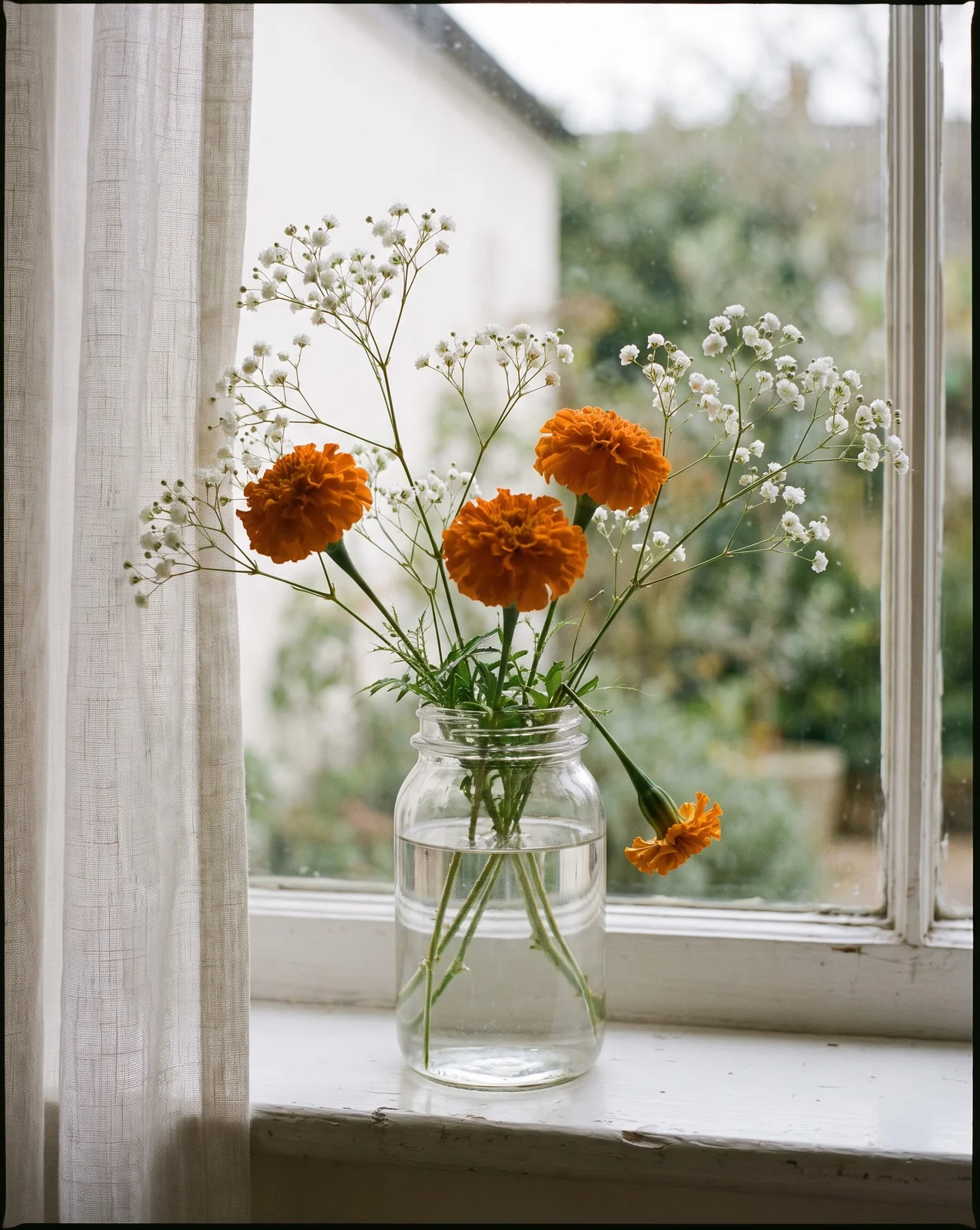
Frequently asked questions
Is cempasúchil the exact same plant as an African marigold?
Yes. Cempasúchil is Tagetes erecta, the same species sold in North American nurseries as African or American marigold. Mexican heirloom selections often run taller and smell stronger, but a plant bought off a garden-center bench does the same ritual job.
Can I use paper or artificial flowers on an ofrenda?
Yes. Handmade crepe and tissue marigolds are a traditional practice in their own right, used widely across Mexico, and they turn up in institutional altars as readily as home ones: the Desert Botanical Garden’s public Mega Altar was built from 4,000 of them. Paper takes candle heat without wilting and will not decay partway through the three days.
What should I do if fresh Mexican marigolds are unavailable?
If large-flowered Tagetes erecta cannot be found in late October, smaller French marigolds (Tagetes patula), golden chrysanthemums, or orange carnations stand in for the color. Pair whatever you find with handmade paper marigolds and the altar gets both the color and the visual structure.
Is it respectful for non-Mexican families or classrooms to build an ofrenda?
Yes, as long as the altar is built as a sincere memorial rather than as Halloween decor. Name the people it is for, whether family members, historical figures, or community ancestors, and give them the photographs, the food they liked, and the traditional flowers. An ofrenda made in earnest is understood as such.
How do I prevent cut marigolds from rotting before November 2nd?
Keep cut stems in cool fresh water and away from direct candle flames, and strip the lower leaves so none of them sit below the waterline. UF/IFAS Extension notes that wet conditions bring on Botrytis blight, which browns and rots the flower heads. Lay the loose floor petals on the morning of October 31st rather than days ahead.
More About Occasion flowers
Thanksgiving flowers: centerpieces you build yourself
Diwali flowers: marigold garlands and DIY toran
Halloween flowers: real black blooms and safe DIY builds
Homecoming corsage and boutonniere guide
Fall bouquet from your garden: what to cut and how
Fall wedding flowers by month, color, and budget
Friendship flowers

Thank you flowers
Get well flowers
Enjoying our flower guides? Add YourFlowersGuide as a preferred source on Google. It helps more readers find us.
Add to Preferred Sources