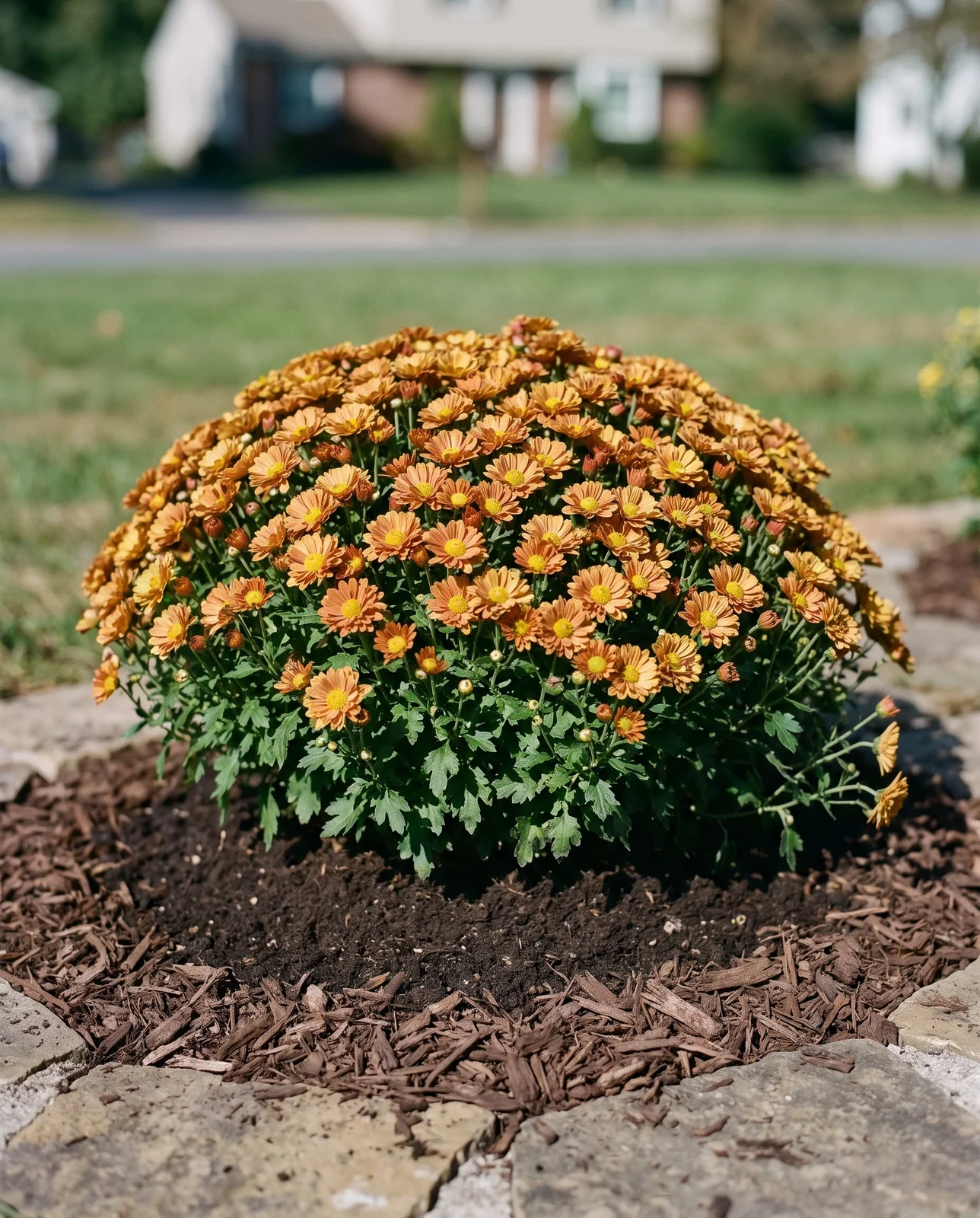
Garden mums (Chrysanthemum x morifolium) bought in full bloom in September often look finished three weeks later: papery brown petals, stems drooping over the pot rim, a mound that feels dry and brittle to the touch. In most cases nothing was done wrong. The plant is either dry, waterlogged, frost-nipped, or simply at the end of its natural bloom cycle, and which of the four it is decides whether you keep watering it or write it off.
The second question arrives right behind the first: will it come back. That depends almost entirely on what was in the pot to begin with, because garden centers stock cold-hardy garden mums and tender florist mums side by side and the tag rarely spells out which is which. A hardy plant with its crown in well-drained ground is a perennial that returns for years. The same plant left root-bound in its nursery pot through a hard freeze usually is not. What follows covers how to tell the two kinds apart, the light and water a mum needs, a symptom-by-symptom read on browning, what to cut and what to leave standing after the flowers go, the zones where mums overwinter on their own, and what the ASPCA says about pets.
On this page 7 sections
Garden mums vs. florist mums: know which one you bought
The autumn mum, Chrysanthemum x morifolium, is an herbaceous perennial in the daisy family, Asteraceae, and NC State Extension traces it to a complex hybrid of five Chinese species: Chrysanthemum argyrophyllum, Chrysanthemum dichrum, Chrysanthemum indicum, Chrysanthemum nankingense, and Chrysanthemum zawadzkii. Stems and foliage grow through spring and summer, but the plant does not flower until autumn. UF/IFAS Gardening Solutions puts bud set and bloom in the short-day stretch running from fall through spring, as daylight hours shorten.
The myth that gets potted mums thrown out too soon
The myth: All potted mums sold in autumn are temporary annuals meant to be thrown away after flowering.
The reality: UF/IFAS Gardening Solutions and NC State Extension both describe garden mums as cold-hardy herbaceous perennials that survive winter and return year after year once their crowns sit in well-drained ground. The plant handed over at the register is often a florist mum instead, a tender type with no outdoor winter hardiness, and that is the one that will not come back.
Telling the two apart comes down to the label and the buds. UF/IFAS Gardening Solutions gives the plants sold as garden mums considerably more cold hardiness than those labeled florist mums: garden mums are bred for landscape performance and outdoor cold tolerance, while florist mums cannot take freezing ground and suit short-term indoor display only. At the bench, UF/IFAS advises picking a well-shaped specimen carrying plenty of unopened buds rather than one already at full bloom, because a higher bud count keeps the flowering going as the buds open gradually over weeks.

Light and water mums actually need
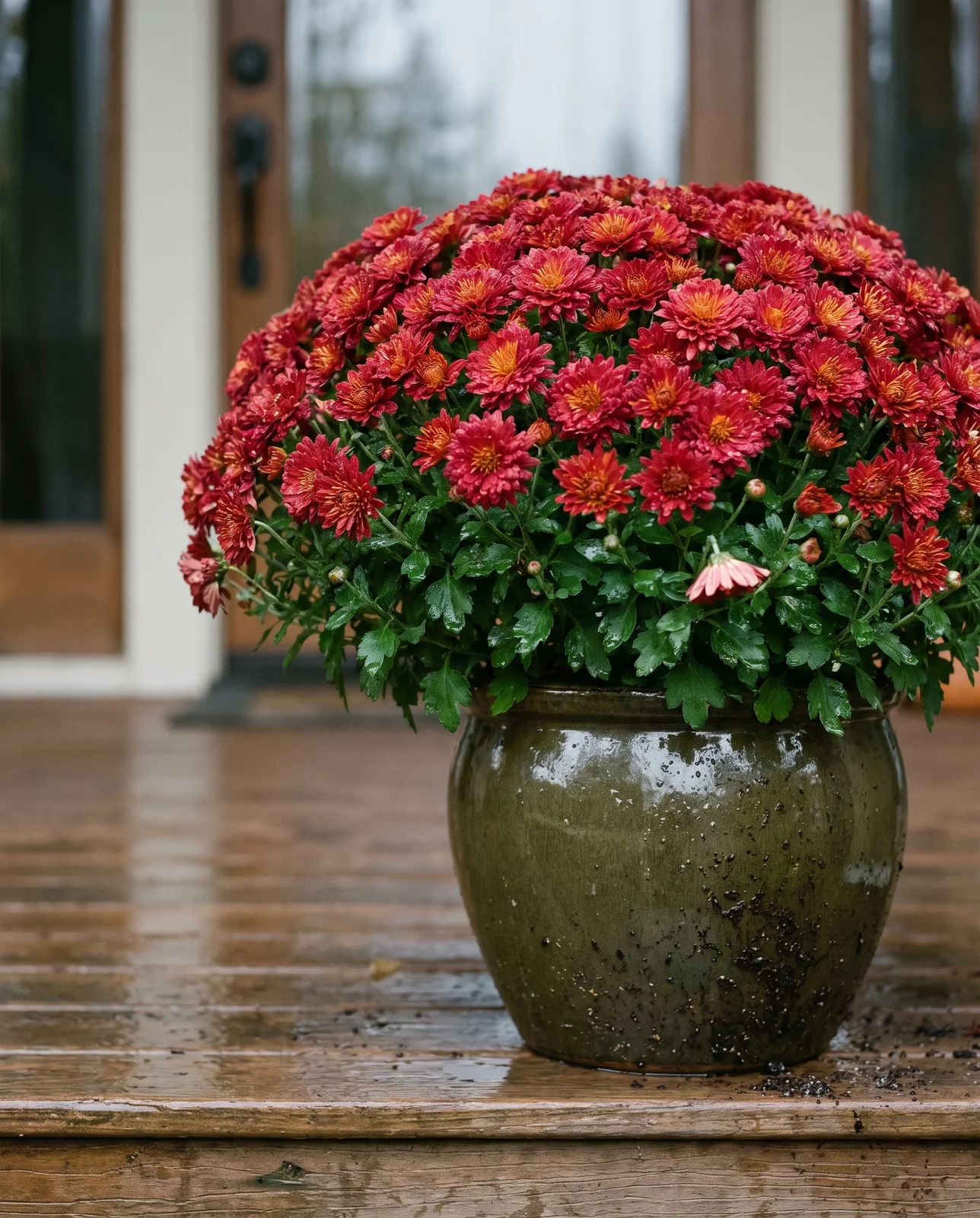
Garden mums grow densest in full sun and well-drained soil, the pairing NC State Extension and UF/IFAS Gardening Solutions both name first. A spot with only morning or afternoon sun still works, per UF/IFAS, and in hot southern gardens NC State recommends shelter from intense afternoon sun so the plant does not take on heat stress. Light also governs habit: too much shade makes the stems sprawl outward instead of holding the erect, compact mound a healthy plant makes, roughly 1 to 3 feet tall and 1 to 2 feet across. The trap is that shade does not announce itself the first season. Clemson Cooperative Extension puts it plainly: a mature plant set in a shady spot gives nice color the first year and does very poorly the following year, coasting on energy it banked before it was moved.
Water matters as much as light. Clemson Cooperative Extension notes that mums have high water demands, highest while they are actively blooming, and that a moisture deficit slows growth or halts it entirely. A field-grown plant moved into a landscape bed needs a generous soak at planting so it does not wilt before the root system re-establishes. UF/IFAS puts garden mums in soil enriched with plenty of organic matter so excess water drains away freely instead of standing around the crown. Feeding is simple but frequent: a container mum is watered as needed and carried through the season on a slow-release fertilizer, per UF/IFAS, while Clemson HGIC treats mums as heavy feeders that respond to a weekly dose of water-soluble fertilizer during active growth.
Why mums turn brown: a symptom-by-symptom fix
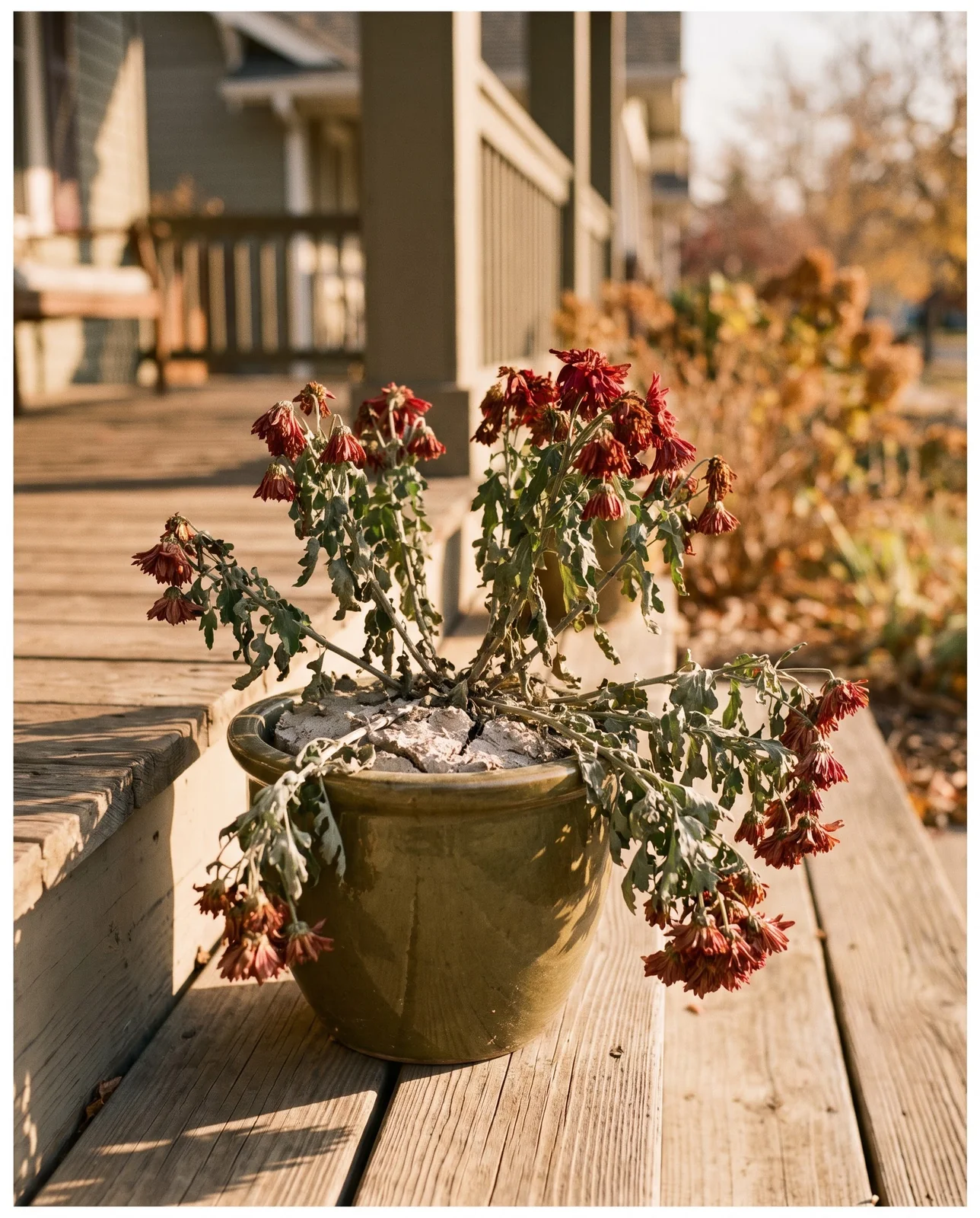
Browning foliage and collapsed flowers come from four specific causes rather than generic decline. The most common in a small nursery pot is plain drought made worse by root binding: the root mass fills the container so completely that moisture cannot reach the core, so leaves curl, petal margins turn crispy brown, and stems lose turgor. The opposite failure looks similar from across the porch. Waterlogged soil pushes oxygen out of the root zone, the fine root hairs rot, and the whole plant wilts with wet soil sitting under it. Some cultivars are less forgiving than others: Clemson Cooperative Extension singles out the dark lavender daisy ‘Stargazer’ as unusually sensitive to overwatering and poor drainage.
What the browning on your mum actually means
Four different causes produce browning that looks alike at a glance. Match the symptom below before treating for the wrong one.
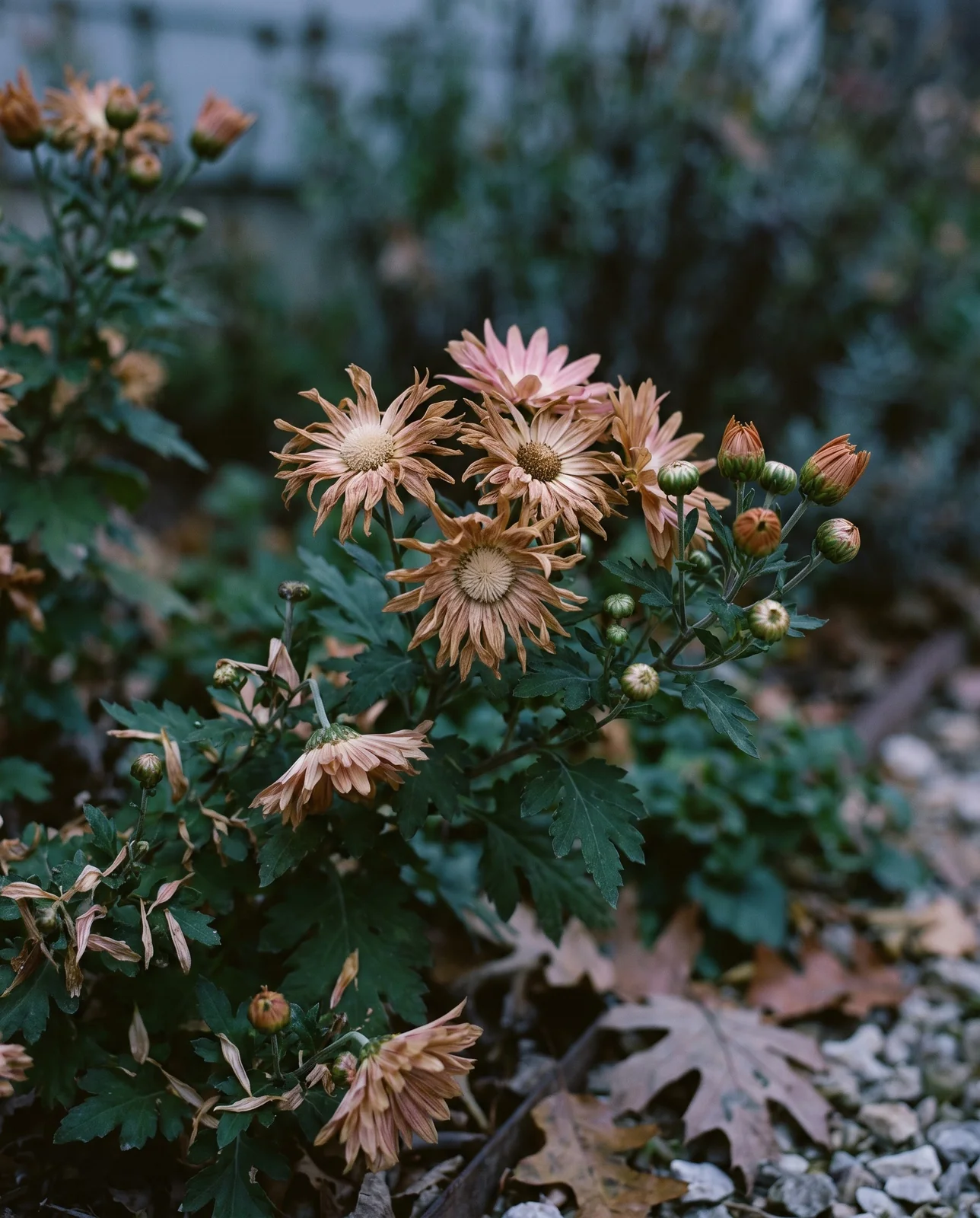
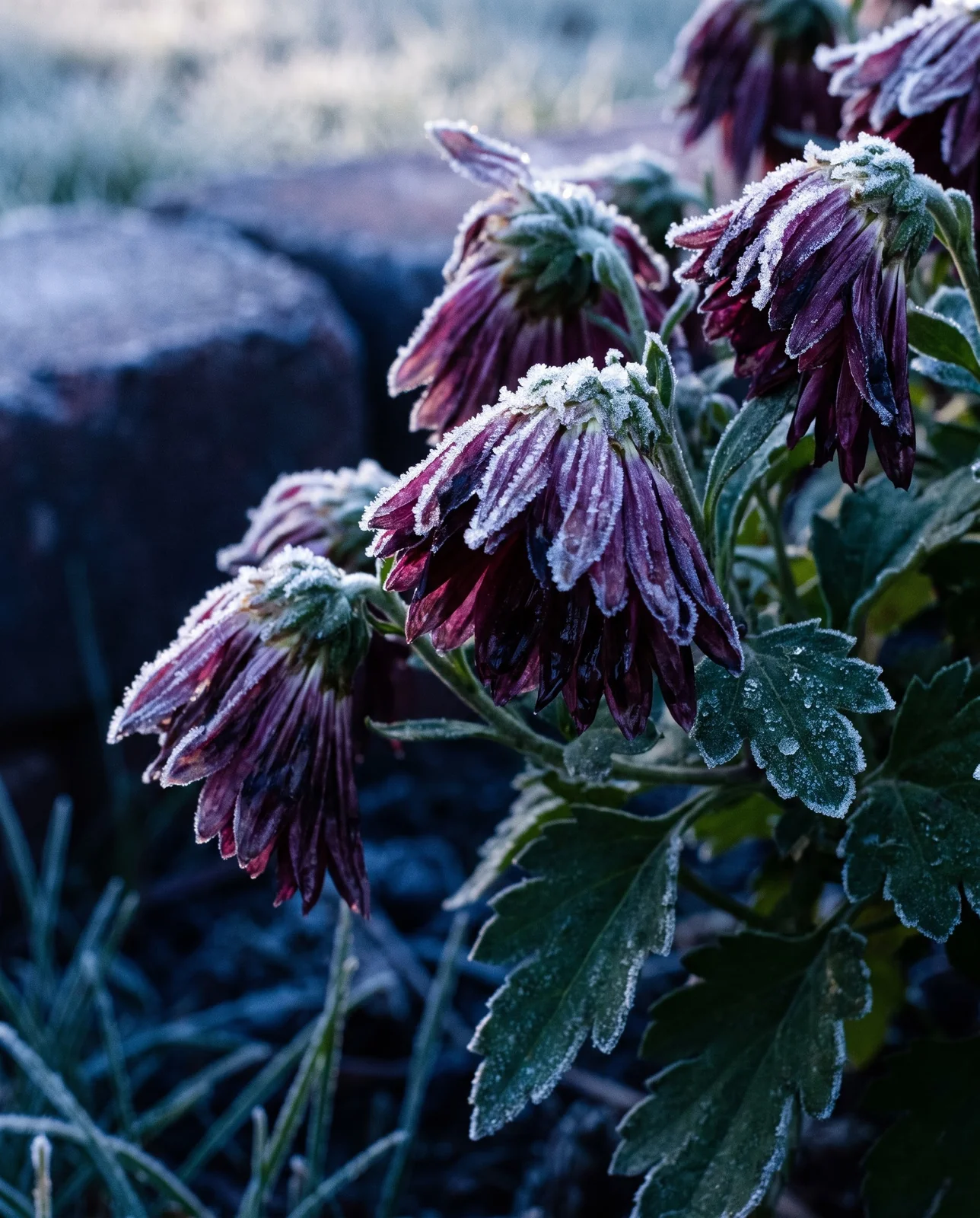
The last two causes are the ones people misread as death. A hard autumn freeze turns open petals limp, dark, and brown overnight while the stems and roots underneath stay fully viable, and ordinary senescence works slowly, drying older heads into pale husks across several weeks while neighboring buds keep opening. Insects and disease are a smaller part of the picture. NC State Extension lists aphids, thrips, spider mites, and lace bugs as occasional pests, along with bacterial blight, powdery mildew, stem rot, rust, root rot, verticillium wilt, and leaf spot as occasional diseases. Watching moisture and air circulation across the whole bed, including autumn companions like marigolds and asters, keeps most of the fungal ones from taking hold.
After the blooms fade: deadhead or leave them?
Deadheading earns the few minutes it takes. Pulling faded blossoms off keeps the plant looking healthy and attractive and, as UF/IFAS Gardening Solutions puts it, encourages new blooms, because a plant that is not building seed spends that energy on the buds still waiting. Keep at it until freezing weather ends flowering for the season, then stop and leave the dormant top growth standing through winter. Cut the old woody stems back cleanly in spring, once fresh green shoots emerge at the soil line.
Everything that makes a mum a tight mound rather than a tall, leggy sprawl happens months before it flowers, in the pinching. Begin when spring growth reaches 6 inches and take the tips out, then keep going. NC State Extension frames the season as three cuts across spring and summer with the last around mid-August, which builds compact, bushy growth and prevents premature flowering. Clemson Cooperative Extension gives the same discipline a regional clock: pinch every four weeks and quit in early July in the upper Piedmont and mountains, or early August at the coast. Light pruning any time from late spring through mid-August, whenever stems pass 6 inches, comes to the same thing. Division keeps an established clump going, and here the two sources part company. NC State divides perennial mums in spring every few years, while Clemson HGIC puts it at every one to two years because the clumps spread fast. Either way, root division and stem cuttings are how one plant becomes several.
Will your mums survive winter? Garden mum vs. annual treatment
Whether a mum comes back depends on what it is, when it went in, and where you garden. Clemson Cooperative Extension and NC State Extension both rate garden mums cold-hardy perennials across USDA Hardiness Zones 5a through 9b. Clemson HGIC calls them reliable, hardy perennials throughout South Carolina, even while many buyers treat them as short-season, fall-planted annuals. NC State Extension is blunter about the warm end of that band: in the South these plants easily overwinter outdoors in garden soil, with no protective structure needed.
Winter survival by zone and planting method
Whether a mum returns next spring depends less on the calendar and more on where its roots sit through winter.
North of that band, NC State Extension notes that mums may need to be dug up and overwintered in greenhouses. A plant left in its container has a different problem: thin pot walls give almost no insulation, so the root zone freezes far faster than it would in the ground. Timing decides the rest. Clemson HGIC finds a spring-planted mum makes a fuller, more vigorous plant for the autumn garden than a fall-planted one. A mound dropped into a bed in late autumn beside long-settled perennials like coneflower has very little time to anchor into warm soil before the ground freezes, which is where winter heave and root loss come from.
Are mums toxic to cats and dogs?
Mums are a documented hazard to household pets. The ASPCA lists chrysanthemums as toxic to dogs, cats, and horses, with the trouble coming from sesquiterpene lactones, pyrethrins, and other irritants. Pyrethrins are the same class of compound drawn from chrysanthemum relatives for natural insecticides, which is why swallowing any of the plant sets off such sharp distress in a small animal. Signs of chrysanthemum poisoning include vomiting, diarrhea, hypersalivation, incoordination, and dermatitis.
People are not entirely exempt either. NC State Extension notes that direct contact with the foliage can bring on mild skin rashes and contact dermatitis in sensitive individuals handling the plants. If a cat or dog grazes on porch containers or bed edges, keep potted mums up on a pedestal out of reach, and the guide to flowers that are safe for cats and dogs covers what to plant instead.
FAQ
Are mums annual or perennial?
Both, depending on which kind you bought. True garden mums, Chrysanthemum x morifolium, are cold-hardy herbaceous perennials rated for USDA Hardiness Zones 5a through 9b, and they return each spring from crowns set in well-drained garden soil. Florist mums sold in floral departments are tender types with no outdoor winter hardiness, so those really are one-season plants.
Why did my potted mums wilt and turn brown so quickly?
Usually severe root drought inside the pot. When root-bound container soil dries out, moisture cannot reach the root core, so petal edges crisp and stems lose turgor on a plant that looks like it was watered. The reverse happens too: a container with poor drainage holds water, the roots rot, and the plant wilts with soggy soil under it.
Can I plant fall potted mums in the ground and expect blooms next year?
Yes, as long as it is a hardy garden mum and not a florist mum. It is not the strongest start, though. Clemson HGIC finds spring-planted mums establish deeper root systems and fuller plants than fall-planted ones, so a plant going in during late autumn is working against the calendar. Get the crown into well-drained ground as early as you can, so the roots settle before hard freezes arrive.
When should I stop pinching back mums?
Around mid-August at the latest, since pinching after that cuts off the autumn flower buds already forming. Clemson HGIC tightens the timing by region: stop in early July in the upper Piedmont and mountains, early August at the coast. From there the plant sets its own buds as daylight hours decrease.
Are mums poisonous to cats and dogs?
Yes. The ASPCA lists chrysanthemums as toxic to dogs, cats, and horses, from sesquiterpene lactones, pyrethrins, and other irritants. Eating any part brings on vomiting, diarrhea, hypersalivation, loss of coordination, and dermatitis.
More About Chrysanthemum
Chrysanthemum tea and edible flowers from garden to cup and kitchen
Chrysanthemum pest and disease guide including aphids leaf miners and white rust

Fall porch and front door displays using chrysanthemums pumpkins and autumn decor

How to pinch chrysanthemums for bushy plants loaded with fall flowers
Exhibition chrysanthemums and the art of growing show-stopping single blooms
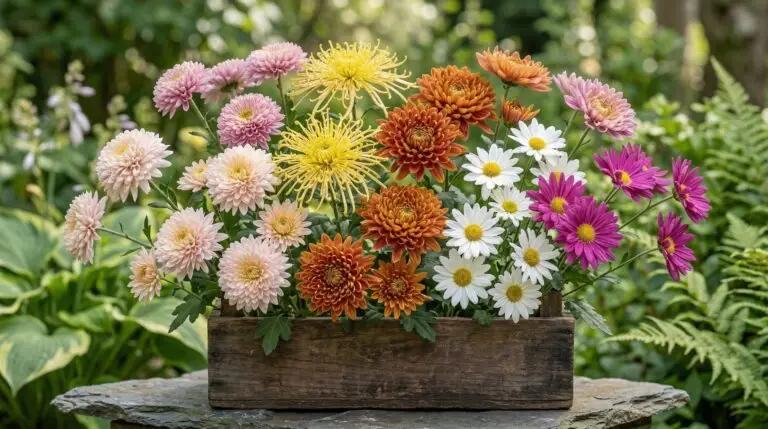
Hardy garden chrysanthemum varieties that survive winter and come back stronger

Companion plants for mums: what to grow and what to avoid
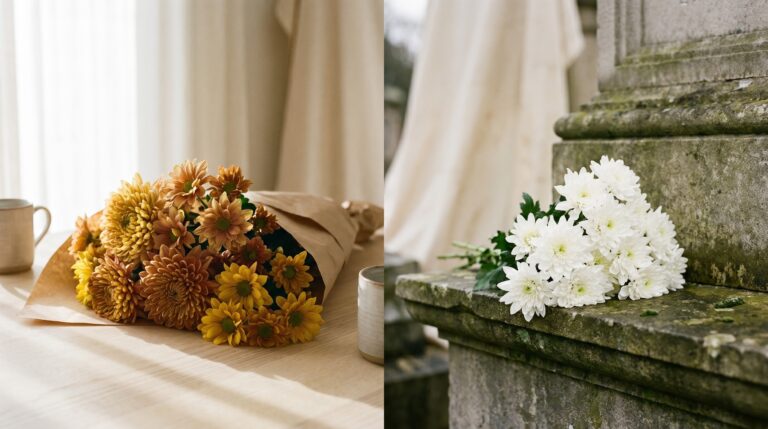
Chrysanthemum meaning, and why it says joy in one country and death in the next

How to divide chrysanthemums in spring for healthier plants and more blooms
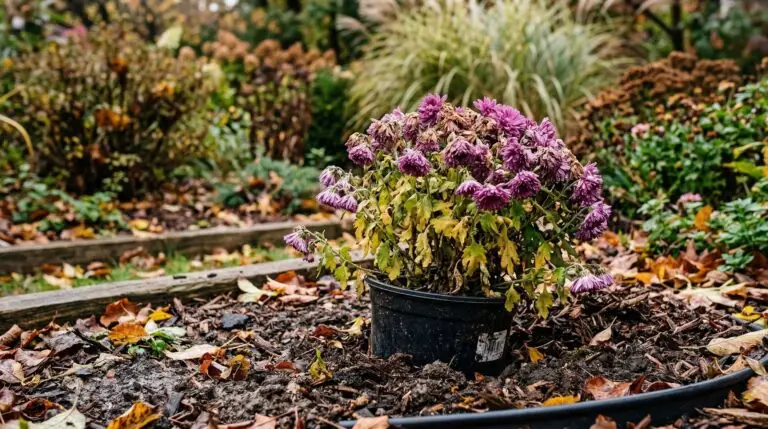
Growing garden mums as perennials instead of throwing them away every fall
Enjoying our flower guides? Add YourFlowersGuide as a preferred source on Google. It helps more readers find us.
Add to Preferred Sources