October is the month the flower garden runs on two clocks at once. Garden mums, native asters, and goldenrod carry the last strong color through northern beds, sasanqua camellia and late perennials keep the Southeast in bloom, and marigolds and cosmos hold containers going in zones 9 through 11. At the same time the plants that carried the summer, dahlias, cannas, begonias, and gladioli, have to come out of the ground before a hard freeze reaches them.
The two schedules pull in opposite directions. Spring-flowering bulbs go into the ground this month at a depth of two to three times their height, while tender tubers come up, dry off, and go into storage at temperatures that differ by plant. Between those jobs sits everything still flowering, plus the cold-hardy annuals that hold beds and containers through winter. Which job comes first depends on when freezing nights reach your area: gardeners on the mild Pacific coast are still cutting dahlias while Midwest borders are already rimmed with frost. What follows covers what is blooming region by region, what to plant now, when to lift tender bulbs and at what temperature to store them, what a florist has in the cooler this month, and the October birth flower.
On this page 6 sections
What’s blooming in October, region by region
What flowers in October depends on how far south the cold has traveled. The USDA Plant Hardiness Zone Map and its minimum temperature zones set the frame: colder zones lean on frost-tolerant perennials and late-flowering shrubs for the last weeks of the season, while zones 9 through 11 keep bedding plants and summer holdovers running straight through the month. The five regional notes below follow that split.
What is blooming by region this fall
Five regions, what is open in each, and where the flowering season stands. Each note carries the extension office's own reading where one is named.
Northeast
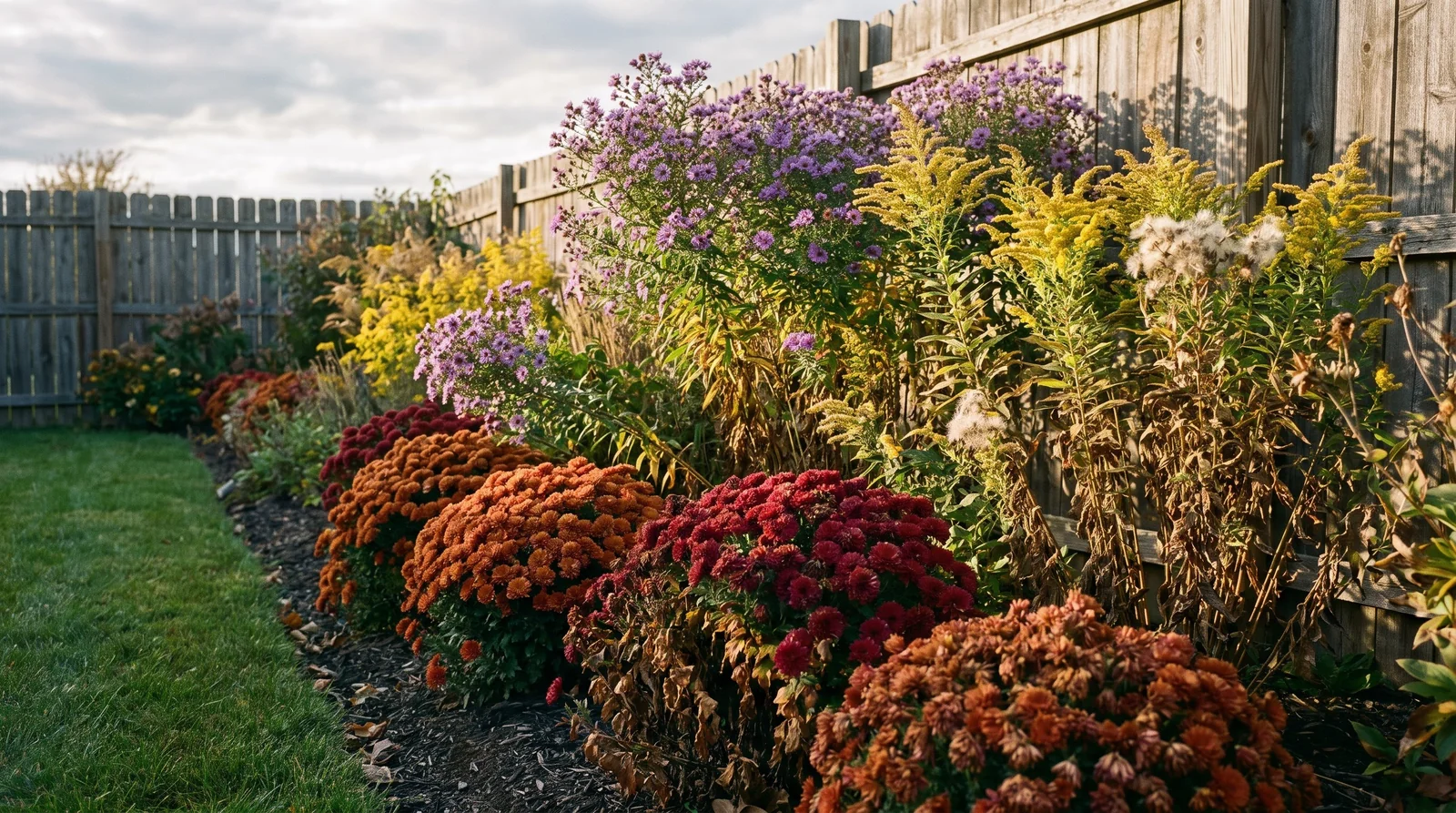
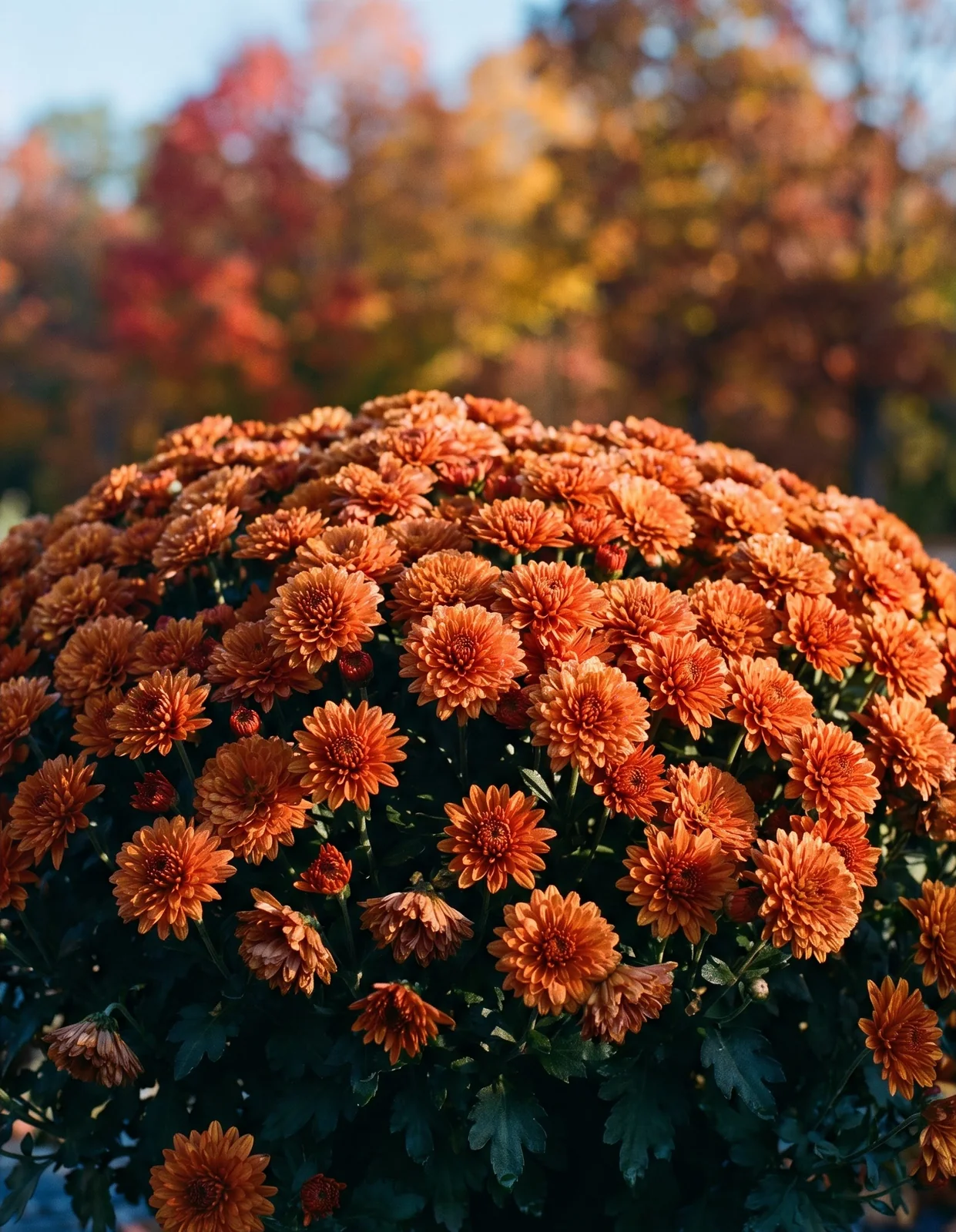
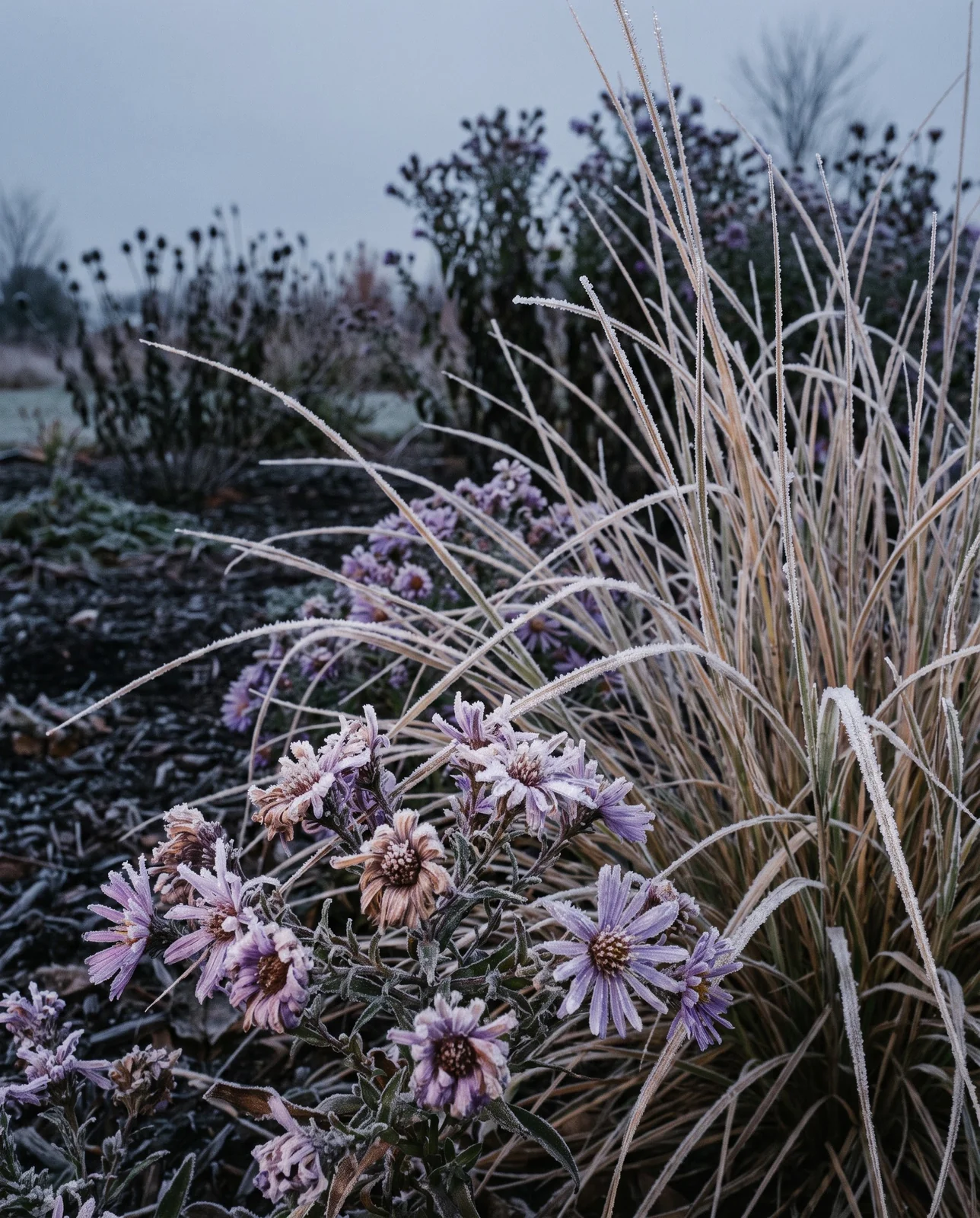
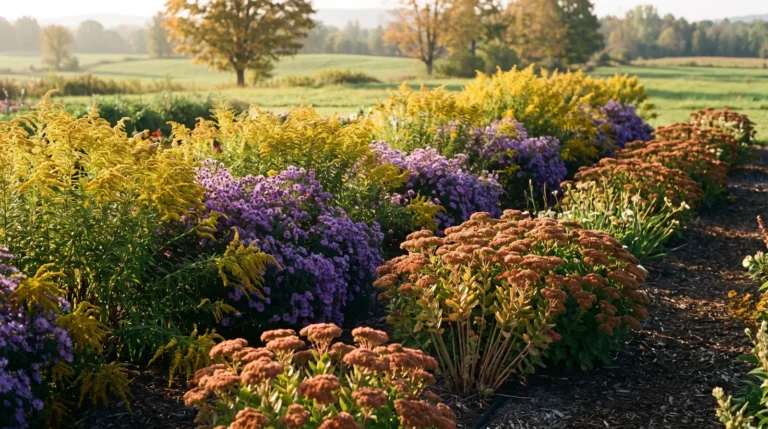
Garden mums reach peak flowering in the Northeast just as the fall foliage turns. Native asters come through from September in purple and blue and take early autumn weather without damage, but as nights drop toward freezing they slow down and start setting seed heads. Mums hold their flower heads longest, staying open until a killing frost browns the petals.
Midwest
Across the Midwest the flowering window closes as cold air pushes south. Chicago Botanic Garden reads October’s falling leaves as the sign of a major seasonal transition, with a hard frost on the way. Garden mums and late asters supply the last open blooms in perennial borders until sub-freezing nights stop growth and take the top growth down to the soil line.
Southeast
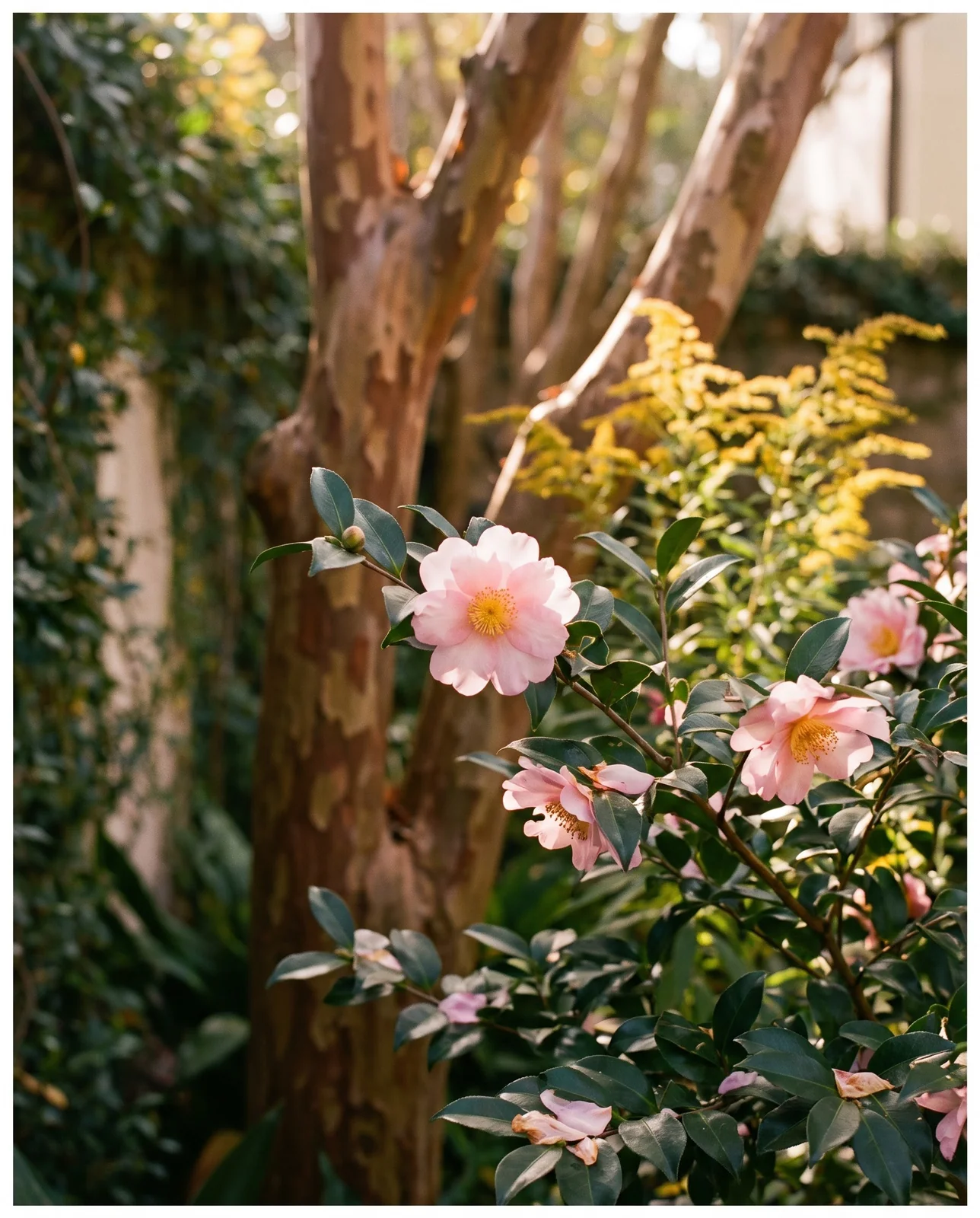
In the Southeast the list of autumn-flowering plants blends woody shrubs with herbaceous perennials, and NC State Extension records it county by county. Caldwell County logs October bloom on chrysanthemums, asters, goldenrod, and the Franklinia tree. Neighboring Alexander County names sasanqua camellia, hardy clematis, crepe myrtle, and Joe Pye weed alongside the same asters and goldenrod. Caldwell also logs the berry display that carries color once the flowers thin out: American beautyberry, nandina, pyracantha, Washington hawthorn, and the Burford, Chinese, Foster, and Nellie Stevens hollies. October is also when gardeners here work acidifying amendments into azaleas and camellias to hold the soil acidic for the roots.
Pacific Northwest
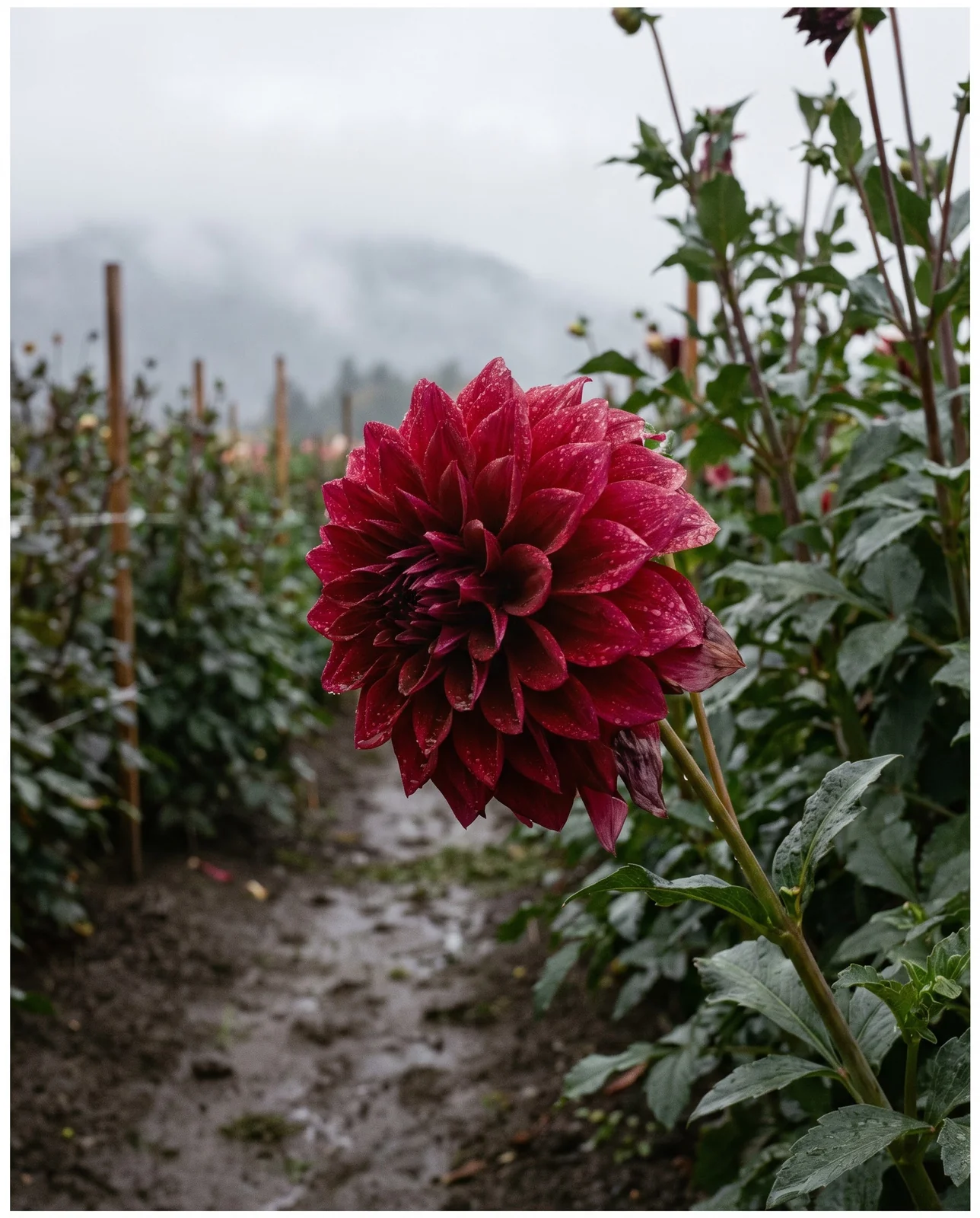
The mild coastal climate of the Pacific Northwest holds dahlias in flower well into October, and gardeners here cut them weeks after colder inland regions have taken their killing freezes. Even with the blooms still coming, growers watch the weather and the soil so tubers come up and go into storage before winter wet and freezing ground set in.
South and Southwest
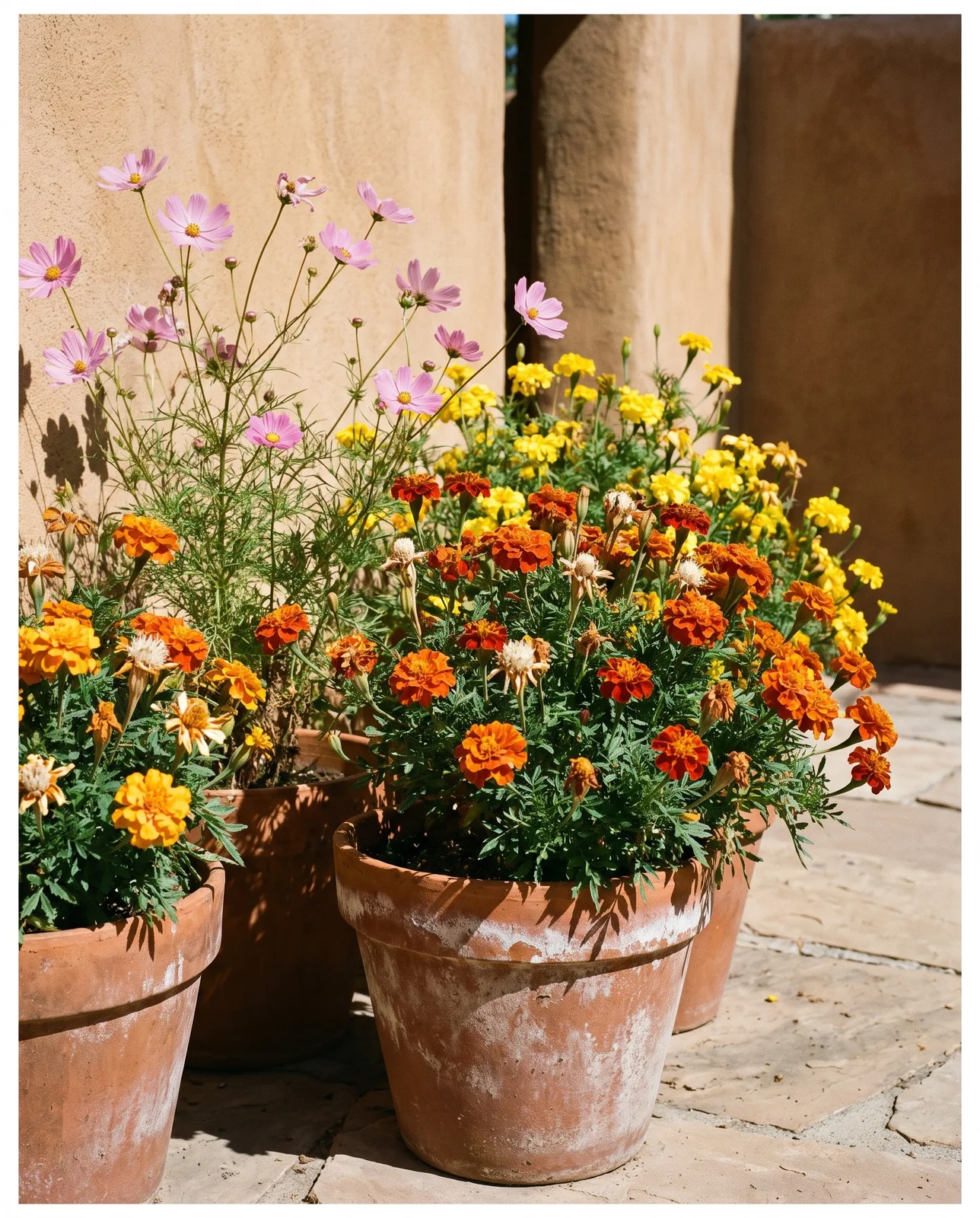
In zones 9 through 11, October reads as relief rather than an ending. Marigolds and cosmos keep beds and outdoor containers in flower through sunny days and mild nights, holding steady color across the whole month while northern gardens shut down.
What to plant now
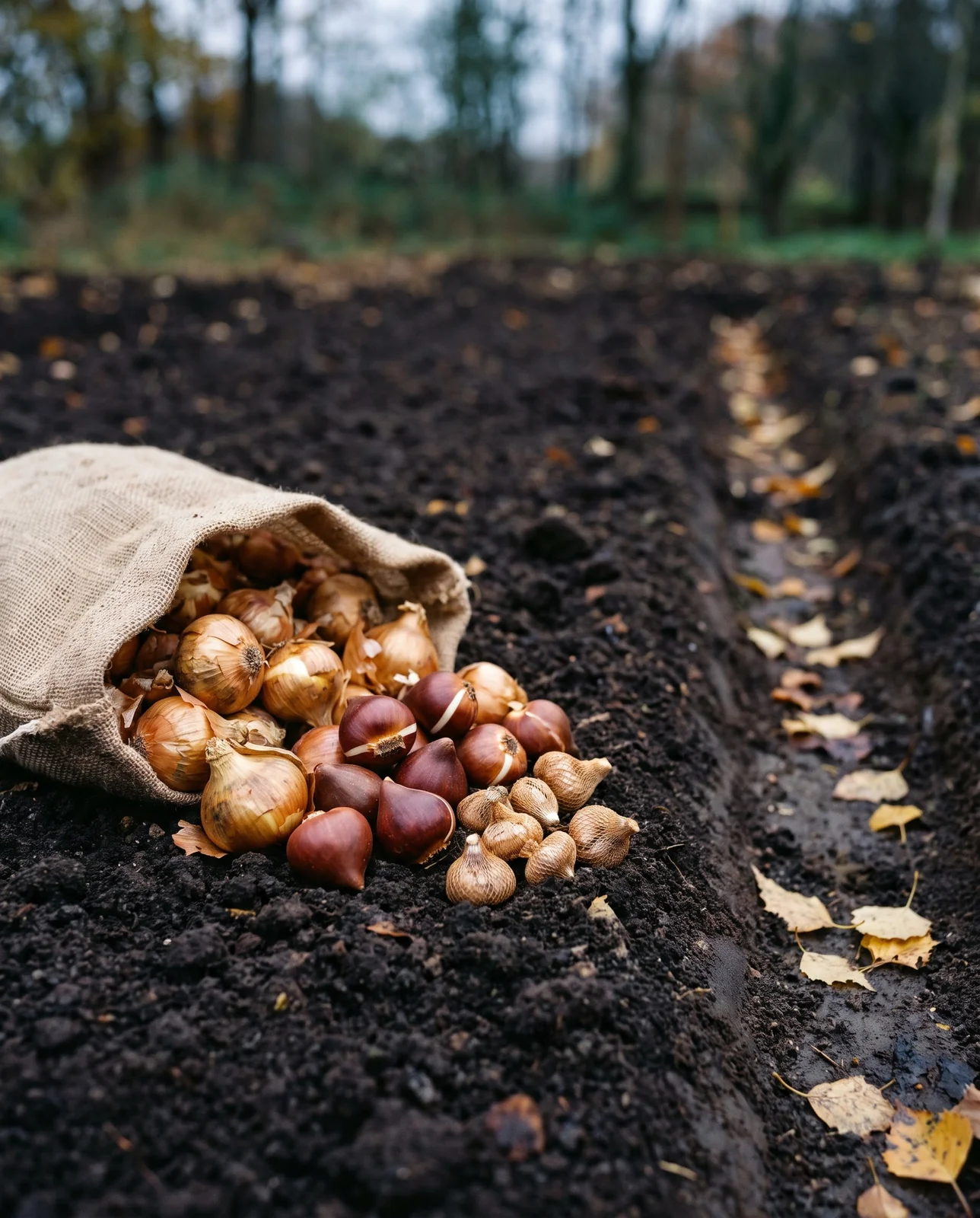
Spring-blooming bulbs go in through October: daffodils, tulips, crocuses, and hyacinths. Chicago Botanic Garden puts them in a sunny, well-drained site at a depth of two to three times the height of the bulb, and both that checklist and Utah State University Extension hold the window open into early November as long as the ground has not frozen. Sprinkle a slow-release granular bulb fertilizer into the top layer of soil above the planting hole as you go, and give established clumps the same slow-release bulb booster as a top dressing over the soil above them. Where rodents, deer, or rabbits have emptied a bulb bed before, the same checklist points to five they leave alone: daffodils (Narcissus species), fritillary (Fritillaria species), grape hyacinth (Muscari armeniacum), ornamental onion (Allium species), and winter aconite (Eranthis hyemalis).
Fall planting depths and storage temperatures
Three tasks carry hard numbers for the season: bulb planting depth, cold-hardy annual timing, and the temperatures for storing tender tubers over winter.
Cold-hardy annuals planted now carry color into the months when little else does. Utah State University Extension names pansies, primrose, kale, and ornamental cabbage for October beds and containers, and NC State Extension in Alexander County makes the case for pansies in particular: set out in autumn, they pay back across autumn, winter, and spring. Utah State University Extension also puts garlic cloves in from mid-October through early November. Where a bed holds no fall vegetable crop, a cover crop of hairy vetch, winter rye, or crimson clover keeps the soil covered until spring.
For flowers indoors ahead of the season, pot spring bulbs early in the month, move them into cold refrigeration, and count twelve weeks; that is the point at which NC State Extension in Caldwell County brings them out into the warmth of the house to start blooming. Early to mid-October is also the window to lift, divide, and replant crowded spring bulbs, perennials, and peonies once the foliage has begun to die back.
This month’s one task
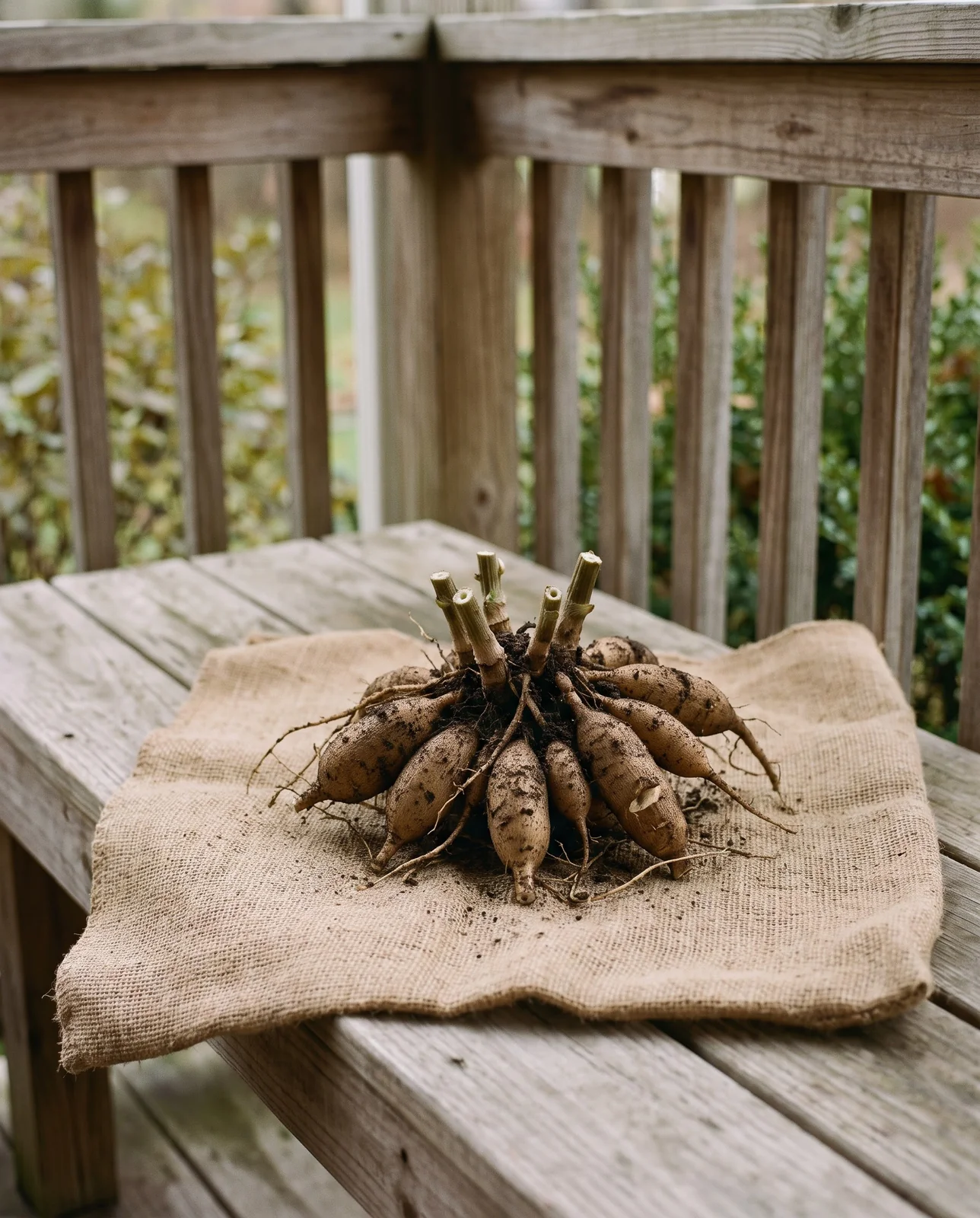
October’s main job is getting tender summer bulbs, tubers, and corms out of the ground, cleaned off, and into storage before frozen soil ruins them. The three sources on this page do not set the same trigger: NC State Extension digs gladioli, dahlias, and caladiums before frost arrives, Utah State University Extension waits until the foliage of gladiolas, dahlias, begonias, and canna lilies has died down, and Chicago Botanic Garden lifts a few weeks after a killing frost has blackened the top growth. Taken together they bracket a window that opens when frost takes the foliage and closes when the ground freezes hard.
Storage is where one umbrella term breaks into two rules. Chicago Botanic Garden cuts the stems and foliage of cannas (Canna species), dahlias (Dahlia species), and tuberous begonias (Begonia x tuberhybrida) back to 4 to 5 inches before lifting, then holds the roots in a darkened room between 40 and 55 degrees Fahrenheit; Utah State University Extension gives the same group a tighter 45 to 50 degrees, which sits inside that band. Gladioli (Gladiolus species) corms want it colder, 35 to 45 degrees, in breathable paper bags or open-weave mesh.
Two more plants need their own handling. Tuberose (Polianthes tuberosa), once dug and stripped of foliage, goes into a pot of very dry soil in a darkened, warm room. Tropical water plants have all foliage and flowers cut off, and their tubers are buried in a container of moist sand held at 55 degrees.
The rest of October’s list reaches past the flower beds. Utah State University Extension covers tomatoes still ripening outdoors with a blanket or tarp against an early frost, while Chicago Botanic Garden puts the green ones in paper bags in a cool basement to finish; harvested winter squash keeps in a cool, dry spot at 50 to 55 degrees. Woody plants get two different instructions in the same month: NC State Extension warns against pruning landscape shrubs in September or October, since late cuts push soft growth that freezes, while Utah State University Extension has long rose canes headed back so a heavy snow load cannot break them. Newly planted trees and shrubs take 2 to 3 inches of shredded bark mulch, and young trunks take a 12 to 16 inch collar of fine-mesh hardware cloth tacked into the soil about 3 inches out against gnawing rabbits.
What’s in the florist’s cooler this month
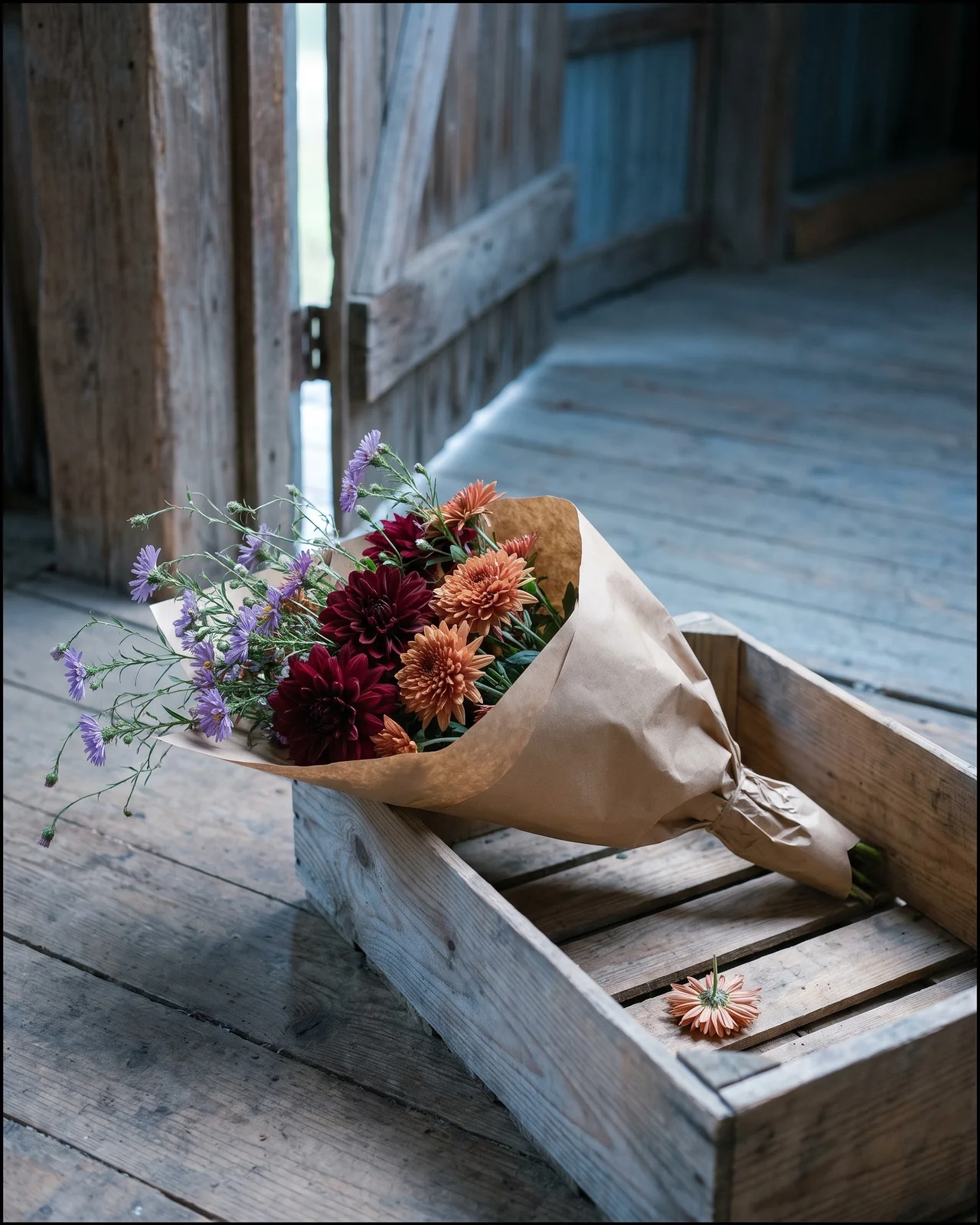
A bouquet built in October is mostly the last of the field and the first of the dried. Florists carry the final local dahlia cuts, decorative and dinnerplate types in deep burgundy, rust, bronze, and plum, and because the outdoor harvest ends with the first killing freeze, these stems close the local cutting season. Cut chrysanthemums fill the cooler buckets in bronze, gold, copper, and dark red, and asters in violet and lavender do the fine-textured work that keeps the heavy composite flowers from crowding each other.
As the volume of fresh field cuts drops through late October, dried material moves into mixed bouquets. Stems of celosia and statice bring texture and autumn color that outlast the fresh flowers standing beside them.
October birth flower
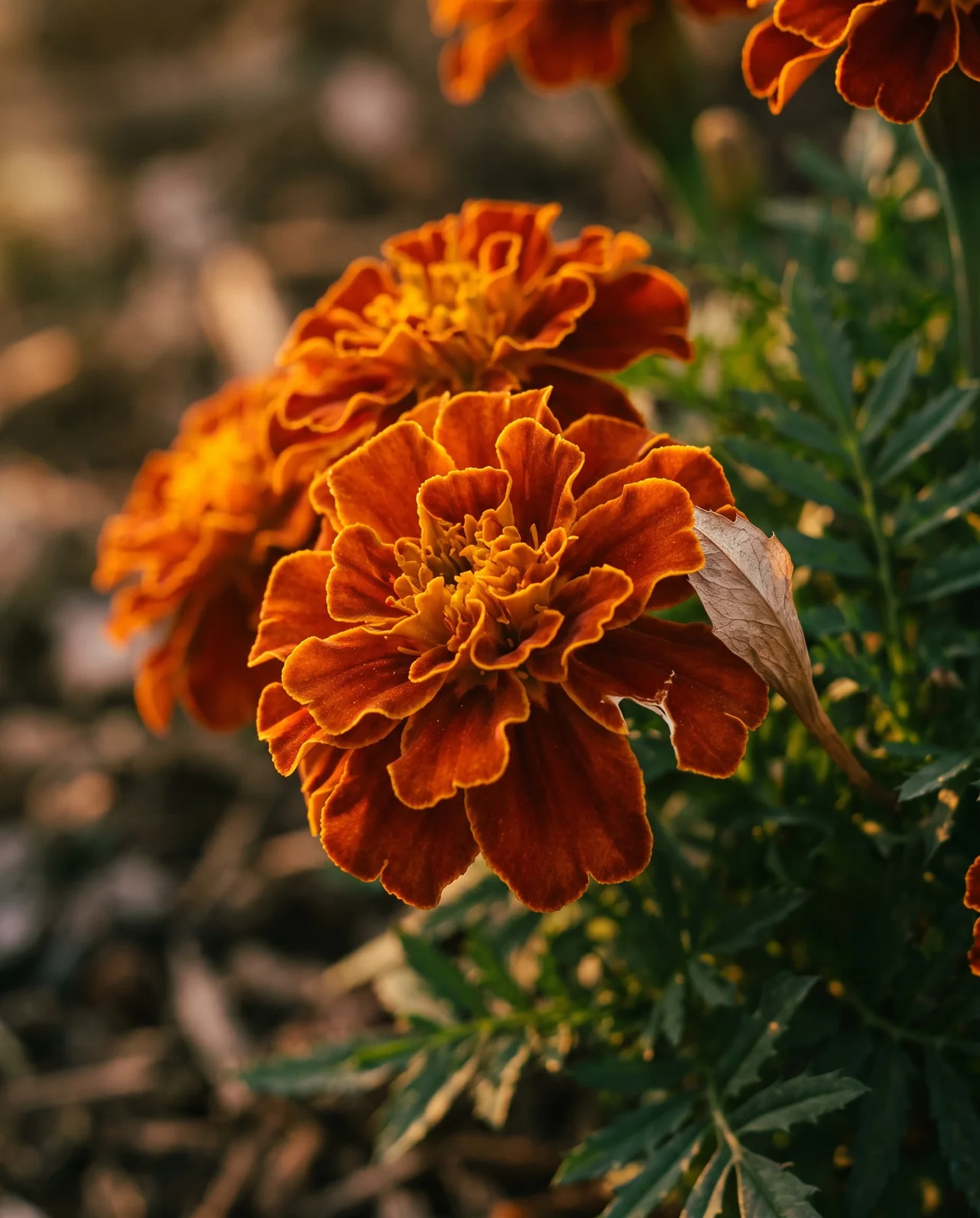
Marigold is the primary birth flower for October, with cosmos as the traditional second. The October birth flower page carries the full lore and the variety detail.
Marigolds hold meaning in several traditions at once. Aztec belief held that the color and strong scent of cempasúchil marigolds (Tagetes erecta) lit the path for ancestral spirits returning during Día de los Muertos. Hindu ceremony uses marigold garlands at weddings and in honor of Lakshmi and Vishnu, Buddhist altars carry the flower as a sign of devotion, and Christian tradition tied it to Mary, which is where the name Mary’s gold comes from. Color carries its own reading: orange for warmth, energy, and strong personal devotion, yellow for friendship, joy, and bright optimism, red-orange for deep affection and enduring loyalty.
The name covers two different plants, and only one of them is food. Pot marigold (Calendula officinalis) has edible petals with a mild, citrus-like flavor that works in salads, teas, and herbal butter. African and French marigolds (Tagetes erecta and Tagetes patula) are bedding plants grown for display and for the pest-deterrent smell; their pungent, bitter oils make them unpalatable, and they belong out of the kitchen.
Cosmos (Cosmos bipinnatus), the secondary birth flower, is native to Mexico and opens flat, daisy-like petals around a central yellow disk. Its symbolism runs to serenity, modest grace, balance, and renewal, a light counterweight to the heavy blooms of late autumn.
FAQ
What flowers bloom naturally in October?
Garden mums, native asters, and goldenrod bloom across northern and midwestern gardens. Southern and mild coastal areas see continued blooms on sasanqua camellias, chrysanthemums, dahlias, marigolds, cosmos, and late-flowering perennials.
What is the official October birth flower?
The primary October birth flower is the marigold (Tagetes species and Calendula officinalis), with cosmos (Cosmos bipinnatus) serving as the secondary birth flower.
Is it too late to plant spring bulbs in October?
No. October is the ideal planting window for spring bulbs including daffodils, tulips, crocuses, and hyacinths. Bulbs can be planted into early November as long as the ground has not frozen solid.
When should dahlias and tender bulbs be dug up?
Dahlias, cannas, and tuberous begonias should be dug before a hard freeze or a few weeks after a killing frost blackens their foliage. Cut stems back to 4 to 5 inches and store tubers in a dark room between 40 and 55 degrees Fahrenheit.
Are all marigolds safe to eat?
No. Only pot marigold (Calendula officinalis) is edible, featuring a mild citrus flavor. Common ornamental marigolds (Tagetes erecta and Tagetes patula) have a bitter taste and should not be eaten.
More About Types of flowers
November flowers: what’s still blooming, by zone
Spider lily (Lycoris radiata): care and bloom guide
Heather plant care: is it a perennial or fall decor
Flowers that bloom in winter: true bloomers by zone
Ornamental kale care: why it won’t turn color yet
Fall flowers: the full list by color, zone, and bloom time
September flowers: what’s blooming and what to plant now
Enjoying our flower guides? Add YourFlowersGuide as a preferred source on Google. It helps more readers find us.
Add to Preferred Sources