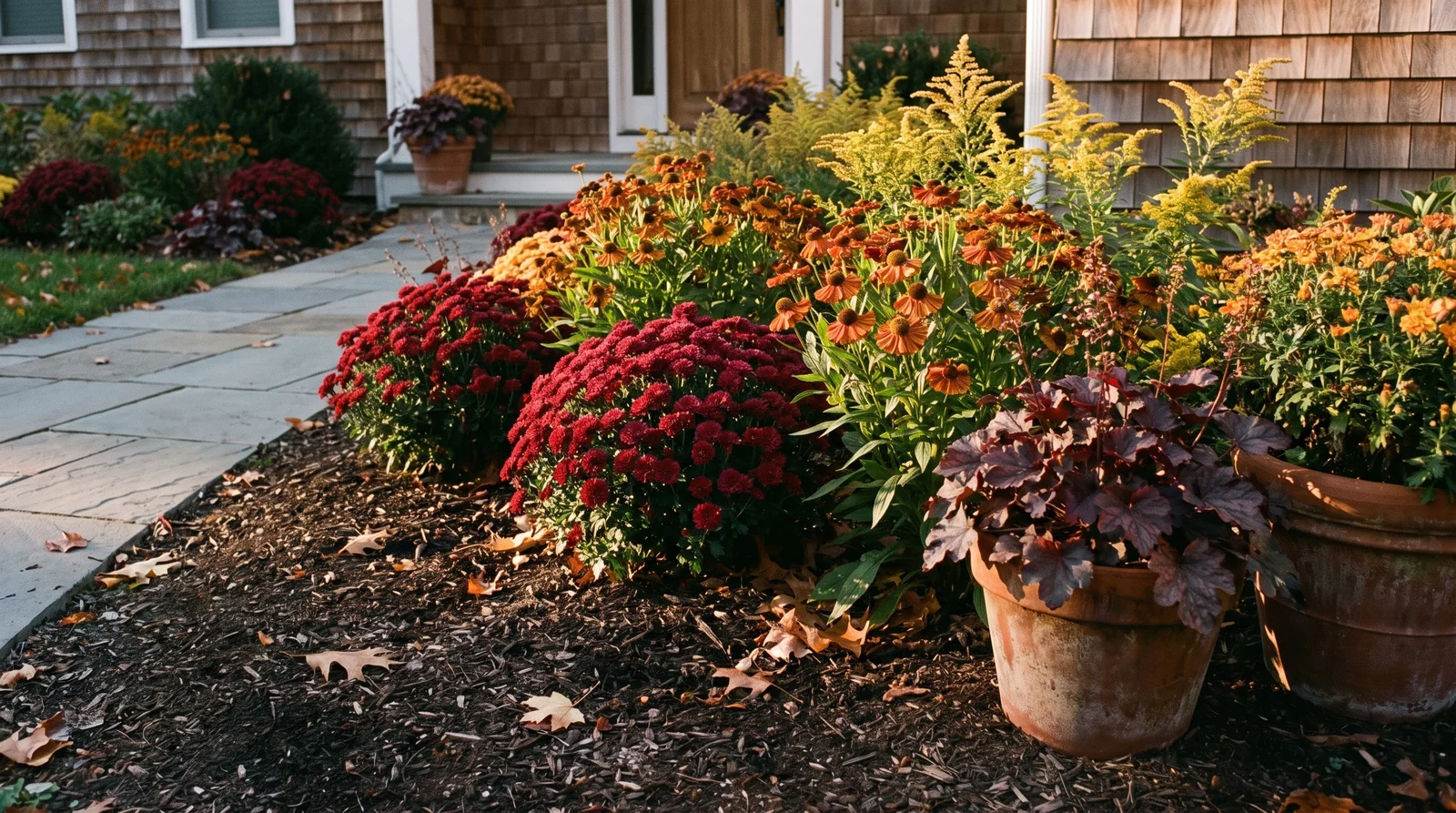
Fall flowers are the plants that carry color in the garden through September, October, and November: garden mums and asters opening as the summer bedding gives out, snapdragons going in as the nights cool, ornamental kale holding leaf color after the last bloom drops. Fall-planted bulbs belong in a separate category. Tulips, daffodils, hyacinths, and spring crocus go into the ground in autumn and do nothing visible until spring, so they sit outside this list.
The plants that do bloom now split three ways by how they meet cold, and that split decides most of what you should buy in September: hardy annuals that keep going through freezing weather, half-hardy annuals that take a light frost and rebloom in cool air, and perennials whose roots ride out winter while the top growth dies to the ground. Color is where most gardeners start, so the list below is sorted that way, seven palettes from red and burgundy through to bicolors, with the hardiness tier, the light, and the bloom window on every entry. What follows covers the filter worth running before you buy, the color groups themselves, how the frost tiers behave once the temperature drops, and how different the calendar looks in a zone 4 bed against a zone 9 courtyard.
On this page 5 sections
How to choose fall flowers
Color is where a fall bed usually starts, but the site decides whether that color lasts. Clemson University Cooperative Extension Service puts the requirement for most flowering annuals at 4 to 6 hours of full direct sun a day, and a spot with less will make leaves and few blooms no matter which palette you picked. Ground preparation comes next: spade the bed 6 to 10 inches deep, and aim for a soil pH between 6.0 and 6.5, which suits nearly every annual on this list. With no soil test to work from, the baseline is 1 pound of a complete 10-10-10 fertilizer per 100 square feet of bed, plus 4 pounds (3 pints) of pelletized lime per 100 square feet to pull an acid soil back up. Coastal ground is the exception: in counties such as Horry, Charleston, and Beaufort, where phosphorus already runs high, the rate drops to 3/4 pound of a 15-0-15 fertilizer per 100 square feet.
After planting, water and mulch do most of the work. Flowering annuals want roughly 1 to 1.5 inches of water a week from rain or irrigation, and a 2 to 3 inch layer of pine bark or pine straw holds that moisture and keeps cool-season weeds down as the soil cools. Deadheading pays off more in autumn than gardeners expect: pull the faded flowers before they set seed and the plant keeps pushing new buds instead of spending itself on seed. Summer annuals that already look ragged by August are a separate case: rejuvenation pruning, a hard cut well back into the plant, can force a second display out of them in time for autumn.
Work through the filter before you choose a fall flower
Four questions, in order, narrow a long fall planting list down to a short one: color, cold hardiness, sun exposure, then habit and height.
Half-Hardy Annual: takes a light frost, reblooms in cool fall weather (sweet alyssum, dianthus)
Tender Annual: cannot tolerate freezing temperatures (zinnia, vinca, impatiens)
Herbaceous Perennial: roots survive winter cold, top growth dies back (aster, swamp sunflower, ginger lily)
Mid-border, 12 to 22 in: ‘Liberty Classic’, ‘Snaptastic’ and ‘Candy Tops’ snapdragons
Dwarf / edging, 6 to 10 in: ‘Snapshot’ and ‘Floral Showers’ snapdragons
Trailing / pots, 6 in tall and 12 in across: ‘Candy Showers’ snapdragon
Fall flowers grouped by color
Autumn palettes run from deep red and bronze through gold to cool blue, soft pink, and clean white, and the practical problem is filling all three layers of a bed in whichever palette you settled on. Snapdragons (Antirrhinum majus) solve more of that problem than anything else here, because they throw vertical spires in nearly every color category, they cover the whole height range from edging to cutting stem, and they go in the ground just as autumn temperatures drop. The tall series carry the back of a border and the cutting row: ‘Potomac’ to 60 inches, ‘Rocket’ to 36, and ‘Madame Butterfly’ at 24 to 36 inches with open, double azalea-type flowers. The middle tier belongs to ‘Liberty Classic’ at 18 to 22 inches, ‘Snaptastic’ at 16, and ‘Candy Tops’ at 12 inches on sturdy stems. At the front, ‘Snapshot’ runs 6 to 10 inches and ‘Floral Showers’ makes a compact 8 inches tall and wide, while trailing ‘Candy Showers’ stays 6 inches tall and spills 12 inches over the rim of a pot. Cut the tall ones back to 6 inches once they finish and they push a second set of flowering stems.
Fall flowers sorted by color palette
Seven palettes, in the order of the filter above, each entry paired with its life cycle, light needs, and bloom window.
Deep crimson, bronze-red, and scarlet, the tones that anchor a late bed.
Copper, rust, and amber, the palette most people picture when they say fall container.
Bright golds, the colors that still read from the far end of a border.
Violet, lavender, and cobalt spikes that hold their own against bronze foliage.
Magenta, rose, and blush, which carry a bed out of summer without a hard break.
White spires and low white groundcovers, best against dark autumn soil.
Patterned florets and cold-colored foliage, for containers built in layers.
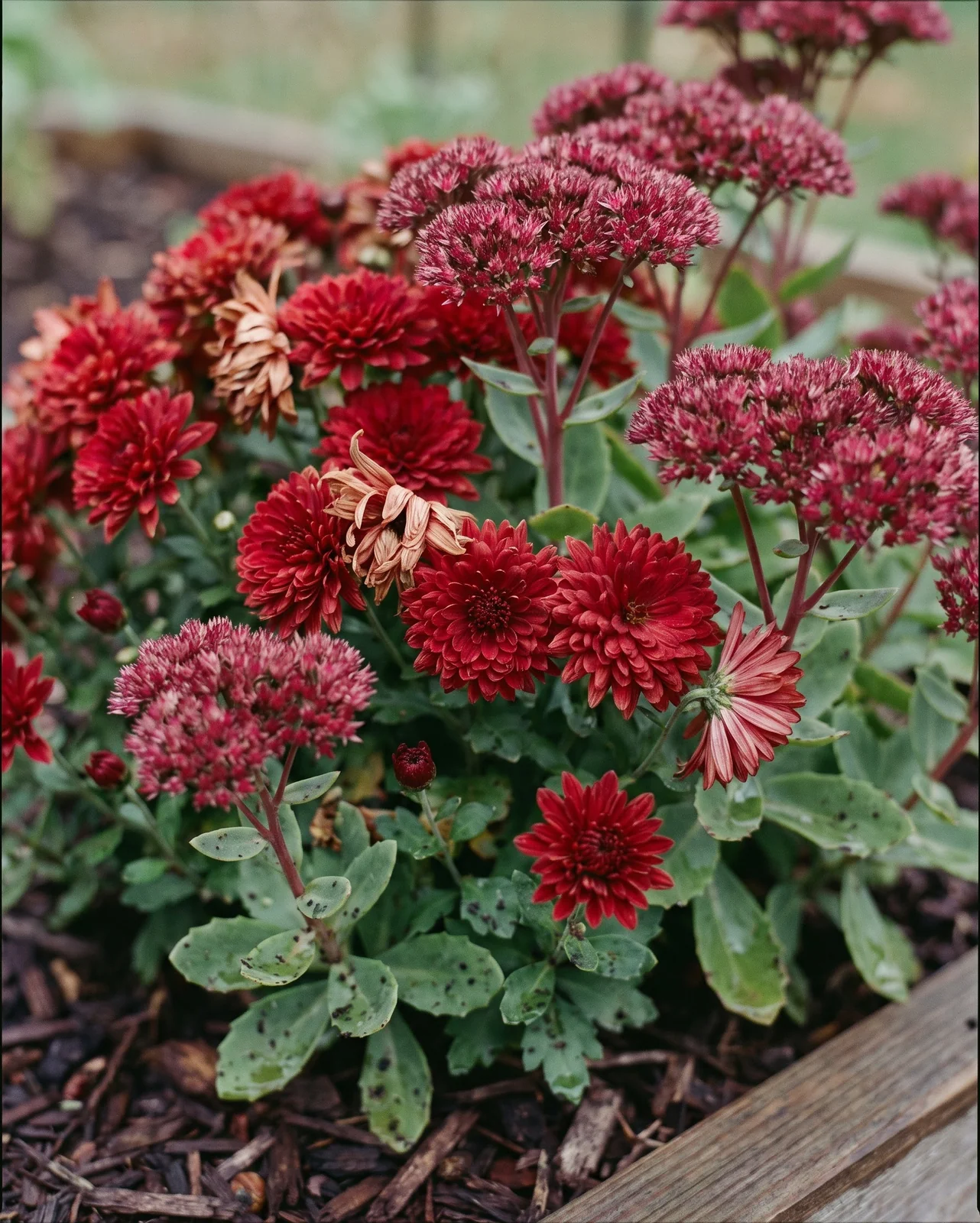
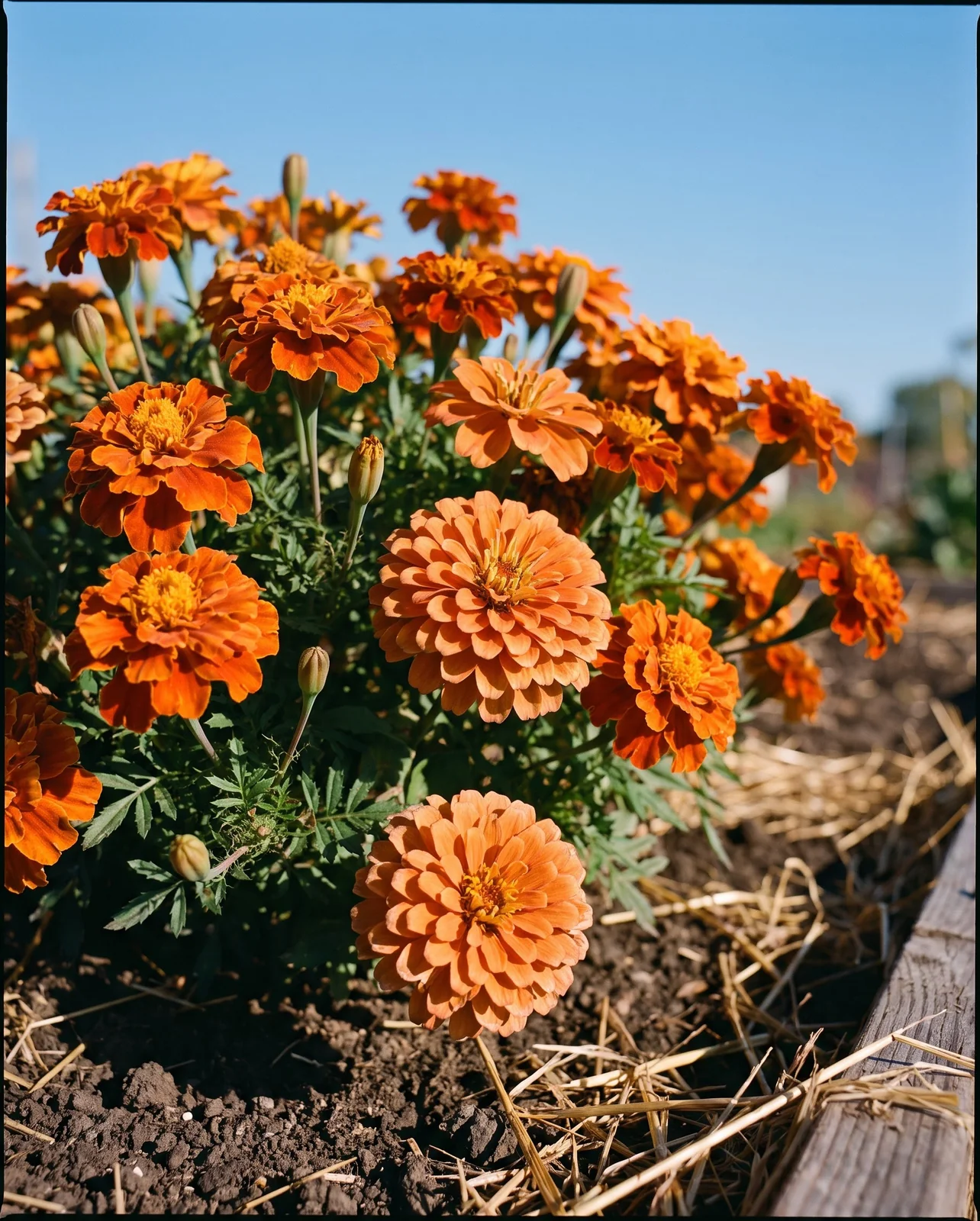
For a red and bronze bed, bronze-red chrysanthemum and scarlet dahlia give the dense, rounded forms that sit well under tall ‘Potomac’ snapdragons. Gardeners in the warm South get one more red option: the University of Florida IFAS Extension names firespike among the perennials that color a Florida fall, next to salvia and chrysanthemum. Orange and amber run on marigolds and rust-toned garden mums, with the autumn flush of dianthus filling the low tier. For gold on a tall stem the pick is swamp sunflower (Helianthus angustifolius), which carries masses of daisy-like yellow flowers from September into late autumn.
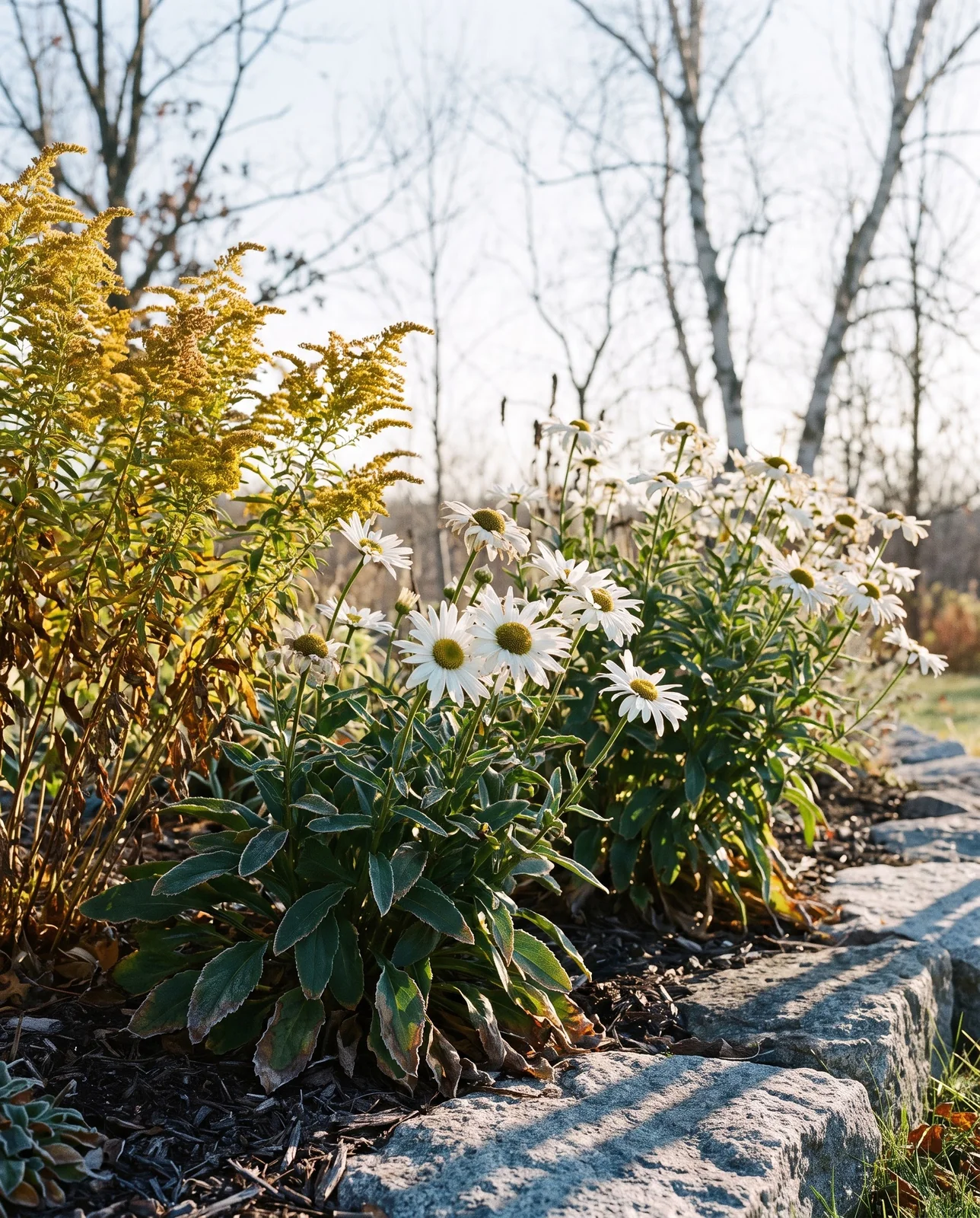
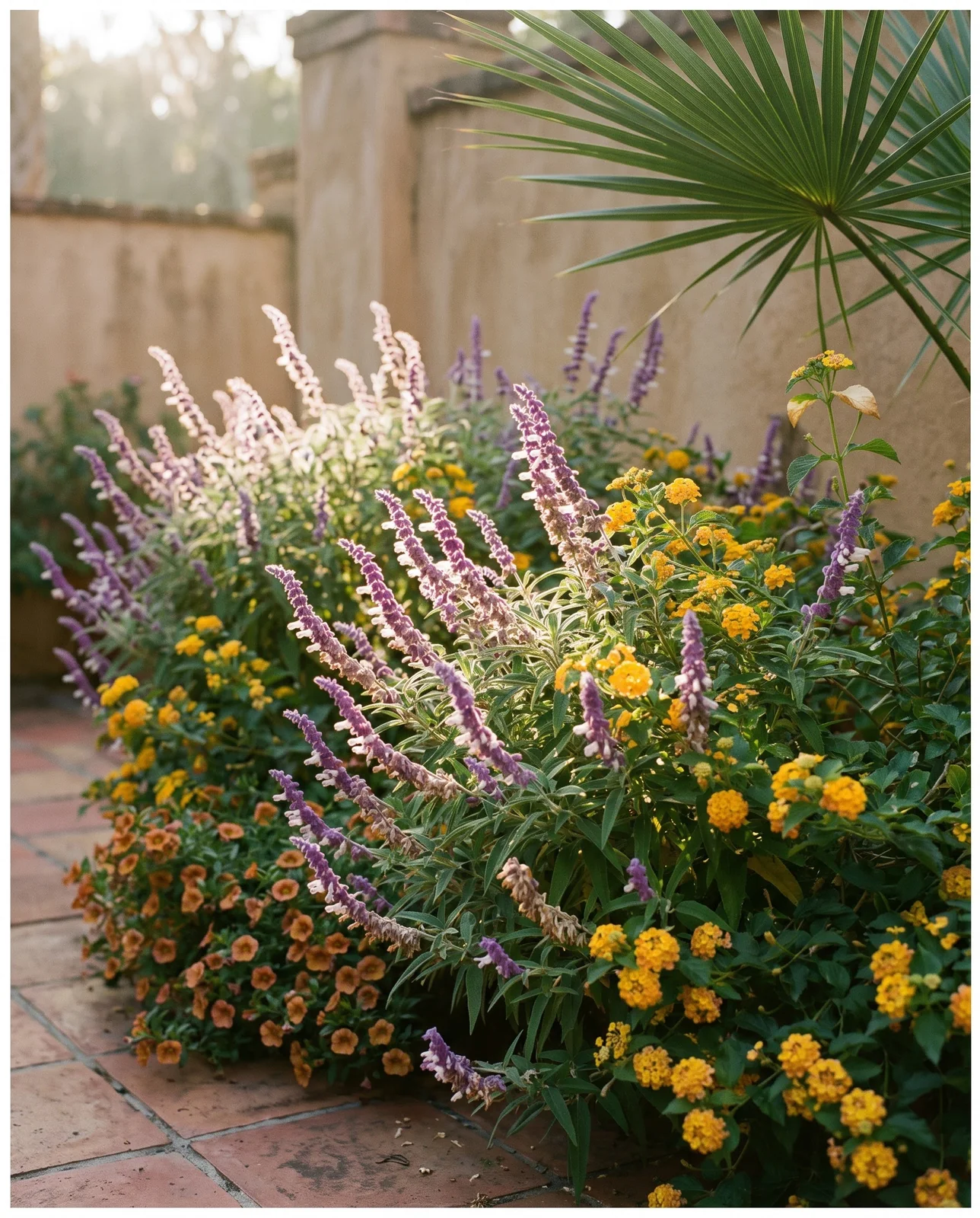
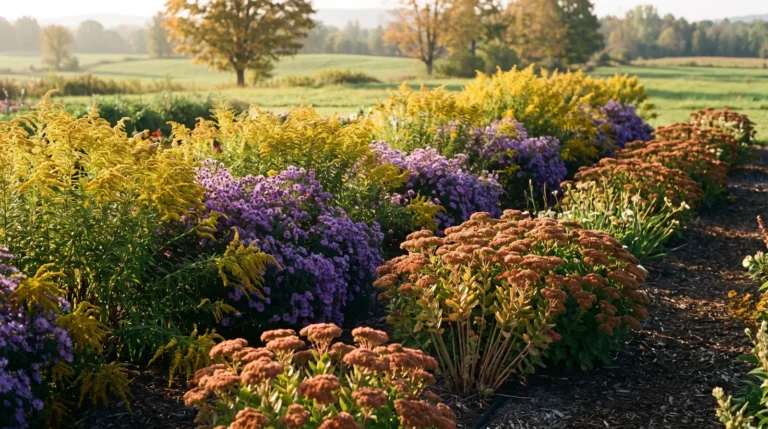
Blue and purple hold the longest bloom windows in the autumn garden. Native perennial asters throw masses of lavender and blue florets and keep flowering right up to frost, feeding bees the whole way. Mexican bush sage (Salvia leucantha) planted beside them supplies the texture contrast: velvety purple and white spikes that Clemson Extension counts among the stars of the early to mid fall garden, worked by hummingbirds as hard as any other salvia. In shaded corners, ginger lily adds scent and pale bloom before cold takes the foliage down to the ground. The low tiers go to sweet alyssum and ruffled ornamental kale, which hold white, pink, and deep violet after most of the bed has finished. Leave the spent coneflower heads standing among them and the planting keeps its structure and feeds birds through the winter.
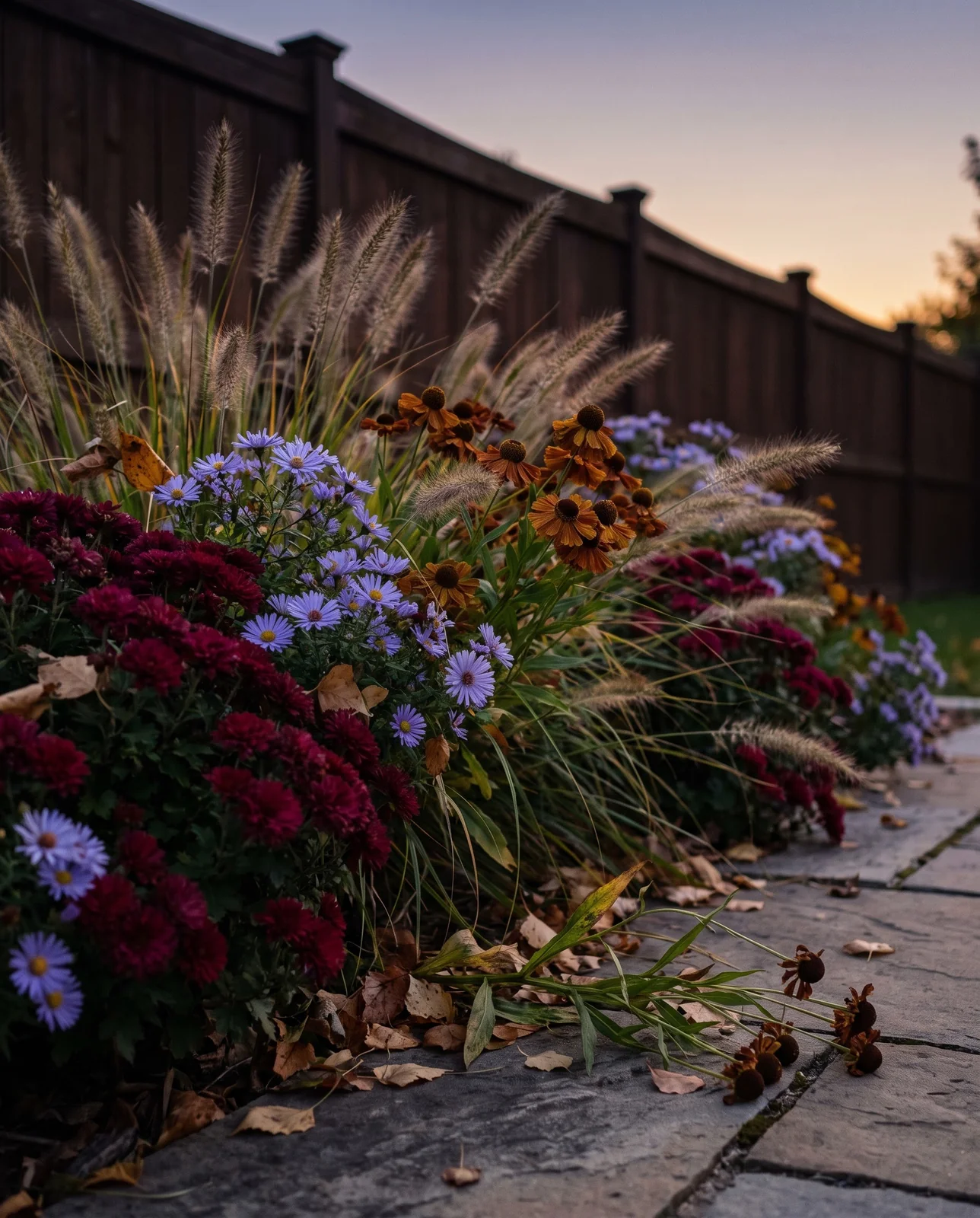
Annual vs. perennial: understanding frost tolerance
Whether a plant is an annual or a perennial decides what you do with it in November. A true annual sprouts from seed, flowers, sets seed, and dies inside one season, but that single word hides three different answers to cold, and the difference is what gets missed at the garden center. Clemson Extension splits annuals into hardy, half-hardy, and tender. Hardy annuals, pansies and ornamental kale among them, are grown for color in cool and cold seasons: they go in during fall, hold through winter, and give out only when summer heat returns. Half-hardy annuals such as sweet alyssum and dianthus take a light frost without collapsing; they are usually set out in early spring, sulk through midsummer heat, and then produce a strong second flush of bloom once autumn cools the air.
Tender annuals have no margin at all. Vinca, zinnia, and impatiens cannot tolerate freezing temperatures, and one freezing night finishes them where they stand. Perennials work from the other end. Their roots hold in cold ground even after the top growth freezes off, so fall-blooming perennials like aster, swamp sunflower, and ginger lily die back to the soil line in late autumn and come up again from the crown in spring.
Cold hardiness tiers, and which fall flowers belong to each
Four tiers cover how a fall planting behaves once the temperature drops, from a plant that quits at the first freeze to one whose roots ride out winter underground.
The tier is not fixed, though, because it moves with latitude. Snapdragons (Antirrhinum majus) are the clearest case. Clemson Extension treats them as annuals everywhere except USDA hardiness zones 9 and above, where they grow as true perennials, and yet in a protected zone 8 garden in Upstate South Carolina individual plants have lived and flowered for nearly 3 years. In that intermediate band, snapdragons flower heavily through autumn, go quiet during the coldest stretches of winter, and start again early the following spring.
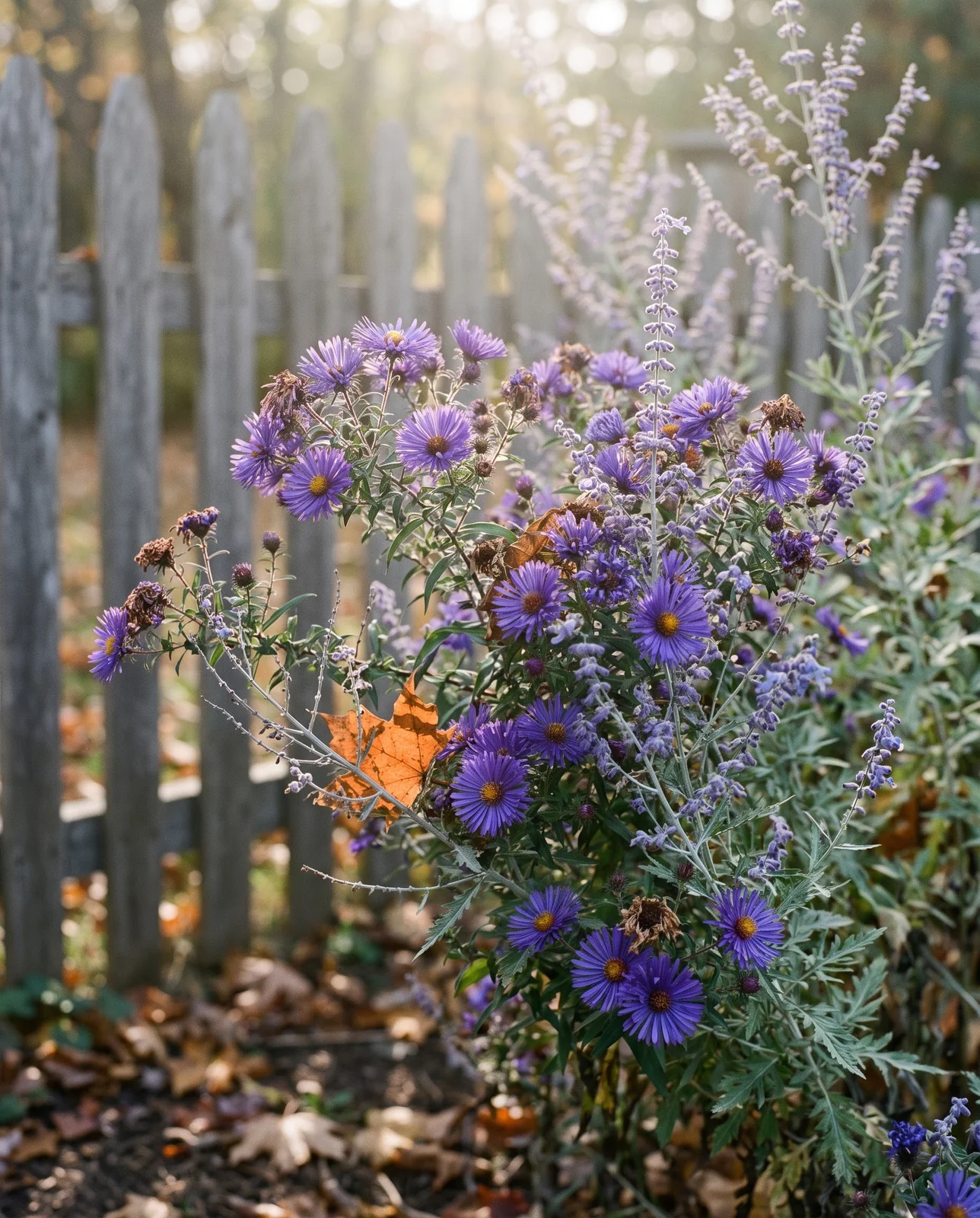
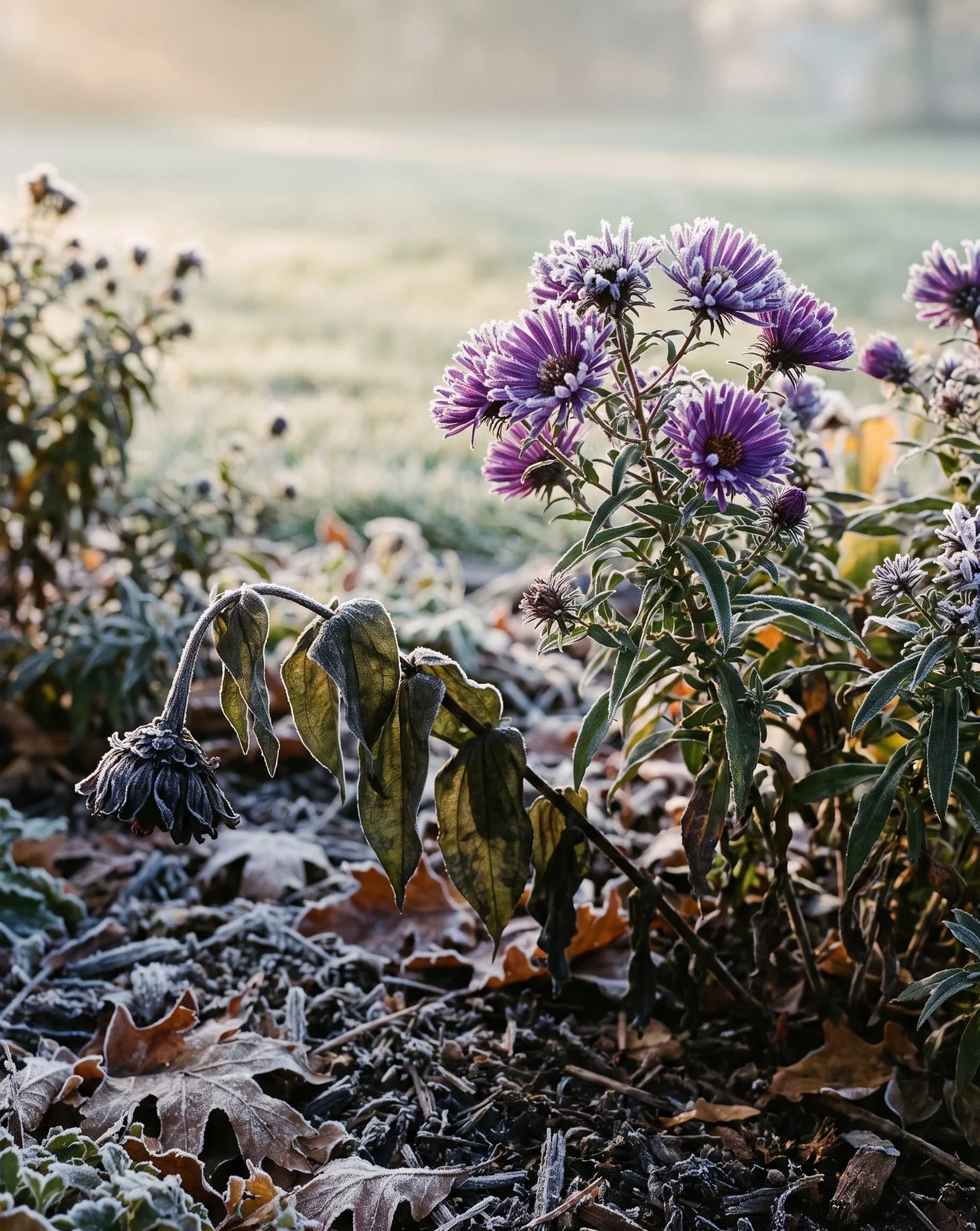
Fall bloom calendar by USDA hardiness zone
The USDA Plant Hardiness Zone Map, kept by the Agricultural Research Service, is the standard for working out which perennials are likely to thrive where you garden. It maps the average annual extreme minimum winter temperature as 10-degree Fahrenheit zones and 5-degree Fahrenheit half zones. Because the first autumn frost arrives months apart across those bands, the same list of plants goes in the ground on completely different dates. In the north the job is to get roots down before the soil chills. In the far south, autumn opens a long cool-season run that carries straight through winter.
Fall planting deadlines and frost windows by zone
Four zone bands, each with its own frost timing, the planting deadline that gives roots time to establish before that frost, and what perennials and annuals actually do once it arrives.
Cold arrives fast in the north, so a native aster there has to open and finish its cycle before hard freezes shut the bed down, and winter annuals need to go in at least 6 weeks before the expected first fall frost date to root while the soil is still warm. The southern calendar inverts. The University of Florida IFAS Extension describes fall in warm climates as the opening of the main annual planting season rather than its close: salvia, firespike, and chrysanthemum supply the perennial color, while petunias, pansies, and snapdragons run as cool-season annuals through autumn and winter.
Frequently asked questions
Which fall flowers survive the first frost?
Hardy annuals take it in stride: ornamental kale and pansies go through freezing weather and keep growing into winter. Half-hardy annuals, meaning sweet alyssum, dianthus, and snapdragons, come through a light overnight frost without collapsing and often push a fresh flush of bloom in the cool air that follows. Hardy perennials such as aster and swamp sunflower lose their stems but not their lives, because the crown sits below the soil where the cold does not reach. Tender annuals are the ones you lose on the first freezing night: zinnia, vinca, impatiens.
What is the difference between fall flowers and fall-planted bulbs?
A fall flower is doing its work now, producing bloom or strong foliage color during September, October, and November. A fall-planted bulb is doing nothing you can see. Tulips, daffodils, hyacinths, and spring crocus go into the ground in autumn as dormant storage organs, take their winter chilling underground, and flower the following spring. Same planting month, opposite payoff.
Which fall-blooming plants return year after year?
The perennials, from their root systems. Aster, swamp sunflower (Helianthus angustifolius), Mexican bush sage (Salvia leucantha), ginger lily, firespike, and hardy garden chrysanthemums all come back. True annuals, zinnia and marigold among them, finish their life cycle in one season and have to be bought again the next.
When should winter annuals be planted in the fall?
Clemson Extension advises planting at least 6 weeks before your region’s expected first fall frost date. Young roots need warm soil to establish, and root development stops once the ground goes cold.
Can summer annuals like petunias bloom again in the fall?
Yes, but the cut has to come in midsummer, not in September. Petunias gone leggy and thin in the heat can be cut back to within a few inches of the ground, then fertilized and watered heavily, and they fill out and flower again in just a few weeks, in time for an autumn display.
Are snapdragons annuals or perennials?
Both, depending on the zone. Clemson Extension classes snapdragons (Antirrhinum majus) as perennials in USDA hardiness zones 9 and above and as cool-season annuals everywhere colder. The line is not sharp: in sheltered zone 8 gardens, individual plants have carried on for nearly 3 years, blooming heavily in autumn, pausing in the coldest weeks, and starting again early in spring.
Should dead aster stems be cut down in late autumn?
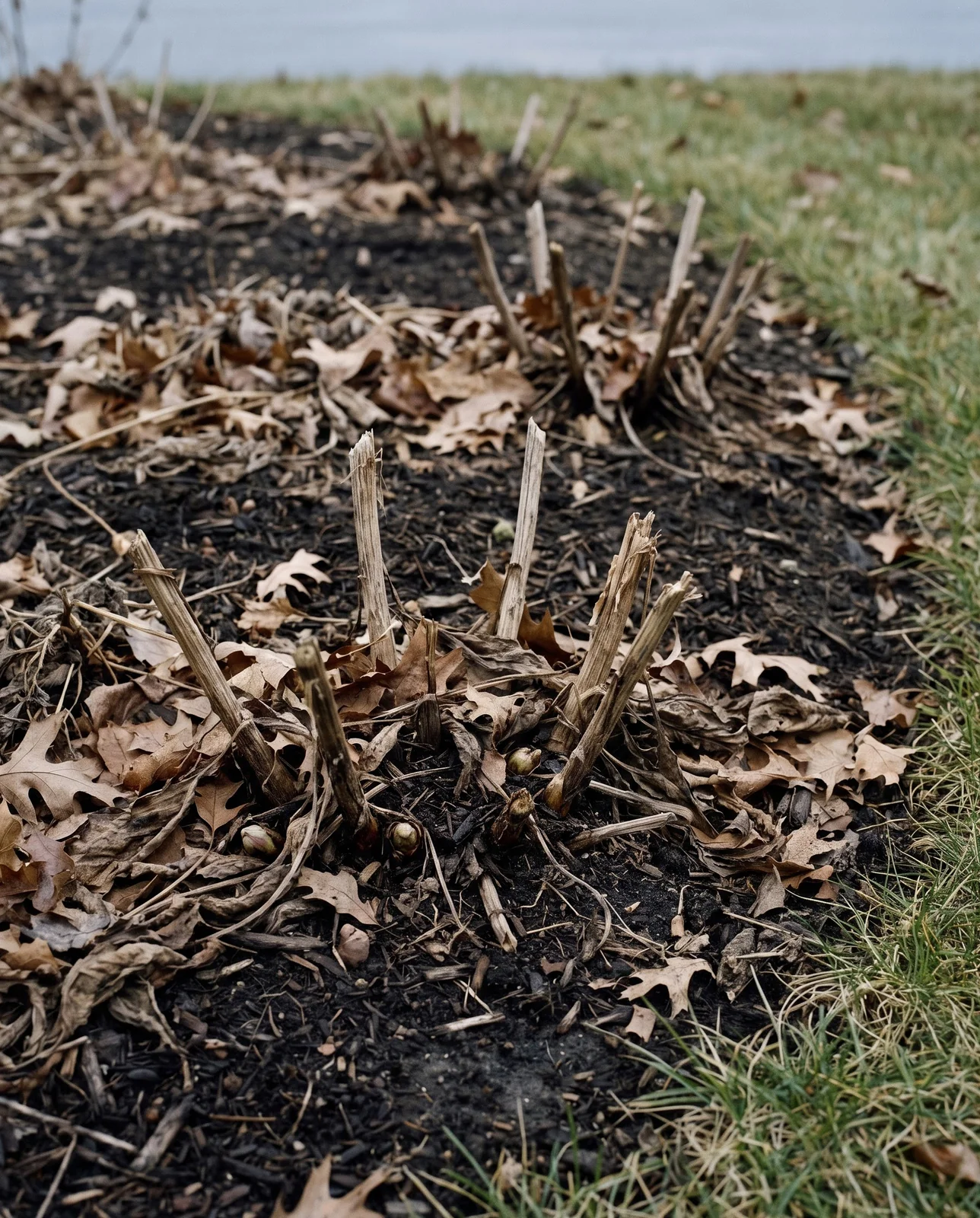
Leave them standing. Clemson Extension makes the case for uncut aster stalks as winter bird food, because goldfinches work the seed heads through the cold months. Cut the stems back to ground level in early spring, before the new green shoots push through.
More About Types of flowers
November flowers: what’s still blooming, by zone
October flowers: what’s blooming and what to plant now
Spider lily (Lycoris radiata): care and bloom guide
Heather plant care: is it a perennial or fall decor
Flowers that bloom in winter: true bloomers by zone
Ornamental kale care: why it won’t turn color yet
September flowers: what’s blooming and what to plant now
Enjoying our flower guides? Add YourFlowersGuide as a preferred source on Google. It helps more readers find us.
Add to Preferred Sources