Flowers that bloom in winter split into three groups that behave nothing alike. True winter bloomers, hellebores, snowdrops, winter aconite, witch hazel, winter jasmine, and camellias among them, open their flowers outdoors in freezing weather. Cool-season annuals such as pansies and violas come through frost alive but stop flowering once the ground freezes solid. Tender tropicals, poinsettia and Christmas cactus among them, bloom only indoors, brought into color for the holidays and never meant for a garden bed.
Which group applies depends on where the flower has to bloom. Outdoors, hardiness zone sets the list before anything else does, and the coldest zones leave a far shorter one than the milder South. Indoors, zone stops mattering and stable room temperature, bright indirect light, and moderate indoor humidity take over, along with how the plant was brought into bud before it reached the store. Timing separates the two halves as well, since bulbs and shrubs for outdoor winter color go into the ground in early autumn while the soil is still workable, not in December. What follows covers how to pick by zone and setting, the outdoor winter bloomers species by species, where pansies and violas actually stand, the potted flowers worth having indoors in December, and a calendar of bloom windows by zone.
On this page 6 sections
How to choose: zone, indoor or outdoor, timing
Start with the USDA Plant Hardiness Zone Map, which gives the average lowest winter temperature for your address and settles the outdoor list before taste comes into it. In the northern zones 3 through 5, the ground stays frozen for weeks at a stretch, and outdoor bloom narrows to snow-tolerant woodland plants: snowdrops, early species crocuses, and cold-hardy witch hazel. Zones 6 through 9 have milder ground and a wider palette that takes in winter jasmine, hybrid hellebores, and Japanese camellias. Pushing a southern evergreen shrub north of its range does not produce a smaller version of the same plant. It produces winter desiccation, dead flower buds, or a dead shrub.
Timing decides whether an outdoor plant flowers in its first season at all. Winter-flowering bulbs and tubers, snowdrops and winter aconite among them, go in dormant in early autumn while the soil is still workable, which gives the roots time to anchor before the ground freezes. Woody shrubs such as witch hazel and camellia go in as established container plants in early autumn or early spring; neither can be bought in December, dropped into frozen ground, and expected to flower that same winter. Indoor plants run on a different clock. An amaryllis bulb potted at home takes six to eight weeks of indoor warmth to open, while florist cyclamen and poinsettias leave the grower already in bud in late November.
Where to plant for winter bloom, indoors or by zone
Start with where the bloom needs to happen: indoors for the winter holidays, or outdoors by USDA hardiness zone. Match the plant to the setting rather than trying to force one plant into both.
Outdoor: true winter bloomers by zone
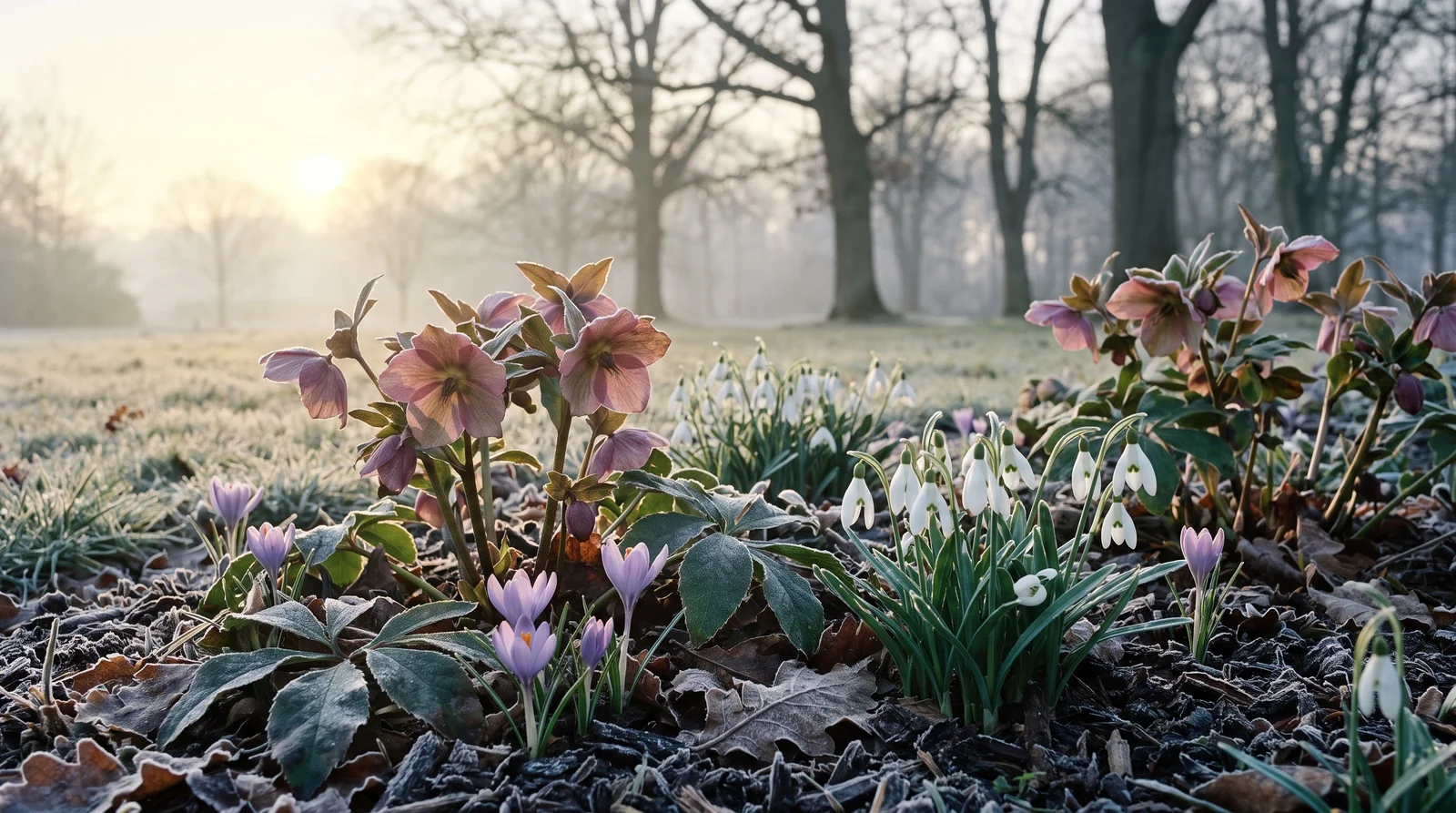
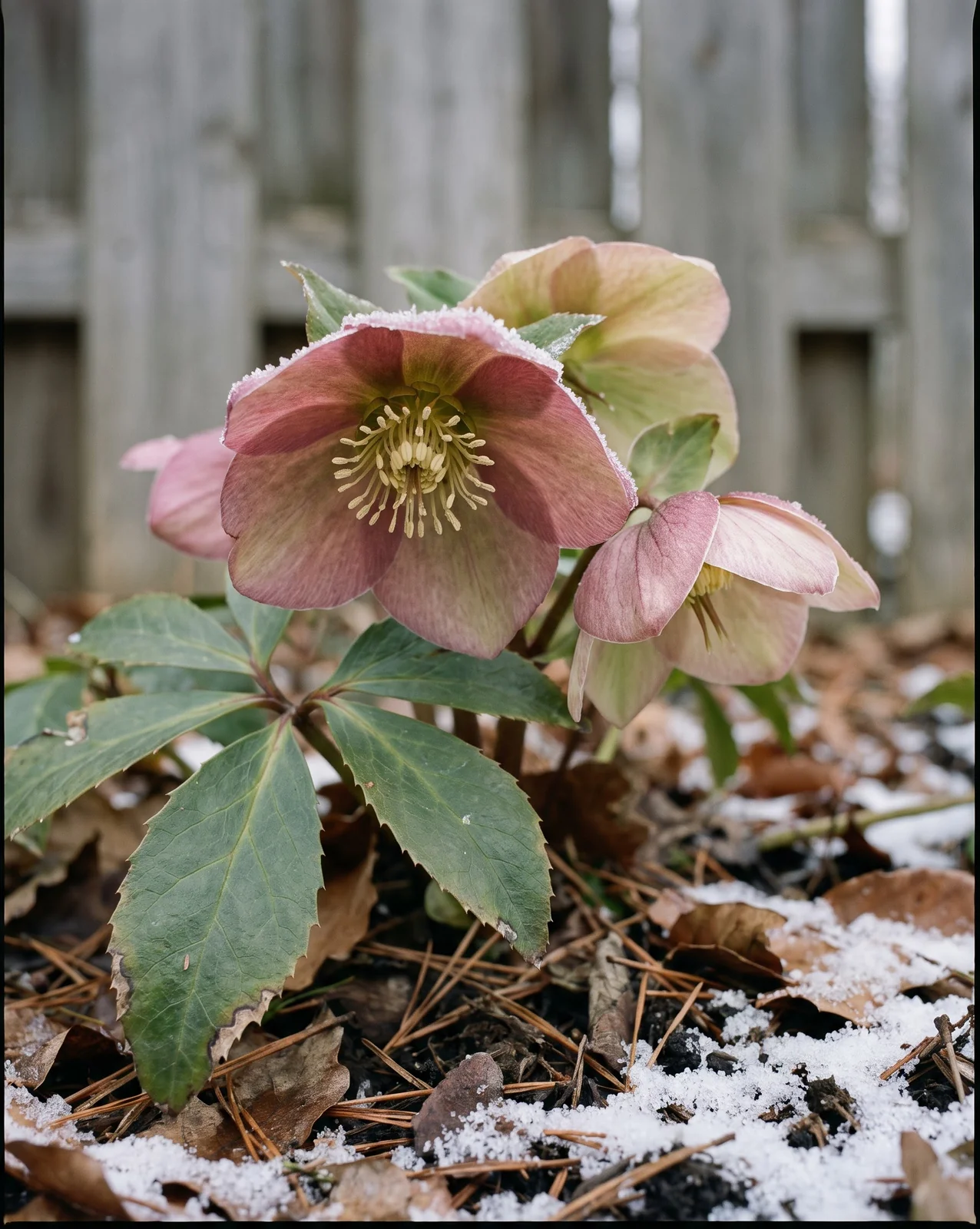
Hybrid Lenten rose (Helleborus x hybridus) is a garden-made cross between Helleborus niger and Helleborus orientalis, and North Carolina State Extension rates it hardy from zone 4a through 9b. Mature clumps reach 2 feet tall and 30 inches wide and can be split for propagation once they have filled in. The flower stems are the whole trick: they push up out of bare ground at the first warm break in late winter, so a border that looked finished in January carries color first. The plants want shade or partial shade and moist, well-draining soil, since both bright winter sun and heat damage them. Named selections run from ‘Dark and Handsome’ with purple-black double blooms to ‘Penny’s Pink’ at 12 to 24 inches with pink and chartreuse flowers and ‘Winter Delights Violet’ at 15 inches. Every part of the plant holds cardiac glycosides, helleborin among them, which act directly on the heart muscle and cause delirium and convulsions if eaten. Deer leave hellebores alone.
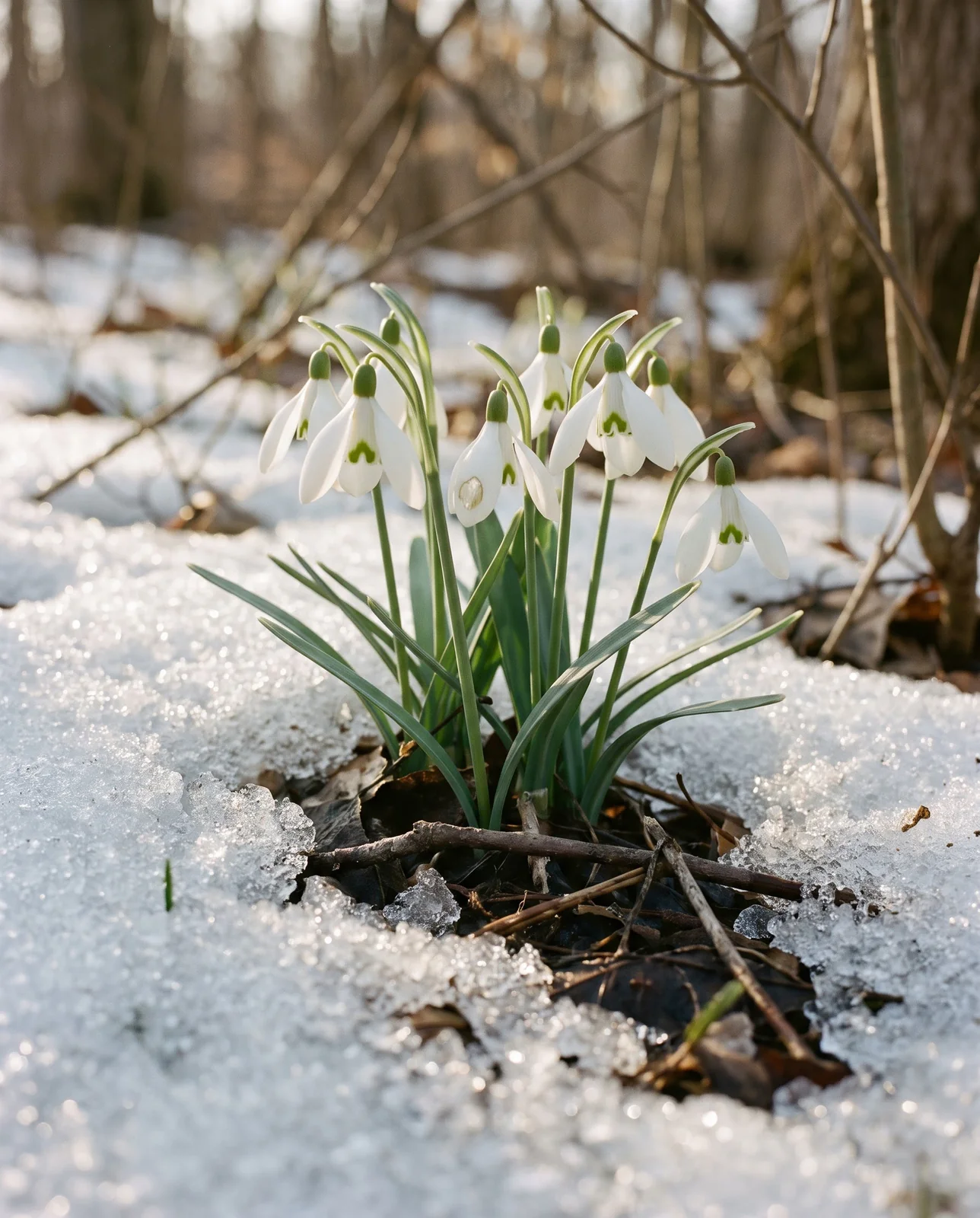
Snowdrop (Galanthus nivalis) is a small bulbous perennial in the amaryllis family, Amaryllidaceae, hardy from zone 3a through 9b, standing 4 to 10 inches tall with a spread of 3 to 6 inches. The nodding milk-white flowers come from late winter into early spring, often with snow still on the ground around them. There is a catch for gardeners in the South: North Carolina State Extension notes that snowdrop seed needs a cold spell below 20 degrees Fahrenheit to germinate, so in a warm winter the planting cannot renew itself from seed and tends to be shorter lived. Where winters are cold, snowdrops do the work themselves, spreading by bulb offsets and self-seeding under deciduous trees into colonies, so give them room rather than a tidy edge. ‘Flore Pleno’ carries 1-inch double white flowers, and ‘Viride Apic’ has green markings on both the inner and outer tepals. Eating the bulbs causes low-severity nausea, vomiting, and diarrhea from phenanthridine alkaloids.
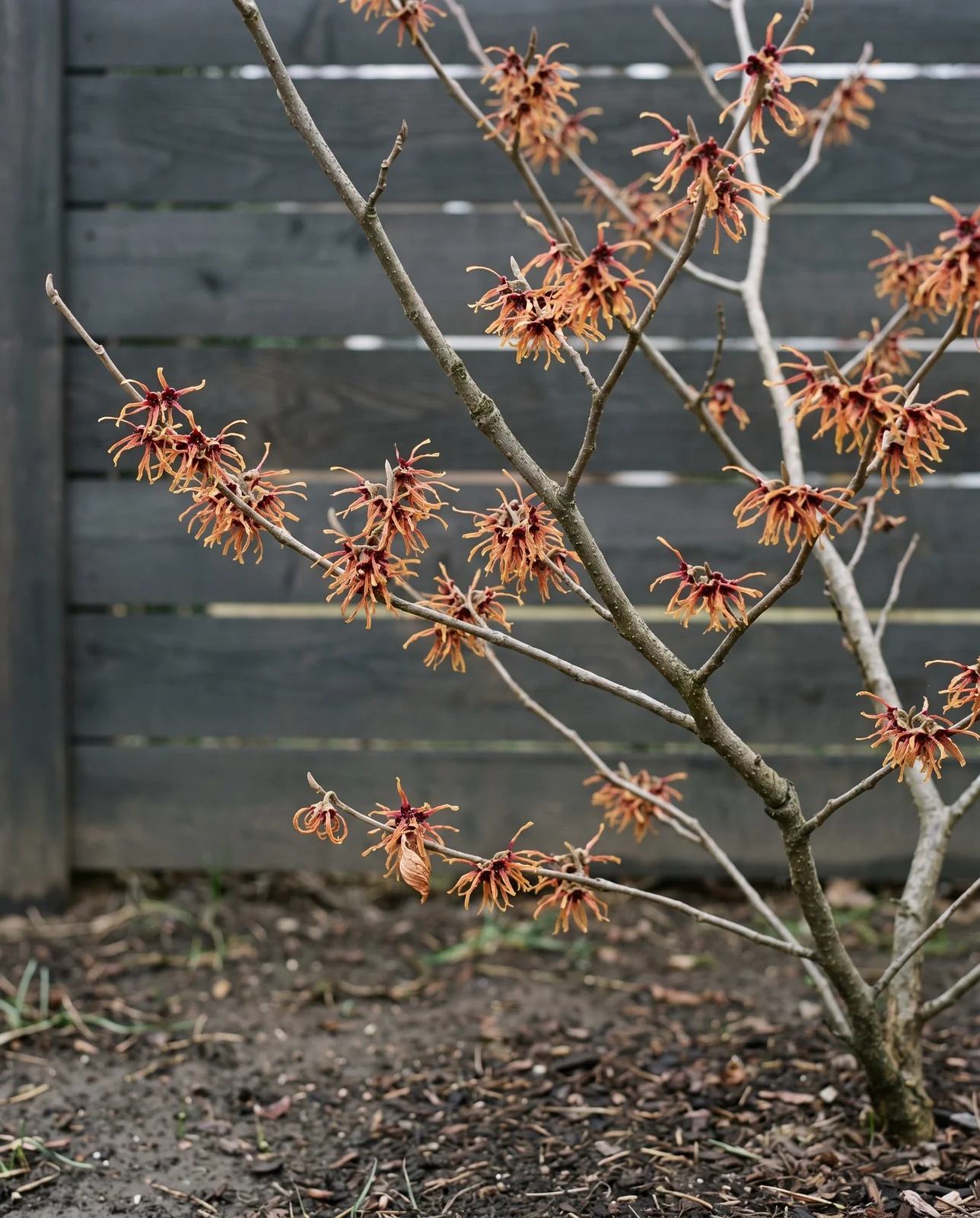
Common witch hazel (Hamamelis virginiana) is a deciduous shrub or small tree hardy from zone 3a through 9b, growing 15 to 30 feet tall and 15 to 20 feet wide. The genus name comes from the Greek hama, at the same time, and melon, fruit, because the shrub carries flowers and ripe fruit capsules at once. Yellow spidery flowers with four crinkly ribbon-shaped petals open along the branches from October to December and are pollinated by noctuid moths. It needs moist, acidic, humus-rich soil and will not take drought, though heavy clay, eroding ground, and deer browsing leave it unbothered. Cultivars include ‘Little Suzie’ at 5 feet with yellow fall foliage, ‘Quasimodo’ at 2 to 3 feet with orange flowers, and ‘Mohonk Red’, whose flowers are red at the base and fade to straw at the tips. One distinction is worth making plainly. The January-to-March witch hazel bloom pictured on most winter lists comes from the hybrid crosses sold as Hamamelis x intermedia; the native H. virginiana flowers in late autumn and early winter.
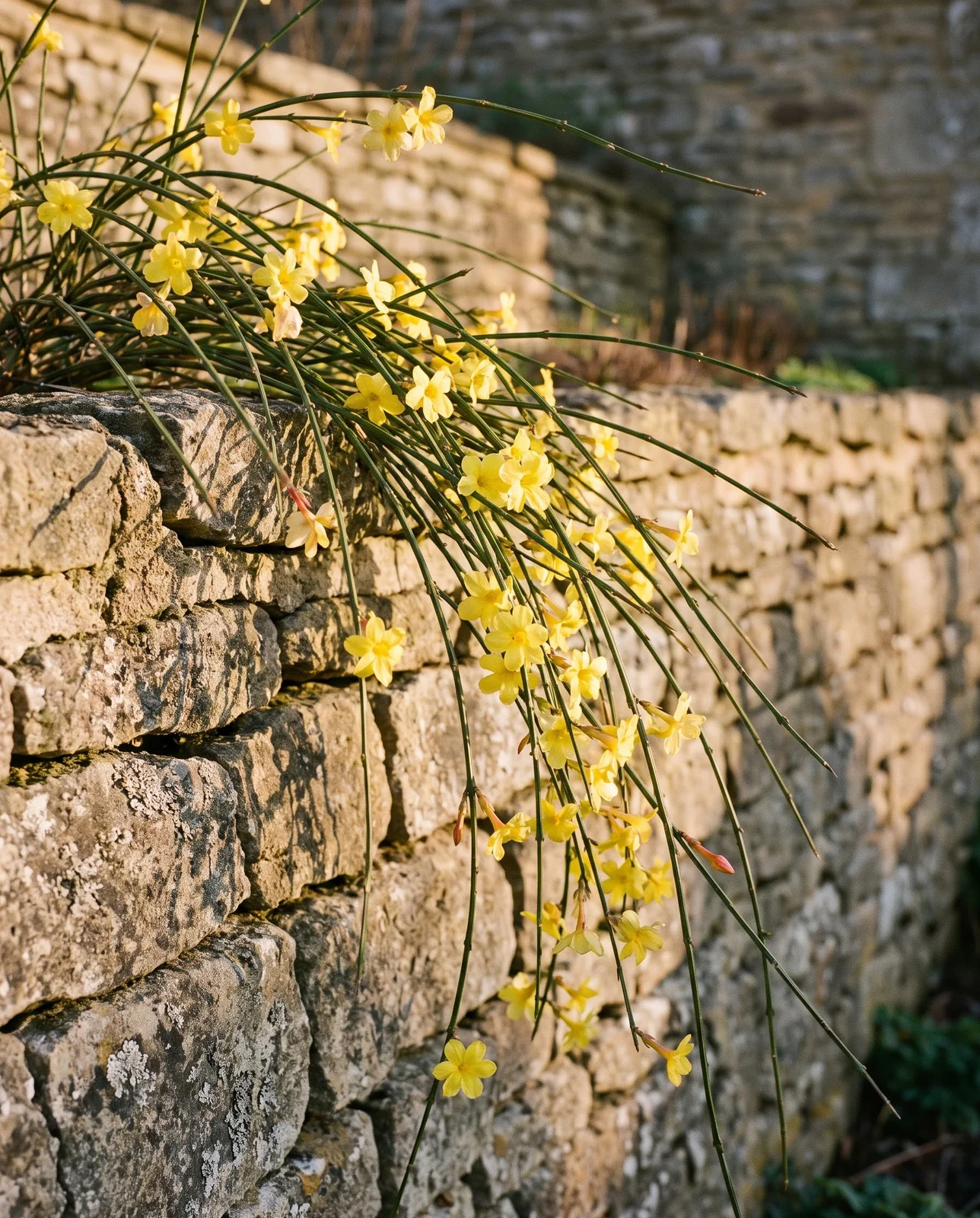
Winter jasmine (Jasminum nudiflorum) carries bright yellow flowers on arching green stems from zone 6a through 10b, and unlike the fragrant summer jasmines it has no scent at all. The flowers open along bare branches in January and February, before the leaves appear, which is the point of the plant. It grows 4 to 10 feet with a trailing, sprawling habit better suited to being trained flat against a stone wall, spilled down a retaining bank, or set to stabilize a cold slope than kept as a freestanding shrub, and it takes full sun to partial shade in most well-drained garden soil without much feeding. A south-facing slope or a spot next to masonry holds enough stored warmth to bring the buds open earlier. Cut the stems back right after flowering; left alone, the plant builds a tangled woody center and puts out less of the new growth that carries next winter’s flowers.
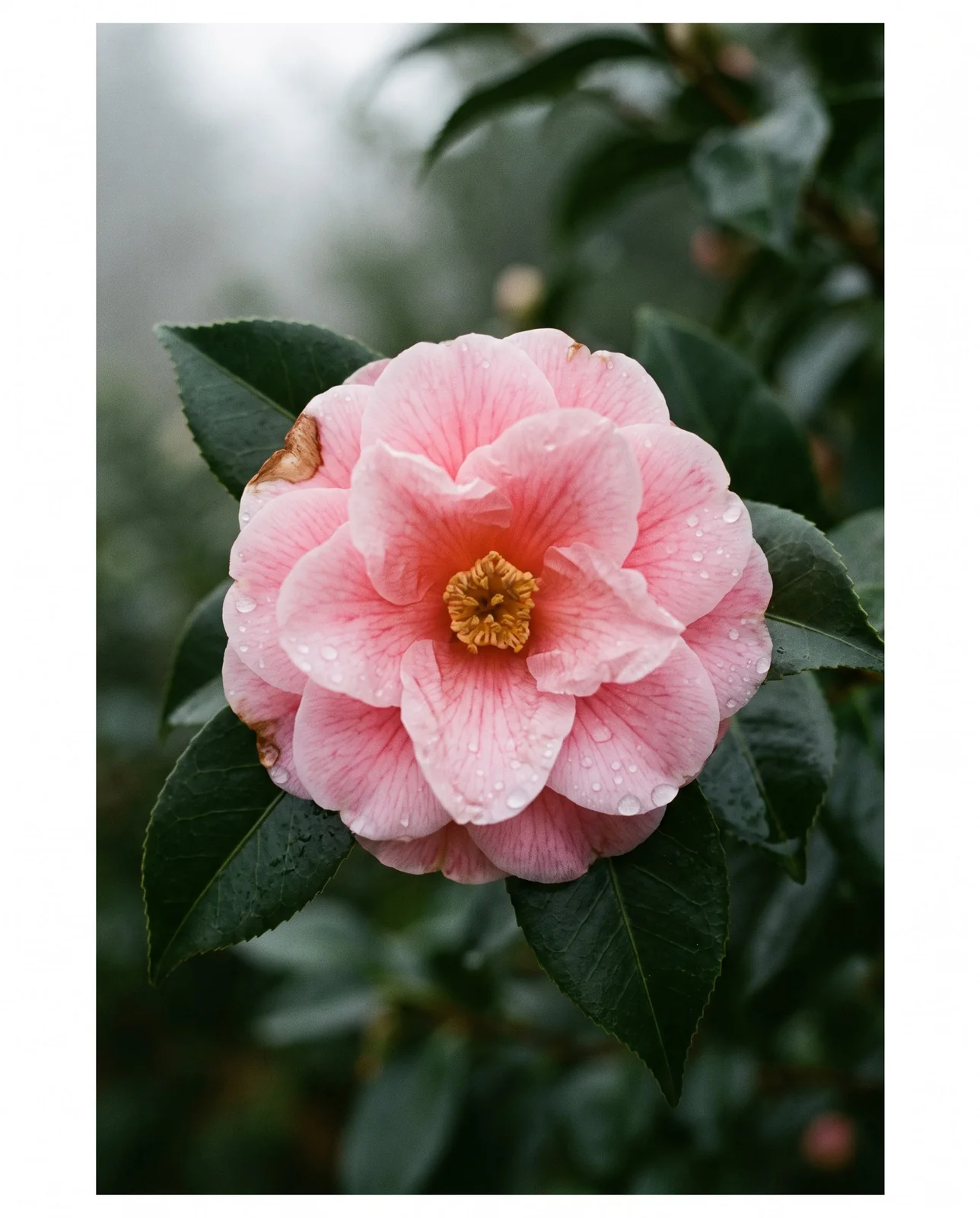
Japanese camellia (Camellia japonica) is a broadleaf evergreen hardy from zone 7a through 9b, with flowers 2 to 5 inches across that hold on the bush for three to four weeks. The bloom window is the part most winter lists collapse into one line: depending on the cultivar it starts as early as October and finishes as late as mid-March, so the same species can be a fall shrub in one garden and a midwinter one in the next, and ‘Kramer’s Supreme’, with red flowers, is one of the winter-blooming selections. North Carolina State Extension puts the plant in shade to partial shade, sheltered from drying winter winds, in acidic soil at pH 5.5 to 6.5, and calls for a planting hole three to four times wider than the root ball but no deeper. Excess sun, hard cold, and deep shade all cut flowering back, and so does drought in August and September, months before the buds are due. Buds form on old growth, which puts pruning immediately after flowering or in early summer and nowhere else. Clear fallen petals off the ground as well, the standard practice against petal blight fungus (Ciborinia camelliae).
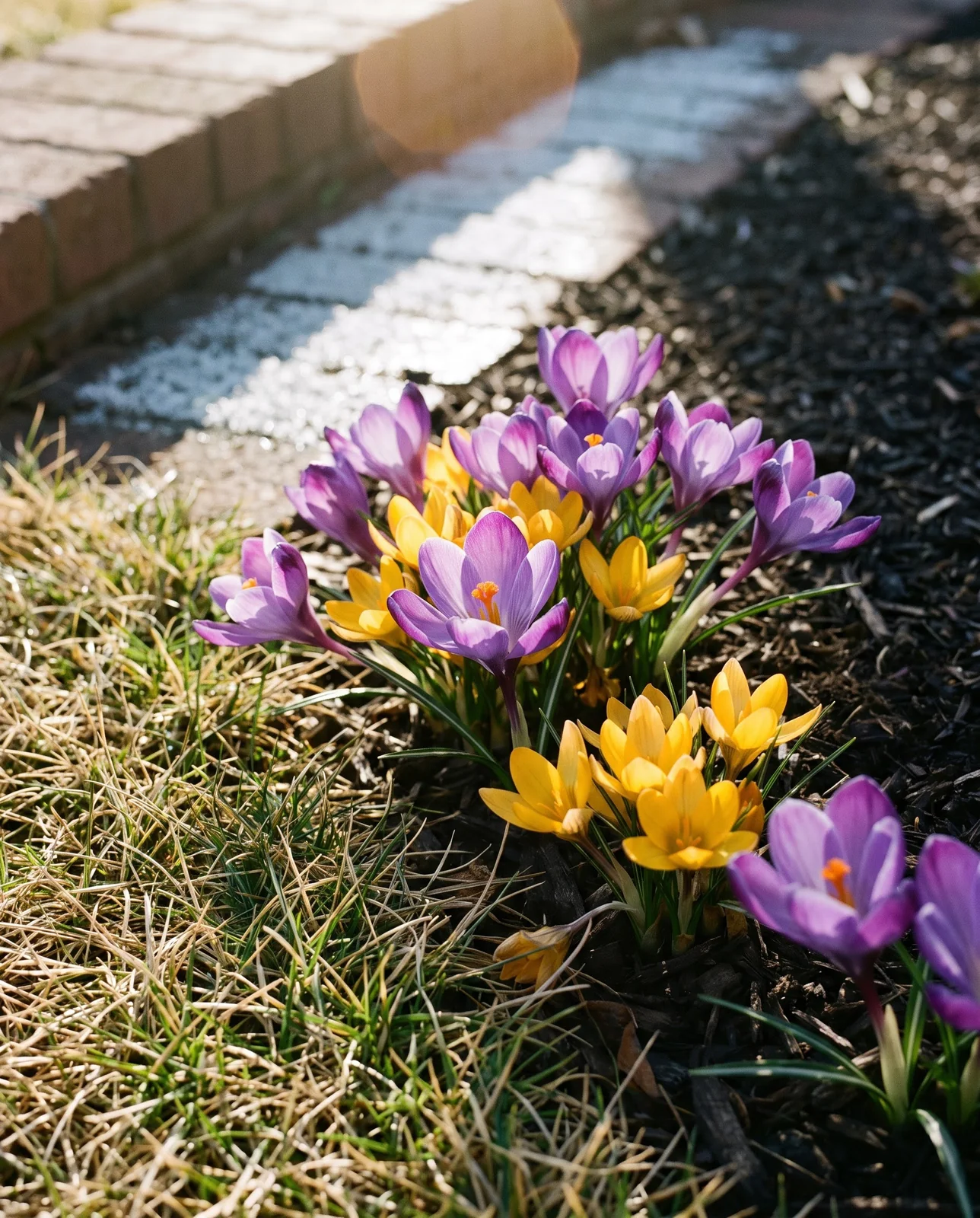
Species crocus (Crocus spp.) is a corm perennial hardy from zone 3a through 8b, only 3 to 6 inches tall, that pushes pointed shoots through cold soil and thin snow crust as the ground begins to warm in late winter. The flowers run on light and temperature rather than on the calendar, opening wide in bright morning sun and shutting tight on overcast days and cold nights, so the same drift can look like full bloom at noon and like nothing at all by late afternoon. Set the corms 3 to 4 inches deep in gritty, well-draining soil in early autumn, since wet autumn ground rots them. Large drifts under deciduous trees or along a lawn edge read far better than scattered singles, and they give foraging bees early nectar during warm winter breaks. Rodents are the other problem: wire mesh laid over the planting, or daffodil bulbs mixed through it, carries the corms past late autumn.
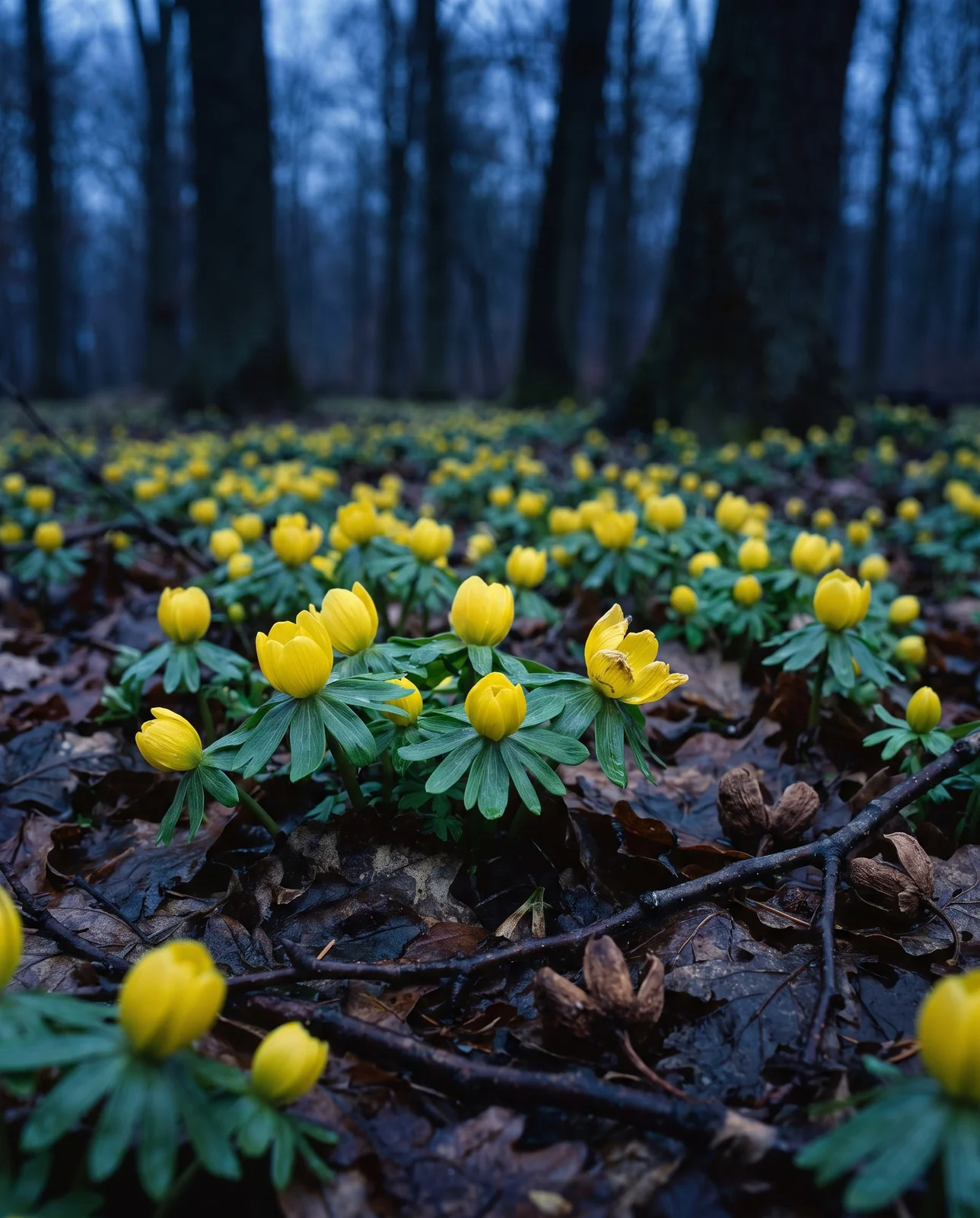
Winter aconite (Eranthis hyemalis) is a buttercup relative, family Ranunculaceae, with golden cup-shaped flowers set in an umbrella-like collar of green bracts. It stands 3 to 6 inches tall, is hardy in zones 4 through 8, and often opens with snow still lying around it. The tubers arrive small and hard; soaking them in water for several hours before planting in early autumn breaks dormancy and speeds rooting. Set them 2 to 3 inches deep in moist, humus-rich soil under deciduous shrubs or trees, where they take full winter sun before the canopy leafs out overhead. Once settled, winter aconite self-seeds into dense carpets and makes early groundcover that pairs naturally with snowdrops and the first crocuses.
The frost-tolerant imposters: pansies, violas, and the “does it really bloom in winter” question
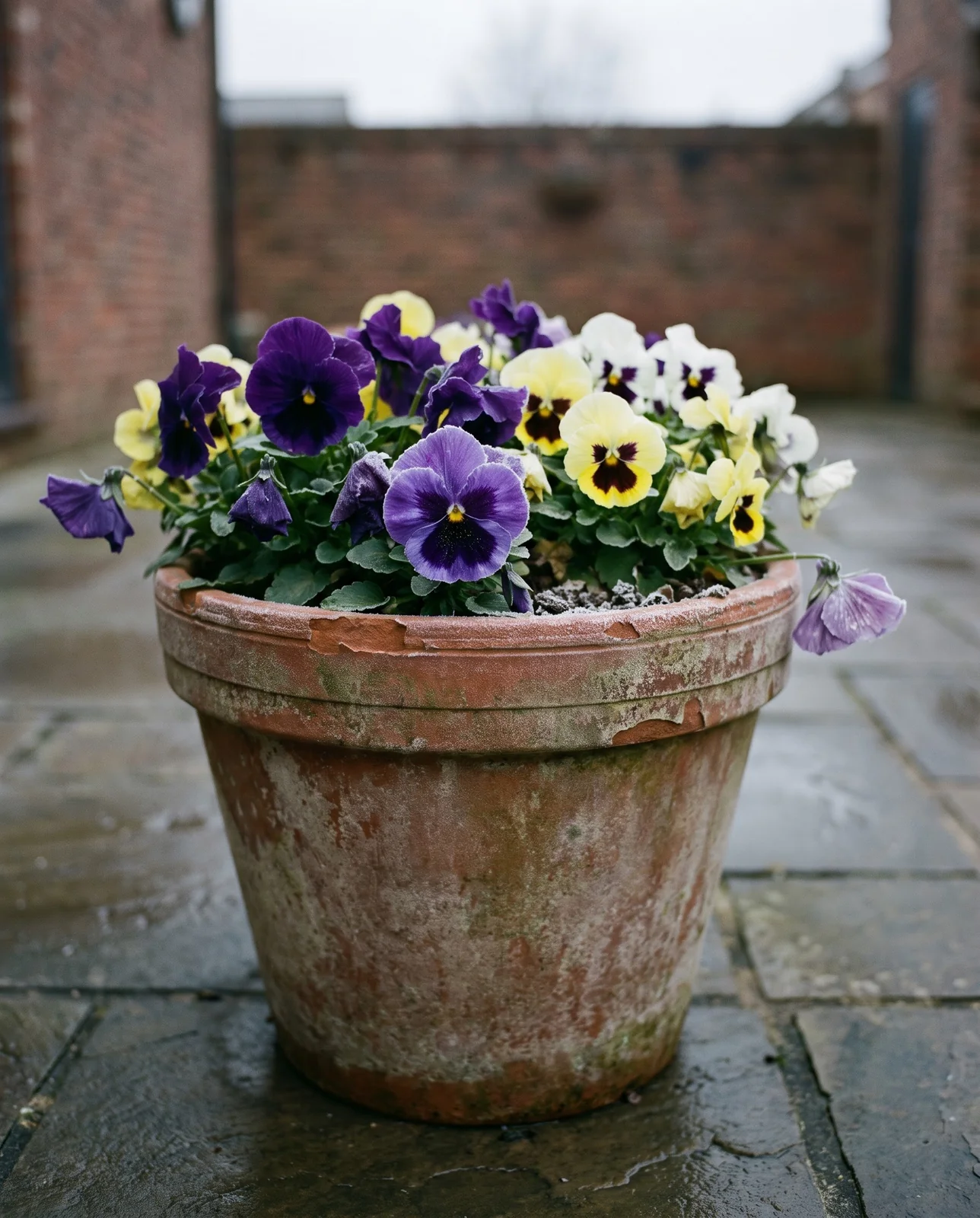
Pansies and violas (Viola x wittrockiana) are cool-season annuals sold as winter flowers, and whether that label holds depends entirely on how cold the winter gets where the pot is standing. In zones 7 through 9, where freezes stay intermittent and shallow, they keep flowering through December, January, and February, given a sunny microclimate out of the wind. On a freezing night the plants go limp and lie down, then stand back up and carry on as the temperature climbs above freezing during the day. Keeping the soil evenly moist and laying a light pine straw mulch over the root zone steadies soil temperature in southern gardens, and pinching off faded flowers keeps new buds coming through every mild spell.
North of that, across zones 4 through 6, pansies are not winter bloomers at all. Once sustained freezing weather arrives and the ground sets solid, bud production stops and the plants sit in a stalled, dormant state. Roots and evergreen foliage come through under snow, which insulates the crown against sub-zero wind, but nothing opens until the soil thaws in late winter or early spring. That gap between the label and the plant is what catches northern gardeners out: a plant sold as a universal winter bloomer gives them living green through the mid-winter blizzards and no flowers at all.
Four beliefs that decide what actually blooms in winter
The myth: Pansies and violas bloom straight through winter in every garden zone.
The reality: Pansies bloom continuously through winter only in mild climates, roughly zones 7 to 9. In northern zones 4 to 6, plants survive under snow but freeze into dormancy and stop flowering until spring.
The myth: The cyclamen sold as a winter houseplant can be planted in an outdoor winter garden bed.
The reality: Tender florist cyclamen, Cyclamen persicum, suffers cellular collapse below 40 degrees Fahrenheit and must stay indoors. Hardy garden cyclamen, Cyclamen hederifolium, hardy zones 5a to 9b per North Carolina State University Extension, blooms in late summer and fall, then enters summer dormancy, not the winter role the florist plant is bought for.
The myth: Native common witch hazel flowers in mid-winter, during January and February.
The reality: Native Hamamelis virginiana flowers from October to December. The mid-to-late-winter witch hazel blooms sold for January through March belong to Asian species and hybrid crosses such as Hamamelis x intermedia, a different plant under the same common name.
The myth: Winter-blooming bulbs can be bought and planted in the middle of winter.
The reality: Cold-hardy geophytes such as snowdrops and winter aconite must go into the ground as dormant bulbs in early autumn, before the ground freezes, so the root network can establish. Buying them once they are already blooming in a pot is a different transaction, not a substitute for autumn planting.
Indoor: flowers for the holidays
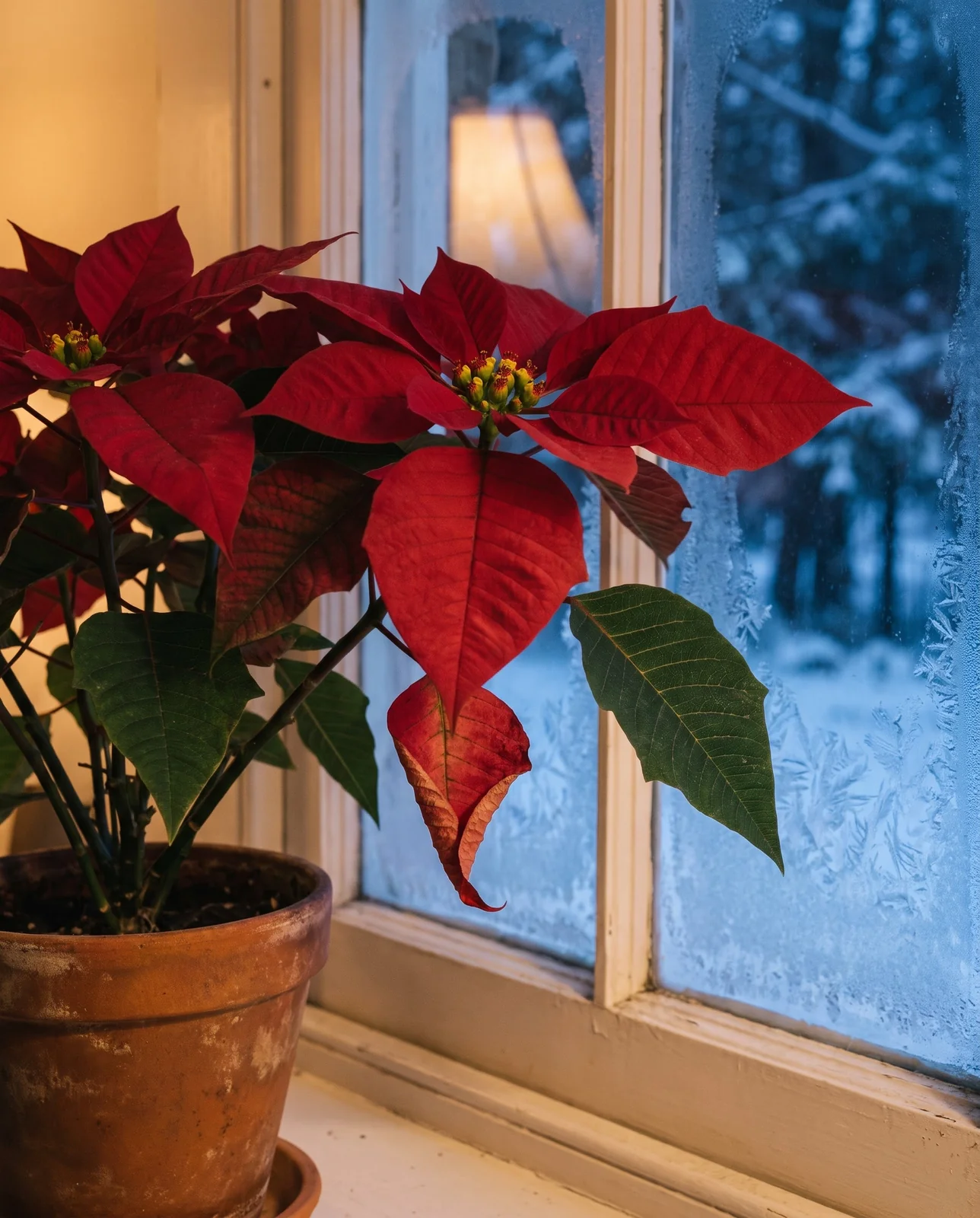
Poinsettia (Euphorbia pulcherrima) is the standing holiday centerpiece, and its color comes from bracts, the modified leaves that color up from late November through January. Give it bright indirect sunlight and steady room temperatures between 65 and 70 degrees Fahrenheit, away from heating vents, fireplace hearths, and the cold draft of an exterior door, all of which bring the leaves down early. Let the soil dry slightly between waterings and never leave standing water in the decorative foil around the pot, which rots the roots fast. Kept that way, with even moisture and indirect light, the bracts hold color well past New Year’s into late winter.
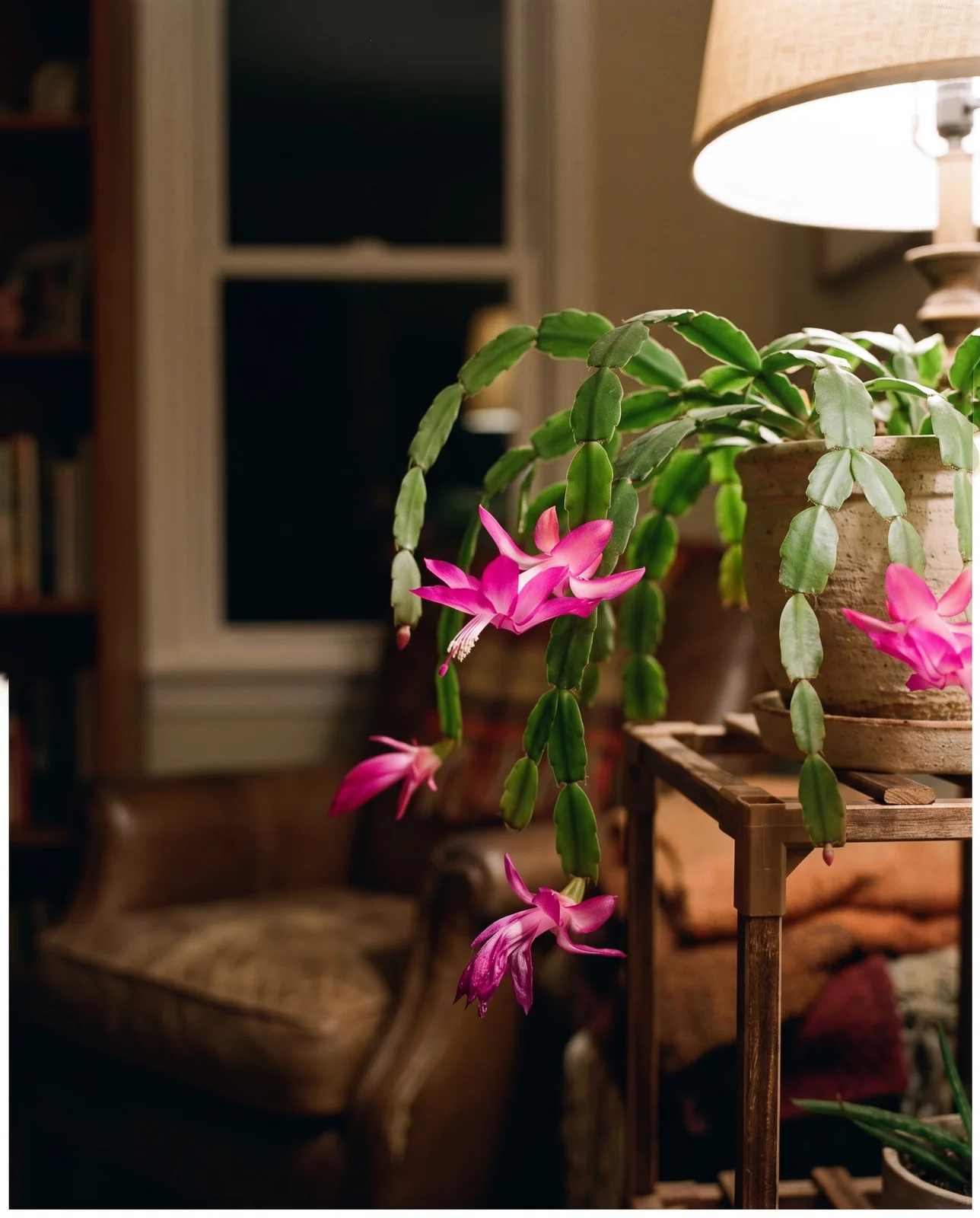
Christmas cactus (Schlumbergera bridgesii) is an epiphytic rainforest succulent from Brazil that hangs pendulous tubular flowers in pink, red, white, or salmon over the rim of the pot from late autumn through midwinter. Shortening daylight and cool autumn nights, around 55 to 65 degrees Fahrenheit, are what set the buds. Unlike desert cacti, it wants evenly moist, well-drained potting soil and bright filtered light rather than direct baking sun. Once buds have formed, stop handling the plant: turning it or carrying it to another room shifts light angle and temperature at once, and the buds fall. After flowering ends in late winter, cut back slightly on water and let it rest before spring growth starts.
Florist cyclamen (Cyclamen persicum) holds swept-back, shuttlecock-shaped flowers in magenta, pink, and white above silver-marbled leaves right through the winter months, and it is the one holiday plant that asks for a cool room: daytime temperatures near 60 to 65 degrees Fahrenheit and nights around 50. Water it from the bottom of the pot, because moisture collecting in the crown of the tuber rots it. An east-facing windowsill gives it bright morning sun without intense midday heat. When a flower or leaf yellows, take the whole stem at its base and pull it away from the tuber with a quick twist rather than cutting it short.
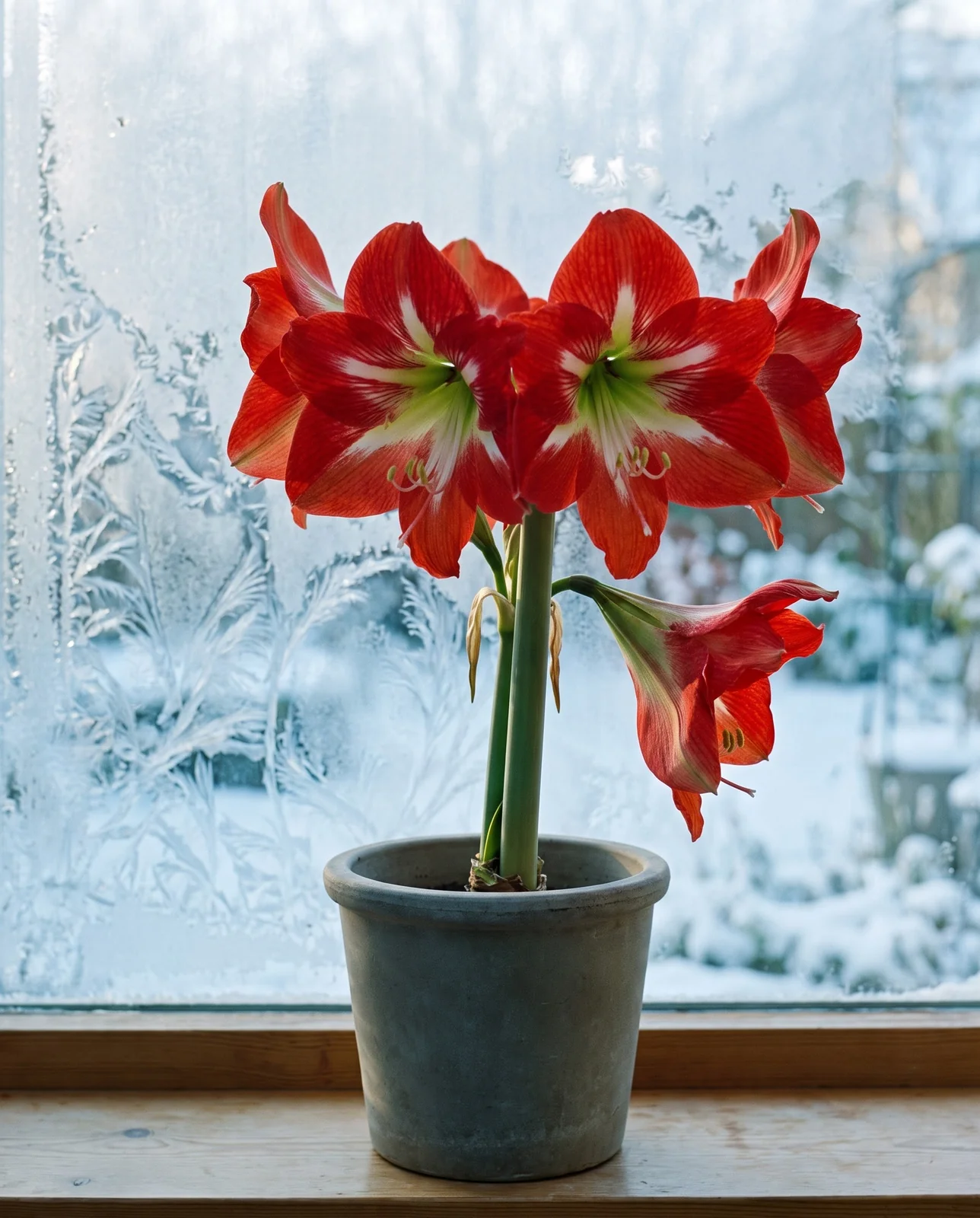
Amaryllis (Hippeastrum) sends up stout hollow scapes topped with two to six trumpet flowers up to 8 inches across. It needs no long cold chilling period, so a bulb potted in early November opens six to eight weeks later in ordinary room conditions. Water sparingly until the green sprout clears the neck of the bulb, then increase it to keep the soil lightly moist as leaves and bud clusters develop. Bright indirect light and a turn of the pot twice a week keep the heavy stems growing straight instead of leaning toward the window, and a slender stake keeps a full flower head from snapping the scape at peak bloom.
FAQ
What flowers actually bloom outdoors during freezing winter weather?
Hybrid Lenten roses (Helleborus x hybridus), snowdrops (Galanthus nivalis), winter jasmine (Jasminum nudiflorum), winter aconite, species crocuses, and Japanese camellias (Camellia japonica) all open flowers outdoors in near-freezing and subfreezing weather. They are built for it, unlike a frost-tolerant annual that only waits the cold out.
Will pansies and violas continue blooming all winter in cold climates?
Not in cold climates. Across zones 4 through 6, pansies and violas come through freezing weather alive under snow cover but stop setting flower buds once the ground freezes solid. Continuous winter flowering happens only in the milder zones 7 to 9, where frosts stay light.
Can a holiday florist cyclamen be planted in an outdoor winter garden?
No. The potted cyclamen sold for the winter holidays is Cyclamen persicum, a tender Mediterranean species that dies once it meets freezing weather outdoors. The hardy garden species, Cyclamen hederifolium, takes cold down to zone 5a, but it flowers in late summer and early autumn rather than in winter.
When should outdoor winter-blooming bulbs and shrubs be planted?
In early autumn, while the soil is still workable. Snowdrops, crocuses, and winter aconite go in then as dormant bulbs and tubers, well ahead of the ground freezing. Woody shrubs such as witch hazel, winter jasmine, and camellia also go in during early autumn or spring, as established plants, so the roots are set before winter arrives.
Can Japanese camellias survive and bloom in zone 5 gardens?
Not in open ground. Camellia japonica is hardy from zone 7a through 9b and takes severe winterkill or dies outright in zone 5. Gardeners that far north grow camellias in containers moved into a cool sunroom for the winter, or plant cold-hardy hybrid cultivars in a sheltered microclimate.
Zone-and-bloom-window calendar
Outdoor winter bloom calendar by USDA hardiness zone
Sorted by the coldest zone each plant tolerates, with the bloom window, the growth habit, and the one care point that decides whether it flowers.
More About Types of flowers
November flowers: what’s still blooming, by zone
October flowers: what’s blooming and what to plant now
Spider lily (Lycoris radiata): care and bloom guide
Heather plant care: is it a perennial or fall decor
Ornamental kale care: why it won’t turn color yet
Fall flowers: the full list by color, zone, and bloom time
September flowers: what’s blooming and what to plant now
Enjoying our flower guides? Add YourFlowersGuide as a preferred source on Google. It helps more readers find us.
Add to Preferred Sources