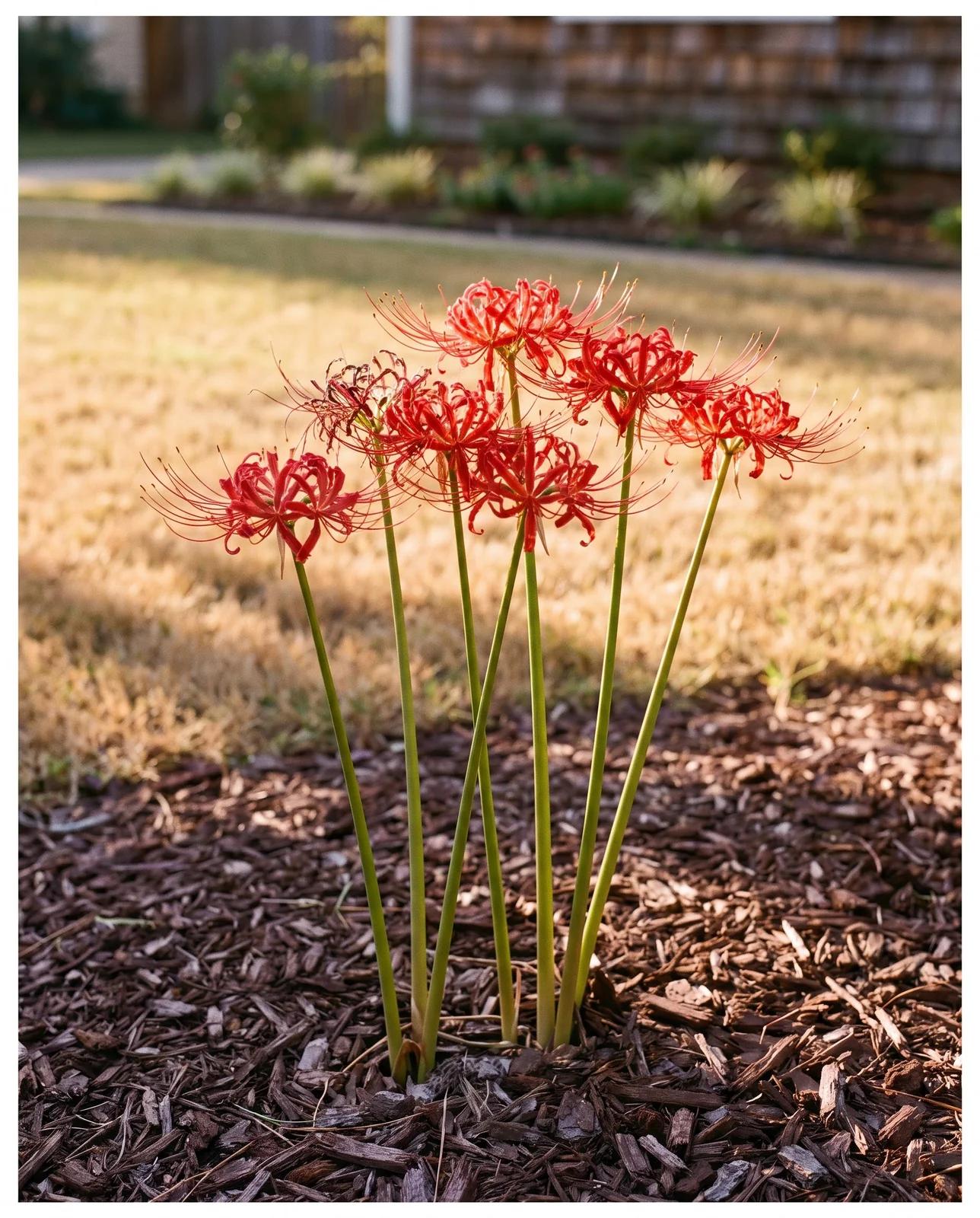
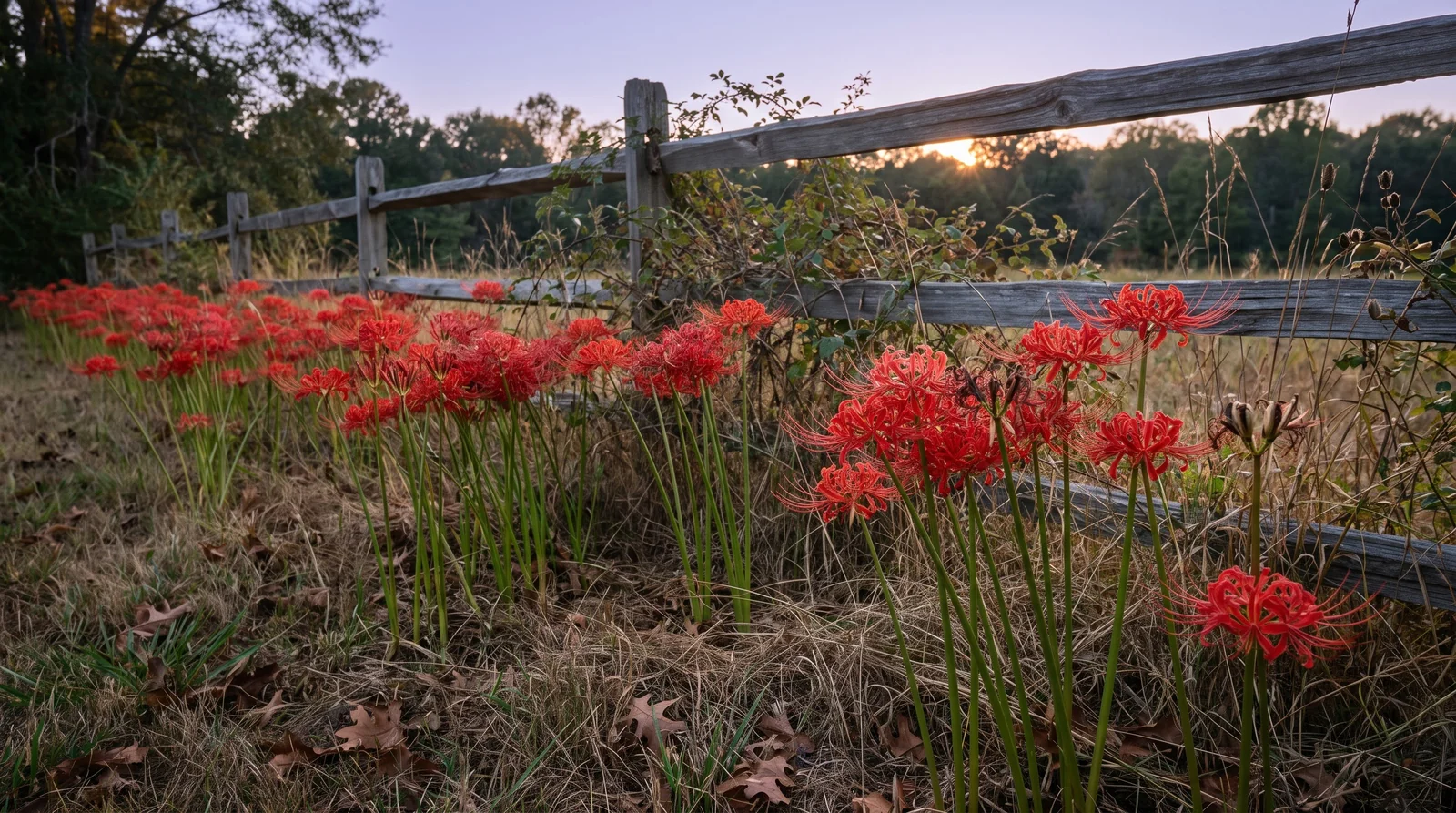
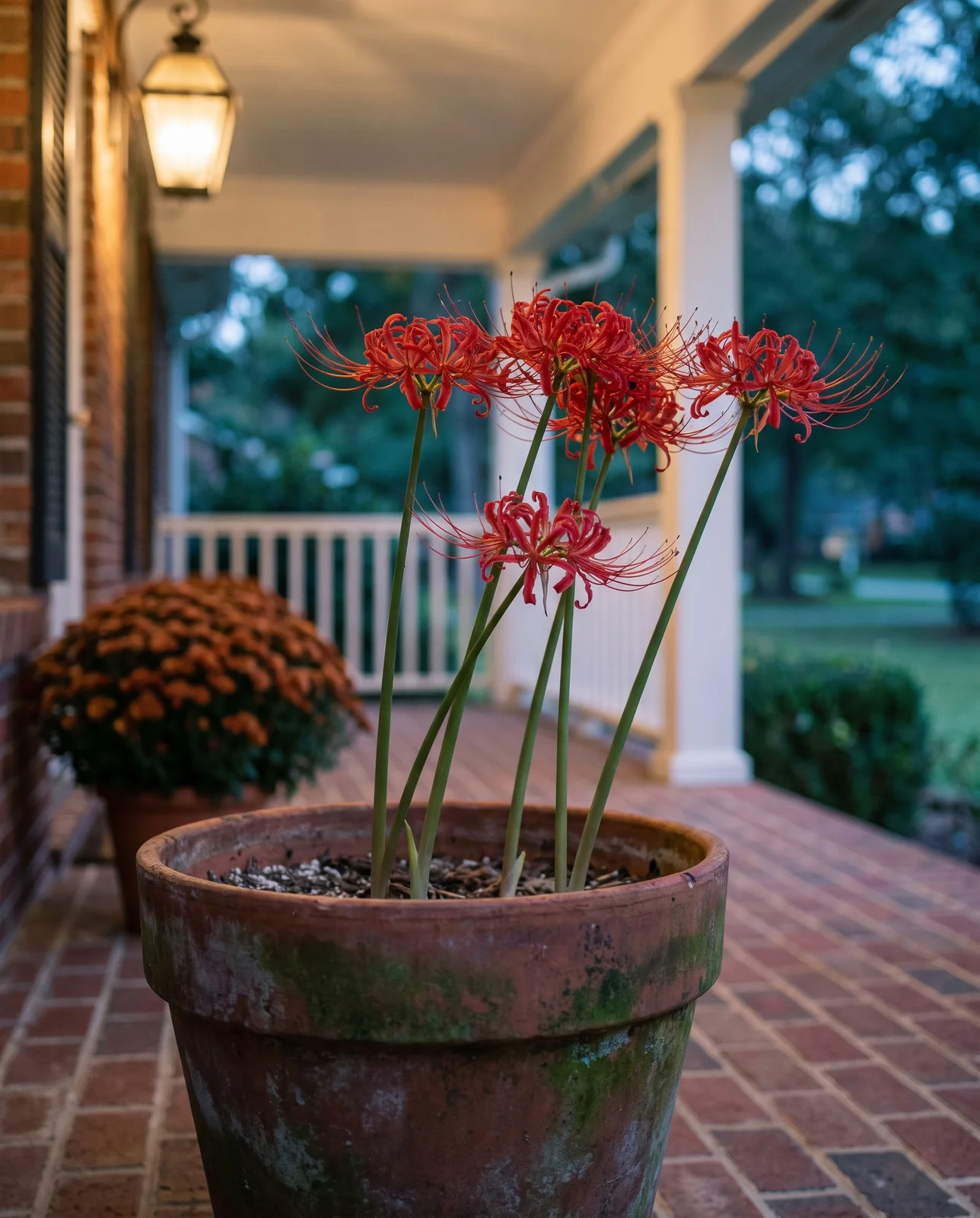
Red spider lily (Lycoris radiata), also sold as hurricane lily, is a late-summer bulb that sends up bare scarlet flower stalks in August and September, weeks before it grows a single leaf. The petals curl back hard and the stamens stand out well past them, which is where the spider in the name comes from. It belongs to the amaryllis family (Amaryllidaceae), comes from shady, moist slopes and rocky stream banks in China, Japan, Korea, and Nepal, and has naturalized through much of the warm-summer American South, where colonies turn up along old fence lines, lawn edges, and borders nobody has touched in years.
Most people meet this plant by accident. Red stems appear out of bare mulch in a yard nobody recently planted, and the first reaction is that something has gone wrong with it. Nothing has. The leafless bloom is how the species works: the narrow grayish-green leaves arrive in October, after the flowers are finished, hold their color all winter, and die back in spring. The second common source of confusion is the name itself, which also belongs to the white spider lily (Hymenocallis latifolia), an unrelated Florida native that blooms with its foliage still on the plant. What follows covers how to tell the two apart, why the flower comes first, where the bulb is hardy, how shallow to set it, what it does in a pot, how toxic it is to pets, and where the Japanese name for it comes from.
On this page 10 sections
- Is this a spider lily? (identification)
- Why it blooms before the leaves show (bloom and foliage timing)
- Where it grows (USDA zones, light, and site)
- Planting and soil
- In containers
- Water and dormancy
- Pets, toxicity, and myths
- Pests and problems
- The name, folklore, and cultural history
- Frequently asked questions
Is this a spider lily? (identification)
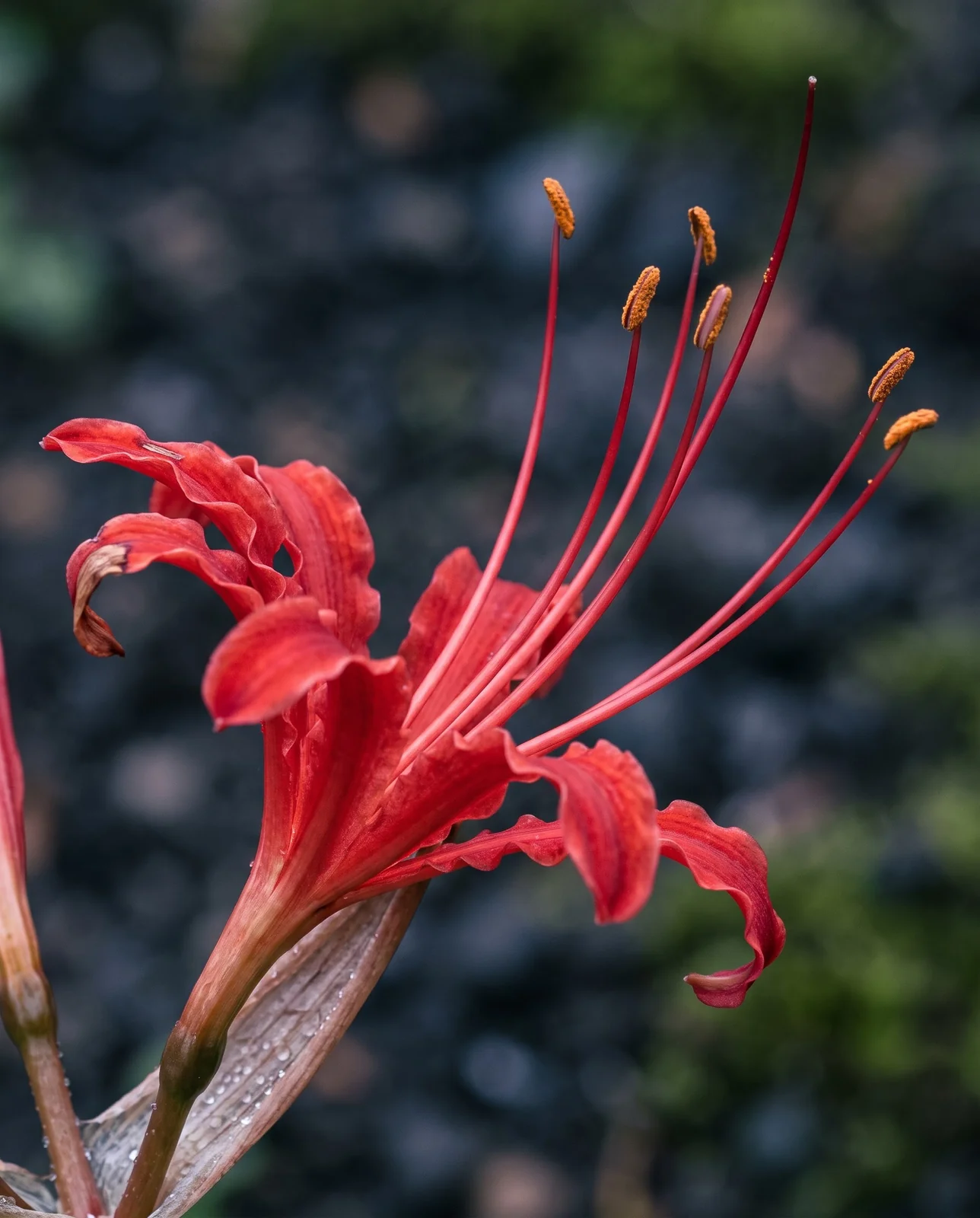
Several unrelated plants answer to the name spider lily, which is why nursery labels and search results contradict each other. The red spider lily (Lycoris radiata) is a deciduous perennial bulb in the amaryllis family. Each naked stem rises 1 to 2 feet and ends in a cluster of four to six nodding red flowers, six-parted and funnel-shaped, the lobes wavy and reflexed strongly backward toward the stem. The stamens are exserted, projecting far past the petals, and those are the spider legs the common name refers to. The plant grows from an underground tunicate bulb, and unlike a fibrous-rooted border perennial such as the daylily, it carries no foliage at all while it is in flower. Variety choice is a short conversation here: North Carolina State University Extension lists only two named selections, ‘Fire Engine’ in bright red and ‘Red Sunset’ in a softer reddish pink.
The plant most often mistaken for it is the white spider lily (Hymenocallis latifolia), a Florida native documented by the University of Florida IFAS Extension. It forms clumps 2 to 3 feet tall of dark green strap-like leaves, opens fragrant white flowers through summer and fall, and stays fully clothed in green the whole time it blooms. A third look-alike, the rare streamside spider lily (Hymenocallis rotata), is a protected Florida wetland native with white blossoms and a distinct webbed center. Petal color and the presence or absence of leaves settle the question on the spot.
Three plants share the name spider lily, here is what separates them
The common name spider lily gets applied to plants from different genera, and the fastest way to sort them is what is happening around the flower: leaves present or absent, and when they show up.
Coral red to bright scarlet flowers open on bare stems 1 to 2 feet tall from late August into September, with no leaves anywhere on the plant. The strap-like foliage does not appear until October, weeks after the blooms are gone. Cold hardiness runs across a range: semi-hardy at one end, damaged below 28°F, and hardy at the other, injured below 5°F.
Fragrant pure white flowers open on stems 2 to 3 feet tall from summer through fall, and the dense dark green foliage stays on the plant the whole time it blooms. It is a tender perennial suited to coastal South Florida rather than a cold-hardy bulb.
White flowers with a prominent webbed center bloom in spring to early summer on stems 1 to 2 feet tall, with wetland foliage present the whole time. It is native to Florida wetlands and is not sold through the garden trade, so a plant matching this description in a suburban yard is unlikely to be this species.
Why it blooms before the leaves show (bloom and foliage timing)
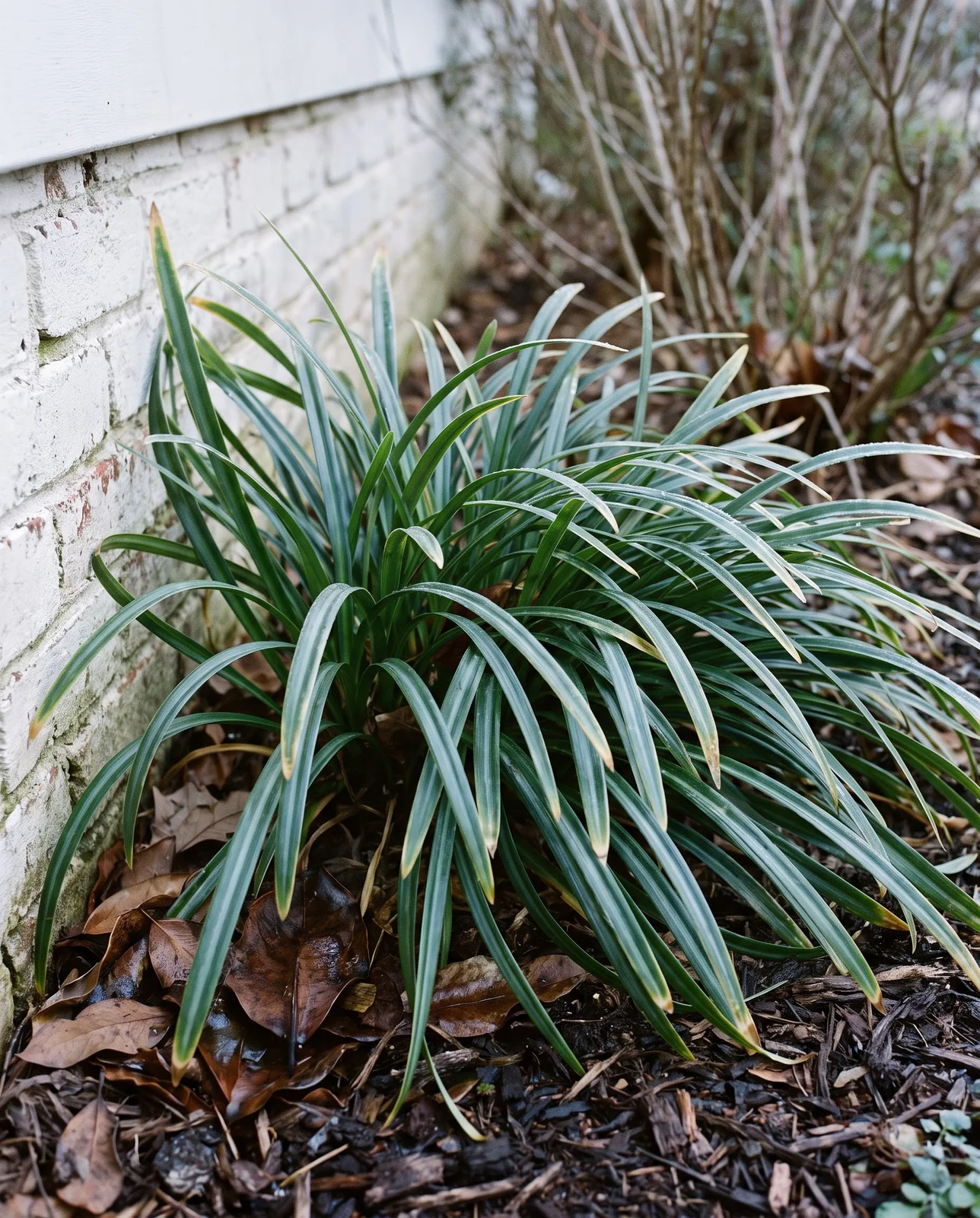
A spring bulb puts up leaves, then flowers, then rests. Lycoris radiata runs the same three phases out of order, and that is the whole explanation for a stalk with nothing on it. Through the heat of midsummer the bulb sits dormant below the soil line with no growth above ground at all. In late August and September the scapes come up fast, clearing bare soil within a matter of days and opening their terminal clusters without a leaf anywhere on the plant. Once the flowers wither in early autumn the second half of the year begins: narrow, fleshy, grayish-green strap-like leaves push out of the bulb neck in October and stay green straight through winter, gathering cool-season light and storing it in the bulb below while the deciduous plants around them stand bare. As spring warms, that foliage yellows and dies off completely, and the bulb drops back into summer dormancy until the next round of flower stalks breaks ground. The plant is never in leaf and in flower at the same time, which is why a colony can look dead in July and finished again in October while doing exactly what it should.
The bloom-first year: what the spider lily is doing in each season
The red spider lily runs on an inverted calendar: it flowers first, grows leaves after, and rests underground through the hottest months. Each phase below carries its own moisture need.
Where it grows (USDA zones, light, and site)
North Carolina State University Extension puts the cold tolerance of this bulb on a range: semi-hardy at one end, damaged below 28°F, and hardy at the other, injured below 5°F. That spread covers USDA hardiness zones 6 through 10. In the United States the species has been introduced and now persists in Alabama, Florida, Georgia, Illinois, Kentucky, Louisiana, and Virginia, where established colonies hold the same ground for decades. Bulbs take full sun to partial shade, and flowering is best where they get partial shade through the hottest hours of the day. Because the flower stems arrive naked, the same extension guidance is to work the bulbs into a mixed ground cover or a perennial flowerbed, so the surrounding greenery gives the bare stalks something to stand in. They also read well mass-planted along a walkway, in a courtyard garden, at the front of a border, or naturalized in loose drifts beside a lawn.
Planting and soil
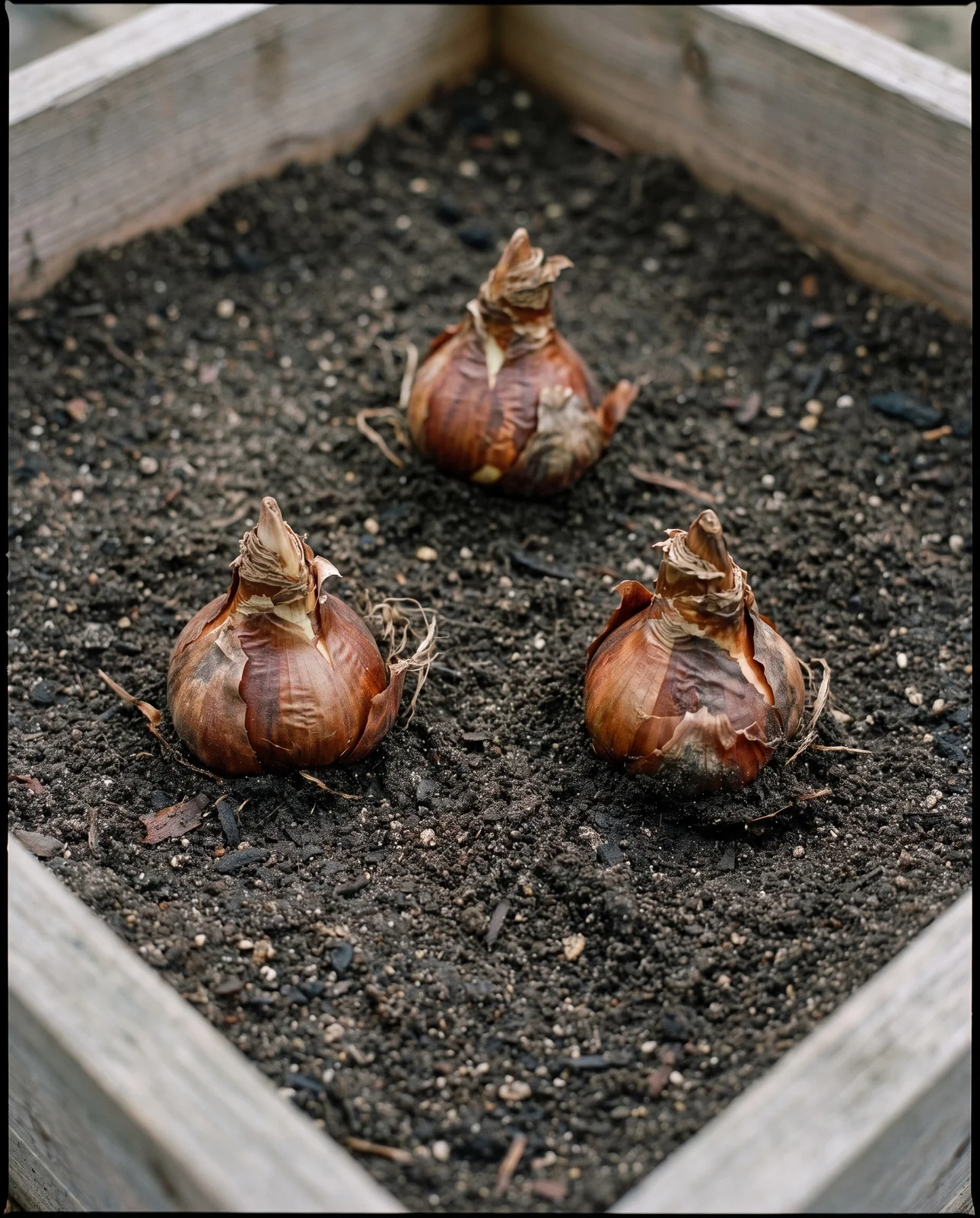
Red spider lily wants rich, moist, well-drained soil with a generous amount of organic matter in it. A heavy clay bed that holds standing water needs organic material or coarse grit worked in before anything goes in the ground, because water sitting against the bulb scales is what rots them. Depth is the part people get wrong. Tulips and daffodils get buried well down; Lycoris radiata is set almost at the surface, with the pointed neck of the bulb left exposed above the soil line. Space bulbs 6 to 12 inches apart so the clump has room to widen. Established plantings naturalize on their own through underground offsets and are long-lived, so a colony can sit undisturbed for years. To propagate, lift a clump, separate those offsets by hand, and replant them at the same shallow depth with the necks showing and the root base settled into moist soil.
In containers
Pot size decides whether a container-grown spider lily ever flowers. These bulbs need an extensive root system before they will bloom, so a cramped pot or a shallow bulb pan restricts root expansion and keeps a mature bulb from flowering at all. Use a deep container with open drainage holes and a porous mix with organic material in it, set the bulbs so their pointed necks sit just above the surface, and leave space between them for roots to run. Water steadily through autumn and winter while the strap-like leaves are working, then move the pot somewhere sheltered and partly shaded and cut the water back sharply for the summer dormancy.
Water and dormancy
Watering tracks the growth phase of the bulb through the year. From October through spring, while the winter leaves are expanding, keep soil moisture steady and moderate. Natural winter precipitation across zones 6 through 10 usually supplies most of it, with supplemental water only during a dry autumn stretch when scapes are coming up or new foliage is breaking through. Summer is where plantings are lost. North Carolina State University Extension is direct about it: through the dormant season the soil is best kept fairly dry. A lawn sprinkler running over a dormant colony, or a bed soaked on the same schedule as everything growing around it, is the ordinary route to fungal decay and a soft bulb. Once the foliage dies back in spring, pull the supplemental water and let the ground stay on the dry side until the flower stems show in late summer.
Pets, toxicity, and myths
Red spider lily carries the alkaloid lycorine, and North Carolina State University Extension rates it a low-severity poison: eating the bulb or the roots brings on abdominal pain, salivation, shivering, nausea, vomiting, and diarrhea. That is a rough day for a dog, not the acute kidney failure that true lilies cause in cats. Gardeners who would rather have nothing toxic in the bed at all can work from our list of dog and cat safe flowers.
What people get wrong about spider lilies
The myth: Leafless flower stalks mean the bulb is defective or dying.
The reality: Lycoris radiata flowers on bare stems by design, and the strap-like leaves follow weeks later, in October.
The myth: Red spider lily poses the same lethal kidney risk to cats as true lilies.
The reality: Eating the bulb causes low-severity gastrointestinal upset, vomiting, nausea and salivation, rather than fatal organ damage.
The myth: White spider lilies are just a white-flowered form of the red spider lily.
The reality: White spider lilies are a different plant, Hymenocallis latifolia, an evergreen Florida native with its own hardiness needs.
The myth: A naturalizing spider lily colony will aggressively invade and ruin a lawn.
The reality: Clumps spread gradually through underground bulb offsets over years and do not aggressively choke out surrounding turf.
Pests and problems
Red spider lily has no serious insect or disease problems, and the one pest documented against it is the narcissus bulb fly, whose larvae occasionally feed on the bulbs. What goes wrong is almost always cultural rather than biological: overwatering through the summer dormancy, which rots the roots and softens the bulb. When an established planting skips its late-summer bloom, the cause usually traces to one of three things: a neck buried under soil instead of left exposed, waterlogged ground through the dormant months, or a container too small for the root system the plant needs before it will flower.
The name, folklore, and cultural history
The genus name Lycoris honors a Roman actress and mistress of Mark Antony, a name picked for the dramatic look of the flowering stems. The species itself belongs to shady, moist ground on slopes and rocky stream banks across China, Japan, Korea, and Nepal, and in that part of the world it carries far more weight than it does in an American front yard. In Japan the plant is higanbana, named for higan, the autumn equinox period, because the scarlet flowers open on schedule with it. That stretch of the calendar is set aside in Buddhist practice for visiting ancestral graves, and over time the flower became tied to grave-site plantings, funeral ceremonies, and remembrance of the dead. That association is old and well documented, which is why the bright red blooms keep turning up in Japanese art, folklore, and modern visual storytelling as shorthand for a final parting.
Frequently asked questions
Why does my spider lily have no leaves when it blooms?
It blooms that way on purpose. The scapes come up naked in late August and September while the bulb is leafless, and the narrow, strap-like green leaves follow in October, after the flowers have withered. Those leaves stay green all winter and die back in spring.
Is the white spider lily the same plant as the red spider lily?
No. The white spider lily (Hymenocallis latifolia) is a separate evergreen species native to Florida that blooms with its foliage present. The red spider lily (Lycoris radiata) is an Asian deciduous bulb that flowers on bare stems.
Are spider lily bulbs poisonous to dogs and cats?
Eating the bulbs or roots causes low-severity toxicity from the alkaloid lycorine. Symptoms run to vomiting, diarrhea, abdominal pain, nausea, and salivation. The trouble stays in the gut and stops short of acute organ failure.
How deep should I plant red spider lily bulbs?
Barely at all. Set the bulb in rich, well-drained soil with its pointed neck exposed slightly above the soil surface, spacing bulbs 6 to 12 inches apart.
Can red spider lilies be grown in containers?
Yes, as long as the pot is deep enough for an extensive root system and has open drainage holes. Without that root volume the bulb will not carry a late-summer flower.
More About Types of flowers
November flowers: what’s still blooming, by zone
October flowers: what’s blooming and what to plant now
Heather plant care: is it a perennial or fall decor
Flowers that bloom in winter: true bloomers by zone
Ornamental kale care: why it won’t turn color yet
Fall flowers: the full list by color, zone, and bloom time
September flowers: what’s blooming and what to plant now
Enjoying our flower guides? Add YourFlowersGuide as a preferred source on Google. It helps more readers find us.
Add to Preferred Sources