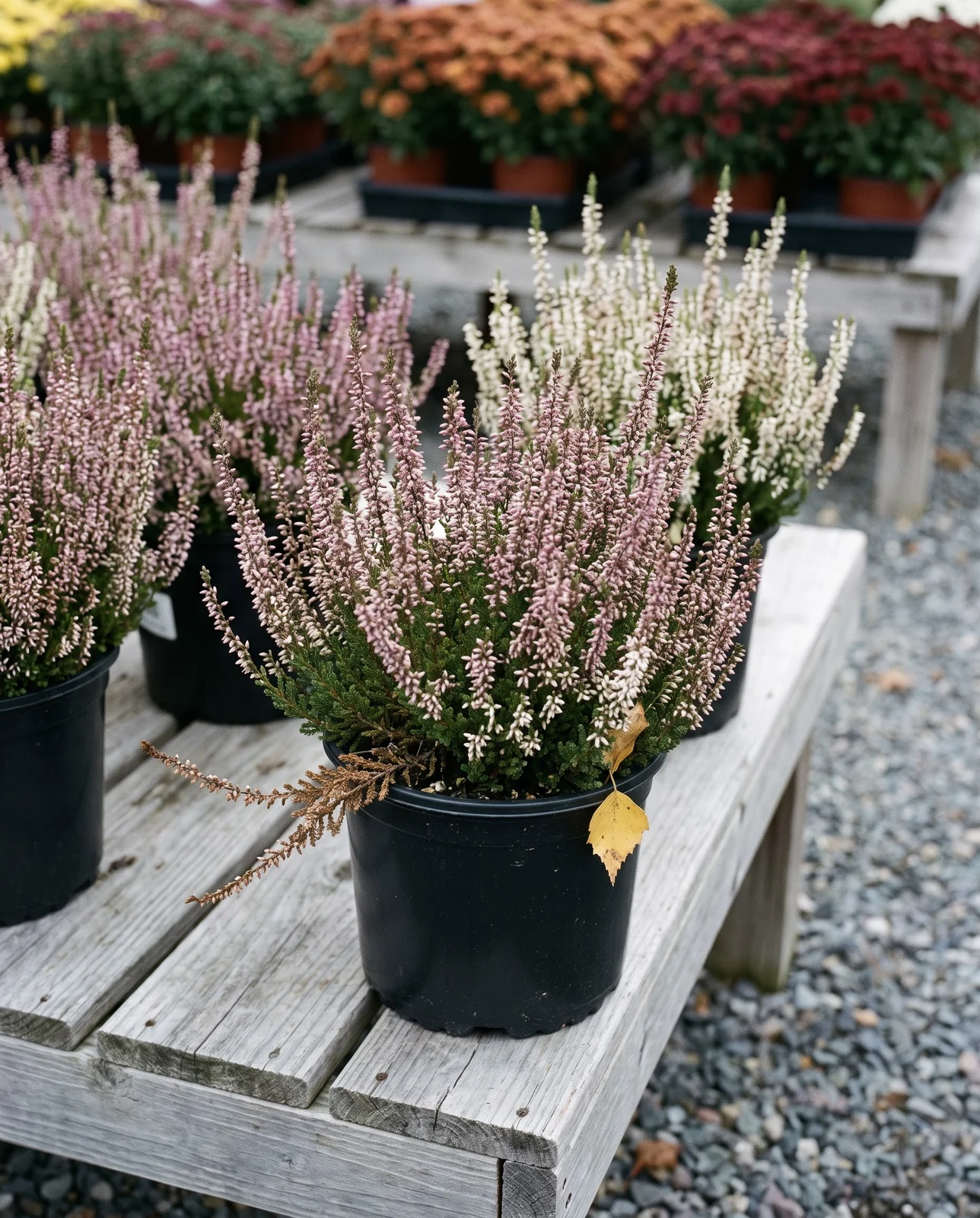
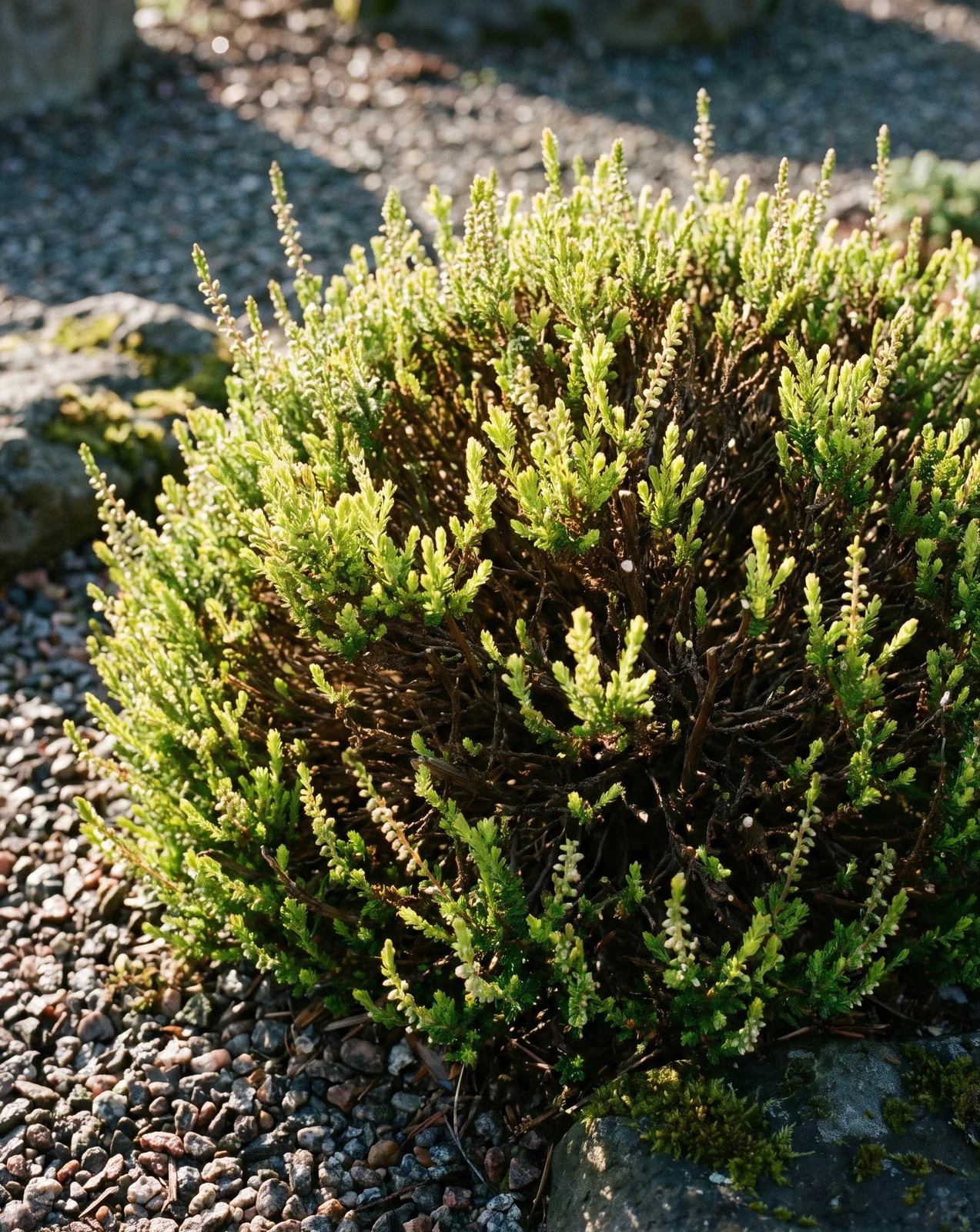
Scotch heather (Calluna vulgaris) is a woody evergreen shrub that lives for decades in a cold-winter garden, not a bedding annual, even though garden centers sell it every September and October on the same benches as potted mums with a tag that says nothing about next spring. Whether the pot on your porch turns into a long-term shrub or stays this year’s decoration comes down to your USDA hardiness zone, the drainage and acidity of your soil, and whether it goes into an open bed or spends winter in the container it came in.
Those three conditions are not equally forgiving. Cold is the easy one: heather comes through hard northern winters without help, and gardeners in cool northern climates can treat it as a permanent outdoor planting. Heat is what ends it, and the ceiling sits lower than most fall buyers expect, so growers in hot southern regions watch the same plant decline as soon as summer arrives. Soil is the other common failure, because heather needs acid, sharply drained ground and slips in the sweet, tight clay that fills most suburban beds. A container adds a fourth problem, since roots above ground freeze in a way roots in a bed never do. What follows covers what the plant actually is, how zone, soil and planting method combine into four different outcomes, how to set up the site, what a potted plant needs through winter, why bronze and purple foliage in November is normal, and when to cut it back.
On this page 7 sections
What you actually bought: Calluna, not just “fall color”
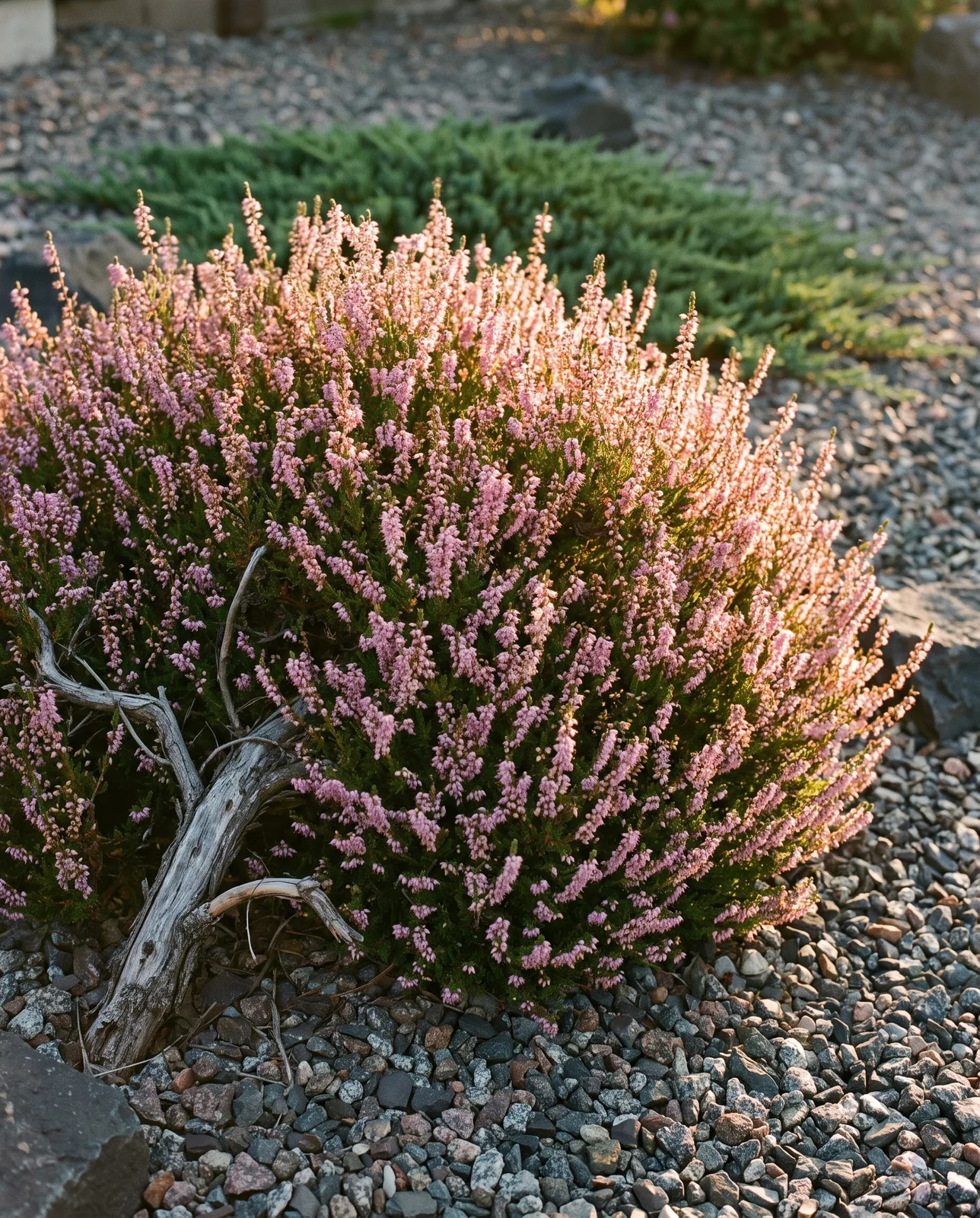
Heather is a single species, Calluna vulgaris (pronounced ka-LU-na vul-GA-ris), the only member of its genus, and it sits in the Ericaceae family alongside related genera such as Erica and Daboecia. The same plant is sold as Scots heather, Scotch heather, and ling. Its genus name comes from a Latin word meaning to cleanse, a nod to the sturdy sweepers the shoots once made in Europe, while vulgaris just means common. What sits in the pot is an evergreen broadleaf shrub with upright, ascending branching that knits into dense mats 2 or more feet across, standing 4 to 24 inches tall. The leaves are scale-like and tiny, 1 to 3 mm long, set in opposite pairs across four ranks, which gives every shoot a squarish outline.
Oregon State University supplies the detail that separates true heather from heath: Calluna carries a colored calyx longer than its petals, and that calyx stays on the branch after the 6 mm rosy to purplish pink flowers have gone over. Scottish folklore long celebrated white-flowering sprigs as tokens of good luck. Native to Europe and Asia Minor, heather has been planted far outside that range and settled in more thoroughly than a fall shopper might guess. Native Plant Trust documents established populations on disturbed ground, in meadows, and along sandy roadsides in New England, and Oregon State University warns that in parts of North America, Canada, Australia, and New Zealand, naturalized heather can spread aggressively enough to degrade native plant communities.
Will it survive where you live and how you planted it
NC State Extension Plant Toolbox puts the cold hardiness range of Calluna vulgaris at USDA zones 4a through 6b, hardy down to zone 4, and states explicitly that this species should not be planted south of zone 6. Cold is not the limit here. Southern gardeners who buy heather during autumn promotions and watch it die the following June almost never lose it to frost. What ends it is the summer: prolonged heat and high atmospheric humidity, and when high temperatures combine with moist soil, fungal pathogens bring on rapid stem rot. From zone 6b north, permanent survival asks for one more thing beyond the suitable climate, an in-ground site with sharp drainage and an acidic pH under 6.0, and the plant holds that spot for years.
What actually happens to heather in your setup
The same heather in four different situations lands in four different places, from decades of return bloom to root failure inside a season. Match your zone, soil and planting method to find which one applies.
Getting the soil and site right
Heather wants acid ground and does not negotiate about it. Both NC State Extension and Oregon State University put the target below pH 6.0, in sandy, rocky, or organic loam that drains exceptionally well; heavy clay or lime-rich alkaline beds lock out essential minerals and suffocate a root system that runs shallow by nature. That is why heather ends up in the same bed as Azaleas and Camellia, which want the same low pH, and why a gardener already keeping a bed acid for a blue Hydrangea macrophylla has most of the work done. Give it full sun for the tightest branching and the brightest flower spires, though light partial shade is tolerated, and do not rule out an exposed coastal site, since heather is well suited to seashore locations that take maritime winds. Water so the soil never dries out completely while the plant is rooting in, and never so much that the roots sit in soggy ground; once established in the garden, heather is reliably drought resistant. Skip the compost in the planting hole and skip the fertilizer. This shrub needs little or none, and surplus nitrogen buys leggy growth and burned roots.
Container vs. ground over winter
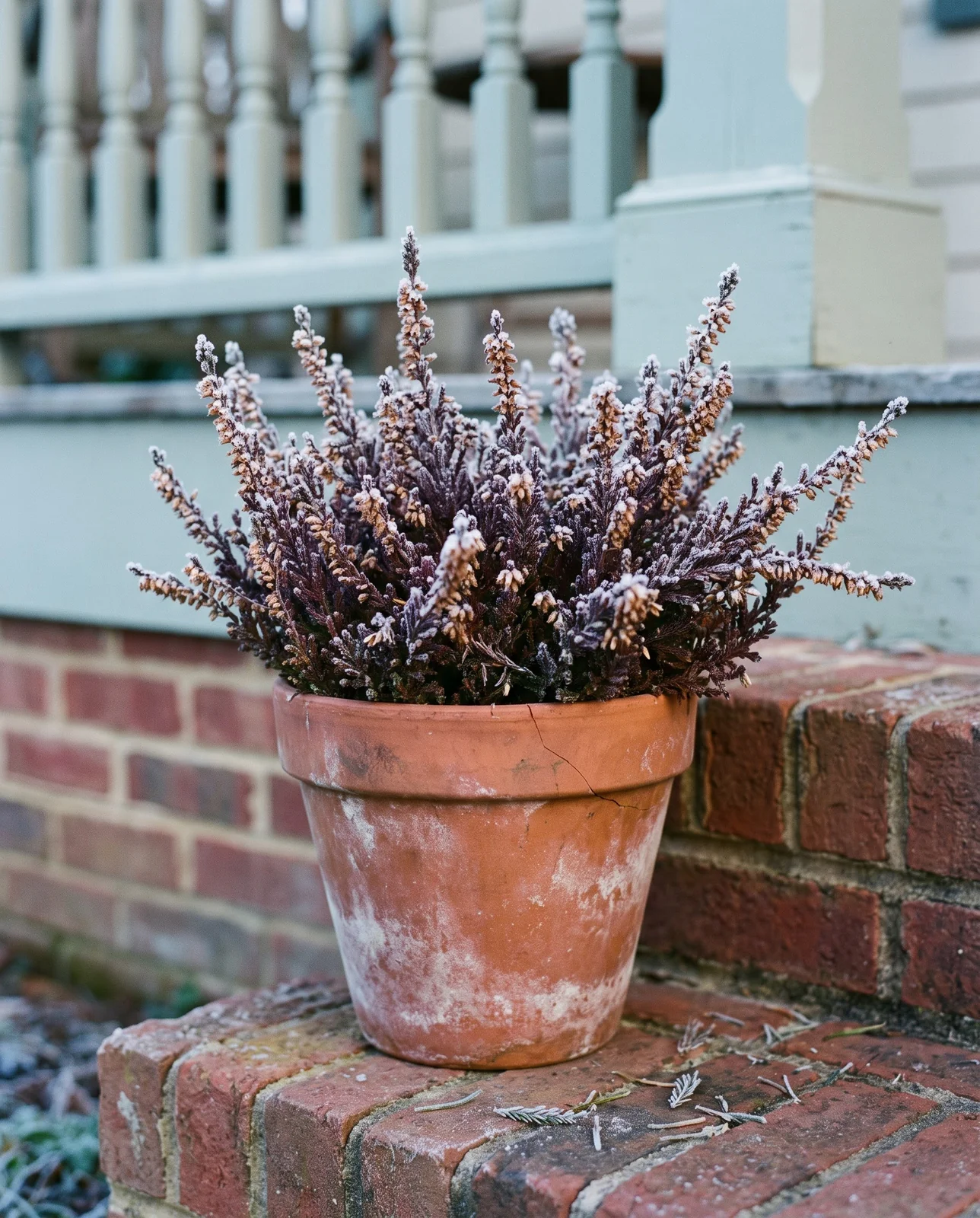
In an open bed the surrounding mass of earth works as a buffer: root-zone temperature stays stable even as air temperatures drop well below zero, and heather planted across zones 4a through 6b comes through winter with nothing added. A pot on the porch steps has none of that soil behind it. Freezing wind reaches the root ball through thin plastic or terracotta walls, and delicate root hairs ride through freeze-thaw cycles that a plant in open ground never feels, which dries the foliage and kills the roots feeding it. A container heather staying outdoors through a northern winter needs that difference made up. Group several pots together against a sheltered foundation wall out of direct wind, wrap the pots in insulating material, or sink the whole container to its rim in an empty garden bed until spring. With no garden space to sink it into, an unheated garage or a protected cold frame does the job, with the potting soil kept barely damp and never drenched.
Is it dying, or just doing what it’s supposed to do
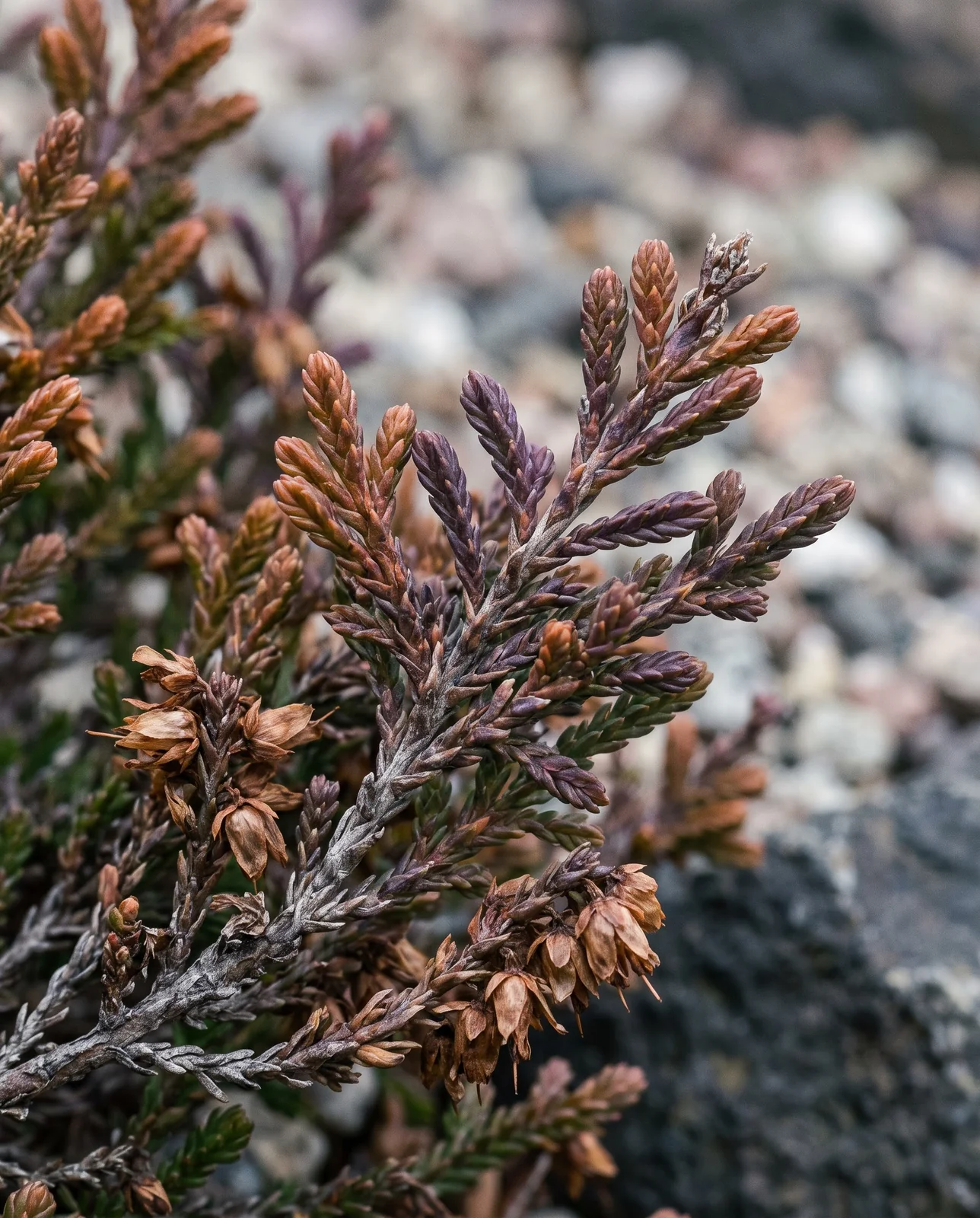
Many gardeners decide a newly bought heather is dying when its green shoots take on a copper or plum cast in late autumn. NC State Extension describes that shift, green to bronze to purple, as what the evergreen foliage of Calluna vulgaris does as winter approaches. It is a healthy, protective adaptation to cold weather rather than a symptom of frost damage or root failure, and the color reverses with the spring growing flush. Breeders have leaned into the trait: ‘Firefly’, ‘Robert Chapman’, and ‘Wickwar Flame’ were bred deliberately for reddish winter foliage that holds its color through snow. Real decline reads differently. NC State names the genuine threats as scale insects, spider mites, and severe stem rot in hot, humid weather, and a stem that has actually died turns dull grayish brown and goes brittle, snapping under light pressure instead of flexing.
Four heather claims worth checking before you plant
The myth: Heather foliage turning bronze or purple in November signals winterkill or root failure.
The reality: NC State Extension confirms the color shift is normal seasonal pigmentation for evergreen heather, which greens up again in spring.
The myth: Heather needs regular fertilizer through autumn to keep blooming.
The reality: Both NC State and Oregon State University note that heather needs little or no fertilizer, and excess nutrients burn the roots.
The myth: Potted heather can survive southern summers with deep daily watering.
The reality: NC State Extension states plainly that Calluna should not be planted south of zone 6, where heat and moisture combine to trigger fatal stem rot.
The myth: Heather and heath are interchangeable names for the same species.
The reality: Calluna vulgaris is true heather, told apart from heath (Erica) by its persistent colored calyxes, which run longer than its petals.
When to prune
Timing matters when cutting heather back to maintain a compact, mounded shape. Oregon State University gives the moment: prune Calluna vulgaris after flowering, in spring. Late autumn is the wrong time, because cutting into stems right before freezing weather leaves open wounds and exposes the shrub to severe winter desiccation. In early spring, just as the plant emerges from winter rest, take sharp shears and trim the previous season’s growth back to just below the dried flower spikes. Never cut down into old, leafless woody stems. Heather carries no dormant buds on aged wood, as is true of many shrubs in the Ericaceae, and a plant sheared to bare brown branches will not push new green foliage.
FAQ
Is heather an annual or a perennial?
It is a true perennial evergreen shrub, and in USDA zones 4a through 6b a long-lived one: set into acidic, well-drained ground, a single plant survives for decades. South of zone 6 the answer flips. Summer heat and humidity push it into severe decline, so the pot really does behave like the seasonal decor it was sold as.
Why is my heather turning bronze or purple in winter?
That is the plant doing what it is supposed to do. NC State Extension notes that the scale-like leaves routinely run from green to bronze or purple as temperatures fall, and the color reverses in spring. It is a natural response to cold, not disease and not freezing damage. Cultivars such as ‘Firefly’ and ‘Robert Chapman’ were selected for exactly this winter color.
What type of soil does heather need to survive?
Sharply drained and acidic, with a pH below 6.0. Oregon State University specifies that sandy, rocky, or organic soils are ideal. Heavy clay or alkaline dirt suffocates the roots and causes rapid chlorosis, so an ordinary garden bed needs amending before the plant goes in rather than after it starts to slip.
Can heather stay in a pot outdoors through the winter?
Yes in zones 4 through 6, but not sitting out in the open. Roots in a pot are far more vulnerable to sub-freezing temperatures than the same roots in a bed. Insulate the container, group several pots together in a sheltered corner, or sink the pot to its rim in an open garden bed until spring.
What hardiness zones support heather plants?
USDA zones 4a through 6b. It is fully cold hardy right down to zone 4, so winter is rarely what limits it. NC State Extension warns against planting it south of zone 6, where intense summer heat and humidity do the damage instead.
Is heather the same plant as lavender?
No, and the two want opposite ground. Scotch heather belongs to the Ericaceae and wants acidic, moisture-retentive soil, while English Lavender belongs to the Lamiaceae and demands dry, alkaline soil. The purple spires look alike on a bench, but the care does not carry over.
More About Types of flowers
November flowers: what’s still blooming, by zone
October flowers: what’s blooming and what to plant now
Spider lily (Lycoris radiata): care and bloom guide
Flowers that bloom in winter: true bloomers by zone
Ornamental kale care: why it won’t turn color yet
Fall flowers: the full list by color, zone, and bloom time
September flowers: what’s blooming and what to plant now
Enjoying our flower guides? Add YourFlowersGuide as a preferred source on Google. It helps more readers find us.
Add to Preferred Sources