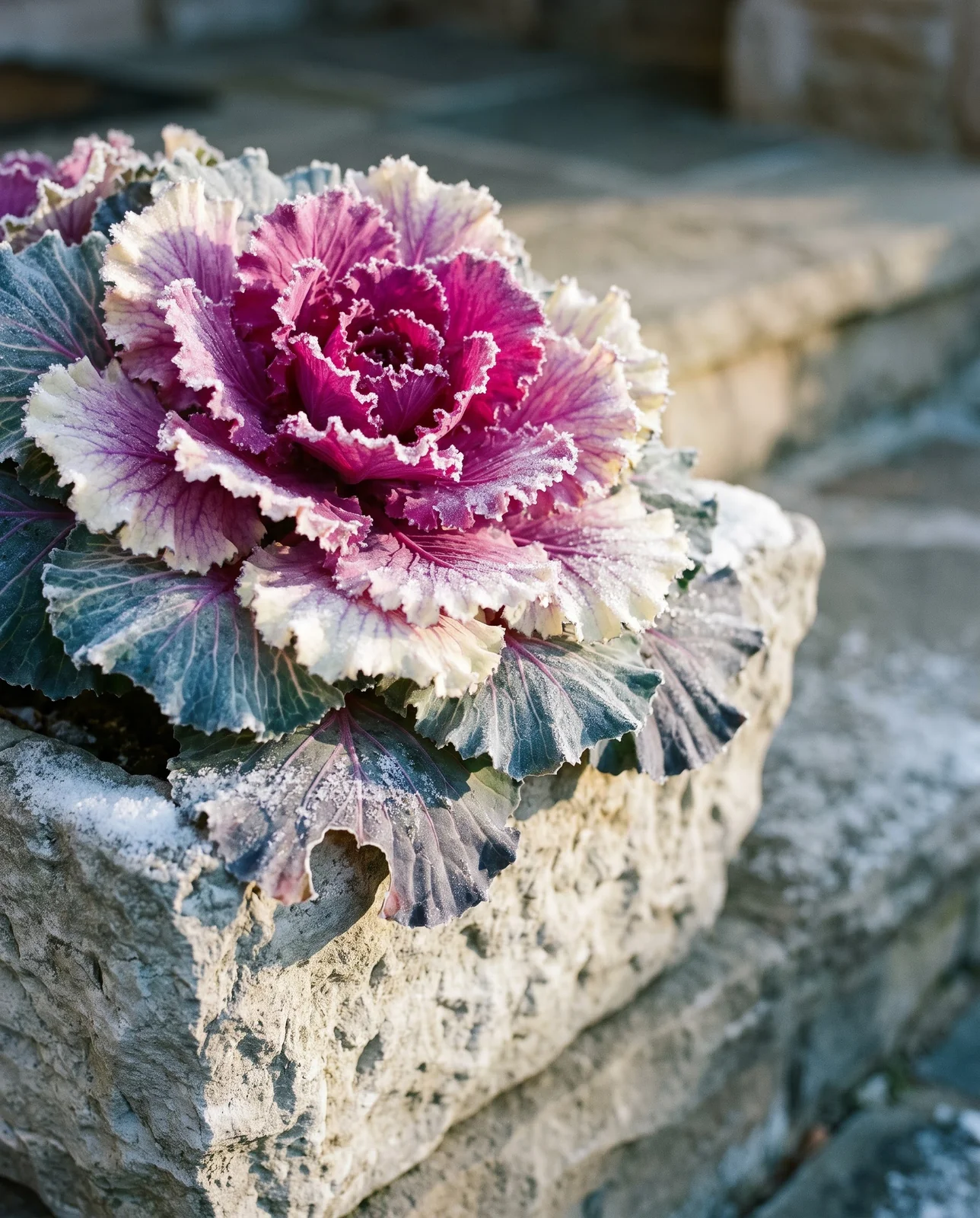
The flowers still open in November depend on which side of the advancing frost line a garden sits on. North of it the outdoor season is closing: ornamental kale and pansies in containers carry the last of the color while freezing nights brown the open mums. In the mild South and along the warm coasts it is still a flower season, with camellias opening and cool-season bedding plants settling in, and the transitional belt between the two carries both at once. The one thing every garden shares this month is the bulb going into a pot indoors.
Which side of that line a garden falls on comes down to the USDA Plant Hardiness Zone Map, the standard built on average annual extreme minimum winter temperatures and drawn in ten-degree zones and five-degree half zones. Gardeners use it to work out which perennials survive winter where they live, and in November it also predicts what is left standing outdoors: cold-zone beds move rapidly into dormancy, leaving frost-hardy containers and foliage rosettes as the only color, while transitional and warm zones keep broadleaf shrubs and late daisies flowering into the holidays. The month also opens the indoor bulb calendar north and south alike. What follows covers what is blooming now in each zone band, what can still be planted, the bed and container work the month calls for, and what turns up on florist benches as holiday stock arrives.
On this page 5 sections
What’s blooming right now, by region
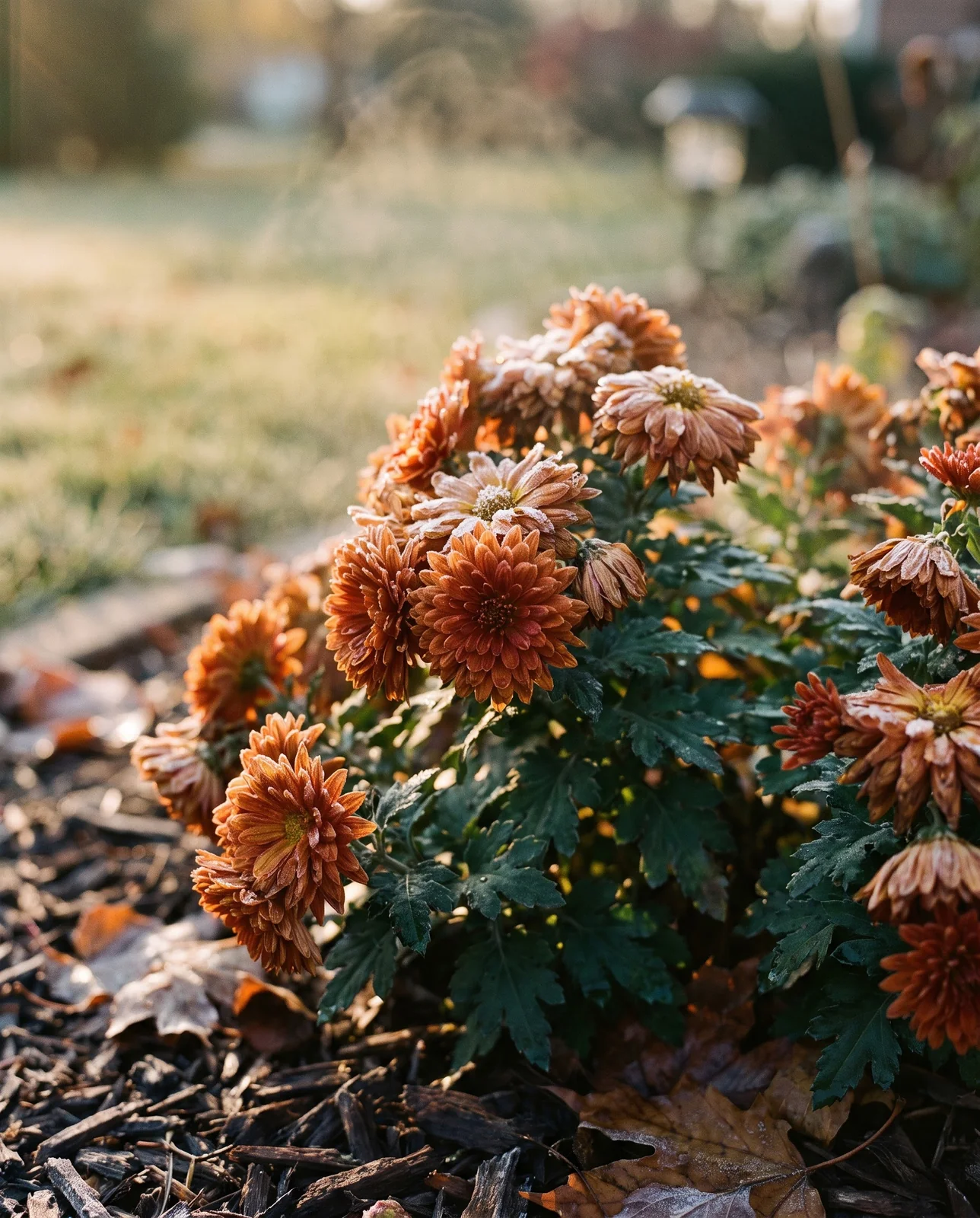
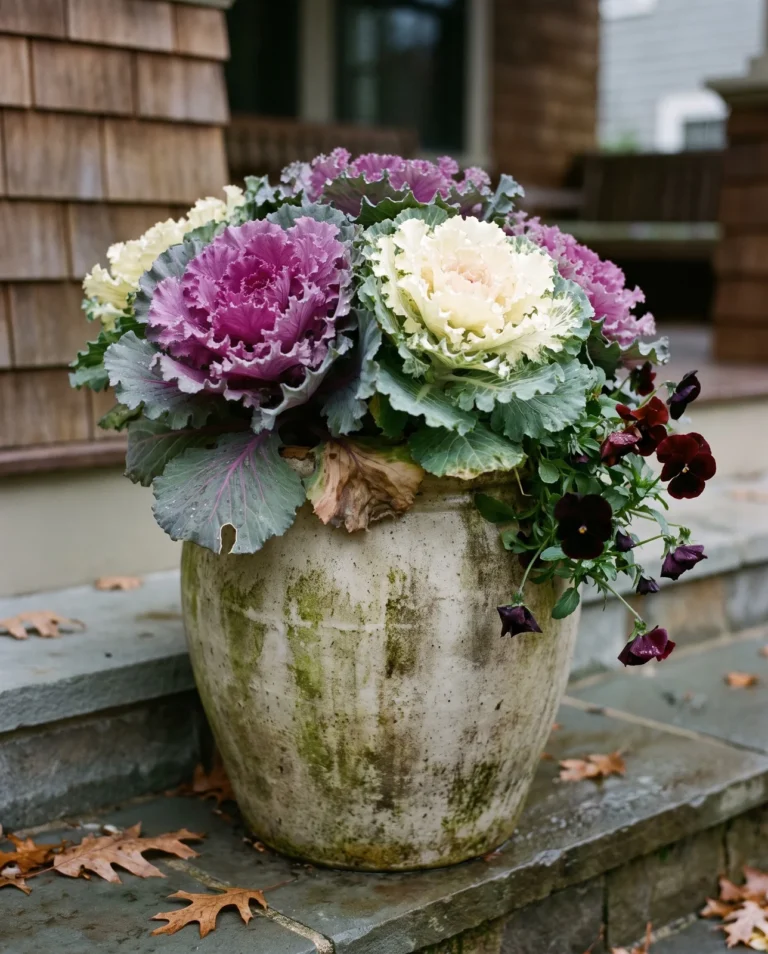
Across USDA zones 3 through 6, the outdoor display draws to a close as sub-freezing temperatures become regular. In the Midwest, the northern plains, and the interior Northeast, the color left standing is in containers: ornamental kale and pansies both take frost without flinching. Chrysanthemums, the traditional November birth flower, carried the display through early autumn, but a run of freezing nights turns the open blossoms brown, and most buyers pull the pot and start again next fall. North Carolina State University Extension rates Chrysanthemum x morifolium as an herbaceous perennial in the daisy family, hardy through USDA zones 5a to 9b. In zone 5 and zone 6 beds, chrysanthemums rooted in the ground early enough form erect mounds 1 to 3 feet tall and 1 to 2 feet wide and come through winter under deep mulch, while the same plant left sitting in an exposed pot freezes root and all. In zones 3 and 4 even a bedded plant is a gamble, and the crowns have to be lifted and held in a greenhouse or a cool indoor space to see spring.
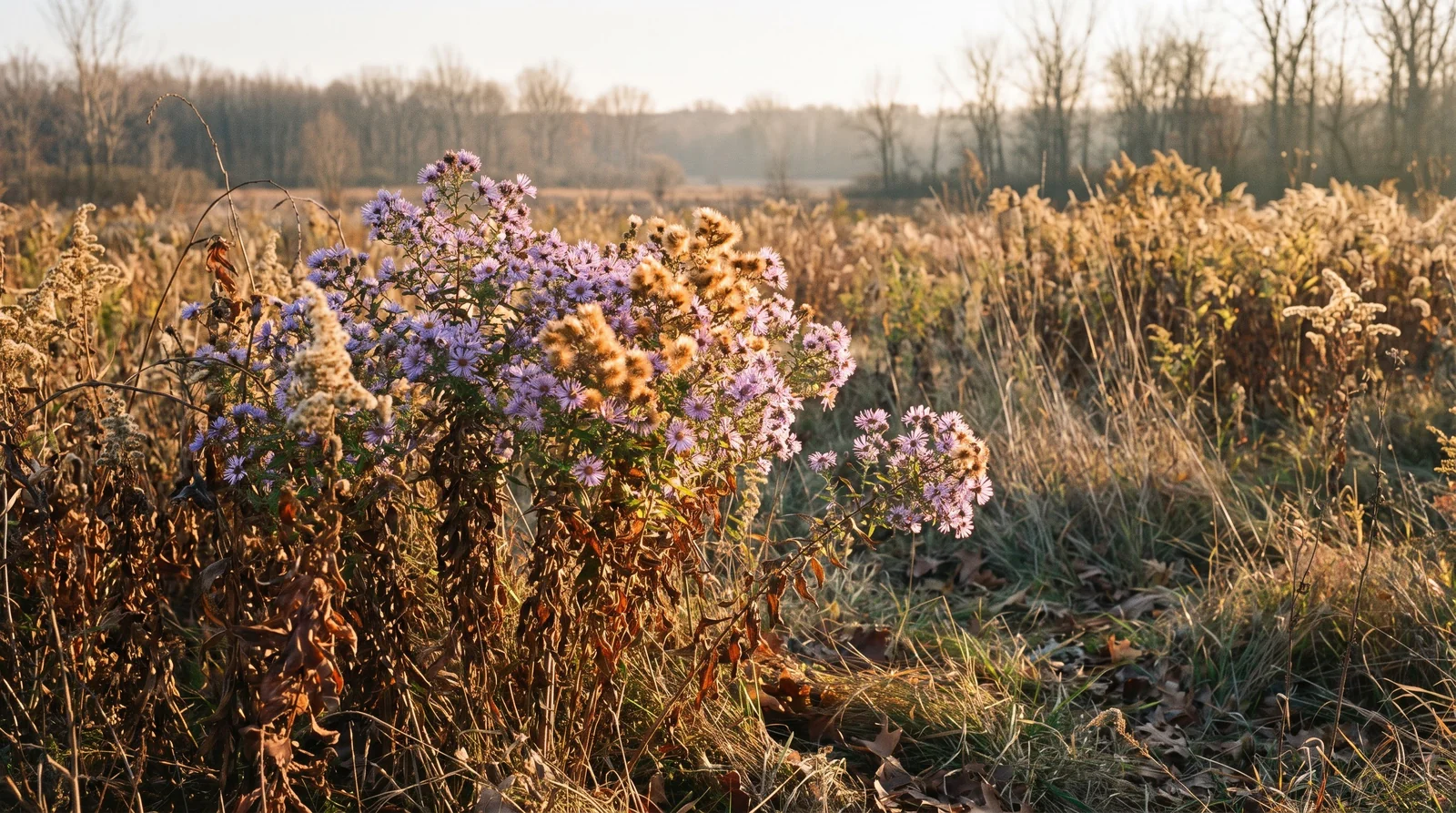
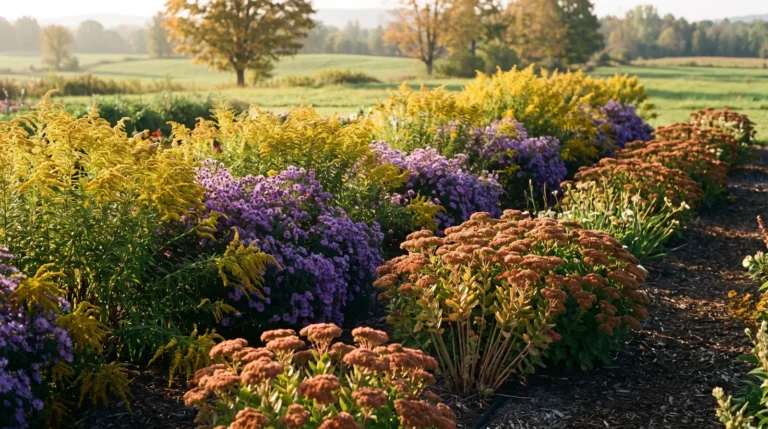
Zones 7 and 8, which take in the mid-Atlantic, the Pacific Northwest, and much of the upper South, wind down gradually, with a long stretch of overlapping color. The New York aster (Symphyotrichum novi-belgii) is finishing: the purple to pink ray flowers around each yellow-orange disc give way to dry achenes, each seed carrying a tuft of hairs. This native perennial runs 3 to 5 feet high, belongs to the same Asteraceae family as the mums beside it, and is hardy from zone 4a through 8b, so it works in a border either alongside chrysanthemums or in place of them. The mums themselves often flower straight through a mild November here. They spend spring and summer building growth and hold their flowers until autumn, and that timing is managed: cut the stems back three times over spring and summer, with the last cut around mid-August, and the plant comes into fall compact and mounded, flowering on schedule without opening prematurely in spring. Wear gloves for that job, because contact with chrysanthemum foliage raises a mild rash on some people.
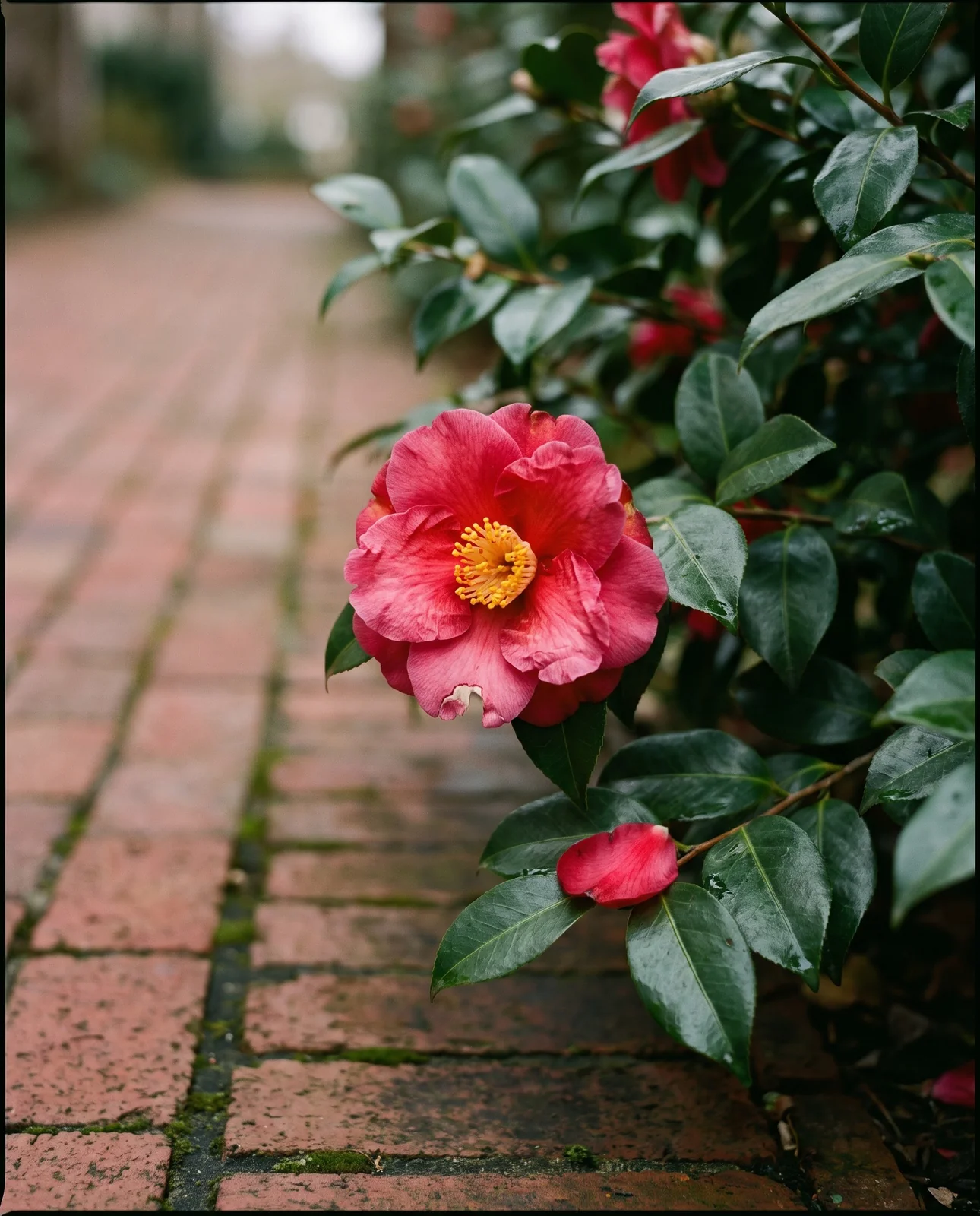
From zone 8b through zone 10, along the Gulf Coast, in Florida, southern Texas, and coastal California, November is an active flowering season, and camellias take it over. NC State Extension rates Camellia japonica hardy in zones 7a through 9b and puts its flowering window anywhere from October to mid-March depending on the variety. Each shrub holds open flowers for three to four weeks at a stretch. These broadleaf evergreens want partial shade, shelter from drying winter winds, and well-drained acidic soil in the pH 5.5 to 6.5 range; leaves going yellow usually mean the soil is not acidic enough. Drought stress through August and September can suppress the flowering that follows, and wet, humid late-season weather brings petal blight (Ciborinia camelliae), a fungus that attacks every camellia species, so developing blossoms are worth watching.
What to plant now
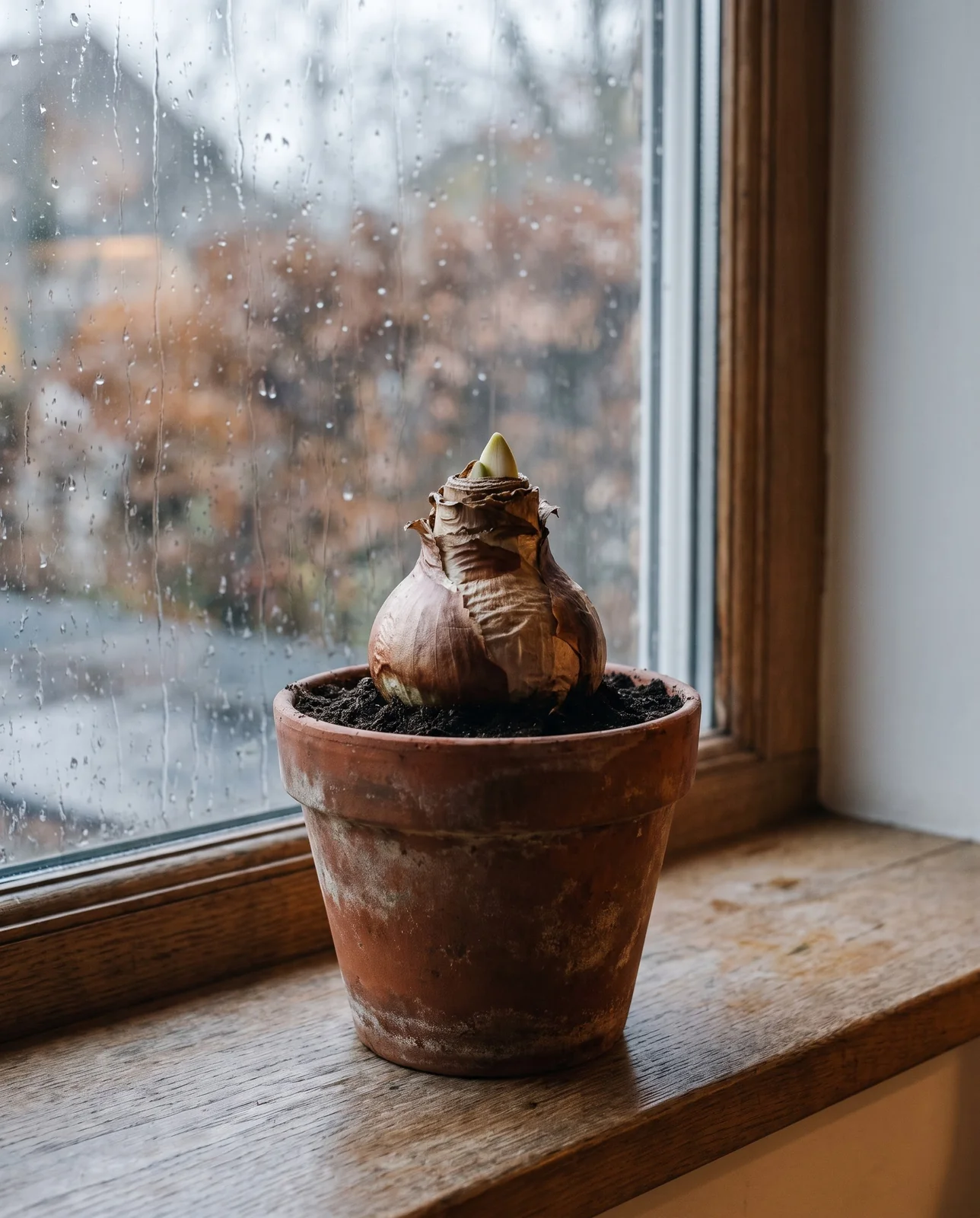
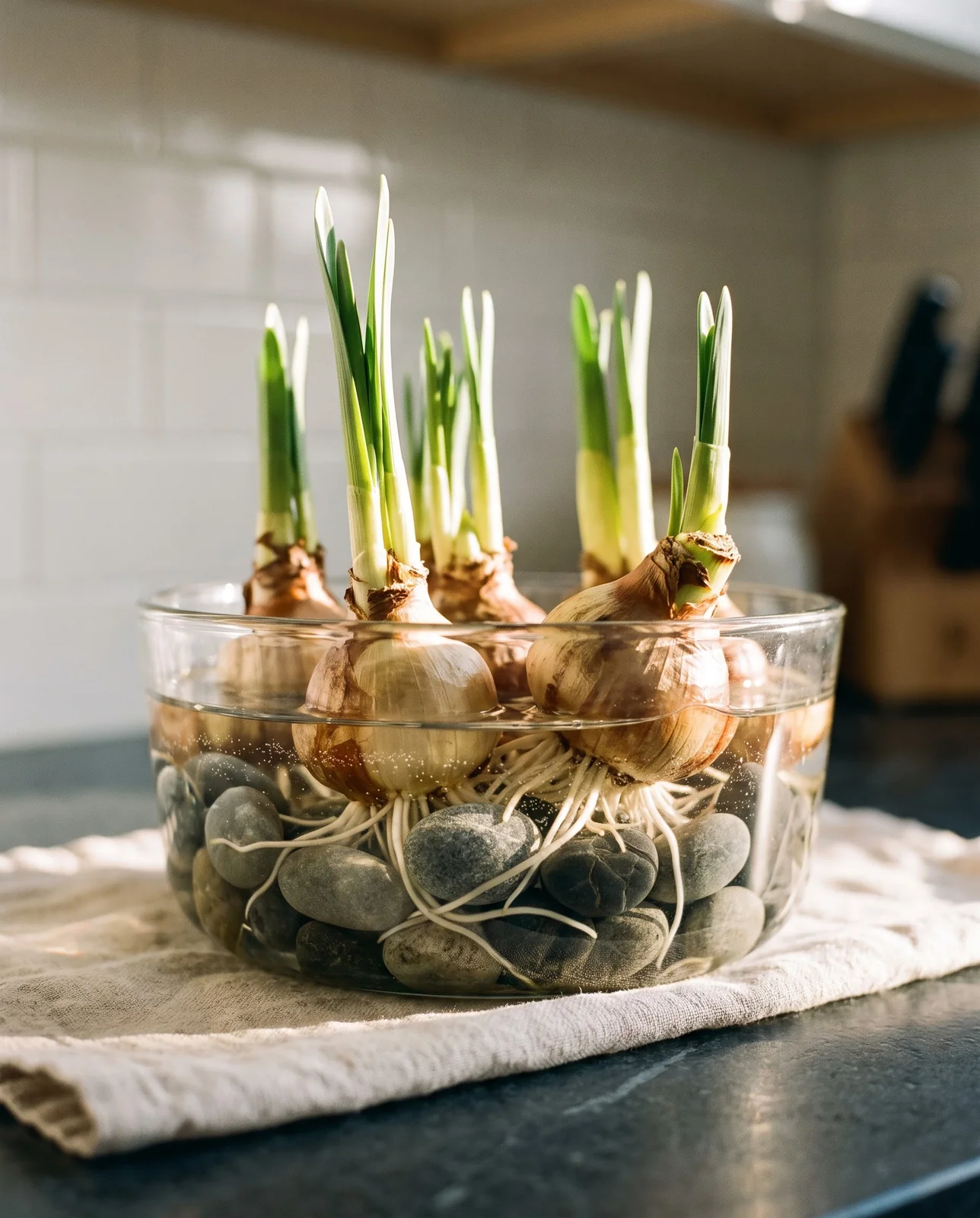
Outdoor planting has mostly stopped in the north, but November is the main window for forcing bulbs indoors, and the timing is a matter of counting weeks. Clemson University Cooperative Extension puts amaryllis at 4 to 8 weeks from potting to flower when the bulb goes in during early to mid-November. Size decides the show: a bulb 30 to 32 centimeters (11.8 to 12.5 inches) around throws two flower stalks carrying three to four blooms apiece. Set it in a snug pot with a third to half of the bulb standing above the mix, which is the guard against red blotch, and hold the pot at 70 to 75 degrees Fahrenheit while roots and the first shoot form. Leave fertilizer alone until green leaves show, because feeding a bulb before they emerge can destroy the root system; once growth starts, feeding becomes essential. Waxed amaryllis sold for gifting are built to be thrown out when the flowers finish, but a potted bulb keeps: withhold water and fertilizer for 8 to 10 weeks until the foliage withers, then start it again. In the mild South it will also live in the ground, hardy through zone 8. Outdoors, November is last call for tulips, daffodils, crocuses, and hyacinths anywhere the soil has not yet frozen.
Task of the month
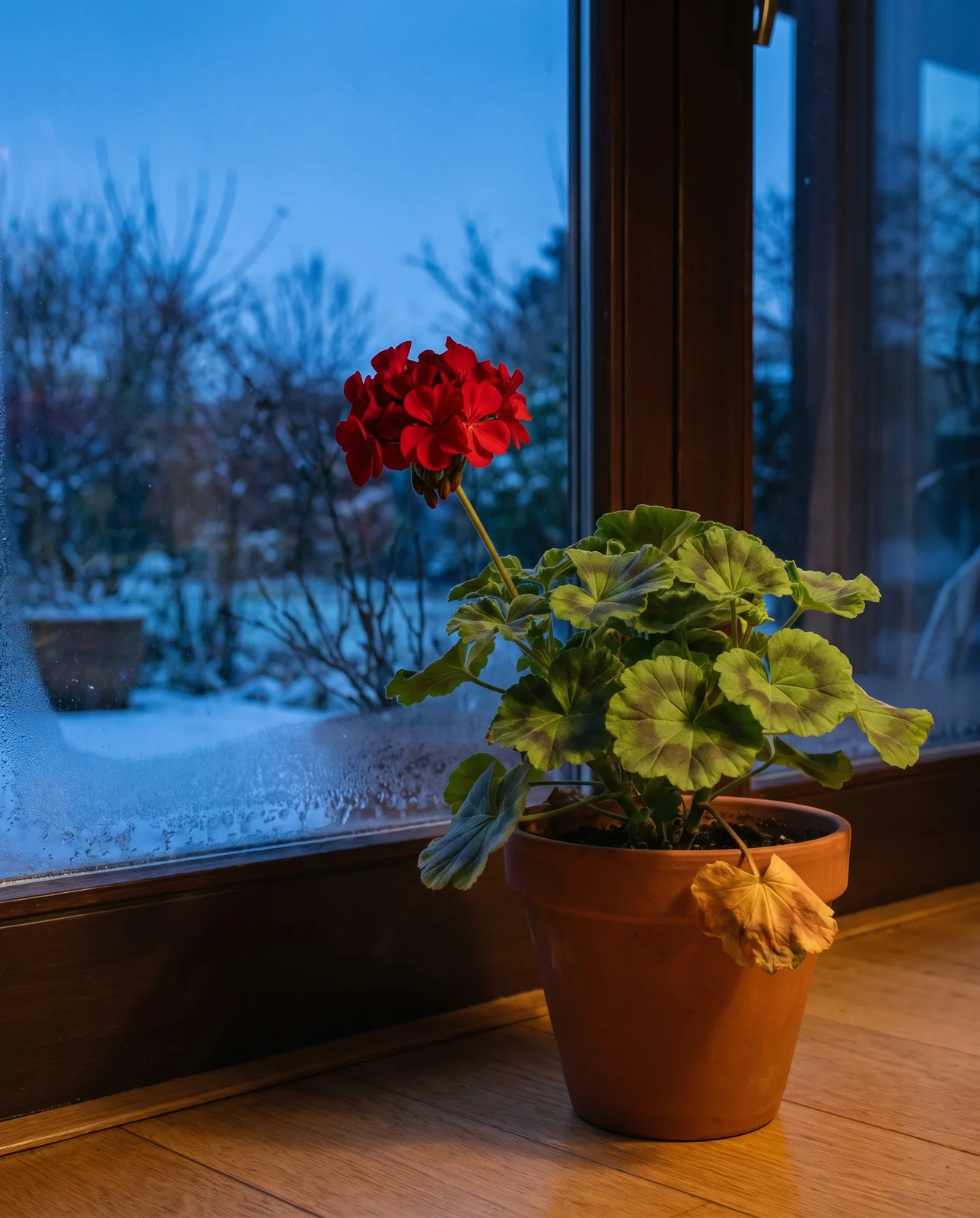
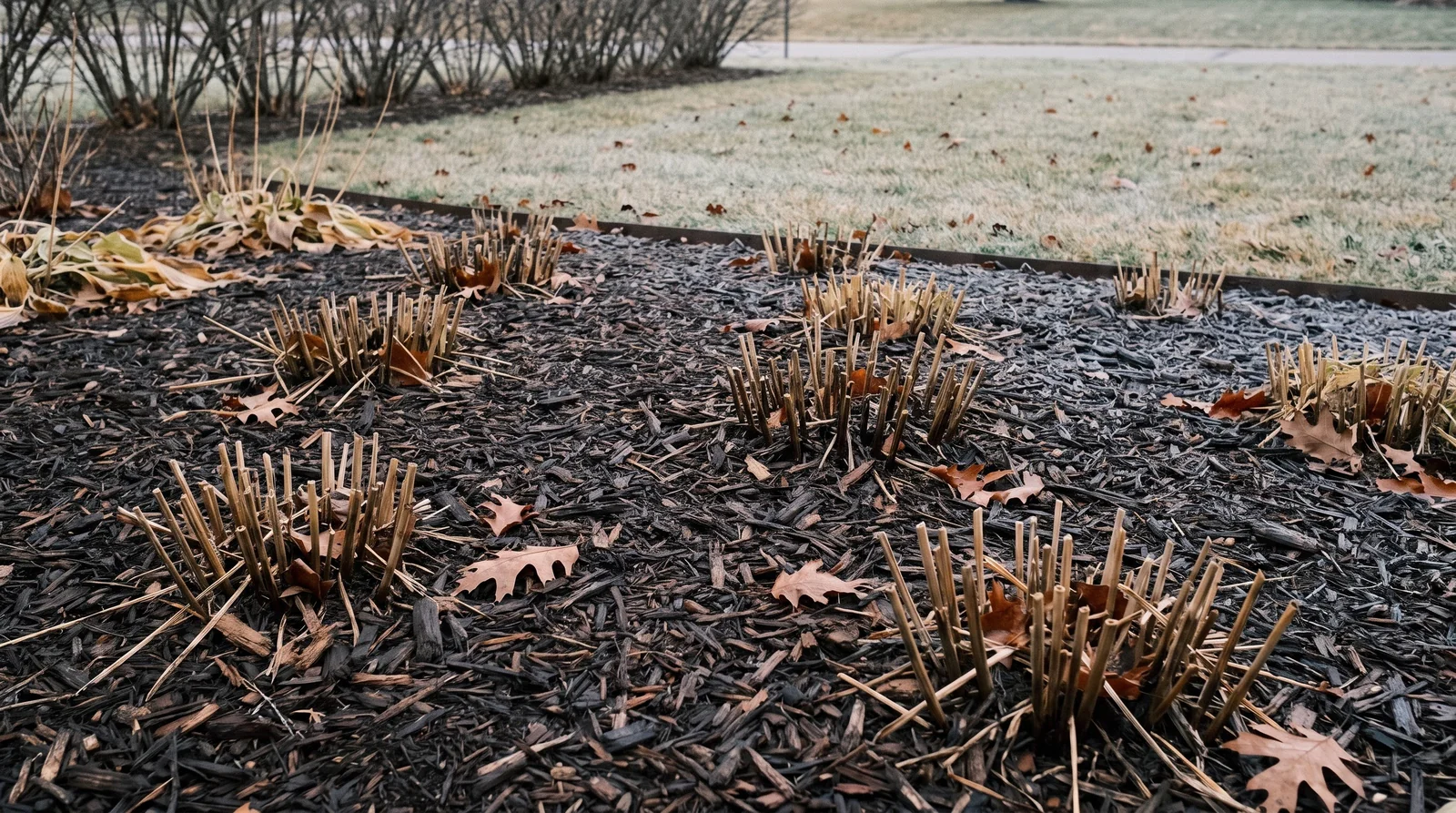
November bed work is timed off the thermometer, not the calendar. Hold off on cutting back blackened perennial foliage until the area has taken its first true hard freeze; the first light frost of the season comes too early for that job. Standing stems shield the crown from premature cold injury and catch insulating snow over soil that would otherwise sit bare. Once a killing freeze has flattened the tops, cut the collapsed foliage back near ground level, which strips out the sites fungal spores and garden pests overwinter in, then lay a clean layer of organic mulch across the root zones to steady soil temperature. Stop outdoor nitrogen at the same time, since a late feed pushes soft growth that the next freeze destroys. Containers need the earlier decision. Tender pots, patio geraniums and subtropical specimens among them, come indoors well ahead of hard freezing weather.
November frost and freeze milestones by USDA zone
Average first hard freeze window by zone band, with what a light 32F frost and a hard freeze at 28F or below each do in the garden.
What to buy from a florist this month
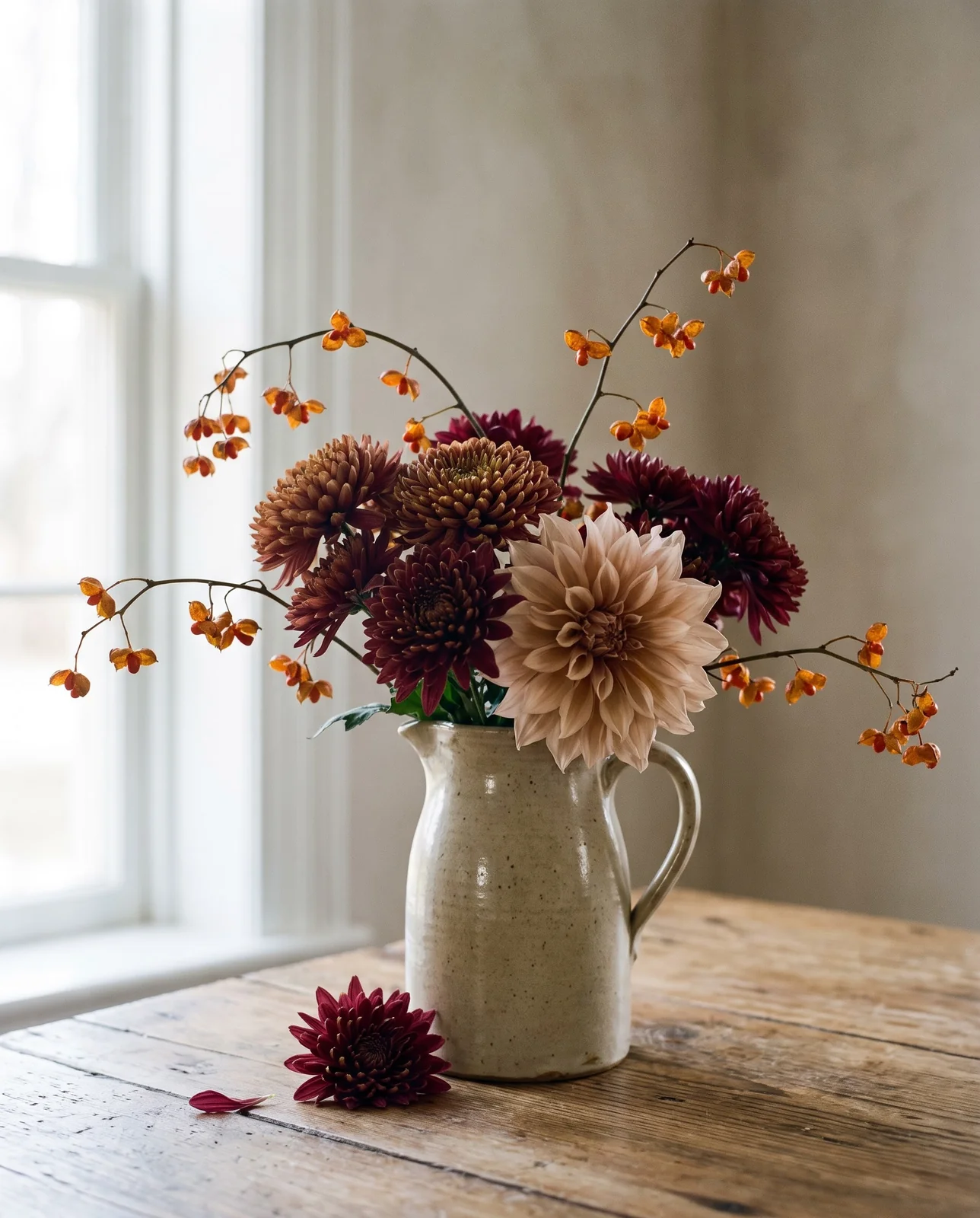
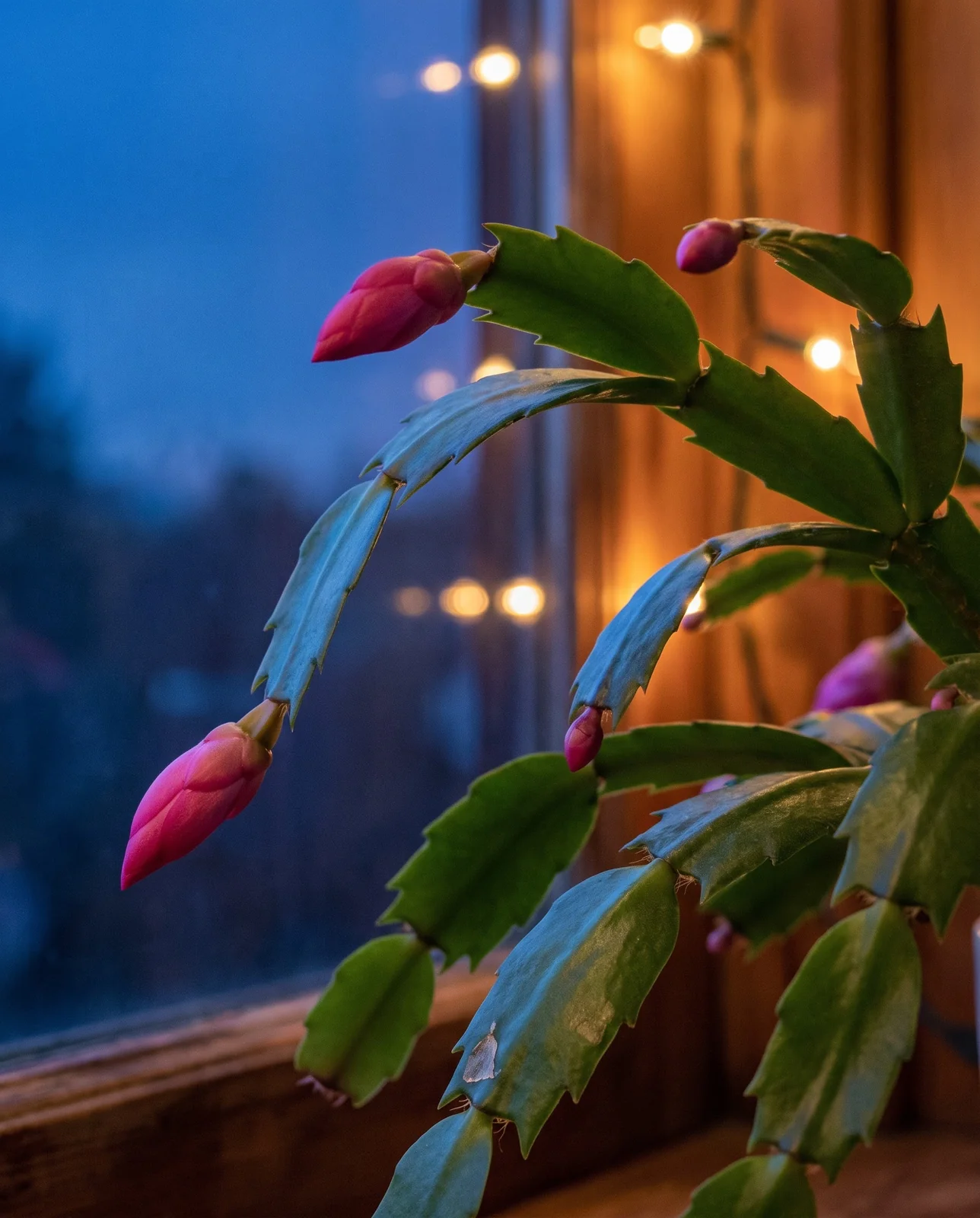
Florist coolers and garden-center benches change over during November, from harvest material to holiday stock. On the cut side, the stems that hold their color through Thanksgiving are chrysanthemums, the last dahlias, dried seed pods, and berried branches. On the potted side, dormant amaryllis bulbs arrive alongside the first poinsettias and the budding Christmas cactus. Schlumbergera x buckleyi, an artificial hybrid that runs 6 to 12 inches tall and 12 to 24 inches across on pendulous stems, flowers from December through February only if autumn treated it right: bright light by day, nights between 55 and 65 degrees Fahrenheit, water pulled back from mid-September, and at least 13 hours of unbroken darkness every night. North Carolina State University Extension names the usual culprit behind a budless plant: artificial light reaching it on autumn evenings. For households with pets or children, this holiday succulent has the advantage of being non-toxic.
Frequently asked questions
Frost, dormancy and indoor bloom questions for November
Do garden mums come back every year?
Yes. Garden chrysanthemums (Chrysanthemum x morifolium) are herbaceous perennials rated hardy from zone 5a through 9b, and a plant set into a bed early enough to root before winter returns the next spring under mulch. What fails is the container: a pot left outside through a freezing winter often takes root injury. In zones 3 and 4 the crowns have to be lifted and overwintered in a greenhouse or a cool indoor space.
When should tender potted plants be brought indoors?
Before night temperatures reach a hard freeze of 28 degrees Fahrenheit or below. Plenty of hardy plants shrug off a light frost near 32 degrees, but tender patio specimens such as geraniums and subtropical container plants are damaged once the air goes sub-freezing.
What flowers can survive a light outdoor frost?
Ornamental kale, pansies, violas, and established garden chrysanthemums all take a light frost near 32 degrees Fahrenheit without structural damage. Tender summer flowering annuals collapse once temperatures dip below freezing.
Why is my Christmas cactus failing to form flower buds in November?
Almost always because it is getting artificial room light at night during autumn. Bud set for holiday flowering needs at least 13 hours of continuous darkness every night, night temperatures between 55 and 65 degrees Fahrenheit, and reduced watering from mid-September onward.
Can I save and replant waxed amaryllis bulbs after they bloom?
No. Waxed bulbs are sold to be discarded once the flowers finish, because the wax seal blocks the root growth a bulb needs to rebuild its reserves for another flowering season. An ordinary potted amaryllis is a different case and can be carried over.
More About Types of flowers
October flowers: what’s blooming and what to plant now
Spider lily (Lycoris radiata): care and bloom guide
Heather plant care: is it a perennial or fall decor
Flowers that bloom in winter: true bloomers by zone
Ornamental kale care: why it won’t turn color yet
Fall flowers: the full list by color, zone, and bloom time
September flowers: what’s blooming and what to plant now
Enjoying our flower guides? Add YourFlowersGuide as a preferred source on Google. It helps more readers find us.
Add to Preferred Sources