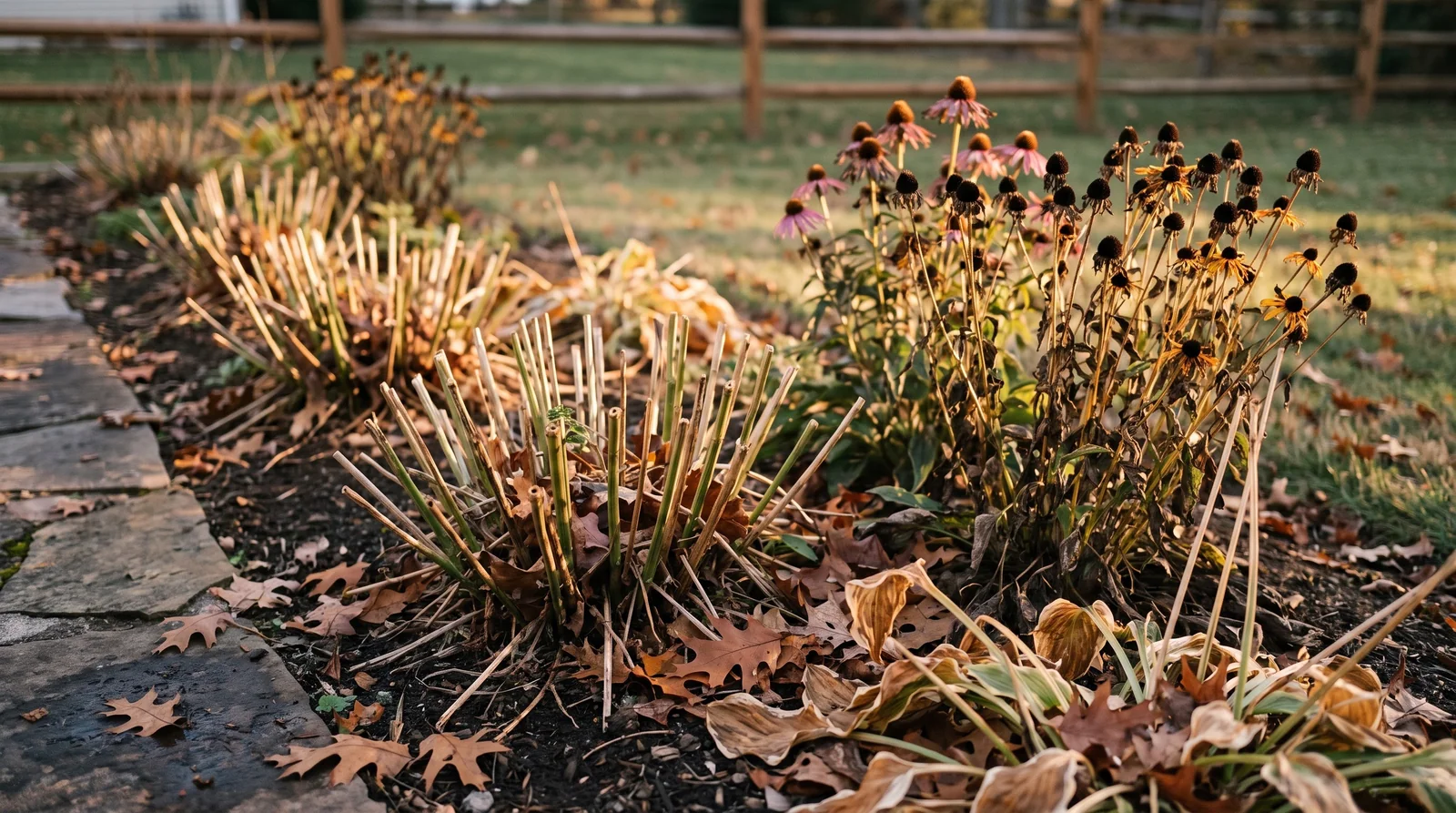
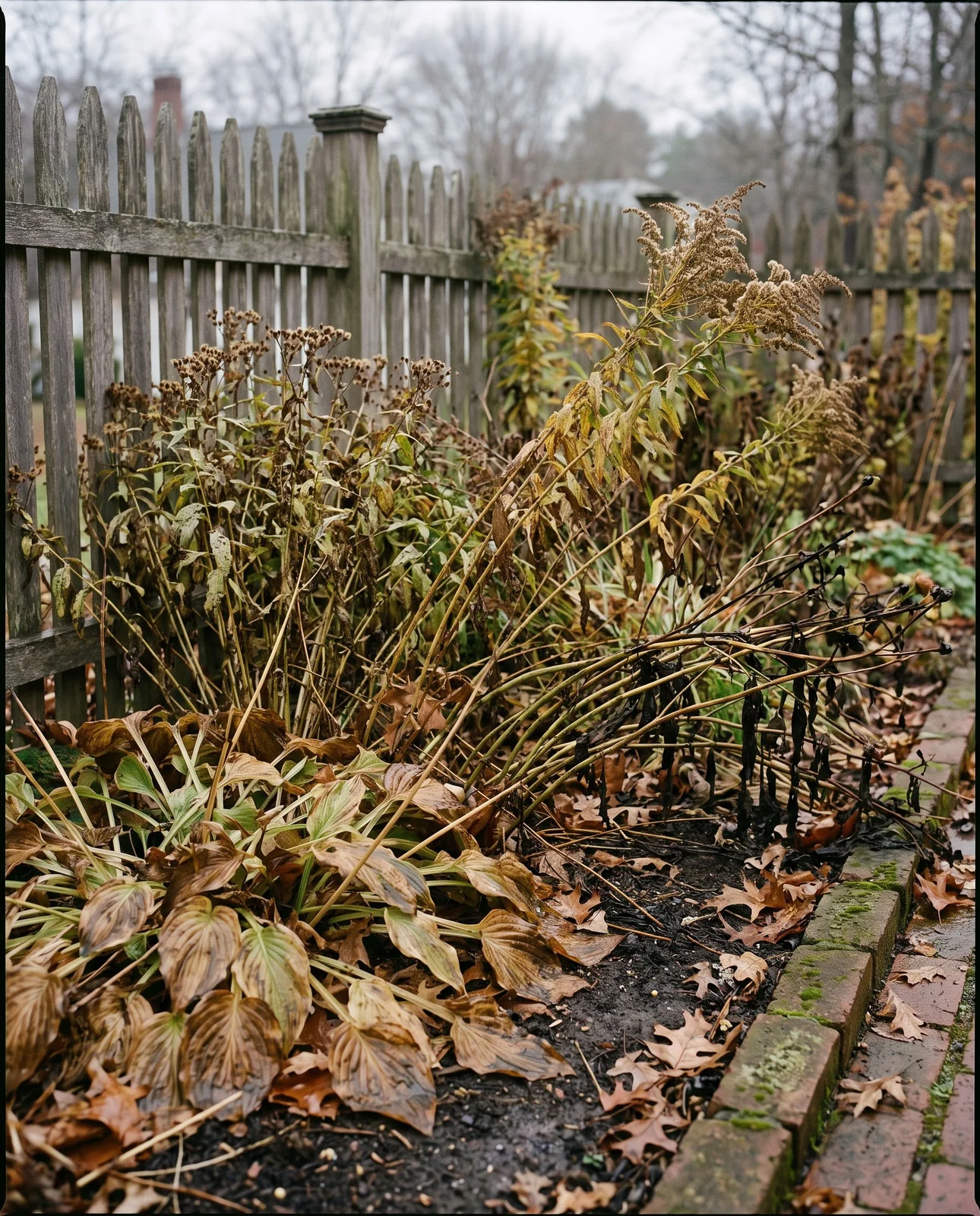
Fall cutback splits a perennial bed into two groups. Anything that carried powdery mildew, leaf spot, or Botrytis gets cut low and hauled out, so the spores leave with the stems instead of waiting at the soil surface for spring. Sturdy seed bearers, woody-based perennials, and hollow-stemmed plants stay standing, insulating their own crowns through freeze-thaw cycles, feeding songbirds, and sheltering native bees. One rule sits above the plant list: wait for a hard freeze, not the first light touch of frost, because green foliage is still moving food down into the roots.
Cutting too early costs a plant twice. The crown loses the food it had not finished storing, and the bed loses the structure that would have carried it through February. The opposite habit, leaving everything standing out of caution, keeps a diseased clump in place to reinfect its own new shoots in April. What follows covers the three checks that settle any single plant, the temperature the National Weather Service attaches to a hard freeze, a plant-by-plant verdict for six garden staples with the timing for each, the stem-nesting bee counts that explain why cutting height matters as much as cutting date, and how the whole schedule slides across zones.
On this page 6 sections
How to decide in three questions
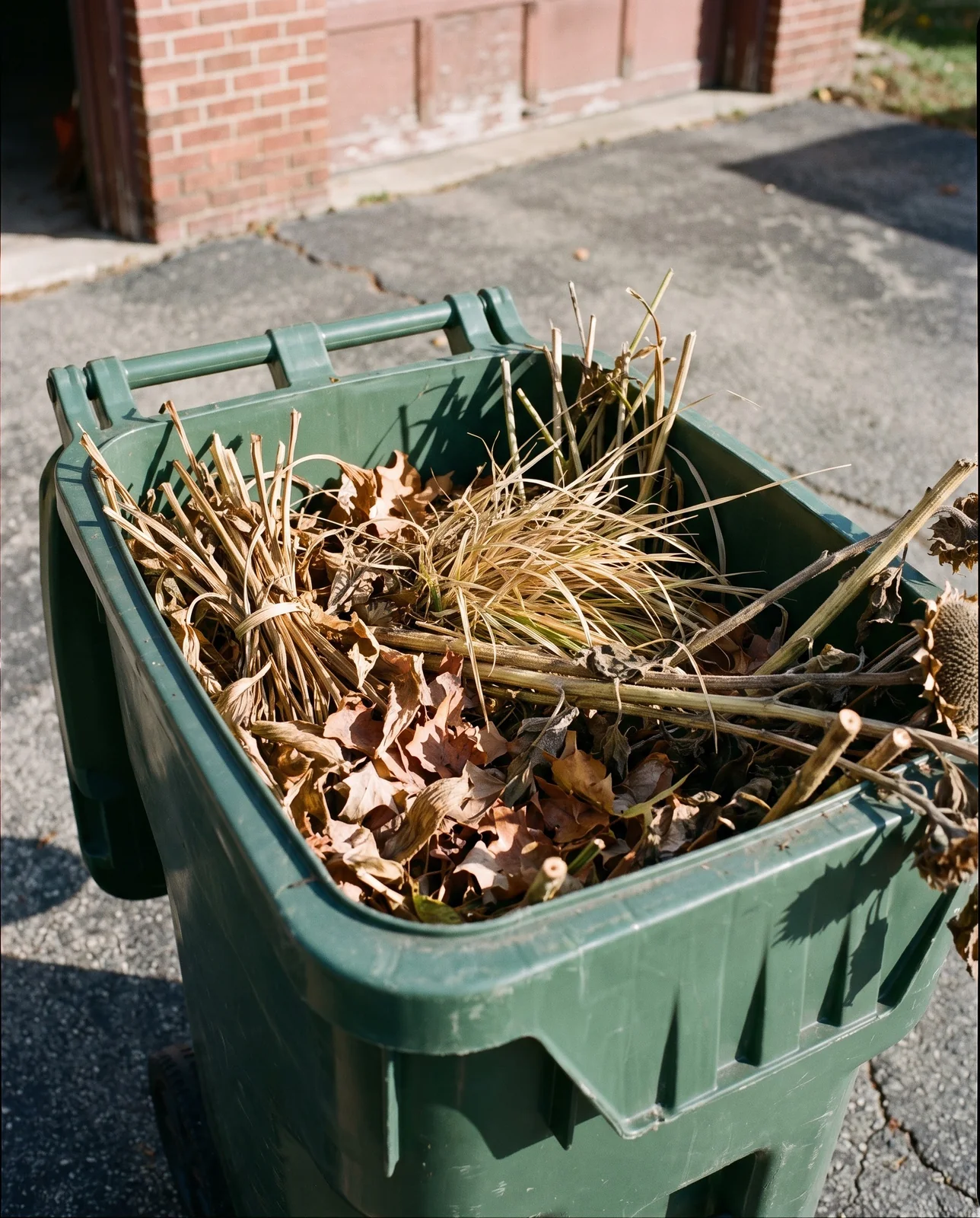
Three checks, run in order, settle the question for any single plant. First, is the foliage evergreen or semi-evergreen? Plants that hold green, working leaves through winter are never sheared to the ground in autumn, because those leaves insulate the crown under snow cover and keep a trickle of photosynthesis going through mild spells. Second, did the plant carry serious foliar blight, mildew, or an insect infestation over the summer? Its collapsed autumn stems are where the fungus waits out the cold, so they come off near soil level once the plant is dormant and leave the bed entirely, bagged for the trash rather than dropped on the compost heap. Third, is anything using the plant? Firm, seed-filled cones that birds work over and pithy, hollow stems that solitary bees nest in are worth more standing than trimmed. A plant that answers no to all three is purely a matter of taste: cut it for looks any time after a hard frost, or leave it until spring, and neither choice changes whether it survives.
The order that decides whether to cut back or leave a plant standing
Four checks, worked in order, settle the fall cutback question for any one perennial.
What hard frost actually means
Nearly every fall cleanup guide tells gardeners to wait for a hard frost, and almost none of them attaches a number to it. The National Weather Service does: a hard freeze is surface air at 28°F (-2°C) or lower, held there for an extended period, cold enough to kill most types of vegetation. That is the line where ice forms inside soft tissue, top growth is finished for the year, and the root crown drops into true dormancy. A light frost, the 32°F to 36°F kind that silvers a lawn at dawn, only burns tender annuals and nips the tips of upper foliage; the hardy perennials under it are still working, pulling carbohydrates down out of the leaves and into storage. Start cutting during a mild autumn or on the morning after a light touch-frost and you sever that supply line before the plant has finished refilling. Watching the forecast for a sustained 28°F reading, rather than for the first frost advisory, is what tells you the bed is closed for the season.
How the National Weather Service classifies a fall frost or freeze
The National Weather Service sets two thresholds relevant to a fall cutback schedule, light frost and hard freeze, each with a different garden effect and a different action.
Perennials to cut back or leave standing
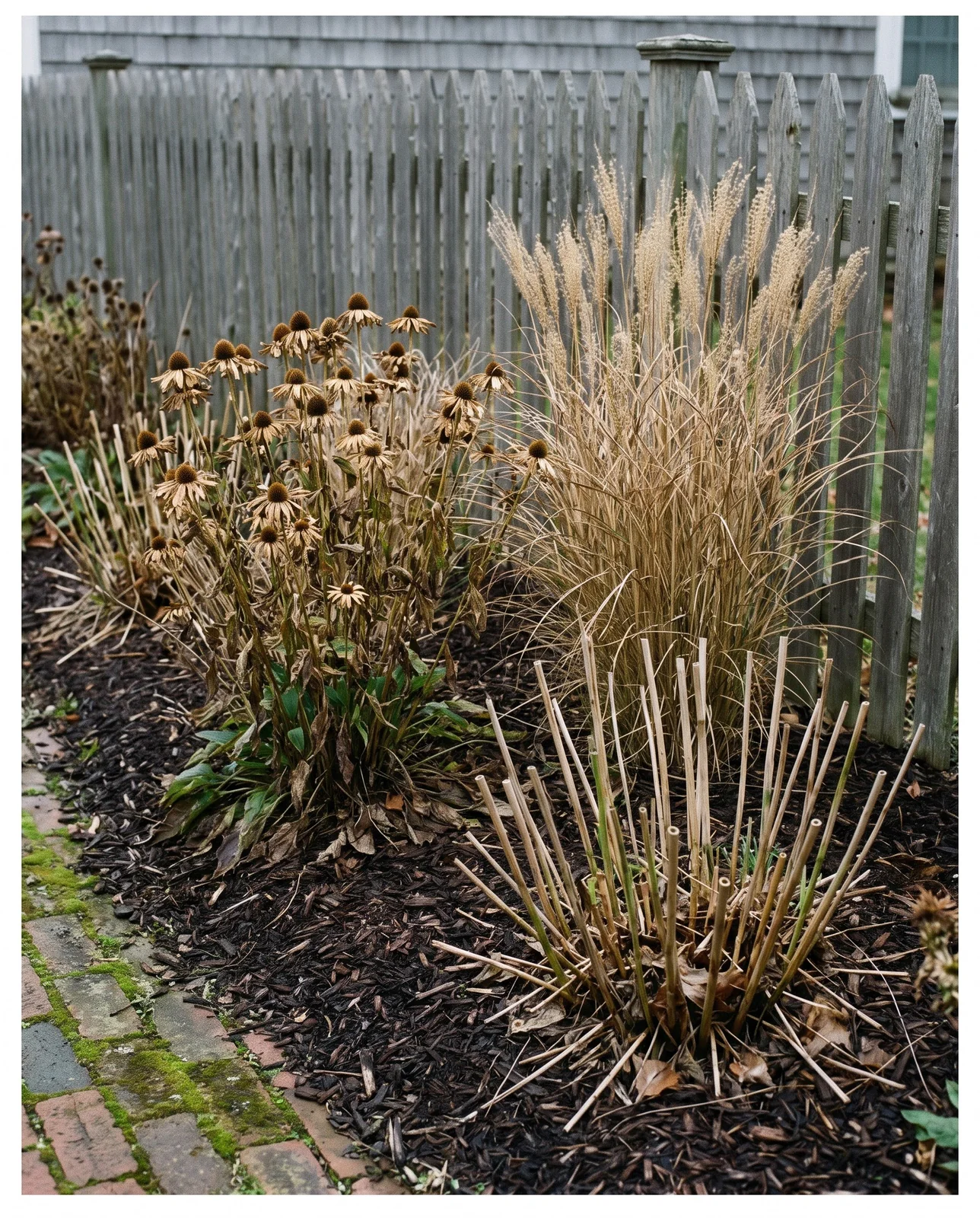
Black-eyed Susan (Rudbeckia)
Verdict: LEAVE standing through winter.
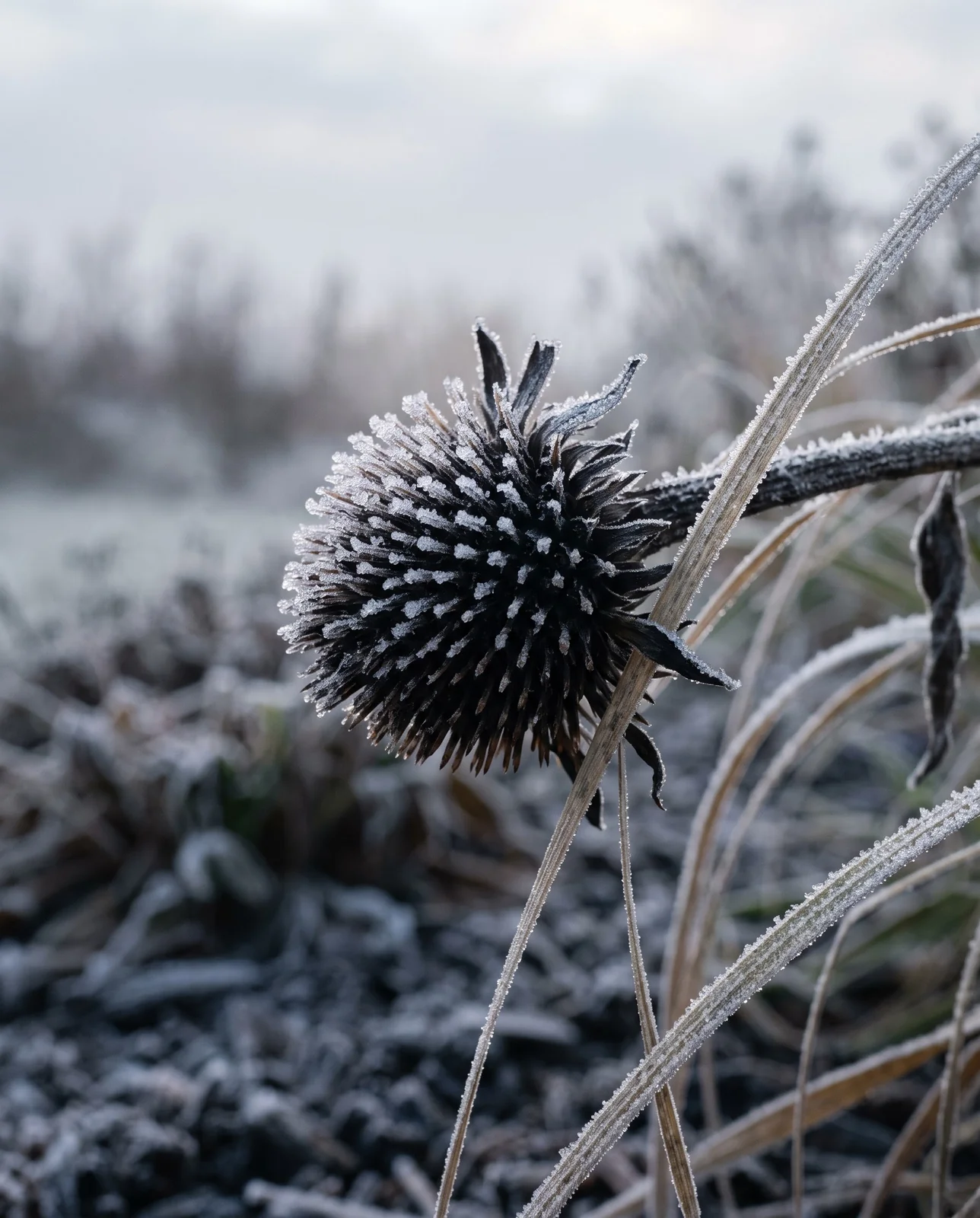
Birds eat the seeds, as the Missouri Botanical Garden puts it plainly, and the dark conical heads of black-eyed Susan hold enough of them to keep goldfinches and sparrows working the bed through the cold months. The stems earn their place a second way: standing, they catch drifting snow, which settles over the root zone as insulation and slow moisture. The one exception is a clump that ran heavy septoria leaf spot in late summer. Shear that foliage once a hard freeze has knocked it down and get it out of the garden so the fungus does not carry over into the new shoots. Healthy clumps stay untouched until late winter or early spring.
Chrysanthemum
Verdict: LEAVE foliage intact until spring.
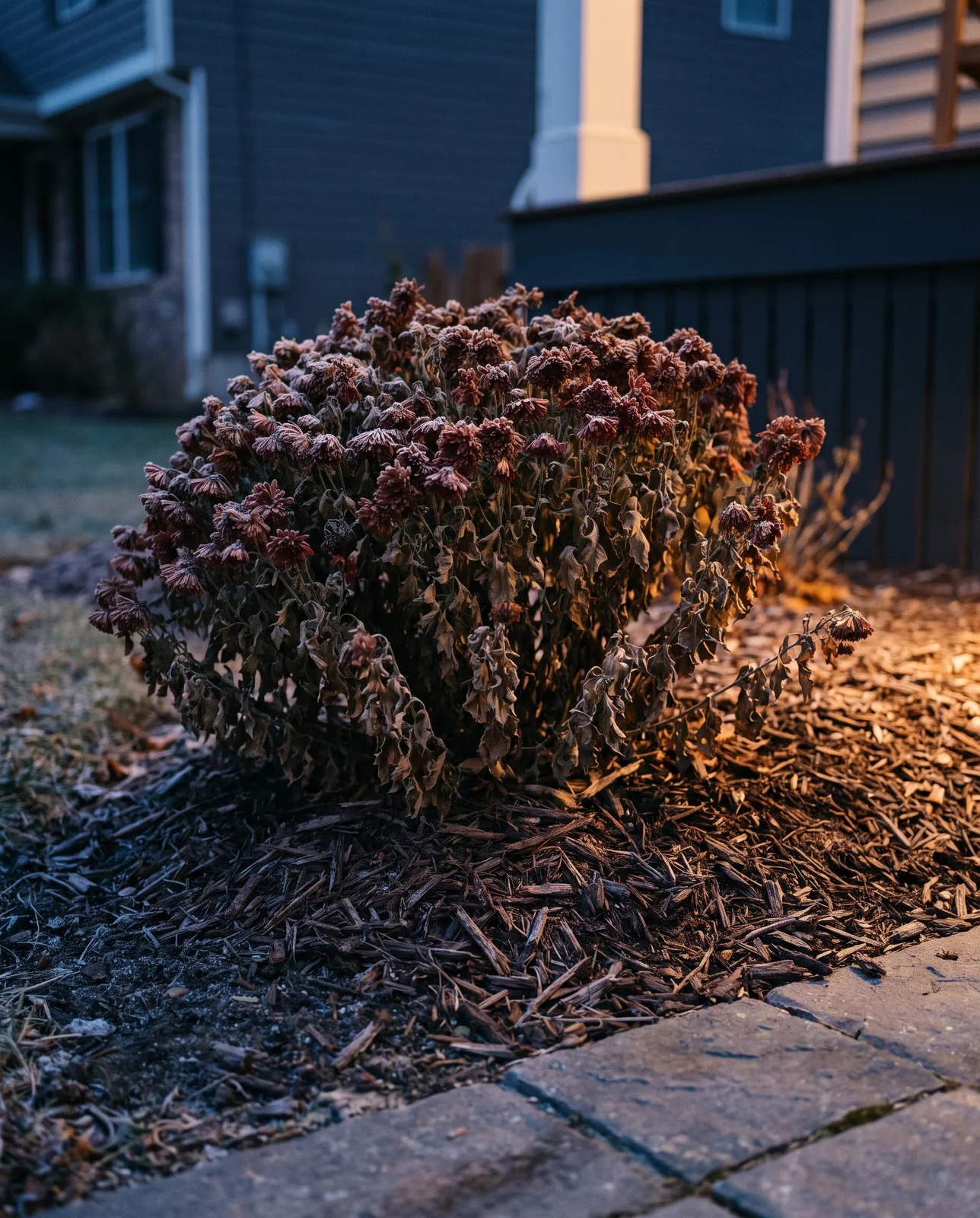
Virginia Cooperative Extension is direct about chrysanthemums: leave the existing foliage and stems on the plant until after the first hard frost, because that dead growth insulates the crown against harsh winter conditions. Cut a mum back in early autumn and the crown buds sit bare in front of hard cold and drying wind. Once freezing weather has settled in, 3 to 4 inches of light, airy mulch over the crown handles the other winter risk, heaving, where repeated freezing and thawing of the soil lifts shallow mum roots clear of the ground and leaves them to dry out. Keep watering until that first hard frost, and set new nursery plants out in late August or early September so the roots have time to take hold.
Coneflower (Echinacea)
Verdict: LEAVE stems standing, or trim to a tall stubble.
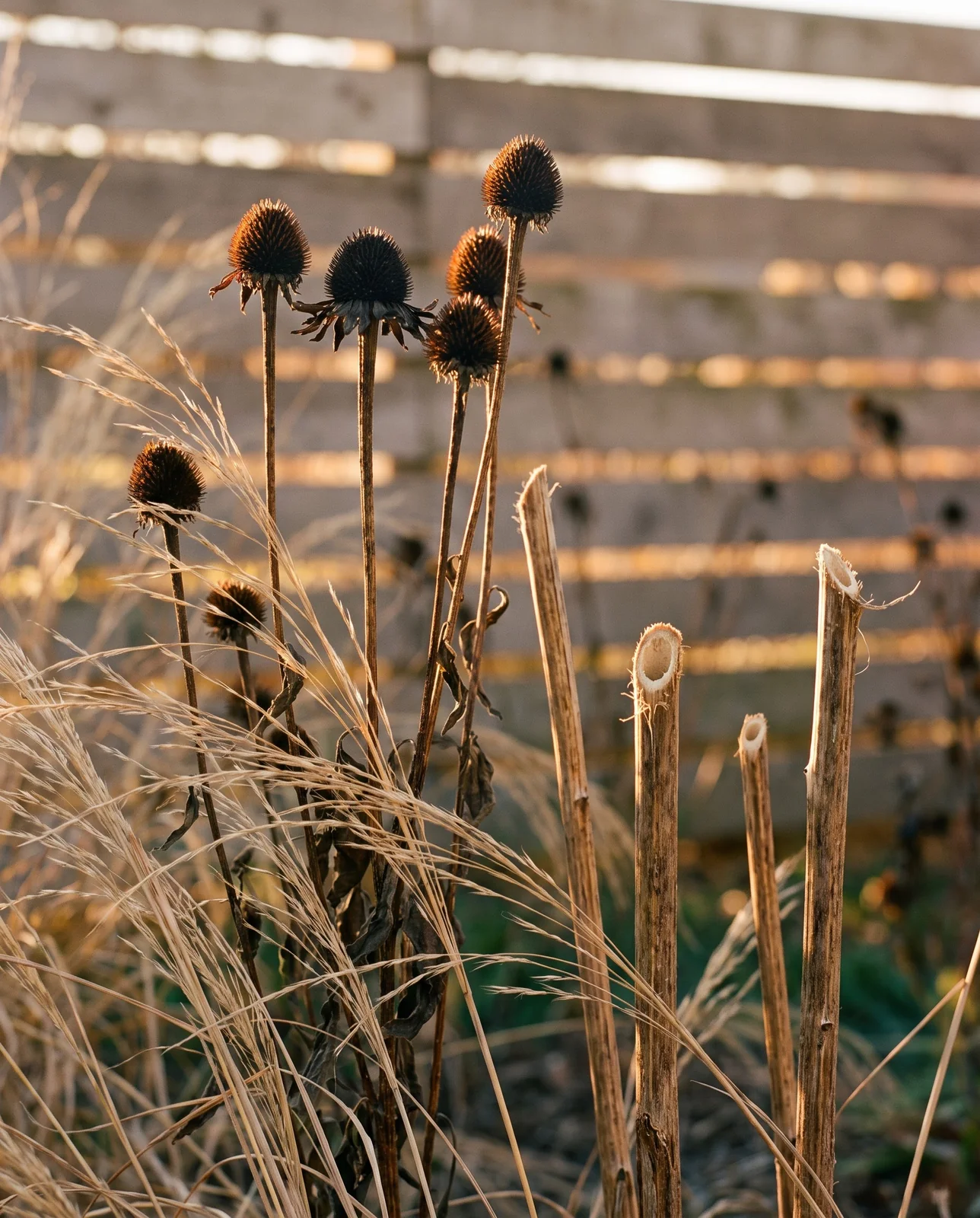
Coneflower earns its keep twice over, with heavy seed heads for songbirds and stems that solitary bees move into. NC State Extension research puts a number on the compromise between habitat and housekeeping: trim stems back to leave a stubble 12 to 24 inches tall. Oregon State University Extension frames the same practice from the other end, advising gardeners to leave an extra 8 to 10 inches of stem to harden when they cut back thick-stemmed perennials. The two figures are not in conflict. One measures the total height left standing, the other the extra length left above the usual cut, and both protect the same thing, the run of soft pith a nesting bee needs. Take the spent cones off only after the birds have picked them clean, and leave the thick lower stalks alone.
Hydrangea macrophylla (Bigleaf hydrangea)
Verdict: LEAVE, no autumn pruning at all.
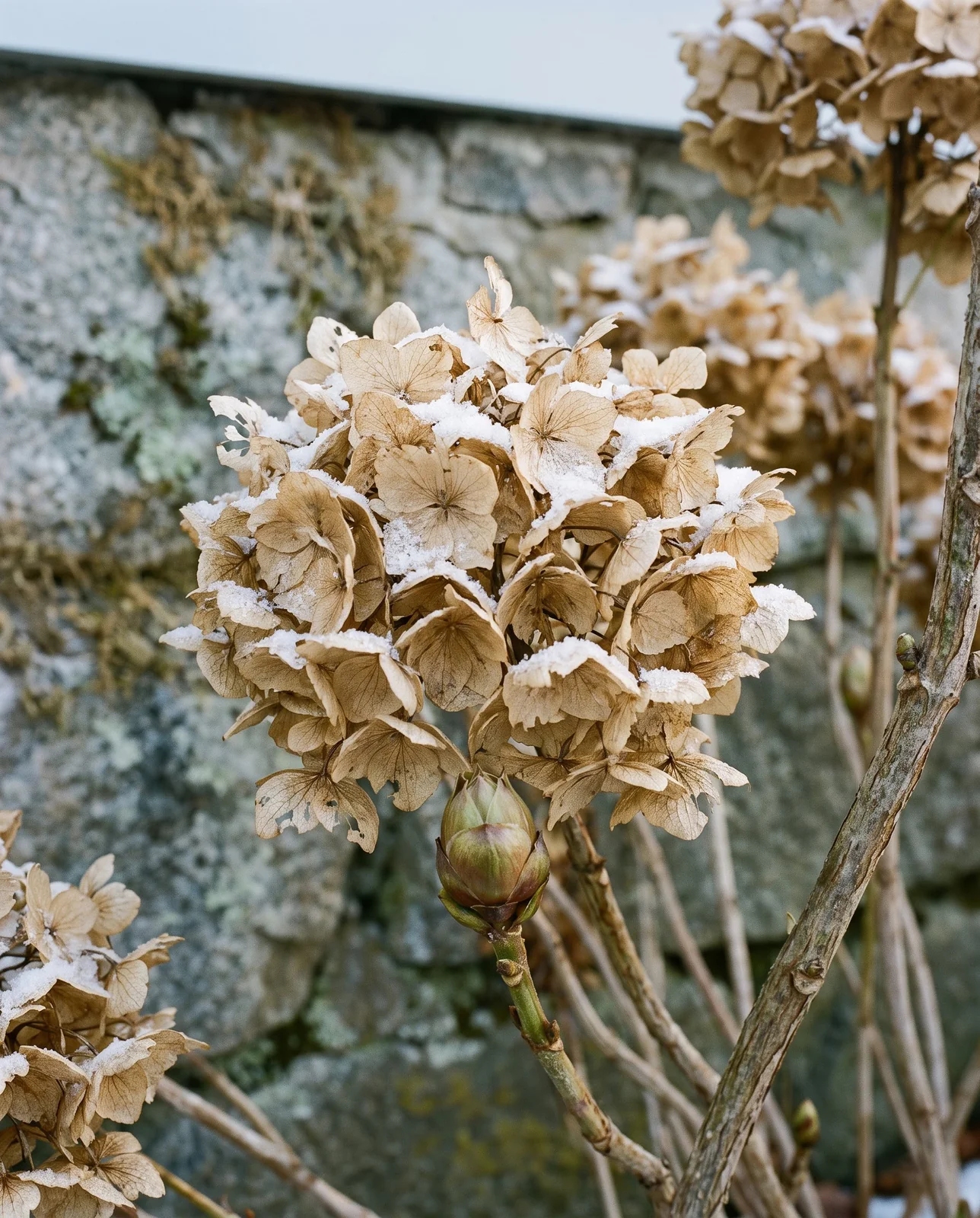
Bigleaf hydrangeas flower on old wood, the growth they put on during the previous season, and the Clemson University Home & Garden Information Center draws a hard date around that: prune after flowering, and not at all after August 1. An autumn cut takes off the buds that were going to open next summer, and the shrub answers the following June with leafy growth and no flowers. Winter injury is the most common reason a bigleaf fails to bloom, which is an argument for leaving the dried mopheads where they are, since they sit above the buds beneath them and take the weather first. The branches stay; the fallen leaves do not. Rake those up and dispose of them each season to hold down Cercospora, anthracnose, and powdery mildew.
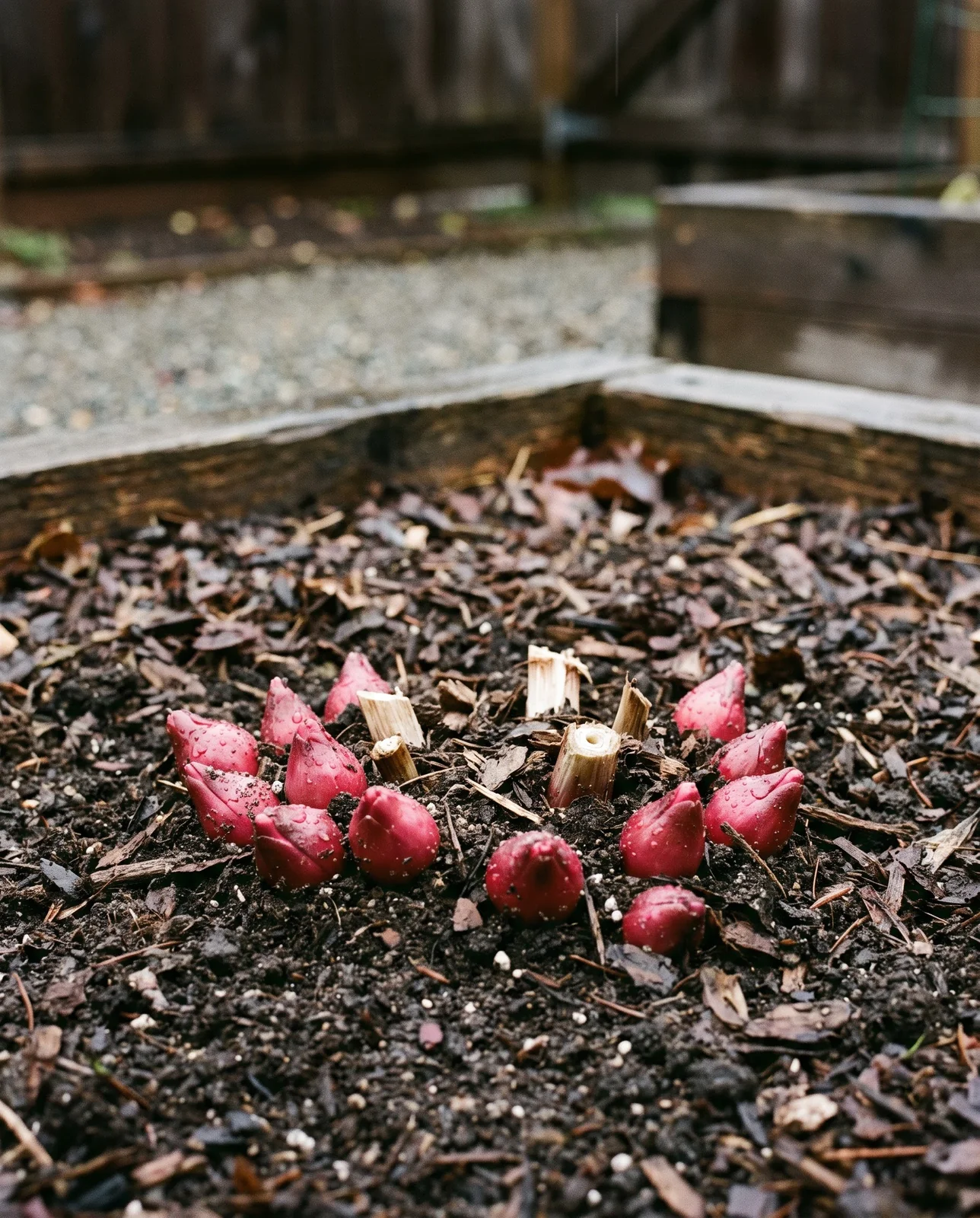
Peonies
Verdict: CUT to ground level after a hard freeze.
Peonies are the clearest cut on this list and also the easiest one to make too early. Iowa State University Extension puts the window after the foliage has been destroyed by a hard freeze, which in Midwestern gardens usually falls in late October or early November, and warns that stalks taken down in August or early September leave the plant with fewer blooms the following spring. Once the freeze has blackened the leaves, cut the stalks off near ground level. Then get the debris out of the bed: Botrytis blight fungi survive winter inside dead peony tissue, so stems from a clump that showed blight, powdery mildew, or leaf blotch go into the trash rather than the compost pile.
Russian sage (Perovskia)
Verdict: LEAVE standing through winter.
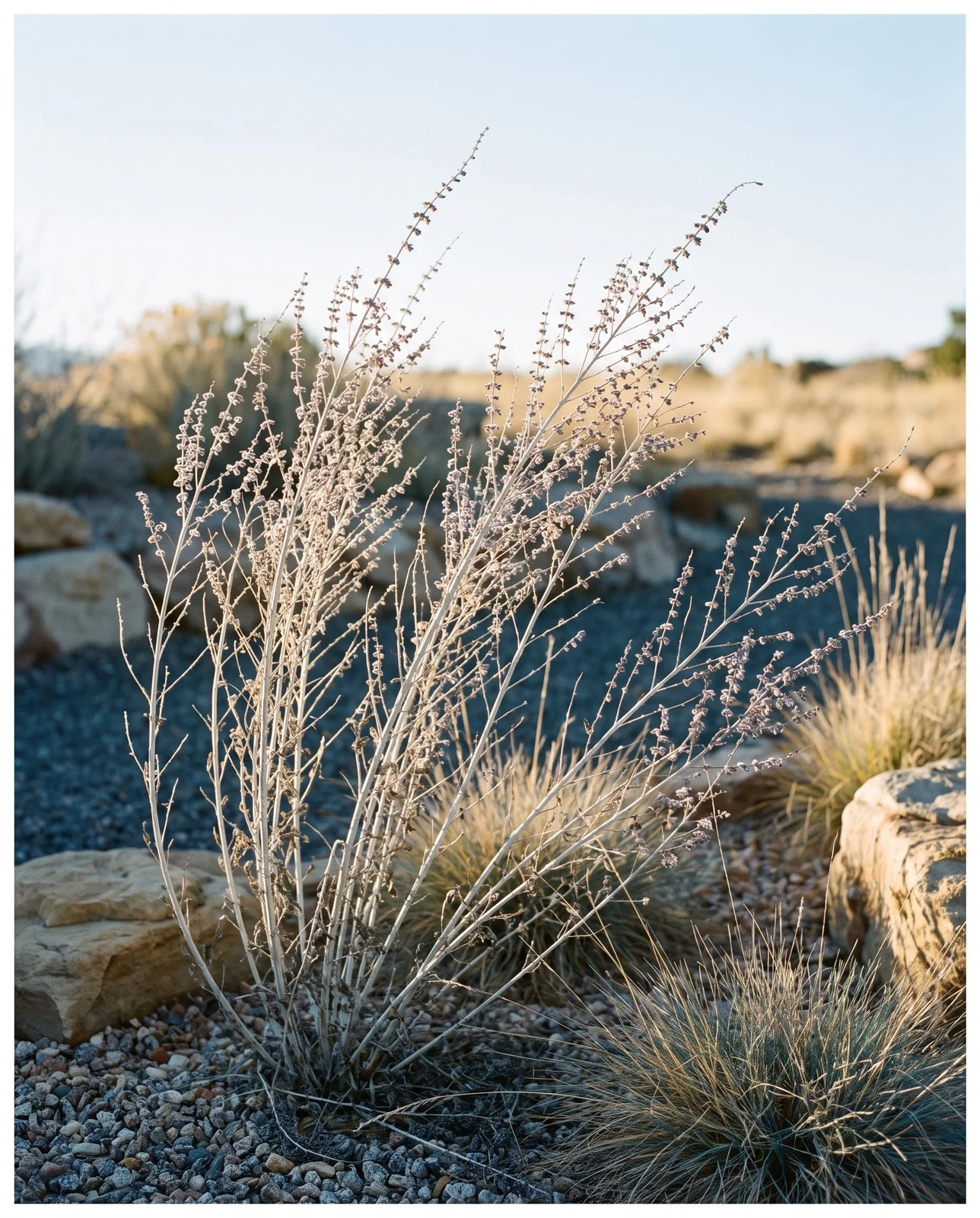
The Missouri Botanical Garden’s instruction for Russian sage is to cut it almost to the ground in late winter or early spring, as soon as new growth appears at the base, and the timing matters because the common mistake here is doing that job four months early. The woody silver stems keep winter wet away from the crown. Cut them in fall and every hollow stub turns into a funnel, running rain and snowmelt straight down into a dormant root system that rots when it sits cold and wet. Left alone, the same stems hold their color and shape above the snow until the buds swell at the base.
Why hollow stems matter for winter wildlife
The case for leaving stems standing has actual numbers behind it. NC State Extension worked through nearly 3,000 perennial stems from 20 North Carolina gardens and found nesting bees in about 1.5% of them. That reads like nothing until the count shifts from stems to gardens: roughly 70% of the gardens held at least one occupied stem in spring, and 55% still had active nests in previous-year stems through summer. By the second fall, standing dead stems were sheltering overwintering bees in about 11% of gardens. Eleven bee species turned up across the study, five of them small carpenter bees in the genus Ceratina. Statewide the pool is larger: more than 100 North Carolina bee species nest in hollow stems, twigs, or wood, either to spend the winter or to raise their young. Long odds on any one stem, in other words, and good odds somewhere in a planted bed.
How many standing stems actually house nesting bees
NC State Extension sampled nearly 3,000 perennial stems across 20 North Carolina gardens to measure standing-stem occupancy by nesting bees, and identified 11 species using them, 5 of the 11 from the small carpenter bee genus Ceratina.
The recommended practice from the same study: trim stems to a 12 to 24 inch stubble in early winter, after frost, so cavities are ready for spring emergence; small carpenter bees and other solitary species are the primary inhabitants.
The same study explains why cutting height matters more than good intentions. Stems that grew and flowered over the summer hold no nests and no overwintering bees in their first winter, because a bee cannot get inside an intact stem. Small carpenter bees (Ceratina) do not chew through solid wood. They hollow out the soft pith of stems that are already cut or broken and build their chamber walls from what they remove. A stubble cut in early winter leaves exactly that, an open pith shaft weathered and waiting by the time solitary bees start hunting nest sites in early spring. The exception is any stem already trimmed or deadheaded during the growing season, which may be occupied and should not be cut a second time. Solitary bees keep no colony to defend and will not sting unless pinched against bare skin.
Frequently asked questions
What temperature counts as a hard frost for garden cleanup?
The National Weather Service puts it at 28°F (-2°C) or colder, held for an extended period. A 32°F light frost only nips tender foliage, while 28°F stops the flow of carbohydrates into the roots and pushes hardy perennials into full dormancy, which is the point where cutting stops costing the plant anything.
Should garden mums be cut back in fall or spring?
Leave mums standing through winter. Virginia Cooperative Extension treats the intact stems as insulation for the crown against severe cold. Add 3 to 4 inches of mulch over the crown to keep freeze-thaw cycles from heaving shallow roots out of the soil, then cut the dead stems in early spring.
Why do extension services recommend leaving perennial stems 12 to 24 inches tall?
NC State Extension found that small carpenter bees need an open pith cavity to build brood chambers in and cannot get into an unbroken stem. A 12 to 24 inch stubble cut in early winter leaves a set of open tunnels standing and accessible when bees begin searching for nest sites in spring.
Can you cut back hydrangeas in the autumn?
Do not cut bigleaf hydrangeas (Hydrangea macrophylla) in autumn. Clemson Extension sets the cutoff at August 1, after which pruning removes the developing buds that produce next summer’s blooms. Wait until late spring, when fresh growth shows which branches came through winter, and take out only the dead wood.
Will solitary stem-nesting bees sting when working in the garden?
No. Unlike honey bees or yellowjackets, solitary stem-nesting bees keep no communal nest and have no workforce to defend one. NC State Extension notes that they will not sting gardeners unless physically grabbed or pinched against bare skin.
Is it safe to compost diseased peony foliage in fall?
No. Iowa State University Extension notes that Botrytis blight and powdery mildew fungi overwinter inside dead plant tissue. Diseased peony debris comes off the property and gets destroyed rather than going into a home compost pile, which rarely runs hot enough to kill fungal spores.
Seasonal timing across zones
Autumn cleanup runs on the thermometer, not the calendar. Northern gardens in USDA zones 3 through 5 usually reach the 28°F threshold by mid to late October. Once that freeze lands, take down the diseased peonies and any leaf-spotted black-eyed Susans first, then mulch the crowns before deep snow arrives.
Zones 6 and 7 rarely see a hard freeze before November, so keep watering perennials and newly set mums through October and keep the pruners in the shed until frost has visibly collapsed the top growth. In zone 8 and warmer, the work slides into December or January. Foliage holds on far longer there, and waiting for real dormancy avoids pushing out the soft new growth that the next cold snap will burn.
More About Best & Compare
Deer-resistant shade flowers for zone 4
Best winter flowering gifts
Best flowering houseplants for a winter windowsill
Best flowers for hot, humid summers
Best bulbs to force for winter bloom
Best flowers for a songbird garden
Best flowers to plant near a black walnut tree
Best flowers for tough city conditions
Best flowers for a rock garden
Enjoying our flower guides? Add YourFlowersGuide as a preferred source on Google. It helps more readers find us.
Add to Preferred Sources