The pairing · pick a flower
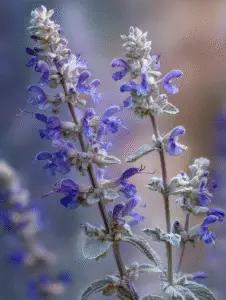 Russian sage+
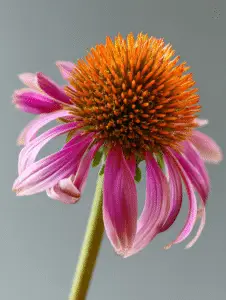 ConeflowerProven
Rigid upright stems and stiff seed heads give the airy sage haze something to stand against, and both plants run on the same lean, dry, full-sun diet.
Russian sage+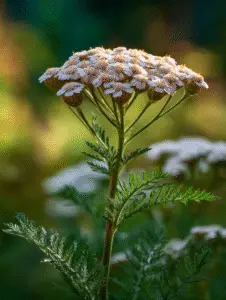 YarrowProven
Flat, plate-like flower clusters read as a horizontal counterpoint to Russian sage's vertical spikes, and yarrow shares the exact same lean, dry, full-sun tolerance.
Russian sage+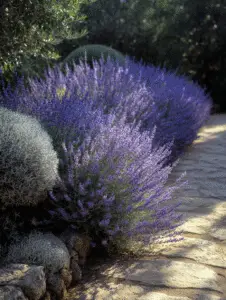 LavenderProven
A near-twin Mediterranean diet, full sun and sharp drainage, extends the same silvery-blue palette at a shorter, tighter, front-of-border height.
Russian sage+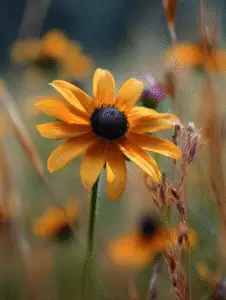 Black-eyed SusanProven
Gold, daisy-form flowers sit directly opposite violet-blue on the color wheel, and dark green foliage sets off Russian sage's silver stems.
Russian sage+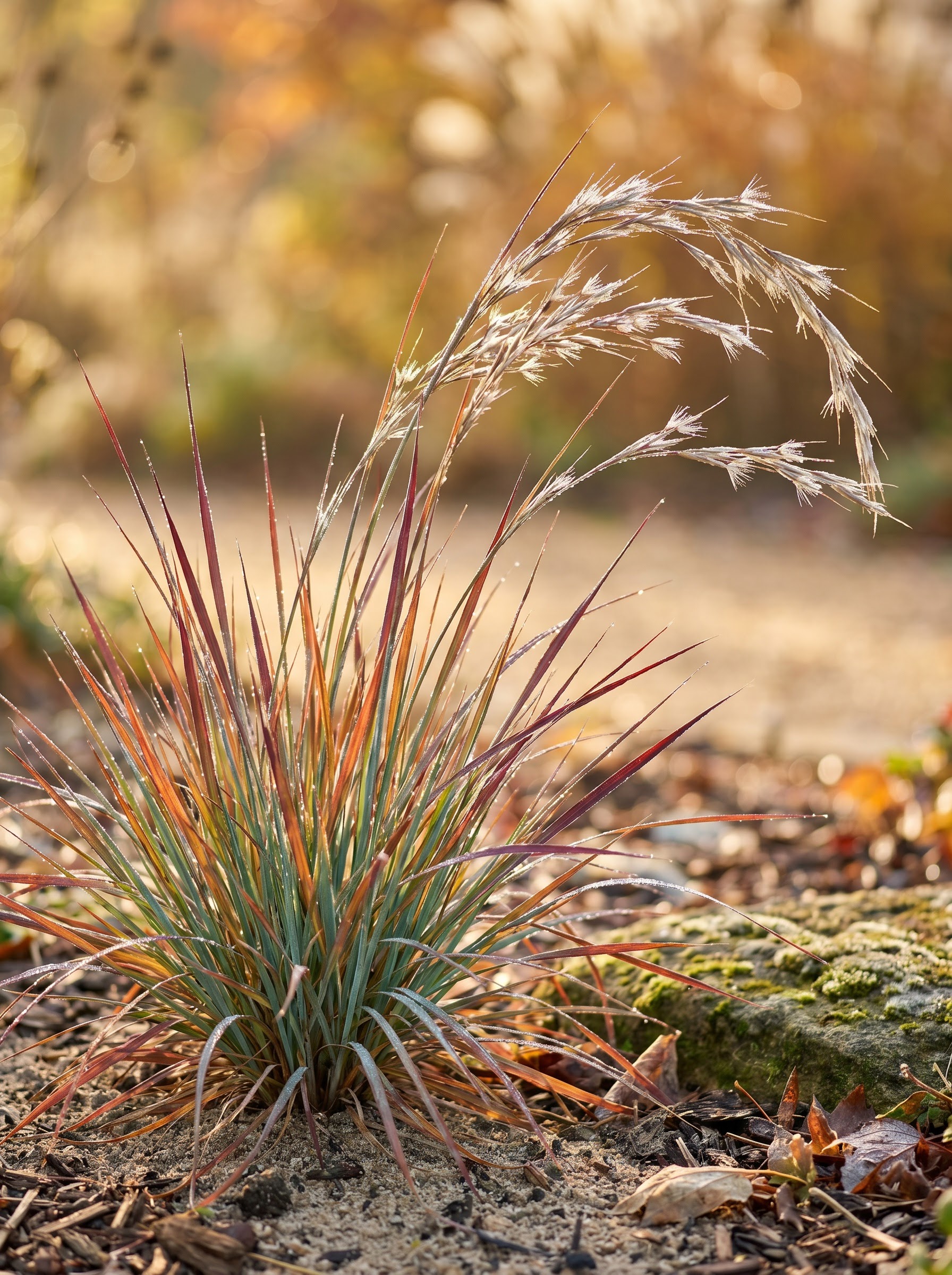 Little bluestemProven
Fine, upright grass blades and copper fall color extend structure into winter after Russian sage goes dormant, on the same poor, dry soil.
Russian sage+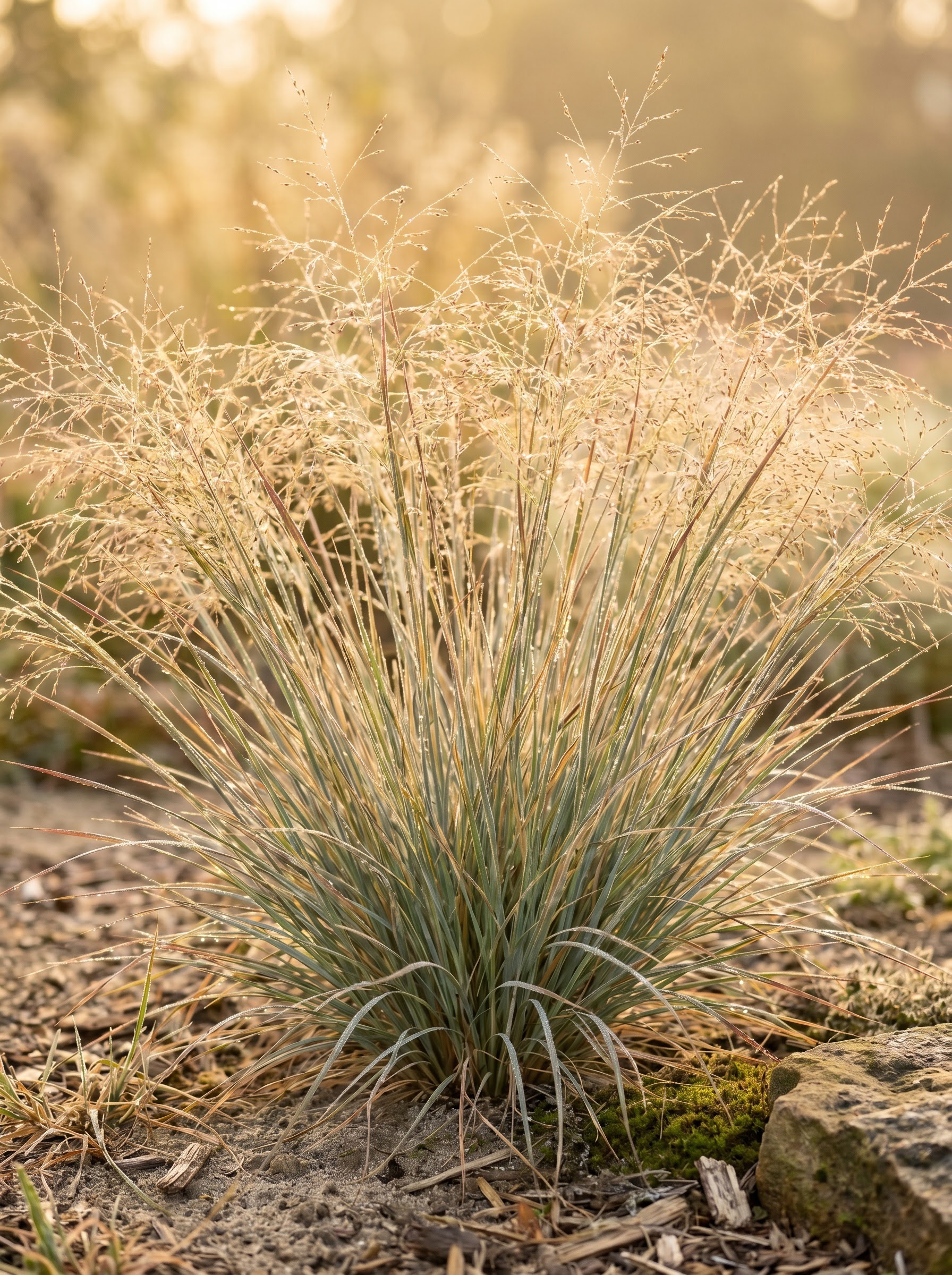 SwitchgrassProven
A taller prairie grass that shares Russian sage's lean, dry, full-sun conditions and adds airy movement without competing for the same visual space.
Russian sage+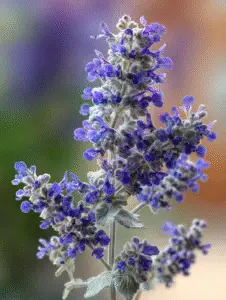 CatmintProven
A shorter, hardier stand-in for the same violet-blue tone, on identical dry, well-drained soil, and one of the longest-blooming pollinator plants available.
Russian sage+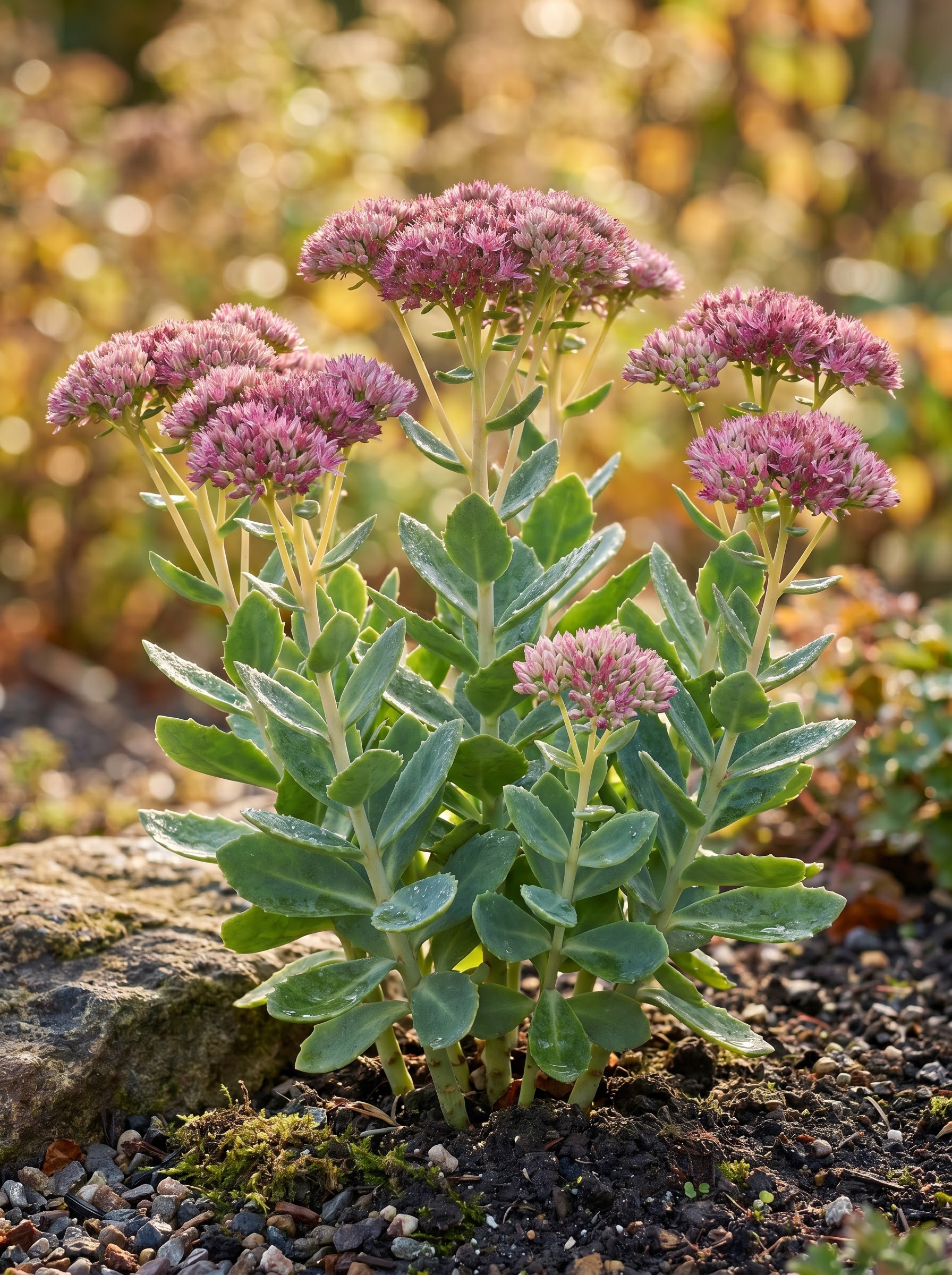 SedumProven
Thick, water-storing leaves handle the same lean, fast-draining soil, and the low mounding habit gives Russian sage's height a textural counterpoint at the front of the bed.
Russian sage+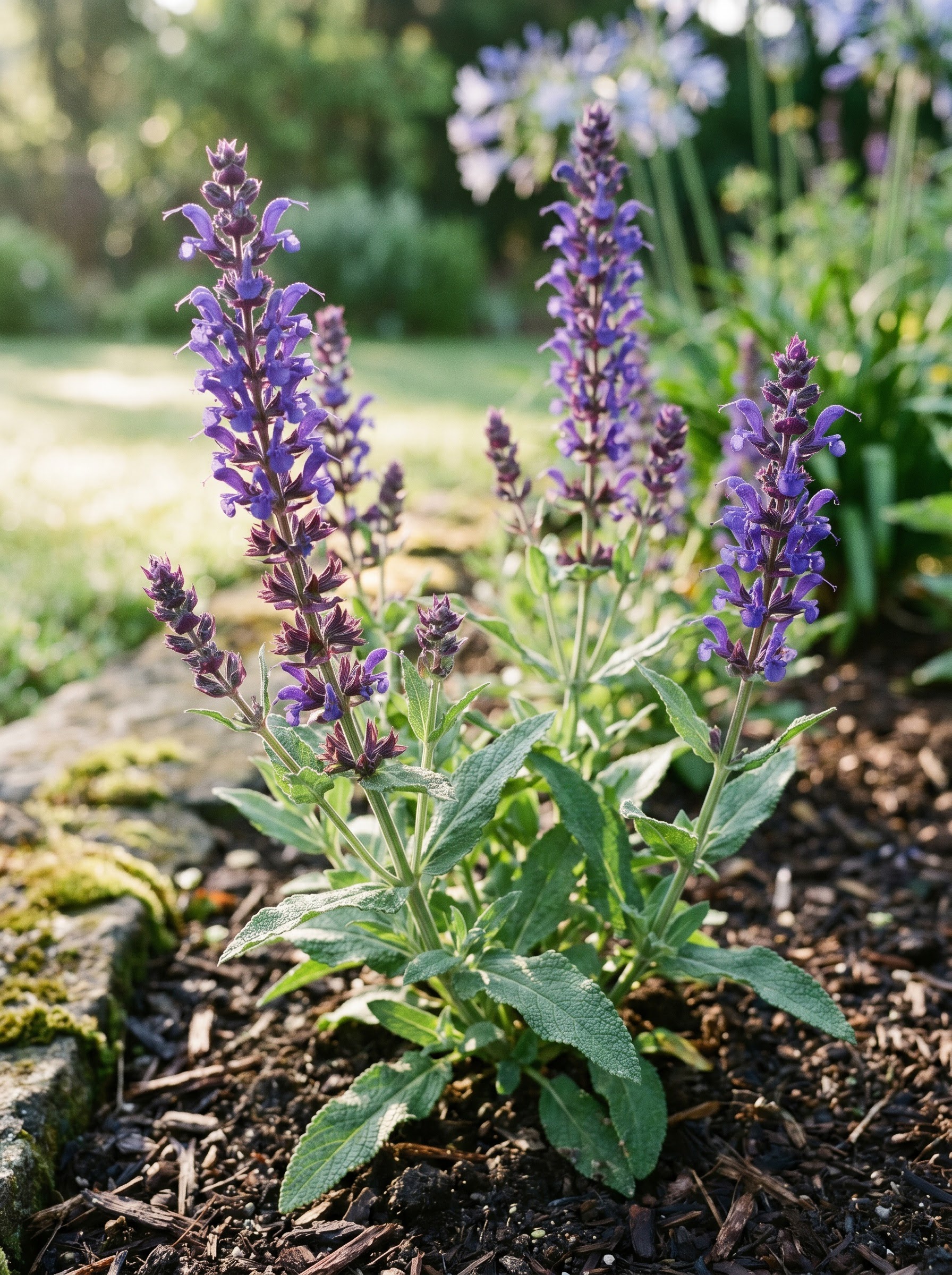 Perennial salviaProven
A genus-level relative of Russian sage that shares the exact dry, sunny diet and starts its spiky violet-blue bloom earlier in the season, overlapping rather than strictly handing off.
All Russian sage companions
9 flower companions, best match first
What not to plant near Russian sage
Most bad neighbours are not evil, they just want the opposite light, water or root run. Here is what to keep away, and what to do instead.
Impatiens
Impatiens need rich, consistently moist soil and often shade to thrive, and giving them the water they need keeps Russian sage's root zone wet enough to rot.
Hostas, ferns and astilbe
These shade-and-moisture plants need soil that stays consistently damp, the opposite of the fast-draining, dry-between-waterings conditions Russian sage requires to avoid root rot.
Peonies
Peonies want even moisture and are not drought-tolerant the way Russian sage is, and watering the peony properly sits Russian sage in wetter soil than it can handle long-term.
Rich, heavily amended, or regularly fertilized beds
Fertile soil and regular feeding push Russian sage into soft, leggy growth at the expense of flowers, so a bed designed for heavy-feeding annuals or vegetables works against it even without a specific problem neighbor.
Shade-casting neighbors and partial-shade positions
Full sun is close to non-negotiable; a taller neighbor's shadow or a shady planting spot cuts Russian sage below the light it needs and produces the same weak, floppy growth as rich soil does.
Fennel and dill, planted close
Some gardening sources name fennel and dill as competing for nutrients and space, but no extension source ties this specifically to Russian sage, so it reads more like generic advice against crowding any young perennial with a vigorous herb.
The best companions for Russian sage, explained
Russian sage runs on almost nothing, and that single fact decides which plants actually belong beside it. This is a native of the scree slopes and rocky elevations of Central Asia, and the reader who lands on this page usually already has one growing in a hot, sunny strip of the yard where little else thrives. The strategy is simple once you see it: find companions that share the same lean, dry, fast-draining diet, then let contrast in shape and color do the design work, since Russian sage itself is a haze, not a solid form.
Coneflower is the standout pairing, and it earns that spot honestly. Coneflower wants the identical full-sun, poor-soil conditions, and its rigid stems and stiff seed heads give the airy sage something to lean against visually, a genuine textural anchor rather than a decorative afterthought. Iowa State University Extension lists Russian sage alongside coneflower, yarrow, black-eyed Susan and sedum in its own roundup of perennials tolerant of dry conditions, which is about as clean a shared-conditions endorsement as this kind of pairing gets. Yarrow does similar work from a different angle: its flat, plate-like flower clusters read as a horizontal counterpoint to the sage’s vertical spikes, and it tolerates the same neglect.
Lavender is close to a twin. Both plants come from Mediterranean-adjacent, chalky, well-drained ground, and the RHS lists Salvia yangii as tolerant of acid, alkaline or neutral soil in the same breath as chalk and sand, which is functionally lavender’s own profile. Planted together they extend one continuous silver-and-violet theme through the border at two different heights, lavender low and tight, Russian sage taller and looser. Catmint fills a similar color role at a shorter, hardier register, and NC State Extension notes it tolerates a wide range of soil textures as long as they drain well, plus five months of bloom in the right cultivar. For gold against the violet-blue, black-eyed Susan is the classic color-wheel complement, and Wisconsin Horticulture Extension specifically names it, along with white phlox and coreopsis, as a landscape partner for Russian sage. Grasses like little bluestem and switchgrass round the picture out, sharing the same poor, dry soil while adding fine texture and structure that carries into winter after the sage goes dormant.
What not to plant near Russian sage
The honest gap in most Russian sage advice is that it reads as if the plant has no bad neighbors, and that is not true. The danger here is never one plant attacking another. Unlike black walnut or sunflower, Russian sage carries no allelopathy risk, nothing it secretes that harms what grows nearby. The entire avoid list comes down to one mechanism: water and soil-richness mismatch, and it runs in both directions.
Impatiens is the clearest case and the most-repeated one across independent sources. Clemson’s Home and Garden Information Center describes impatiens needing rich, consistently moist soil, kept "well watered, but not soggy, at all times," with soft stems that wilt fast the moment water runs short. Give impatiens what they need and Russian sage’s root zone sits wet enough, long enough, to rot. The same logic rules out hostas, ferns and astilbe, all shade-and-moisture plants that either need watering Russian sage cannot tolerate or shade Russian sage cannot bloom without. Peonies land in a softer version of the same trap: they are not drought-plants the way Russian sage is, and watering a peony properly nudges its dry-loving neighbor toward trouble.
Rich or heavily fertilized beds cause the identical failure even with no specific problem neighbor at all. NC State Extension’s plant profile is direct about this: Russian sage wants well-drained, occasionally dry soil, and poorly drained or overly fertile ground pushes it into soft, leggy growth that flops and blooms less. That is also why partial shade belongs on this list. Full sun of six or more hours is close to non-negotiable, and a taller neighbor’s shadow produces the same weak stems as rich soil does. One more pairing shows up across a couple of consumer gardening sites: fennel and dill, described as competing for nutrients and space. No extension source backs that specific claim for Russian sage, so it reads as generic advice against crowding a young perennial with a vigorous herb rather than a real, sage-specific warning, and it is worth treating that way.
Do they like the same conditions?
State the ruler plainly, because this is where the honest matching happens. Russian sage wants full sun, at least six hours and ideally more, in soil that is lean to poor, fast-draining, and tolerant of acid, alkaline or neutral pH, which the RHS confirms directly for Salvia yangii. Water only needs to be regular through the plant’s first season, while it builds the deep root system that later carries it through drought. After that first year, Wisconsin Horticulture Extension is explicit that the plant "will rot if the soil is too moist," which is the single fact that should decide every companion choice on this page.
Test each candidate against that ruler rather than against how good the photo looks. Coneflower, yarrow, lavender, catmint and the ornamental grasses all pass because they independently tolerate the exact same drought and poor soil. Roses fail the ruler even though the pairing is genuinely popular and visually iconic in English-border design: roses want rich, evenly moist soil, which is close to the opposite of what Russian sage needs to stay upright and compact. That does not make roses an outright avoid, since the two are commonly and successfully grown in the same garden, but it does mean they need real spacing and completely separate watering, never a shared root zone. The soil-pH side of the ruler is more forgiving here than it is for many companion flowers; Russian sage tolerates a wide pH range rather than demanding a narrow one, so pH mismatch is rarely the deciding factor the way water and soil richness are.
How to plant them together
Space most companions 18 to 24 inches from Russian sage’s base, which matches the extension-recommended spacing for the sage itself and gives both plants’ root systems room without inviting competition. Grasses that grow taller than the sage, like switchgrass, do better with 24 to 30 inches, since they belong at the back of the planting rather than crowding its open, see-through habit. Layer by height and role: low mounding plants like catmint and sedum work at the front, where they hide the base of the sage’s woody stems without adding the shade or moisture it dislikes, and taller grasses or perennial salvia sit behind or beside it, where their form contrasts rather than competes.
Timing matters more than most gardeners expect from a plant that blooms so late. Russian sage peaks from mid-summer into fall, so pairing it with something that flowers earlier, like lavender or perennial salvia, hands the color off cleanly instead of fighting for the same visual space at the same time. Sedum works the opposite direction, peaking in fall just as the sage’s own bloom is winding down, which extends the border’s interest rather than duplicating it. In pots, treat Russian sage as the thriller in a large container, at least 14 inches across with real drainage holes, paired with a lower filler like catmint or a trailing plant at the rim, and skip rich potting mix in favor of a gritty, fast-draining blend; container growing concentrates the same overwatering risk that kills Russian sage in the ground, so err toward less water rather than more.
Never fertilize Russian sage or the bed immediately around it. That single habit causes more flopping and sparse bloom than any companion choice ever will, since nitrogen pushes soft, sappy growth exactly the way rich soil does. If a neighboring plant genuinely needs feeding, site it far enough away that runoff and root spread do not reach the sage.
Does companion planting actually work for Russian sage?
Some of it, yes, honestly and provably. The shared-conditions logic is not folklore; it is basic drainage physiology confirmed independently by multiple extension sources, and coneflower, yarrow, lavender and catmint all show up as genuine dry-garden partners in university plant profiles, not just in gardening blogs repeating each other. The pollinator angle is also real and, in this case, unusually well documented: a 2025 peer-reviewed study in the journal Biology tracked bee visitation to Salvia yangii across urban Milan and found wool-carder bees, a genus called Anthidium, visiting the plant in the large majority of observed patches, drawn by both its short-tubed flowers and the dense hairs on its stems that female bees collect for nest-building. That is a specific, citable mechanism, not a vague "good for pollinators" claim.
What is not proven is the idea that any companion actively protects Russian sage or repels pests from it. The plant has essentially no serious pest or disease problems on its own, according to Penn State Extension, and its deer and rabbit resistance comes from its own strong scent, not from anything a neighbor contributes. The claim that fennel or dill specifically compete with Russian sage falls into the same unproven category: repeated across a couple of consumer gardening sites, absent from any extension source, and best treated as ordinary garden-spacing caution rather than a documented conflict. The honest verdict: the design pairings on this page work because the conditions genuinely match, the avoid list works because the water and soil-richness mismatch is real and mechanistically obvious, and the handful of specific "this plant fights that plant" claims beyond that are folklore dressed up as fact.
Frequently asked questions
What can I plant in front of Russian sage?
Catmint and sedum both work well as a low front-of-border layer. Both tolerate the same dry, lean soil Russian sage needs, so neither one requires extra water that would put the sage’s roots at risk, and both stay low enough to leave the airy sage haze visible behind them.
What should you not plant near Russian sage?
Avoid impatiens, hostas, ferns, astilbe and peonies, all of which need richer, more consistently moist soil than Russian sage tolerates. Also avoid siting it in partial shade or next to a shrub or tree that will eventually shade it, since full sun is close to a hard requirement for upright, floriferous growth.
Can I plant Russian sage and roses together?
You can, and the combination is a genuine English-border classic, but treat them as neighbors with separate needs rather than true companions. Roses want rich, evenly moist soil that would rot Russian sage’s roots, so keep real distance, at least 2 to 3 feet, and water each on its own schedule.
Does Russian sage attract pollinators?
Yes, strongly. A 2025 study published in the journal Biology found wool-carder bees visiting Salvia yangii in the large majority of observed urban garden patches, along with regular visits from honeybees and bumblebees, making it one of the better-documented pollinator perennials in this class of dry-garden plants.
Why is my Russian sage flopping, and can a companion fix it?
Almost always it comes down to too little sun, soil that is too rich, or both, not a bad neighbor. A companion cannot substitute for full sun or lean soil. The fix is siting: move it to the sunniest, poorest-soil spot available, skip fertilizer entirely, and let a sturdy-stemmed neighbor like coneflower provide visual structure rather than expecting any plant to physically prop it up.
Sources
- Russian sage, Salvia yangii (Perovskia atriplicifolia), Wisconsin Horticulture Extension
- Salvia yangii (Russian Sage), NC State Extension Gardener Plant Toolbox
- Perennials Tolerant of Dry Conditions, Iowa State University Extension
- Salvia yangii, RHS
- Impatiens, Clemson HGIC
- Nepeta x faassenii (Blue Catmint), NC State Extension Gardener Plant Toolbox
- Little Bluestem, Schizachyrium scoparium, Wisconsin Horticulture Extension
- Hylotelephium spectabile ‘Autumn Joy’, NC State Extension Gardener Plant Toolbox
- Salvia nemorosa, NC State Extension Gardener Plant Toolbox
- Switch Grass, Panicum virgatum, Wisconsin Horticulture Extension
More About Russian Sage
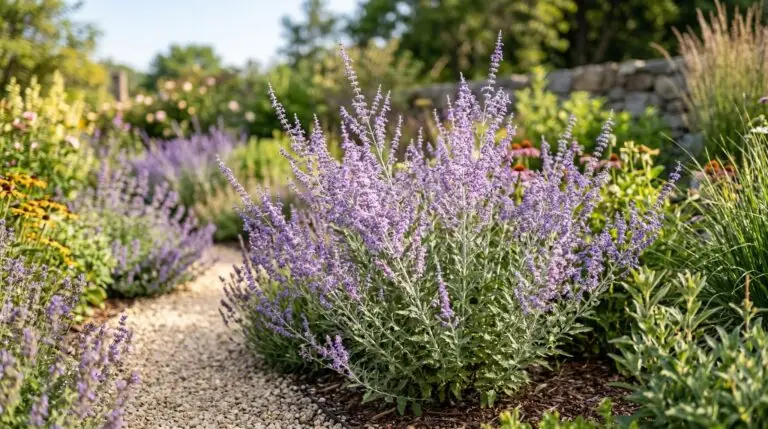
How to grow Russian sage for airy lavender-blue clouds that float above the summer border
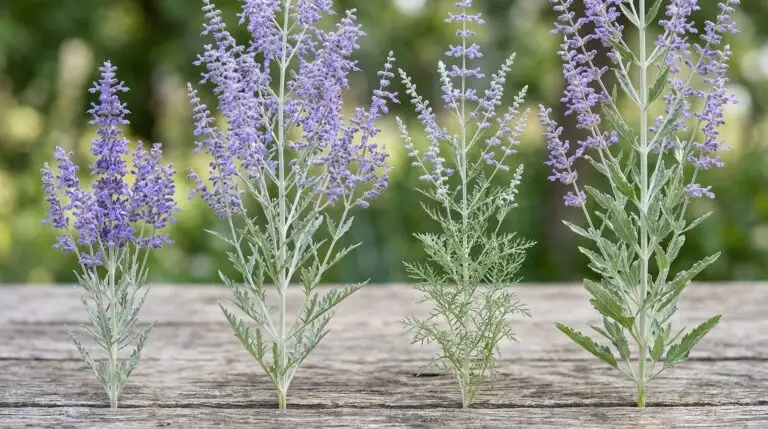
Russian sage versus lavender and which silver-stemmed blue bloomer is right for your garden
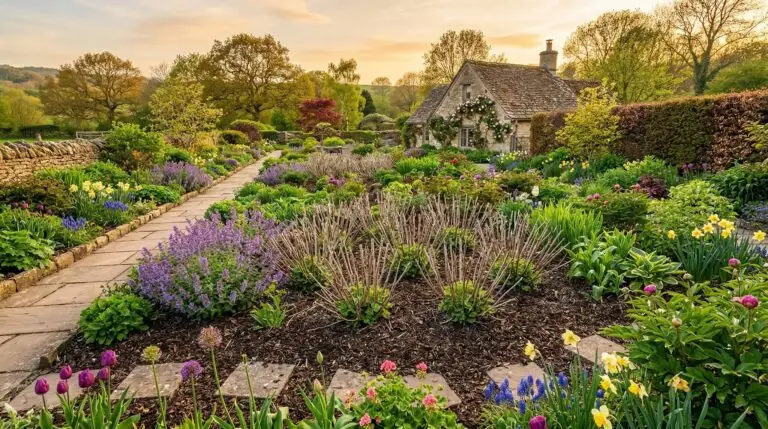
How to prune Russian sage in spring without ending up with a woody tangled mess
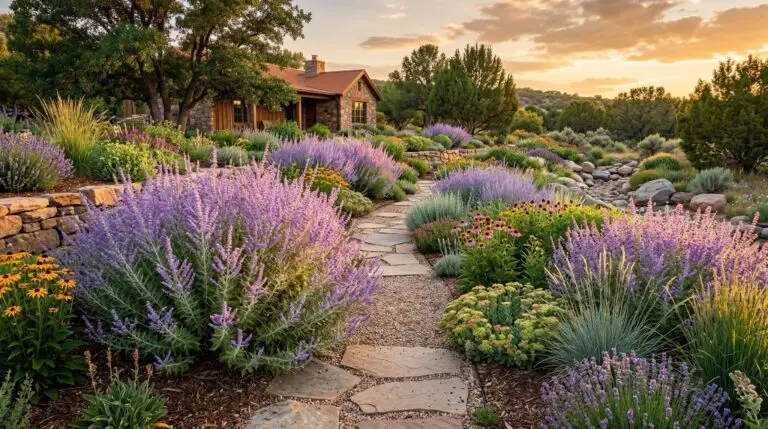
Russian sage as a drought-tolerant superstar for waterwise and xeriscape gardens
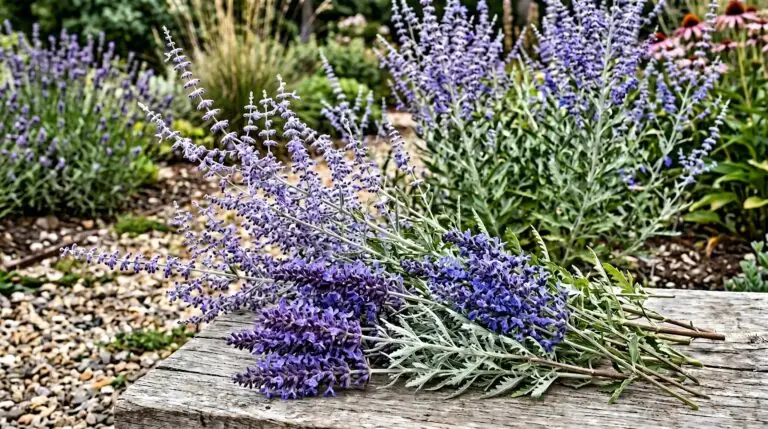
Best Russian sage varieties from compact Little Spire to silvery Blue Jean Baby
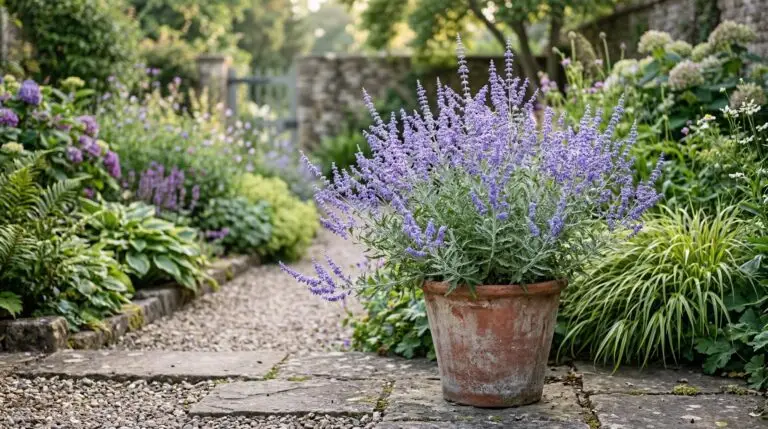
Growing Russian sage in containers for silver-blue drama on sunny patios
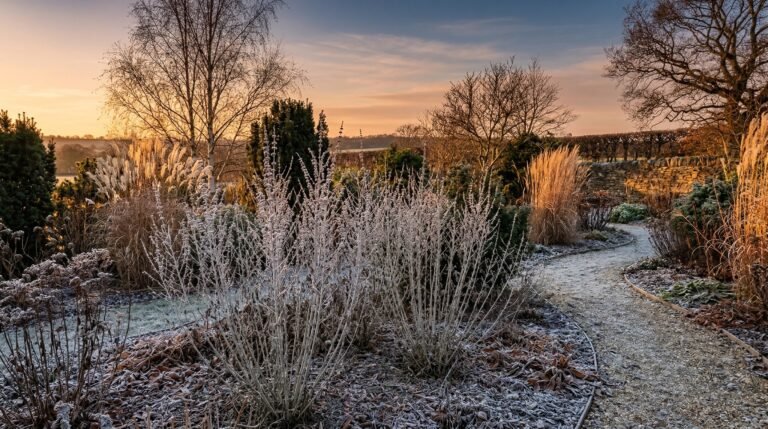
Russian sage in winter and the silver-white stems that bring structure to the frozen garden
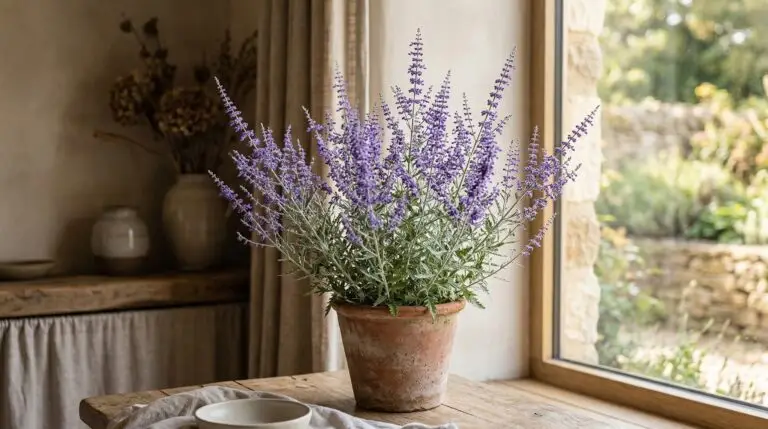
Russian sage for pollinators and the long bloom season that feeds bees for months