The pairing · pick a flower
 Cosmos+
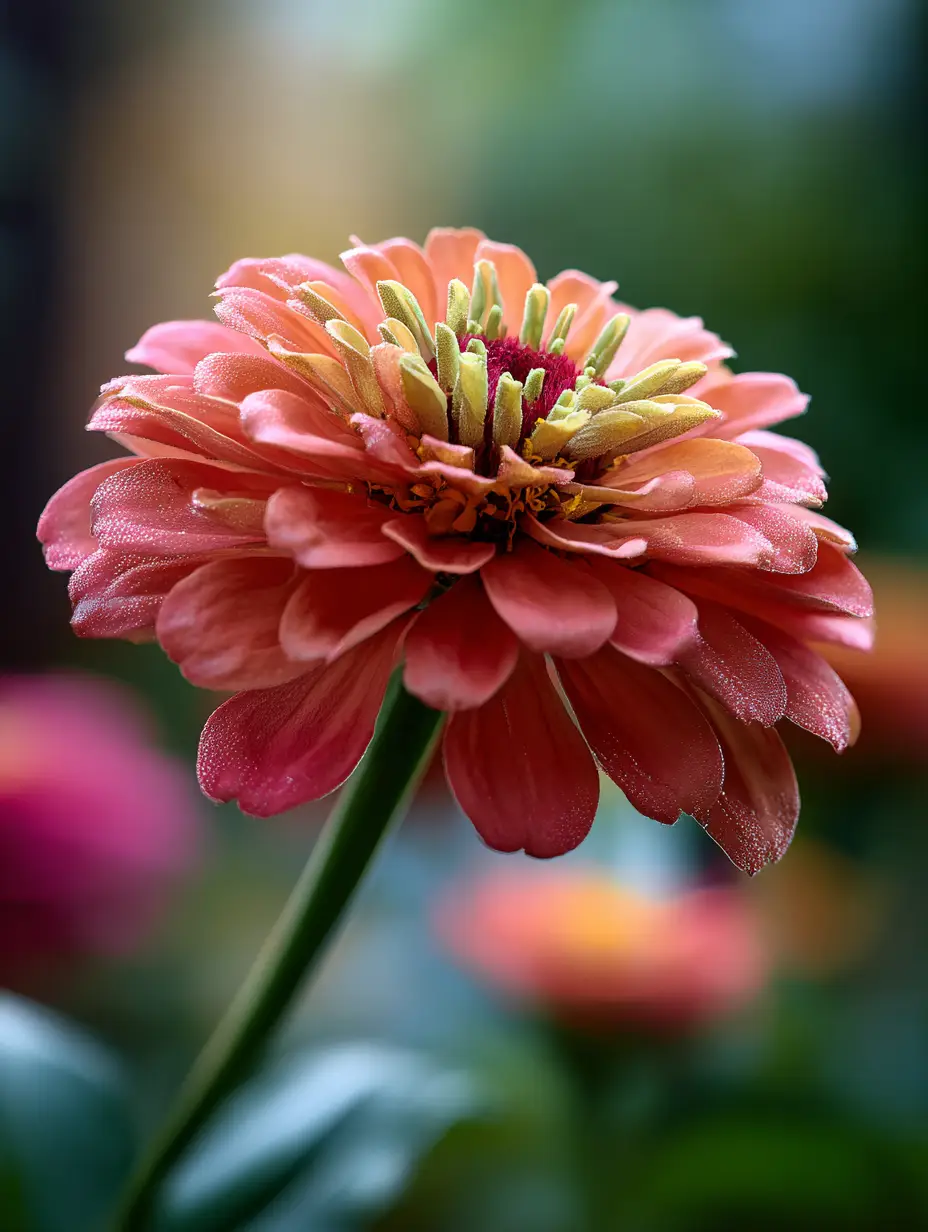 ZinniaProven
Full sun, average-to-poor soil, and the same Mexican-annual calendar as cosmos, with rigid upright stems and coarser leaves that give cosmos's airy, see-through form real structural contrast.
Cosmos+ MarigoldPartial
French marigold's compact, bushy habit sits in the same full sun and forgiving soil cosmos wants and carpets the bare, leggy lower stems cosmos develops as it stretches toward the light; taller African marigold cultivars lose that low-skirt effect, so the compact French types are the better fit here.
Cosmos+ SunflowerPartial
Tolerates the same poor soil and full sun cosmos wants, and its bold, coarse-leaved bulk anchors a bed that would otherwise be all fine, ferny texture. Some consumer sources claim sunflower suppresses cosmos specifically, but sunflower allelopathy is real without a cosmos-specific target: Penn State Extension names sunflower as allelopathic without identifying any affected species, so a claim against cosmos in particular is not treated as fact here.
Cosmos+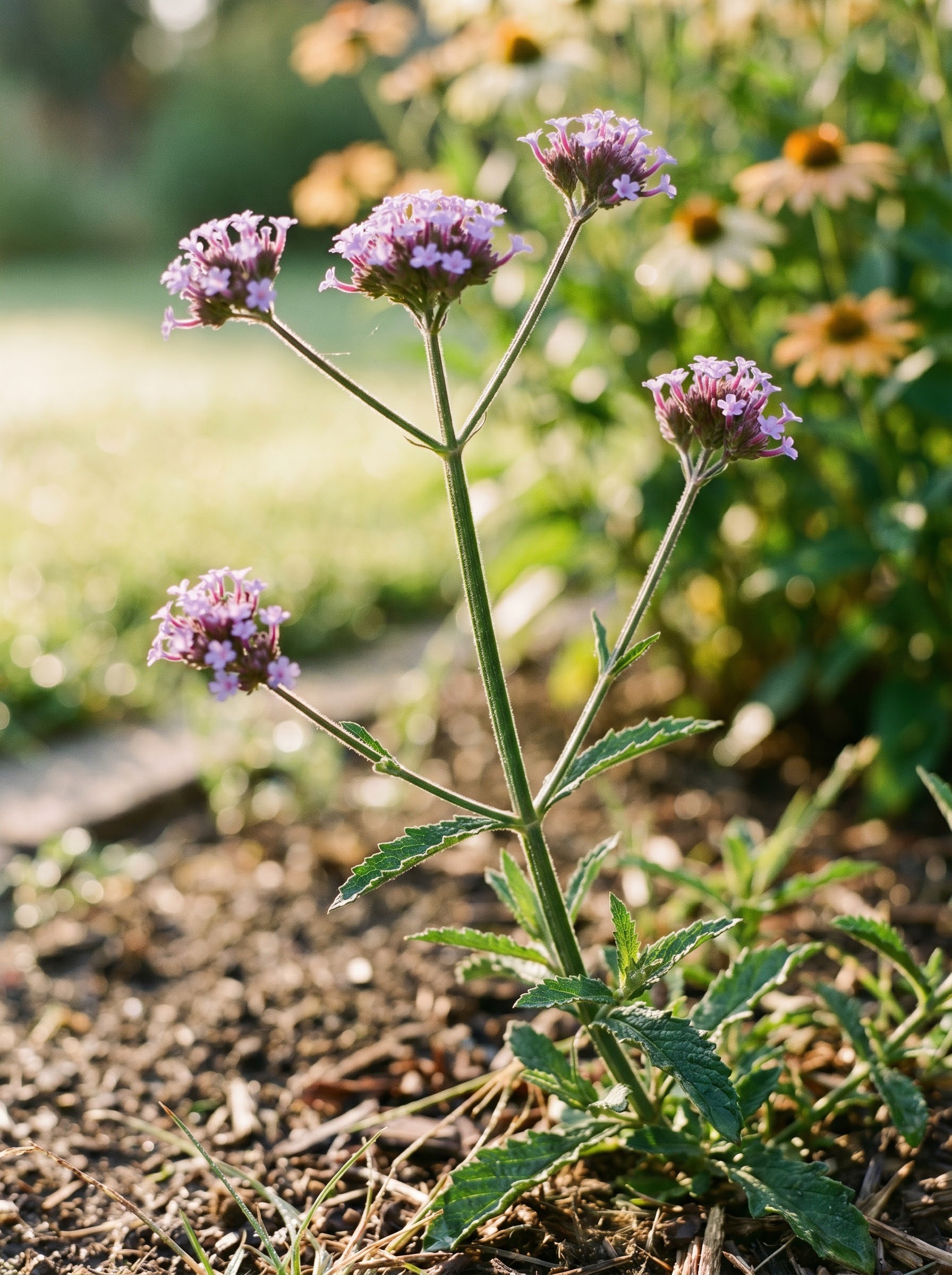 Verbena bonariensisPartial
Shares cosmos's wispy, see-through form on wiry stems, the same full sun and poor-soil tolerance, and a similar habit of self-sowing into volunteer colonies year after year.
Cosmos+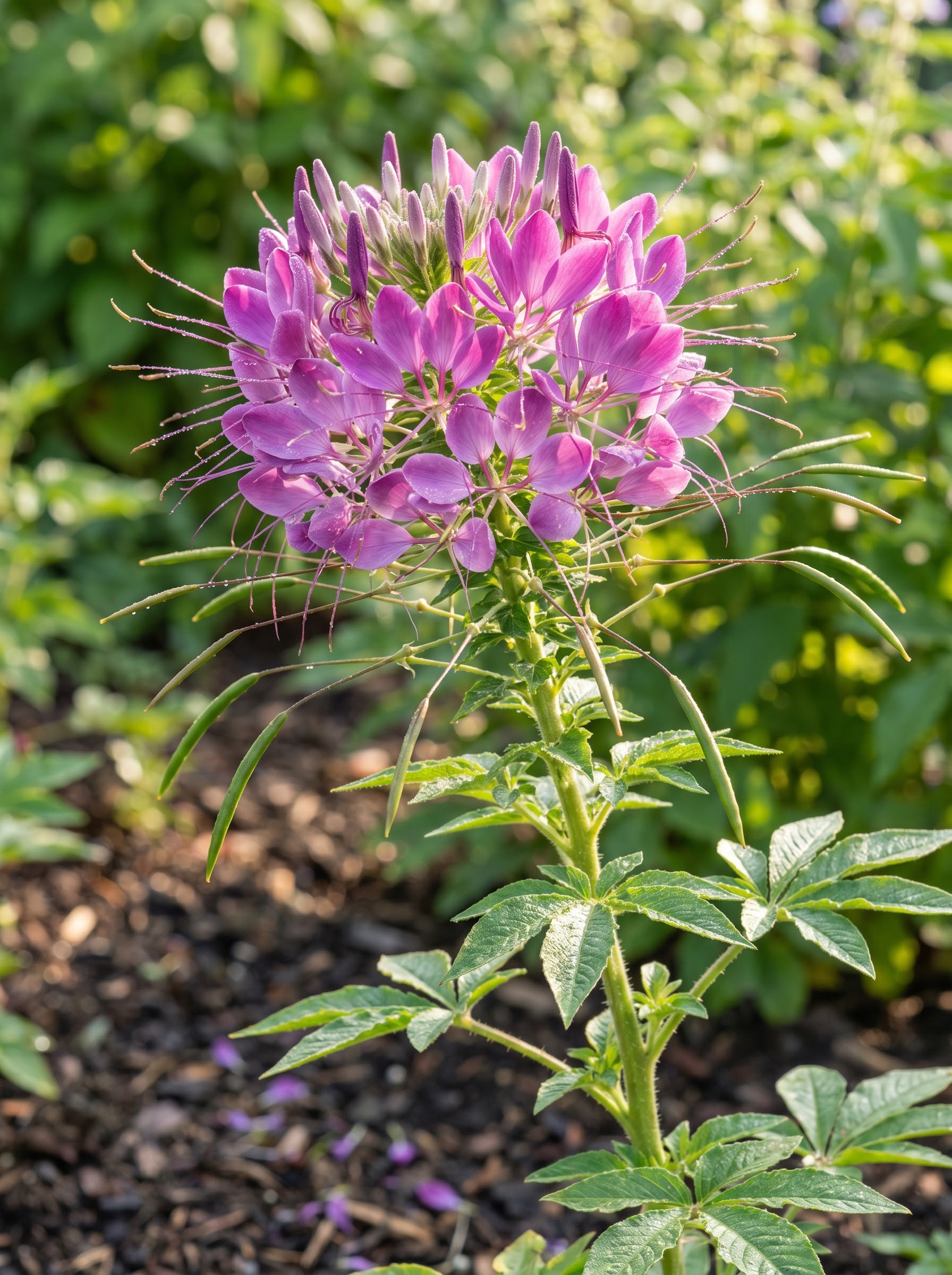 CleomePartial
Full sun and heat tolerance line up with cosmos's own preferences, and its taller, spiky vertical form gives a cottage or wildflower border a shape cosmos cannot supply on its own.
Cosmos+ CornflowerPartial
Tolerant of the same poor soil and full sun, with a cooler-season bloom window that overlaps cosmos's start and extends the display earlier; its blue recedes visually, making white and pink cosmos pop forward.
Cosmos+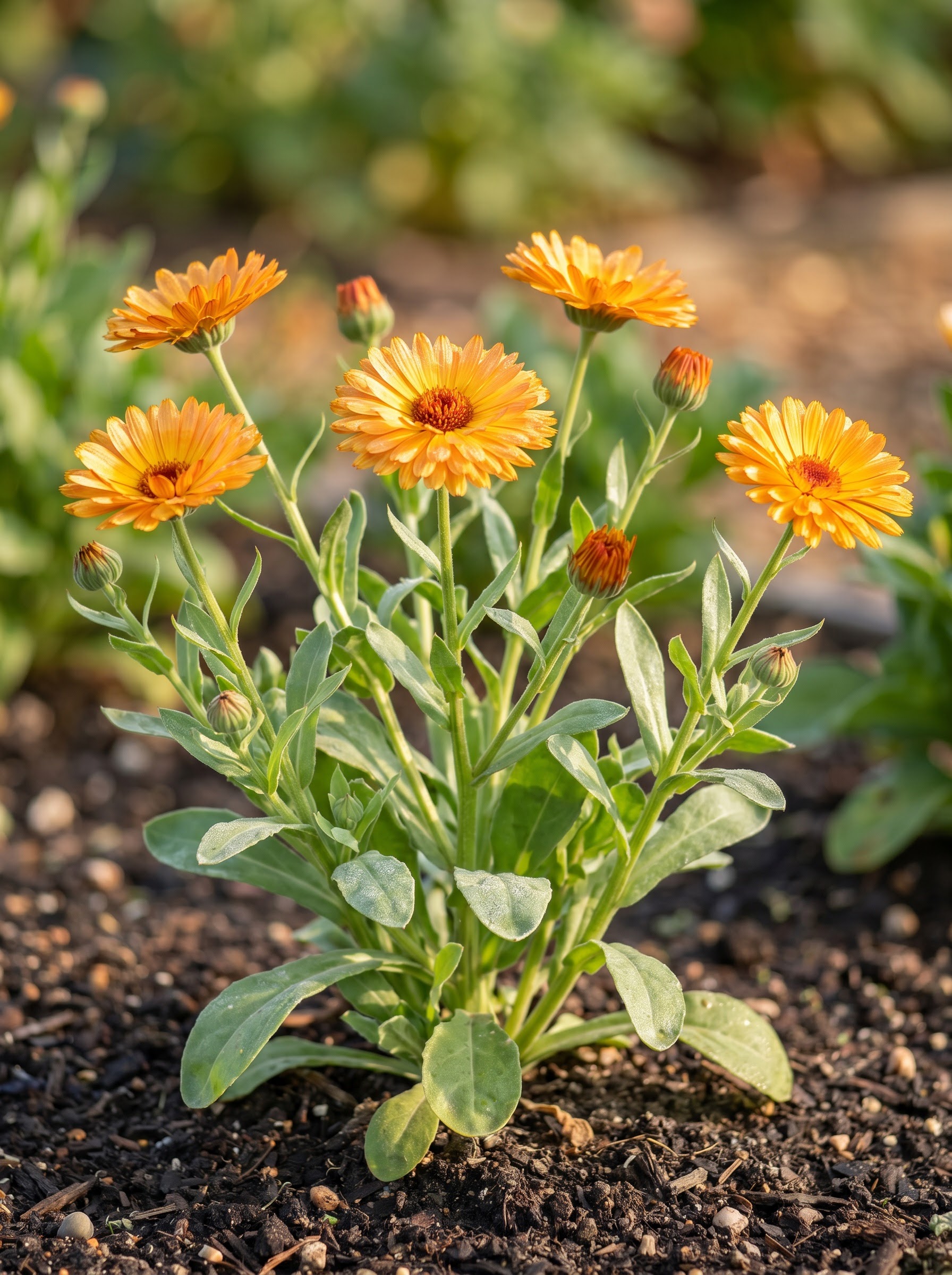 CalendulaPartial
An easy, poor-soil-tolerant cutting-garden annual in the same full sun cosmos wants, its warm gold and orange tones echoing magenta or orange-red Cosmos sulphureus cultivars in a mixed cutting bed.
Cosmos+ ConeflowerPartial
Full sun and drought tolerance once established match cosmos's own profile, and its chunkier, coarse-leaved daisy form gives a prairie-style perennial bed the same contrast zinnia gives a cutting garden.
Cosmos+ Black-eyed SusanPartial
Shares cosmos's full sun and average-to-dry soil tolerance, and its gold-and-brown daisy face echoes the warm end of the cosmos color range while extending a bed's interest into a perennial planting.
All cosmos companions
9 flower companions, best match first
What not to plant near cosmos
Most bad neighbours are not evil, they just want the opposite light, water or root run. Here is what to keep away, and what to do instead.
Heavy feeders and rich-soil companions (geranium, rose, and most fertilized bedding annuals)
Fertilizing a bed to satisfy a hungrier neighbor pushes cosmos toward lush foliage and weak, floppy stems with fewer flowers, since extension sources are explicit that cosmos wants unfertilized, average-to-poor soil and punishes rich ground with sparse bloom.
Shade-preferring plants (hosta, impatiens, most shade ferns)
Cosmos needs 6 or more hours of direct sun for its best bloom and goes spindly and underblooms in partial shade, the opposite of what a shade lover like hosta or impatiens needs to thrive.
Consistent-moisture, rich-soil lovers (most roses, moisture-hungry perennials, over-fertilized annuals)
Cosmos is genuinely drought tolerant and blooms less if overwatered, so a neighbor that wants consistently moist, rich soil forces a choice: underwater the companion or overwater cosmos, and neither plant wins. One popular claim that lavender or rosemary should be avoided because cosmos needs more moisture has the mechanism backward, since cosmos is the dry-soil plant here, not the moisture lover.
Aggressive spreaders and running mints
Rhizomatous runners like mint physically invade the root zone and outcompete cosmos for the modest water and nutrients it is deliberately given, though this is a generic bed risk rather than a cosmos-specific mechanism.
Tall, shading plants sited too close in front of shorter, sun-hungry neighbors
Cosmos reaches 2 to 6 ft with an airy but real canopy, and planted too close in front of a shorter sun-loving neighbor it will shade that plant out over the season, a siting and spacing problem rather than a true antagonism.
The best companions for cosmos, explained
Cosmos sets easy terms and then holds to them strictly: full sun, soil on the poor-to-average side, and no fertilizer at all. Cosmos is deliberately grown lean and dry to keep it blooming instead of running to leaf, so its best companions are not just plants that tolerate the same conditions but plants that actively want the same low-input regime cosmos does. Zinnia is the standout match for exactly that reason. Both are full-sun, average-to-poor-soil Mexican annuals sharing the same drought tolerance and roughly the same summer-into-frost bloom window, and zinnia’s rigid, upright stems and coarser leaves give cosmos’s fine, ferny, see-through form the one structural counterpoint it cannot supply on its own. Marigold earns its place on the same shared-conditions logic while solving a second, more specific problem: cosmos gets leggy and bare low down as it stretches toward the light, and French marigold’s compact, bushy habit carpets exactly that gap without asking for anything cosmos is not already giving; the taller African marigold types lose that low-skirt effect, so the compact French cultivars are the better pick for this particular job.
Sunflower and cornflower round out the strongest tier for different reasons. Sunflower tolerates the same poor soil and full sun and supplies scale and a bold, coarse-leaved anchor a bed built entirely from airy cosmos foliage otherwise lacks, though one honest caveat belongs here: some consumer sources claim sunflower releases compounds that suppress cosmos specifically, and while sunflower allelopathy is real, Penn State Extension names sunflower as allelopathic without identifying cosmos, or any other species, as an affected target, so that claim is not treated as fact on this page. Cornflower does its work through color rather than bulk, tolerating the same lean soil while its blue visually recedes, which makes white and pink cosmos pop forward rather than compete for attention, and its earlier bloom window extends the display before cosmos itself gets going. Verbena bonariensis earns a spot through pure silhouette logic: a different flower shape entirely, tiny purple clusters instead of a simple daisy face, but the same wispy, weightless, see-through habit on wiry stems, plus the same self-sowing tendency that means both plants will volunteer into the same bed year after year without asking.
Cleome, calendula, coneflower, and black-eyed Susan each clear the shared-conditions bar and extend cosmos’s usefulness into a slightly different bed. Cleome brings a genuinely spiky vertical form and heat tolerance that a cottage or wildflower border can use once cosmos itself tops out. Calendula is an easy, poor-soil cutting-garden annual whose warm gold tones echo the orange-red range of Cosmos sulphureus cultivars specifically. Coneflower and black-eyed Susan are the perennial bridge: both share cosmos’s full sun and drought tolerance once established, both bring a chunkier, coarser bloom form that contrasts cosmos’s fine daisy face, and both let a gardener carry cosmos’s design logic into a prairie-style perennial planting rather than a purely annual cutting bed. None of these four needs anything cosmos is not already providing, which is exactly the point.
What not to plant near cosmos
The single most teachable, most extension-backed avoid on this page has nothing to do with pests or disease: it is fertility. Cosmos wants soil on the poor-to-average side and extension guidance is direct that fertilizing it, or planting it in rich, heavily amended ground, produces weak-stemmed, floppy plants that bloom later and more sparsely. That single fact quietly rules out a whole category of companions rather than one named plant: geranium, rose, and most fertilized bedding annuals all need or get regular feeding to look their best, and putting any of them next to cosmos forces a choice between starving the companion to keep cosmos happy or feeding the bed and watching cosmos go leggy and sparse. This is not folklore dressed up as fact. It is basic, extension-stated plant physiology, and it is the cleanest lesson this flower has to teach.
Shade-preferring plants sit on the same principle from the other direction. Cosmos needs 6 or more hours of direct sun for its best bloom and goes spindly and thin-flowered in partial shade, so tucking it in next to a genuine shade lover like hosta, impatiens, or most ferns means someone sited the bed wrong, not that the two plants are fighting each other. The same logic extends to water and richness together: cosmos is genuinely drought tolerant and blooms less if overwatered, so a neighbor that wants consistently moist, rich soil creates the identical bind fertilizer does, someone has to lose. One popular claim worth naming and setting aside here, because it gets the mechanism backward: some general-search sources warn against pairing cosmos with dry-soil herbs like lavender or rosemary on the grounds that cosmos needs more moisture. That reasoning inverts the actual relationship. Cosmos is the dry-soil plant in that pairing, not the thirsty one, and a genuinely low-water herb is a much better match for cosmos than a source claiming the opposite would suggest.
Two more avoids are more ordinary but worth stating plainly. Mint and other rhizomatous runners will physically invade cosmos’s root zone and outcompete it for the modest water and nutrients it is deliberately given by design, a generic bed risk rather than anything unique to cosmos, and the fix is a sunken, bottomless pot rather than avoiding mint altogether. Tall, shading plants sited too close in front of a shorter, sun-hungry neighbor cause a real but ordinary problem too: cosmos’s own airy canopy can reach 2 to 6 feet, and crowded too close in front of something shorter, it will shade that plant out over a season. This is a spacing and siting issue rather than a true antagonism, and it resolves with 12 to 18 inches of clearance rather than pulling either plant out. Cosmos itself is worth defending here as a garden citizen: it is not named as an allelopathic species by any extension source found for this page, and it is not toxic or invasive toward neighbors the way a genuine problem plant would be. The friction it causes traces entirely to input mismatch, not attack.
Do they like the same conditions?
State the ruler plainly, because it is what makes a match honest rather than decorative. Cosmos wants full sun, 6 to 8 hours of direct light for its densest bloom, and while it tolerates partial shade, extension sourcing confirms performance drops off noticeably below that threshold: stems get spindlier and flowering thins. Water needs stay light. Extension guidance calls for even moisture only for the first 5 to 10 days after direct-sowing, and once established, cosmos genuinely prefers to run dry, with overwatering named directly as a cause of reduced bloom. Soil pH sits neutral to slightly alkaline, a wide, forgiving range that rarely becomes a differentiator against most candidate companions, unlike an acid-obligate plant that imposes a hard pH constraint. Soil texture is similarly flexible: cosmos adapts to clay, loam, or sand without complaint.
The real, load-bearing constraint is fertility, not texture or pH, and this is the fact most consumer companion content gets wrong or skips entirely. Extension sources are explicit that cosmos wants soil on the poor-to-average side and that fertilizing it directly trades blooms for foliage and weak stems, the plant-physiology equivalent of a rich diet making an athlete slower rather than stronger. This single fact is the actual reason the avoid list above singles out heavy feeders rather than any specific pest or disease, and it is worth stating as its own rule precisely because so much general gardening advice defaults to "feed everything" without checking whether a given plant actually wants it. Height and habit matter for design rather than culture: cosmos runs 2 to 4 feet typically, with some cultivars reaching 6 feet, on thin, airy stems that can flop or lodge in wind or rich soil, which is exactly why the strongest companions on this page bring rigid structure rather than more softness. USDA zone barely matters here, unlike a woody perennial host, since cosmos is grown as a tender annual essentially everywhere it can be direct-sown after frost; bloom-season overlap with a bed’s other plants is the more useful filter than hardiness range.
One more trait deserves honest treatment rather than a purely aesthetic framing: cosmos is a heavy, reliable self-seeder, confirmed enough that Utah State’s own extension guidance says it can be "referred to as a weed" for that reason alone. That is a genuinely distinctive host trait among the flowers on this site, and it means companion selection should account for whether a neighbor can tolerate volunteer cosmos seedlings showing up in its space every spring, not just whether the two plants share a sun and soil profile on paper.
How to plant them together
Space most in-ground companions 12 to 24 inches from cosmos, adjusting for whatever grows larger at maturity. Zinnia and marigold both sit comfortably in the tighter end of that range, 10 to 18 inches, since neither develops a deep or aggressive root system that would compete hard with cosmos for water. Sunflower, cleome, and coneflower want the fuller 18 to 24 inch spacing, since all three eventually outsize cosmos and will shade it if crowded too close, especially sunflower, which should go on the north side of shorter companions so its bulk does not block their light. Cornflower and calendula are more forgiving on exact distance, working at 8 to 12 inches, since both are shallow-rooted, front-of-bed annuals where the real consideration is airflow rather than true root conflict.
Layer by height and let bloom timing do some of the design work. Cleome, sunflower, and coneflower belong toward the back or center of a bed, cosmos holds the middle at its typical 2 to 4 feet, and marigold, calendula, and cornflower’s lower mounds sit toward the front, doing double duty by hiding the bare lower stems cosmos develops as the season goes on. Cornflower and calendula both lean toward an earlier bloom than cosmos, so plant them where a color handoff into cosmos’s own longer summer run makes sense rather than expecting simultaneous peak bloom from every plant in the bed. Because cosmos self-sows so reliably, plan a light spring edit into the routine: thin or transplant volunteer seedlings before they crowd a companion that cannot compete with an expanding cosmos colony, and deadhead through summer if a tidier, less self-seeding bed is the goal rather than a wilder one.
Containers run on a stricter version of the same fertility rule that governs the open bed. A pot dries out and drains faster than ground soil, which suits cosmos’s own drought tolerance, but it also concentrates fertilizer runoff if a companion in the same container needs regular feeding, so pairing cosmos with anything that wants rich potting mix punishes cosmos specifically fast in a contained space. The safest container partners are the same lean-soil, full-sun annuals recommended for the open bed, zinnia and marigold especially, kept to a similarly compact cultivar so neither plant overwhelms the pot before the season is over.
Does companion planting actually work for cosmos?
Some of it does, and it rests on genuinely solid ground rather than garden-blog repetition. Cosmos’s own status as a documented beneficial-insect magnet is the strongest, best-sourced claim on this entire page: Clemson’s own extension entomology guidance names Cosmos bipinnatus directly as attracting green lacewings, hoverflies, minute pirate bugs, and parasitic wasps, the exact predators and parasitoids that check aphid, thrips, and whitefly populations, and Penn State Extension independently places cosmos among the aster-family plants that draw larger predators like lady beetles and soldier beetles. That is two independent land-grant extension sources confirming the same mechanism from different angles, which is a meaningfully higher bar than a single garden-blog claim clears. The fertility-mismatch mechanism behind the avoid list is equally solid: it is not inferred from a design blog but stated directly by extension sources as basic plant physiology, rich soil trades cosmos’s blooms for foliage, full stop.
Other parts of this page are honest, sound design logic rather than a documented joint study of two specific plants together, and they earn their tier accordingly. Zinnia, sunflower, cornflower, cleome, calendula, coneflower, black-eyed Susan, and Verbena bonariensis all genuinely share cosmos’s growing conditions, confirmed individually by extension sourcing, but no source ties the pairing itself, not just each plant’s separate culture, to a documented outcome specific to growing them together, which is exactly why these sit at Partial rather than Proven. That is not a weakness to hide. Washington State University Extension’s own review of companion-planting claims states plainly that there is no scientific basis for most traditional companion-plant lists, while confirming that diverse plantings genuinely do attract and retain the beneficial insects that matter for pest management, which is precisely the split this page reflects: real conditions-matching and a real, cosmos-specific insectary benefit on one side, decorative tradition on the other. The sunflower-allelopathy claim against cosmos and the lavender-needs-more-moisture claim both fail this test outright. Neither survives contact with a real source, Penn State’s own allelopathy page names no target for sunflower at all, and both are named here as claims to set aside rather than quietly dropped.
Frequently asked questions
What can I plant with cosmos for a cutting garden?
Zinnia is the strongest match, sharing cosmos’s full sun, poor-soil tolerance, and long summer bloom while adding sturdier stems for the vase. Calendula and cornflower both work well as earlier-blooming cutting-garden companions that hand off cleanly into cosmos’s own longer season.
What should you not plant near cosmos?
Avoid heavy feeders like geranium, rose, or any fertilized bedding annual, since feeding the bed to satisfy them makes cosmos leggy and sparse-blooming. Keep true shade lovers and moisture-hungry, rich-soil plants out of the same bed too, and give mint its own contained pot rather than the open ground.
Does cosmos actually attract beneficial insects, or is that just marketing?
It genuinely does. Clemson Cooperative Extension names Cosmos bipinnatus directly as a plant that draws lacewings, hoverflies, minute pirate bugs, and parasitic wasps, all documented predators of aphids, thrips, and whitefly, which makes it one of the better-sourced insectary claims for any flower on this site.
Will cosmos take over my flower bed if I let it self-sow?
It can. Utah State University Extension notes cosmos is "referred to as a weed" precisely because of how reliably it reseeds, so a bed left unmanaged will fill in with volunteers each spring. Deadheading through the season or thinning seedlings in spring keeps it in check without giving up the free replanting.
Why is my cosmos leggy and not blooming much even though it looks healthy?
Check the soil fertility first. Extension sources are direct that rich or fertilized soil produces exactly this outcome, tall, weak, leafy stems with few flowers, since cosmos is built to bloom hardest in poor, unfed ground.
Sources
- Cosmos bipinnatus, North Carolina Extension Gardener Plant Toolbox
- Cosmos in the Garden, Utah State University Extension
- Attracting Beneficial Insects, Clemson Cooperative Extension (HGIC)
- Attracting Beneficial Insects, Penn State Extension
- Allelopathy in the Home Garden, Penn State Extension
- The Myth of Companion Plantings, Washington State University Extension
- Cosmos, Illinois Extension
- Garden Gone Awry? How to Control Aggressive Garden Plants, Illinois Extension
More About Cosmos
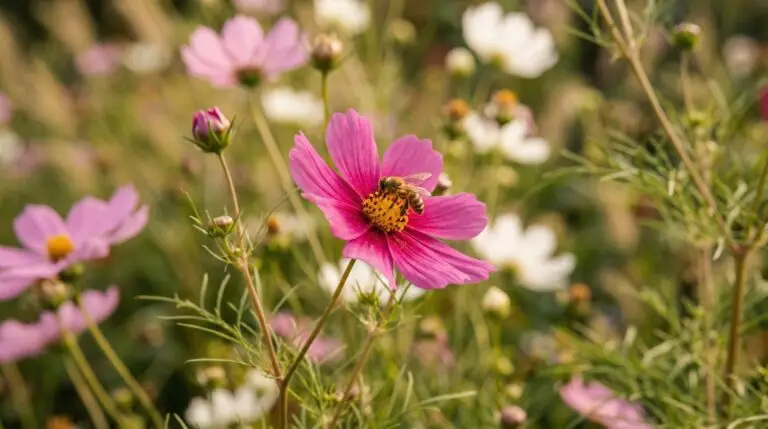
Cosmos for pollinators and why butterflies and bees cannot resist these flowers

Why cosmos grows tall and leggy and how to get compact bushy plants instead

How to save cosmos seeds at the end of the season for free flowers next year
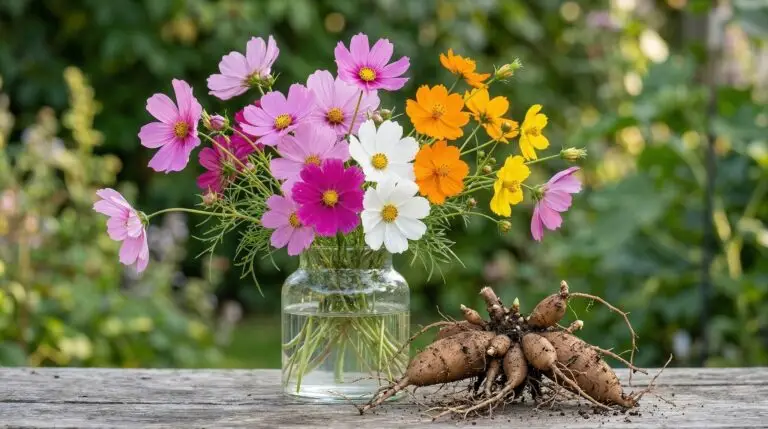
Chocolate cosmos the rare perennial with flowers that smell like dark chocolate

Cosmos as the perfect cut flower for beginners who want armloads of bouquets

Creating a cosmos flower field effect in your backyard for photogenic garden magic
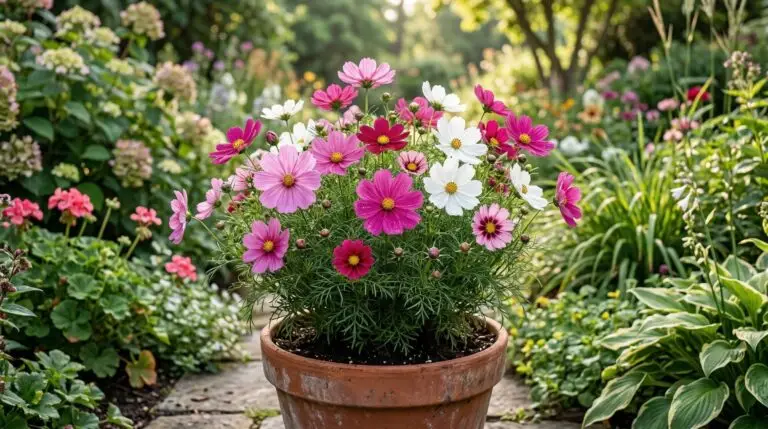
Growing cosmos in containers and hanging baskets for balcony flower gardens

How to grow cosmos from seed for effortless clouds of color all summer long

Best cosmos varieties from classic Sensation to chocolate-scented Cosmos atrosanguineus