Types of Flowers
All 82 flowers, sorted the way you actually look: by colour, by season, or by pet-safety. Tap any flower for its calendar, care, and full guide.
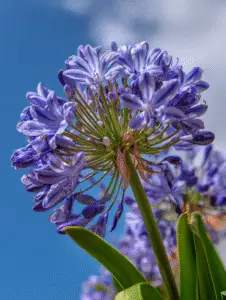 African Lily (Lily of the Nile)Agapanthus praecoxBold summer perennial sending up tall stalks of vivid blue-violet globes above strappy ev
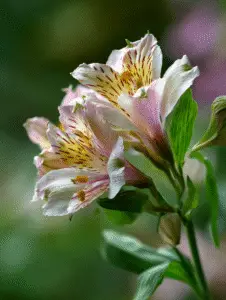 AlstroemeriaAlstroemeria aureaPeruvian Lily / Lily of the Incas, a tuberous perennial with streaked
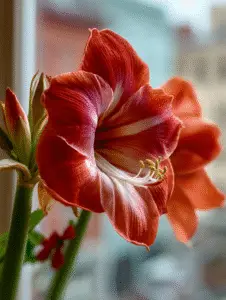 AmaryllisHippeastrumLarge-flowered bulb prized for its showy, trumpet-shaped winter blooms
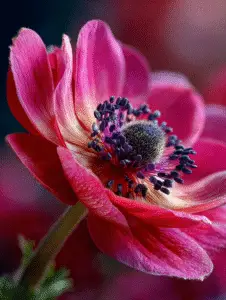 AnemoneAnemone coronariaPoppy anemone
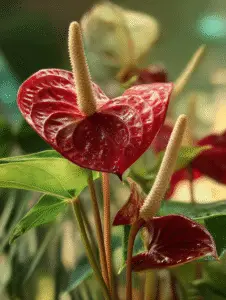 AnthuriumAnthurium andraeanumTropical evergreen perennial prized for its glossy
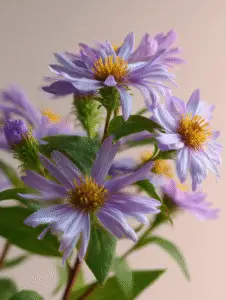 AsterAster amellusEuropean Michaelmas daisy
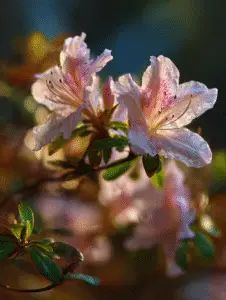 AzaleaRhododendron spp.Acid-loving spring-flowering shrub in the genus Rhododendron
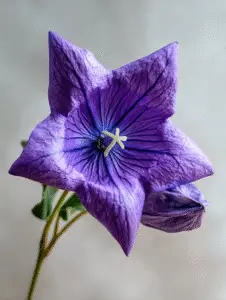 Balloon FlowerPlatycodon grandiflorusA long-lived perennial known for its inflated balloon-like buds that burst open into wide
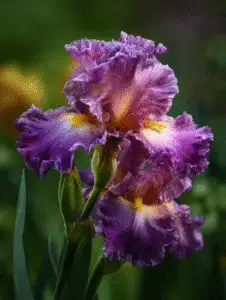 Bearded IrisIris germanicaA hardy rhizomatous perennial prized for large, often fragrant flowers in late spring
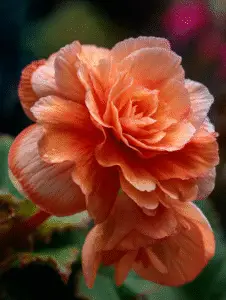 BegoniaBegonia x semperflorensCompact, mounded, fibrous-rooted bedding plant with fleshy stems
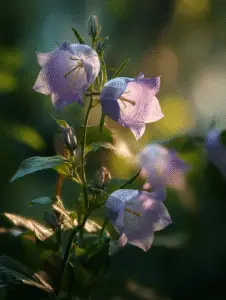 BellflowerCampanula persicifoliaElegant spires of open
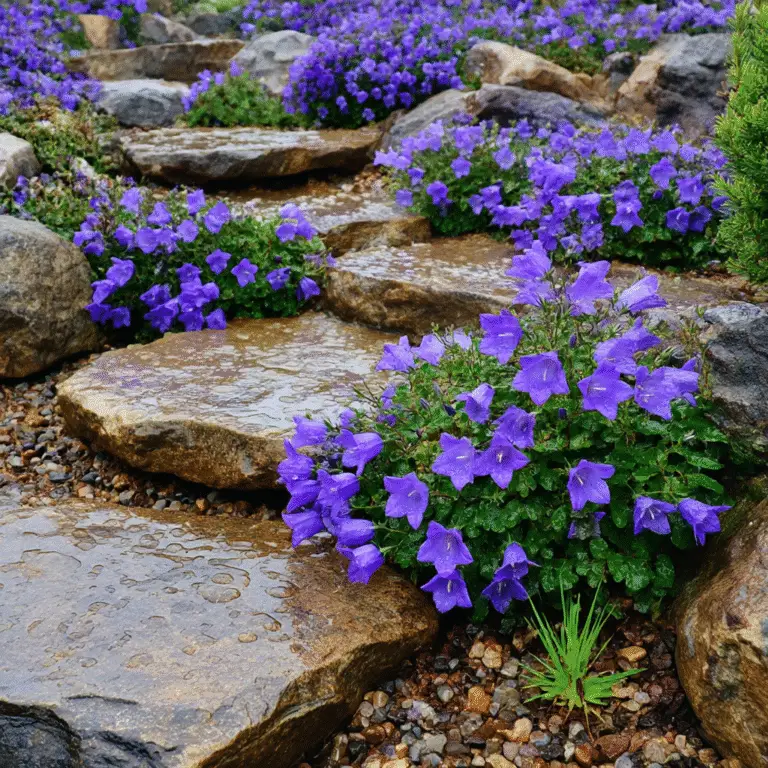 BellflowerCampanula spp.Cup-shaped blooms in lavender-blue and white that ring the midsummer border with effortle
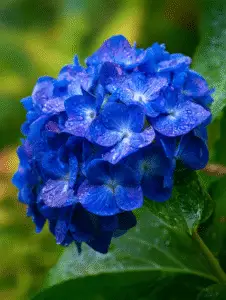 Bigleaf HydrangeaHydrangea macrophyllaMophead & lacecap shrub; bloom color shifts with soil pH
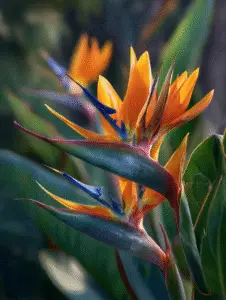 Bird of ParadiseStrelitzia reginaeA bold
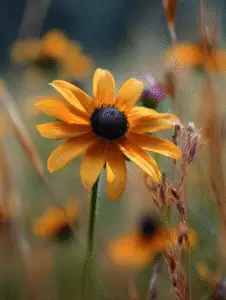 Black-Eyed SusanRudbeckia hirtaA cheerful
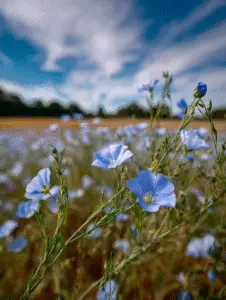 Blue FlaxLinum perenneDelicate sky-blue
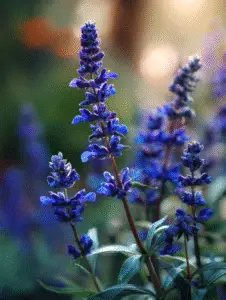 Blue Salvia (Mealycup Sage)Salvia farinaceaUpright violet-blue flower spikes blooming nonstop from early summer to frost
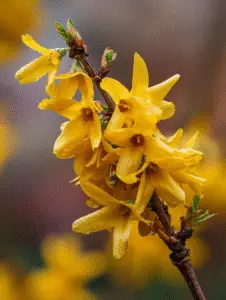 Border ForsythiaForsythia × intermediaBold golden-yellow flowers burst open on bare arching branches before any leaf appears
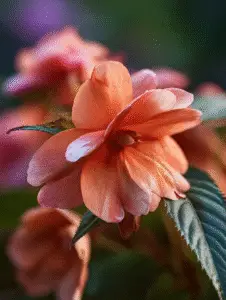 Busy Lizzie (Garden Impatiens)Impatiens wallerianaThe shade garden's workhorse
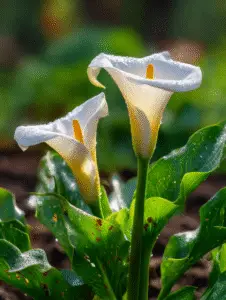 Calla LilyZantedeschia aethiopicaHardy white arum
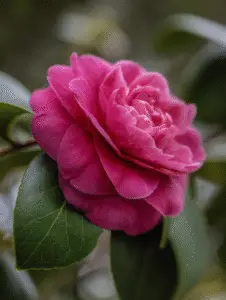 CamelliaCamellia japonicaEvergreen shrub with glossy, leathery dark green leaves and large showy red, pink
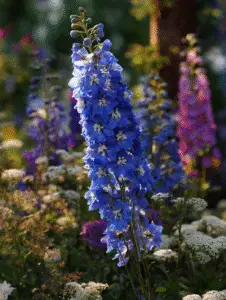 Candle larkspurDelphinium elatumStately cottage-garden spire bearing dense racemes of sky-blue to indigo florets on hollo
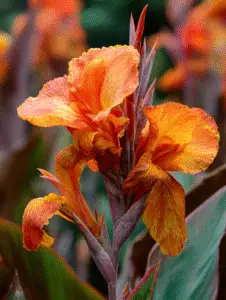 Canna LilyCanna x generalisBold tropical foliage and vivid summer blooms in fiery reds, oranges
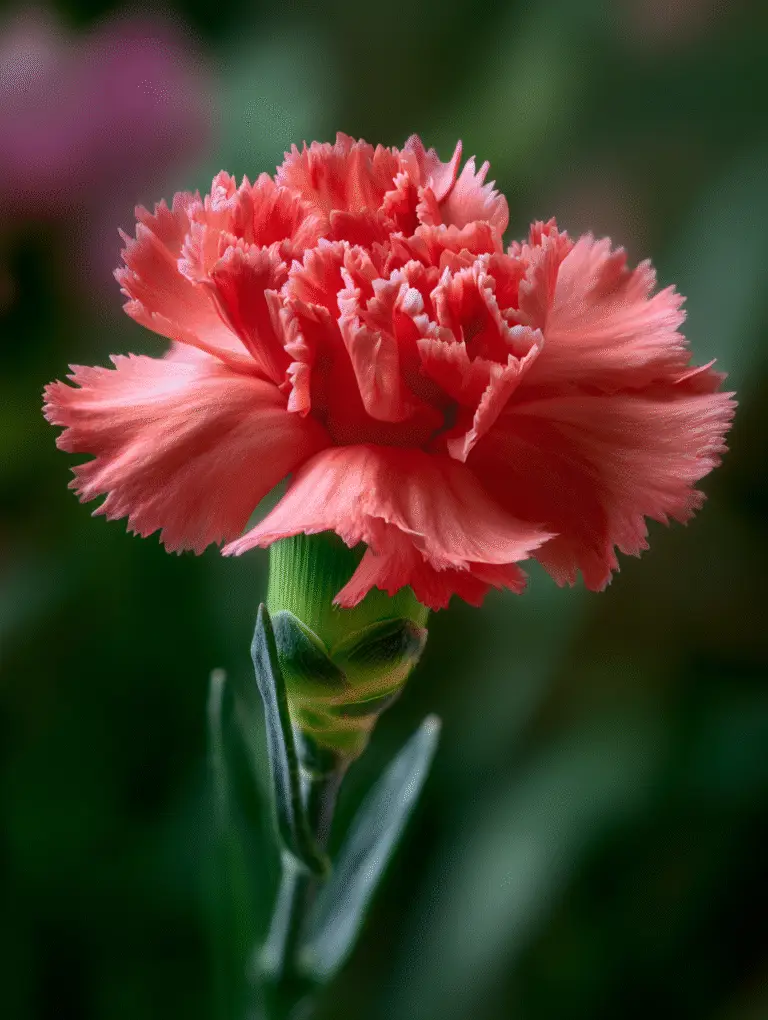 CarnationDianthus caryophyllusClove-scented, double-flowered border perennial in shades of red, pink, white, yellow
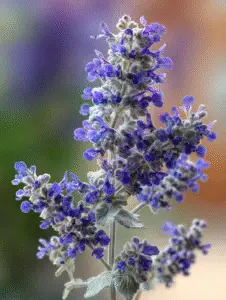 CatmintNepeta x faasseniiA low-mounding, aromatic perennial beloved by bees and notorious for deterring deer
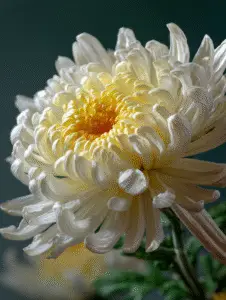 ChrysanthemumChrysanthemum × morifoliumCompact, clump-forming herbaceous perennial in the daisy family
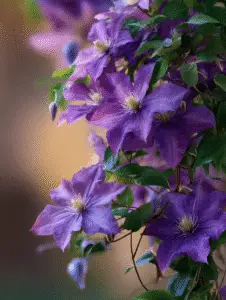 ClematisClematisClimbing perennial vine in the buttercup family with large showy flowers
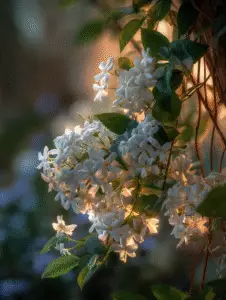 Common JasmineJasminum officinaleThe original perfumer's vine — starry white summer blooms so fragrant a single plant can
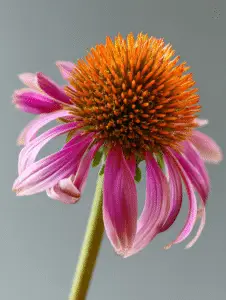 ConeflowerEchinacea purpureaA clump-forming North American prairie perennial with daisy-like
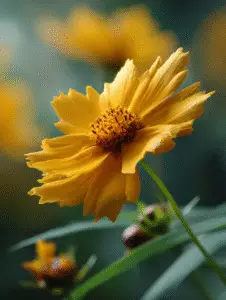 Coreopsis (Tickseed)Coreopsis grandiflora / C. lanceolata / C. verticillataA sun-loving
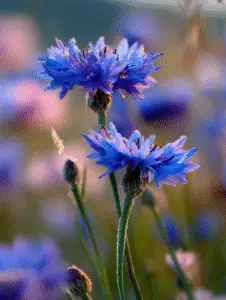 Cornflower (Bachelor's Button)Centaurea cyanusThe electric-blue wildflower of European grain fields — effortlessly self-sows
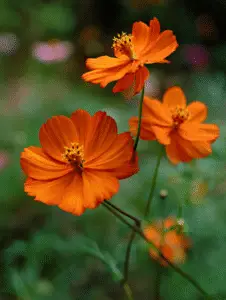 CosmosCosmos bipinnatusShowy, low-maintenance annual with daisy-like flowers and fine
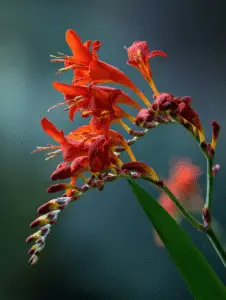 CrocosmiaCrocosmia × crocosmiiflora / Crocosmia 'Lucifer'Fiery arching wands of scarlet or orange in late summer — a hummingbird magnet that natur
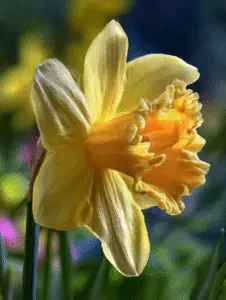 DaffodilsNarcissus spp.Spring-flowering bulb with trumpet- or cup-and-petal flowers in yellow, white, and orange
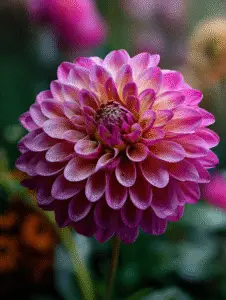 DahliaDahlia pinnataBushy tuberous perennial from Mexico bearing showy late-summer-to-frost blooms in nearly
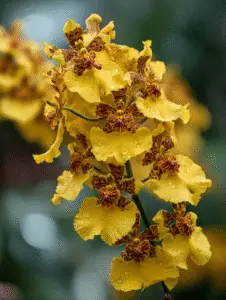 Dancing Lady OrchidOncidiumArching sprays of tiny frilled blooms in warm yellows and burnt oranges that shimmer like
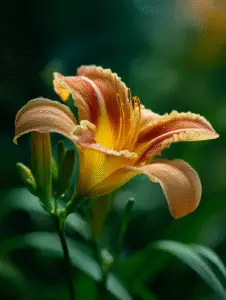 DaylilyHemerocallisTough, adaptable clump-forming perennial whose individual blooms each last a single day
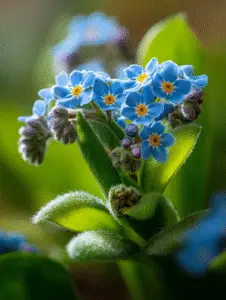 Forget-Me-NotMyosotis sylvaticaA low-growing spring charmer carpeting borders and woodland edges in clouds of sky-blue
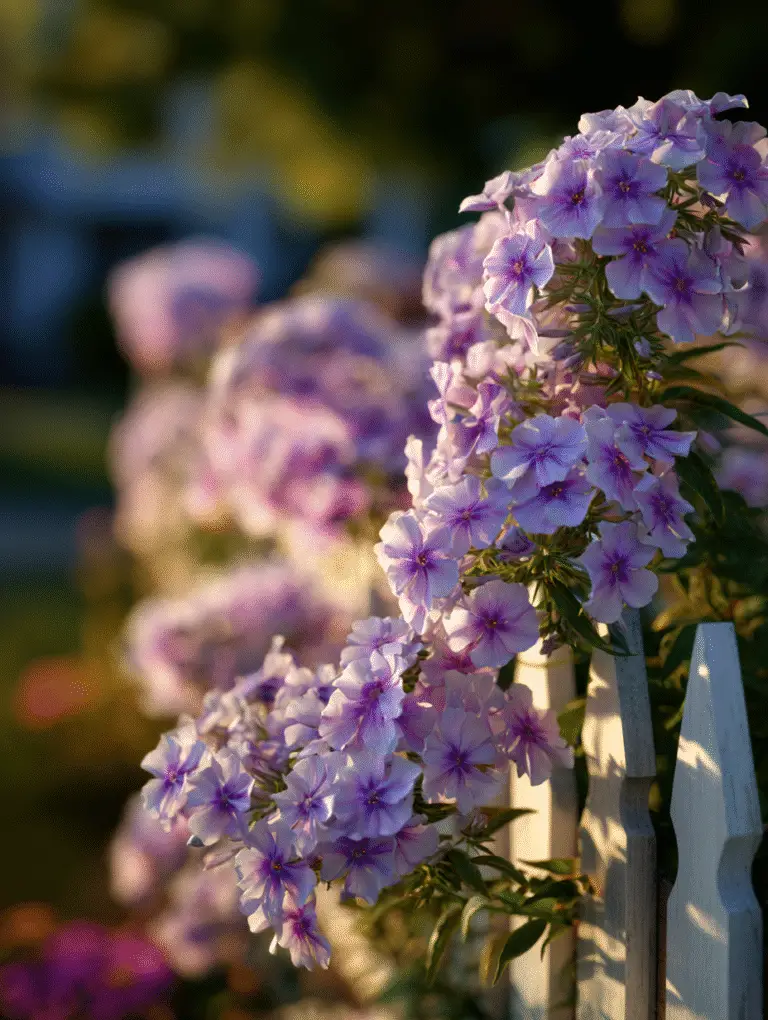 Garden PhloxPhlox paniculataA fragrant
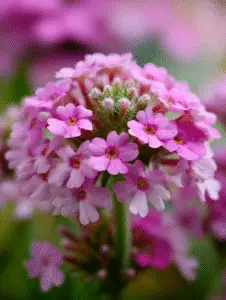 Garden VerbenaVerbena x hybridaA sun-loving annual workhorse that smothers itself in dense flower clusters from late spr
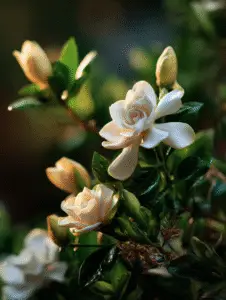 GardeniaGardenia jasminoidesFragrant white-flowered evergreen shrub for acidic, warm-climate gardens
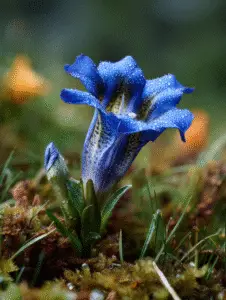 GentianGentiana acaulis (Stemless/Trumpet Gentian); genus GentianaBrilliant deep-blue trumpet flowers rise from low evergreen mats in late spring — one of
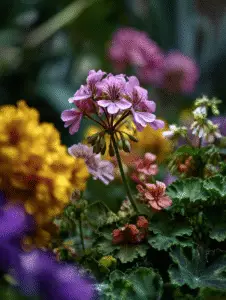 GeraniumPelargonium x hortorumZonal geranium
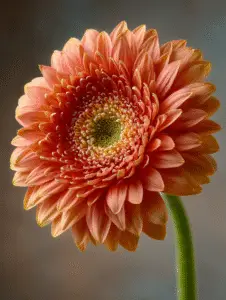 Gerbera DaisyGerbera jamesoniiBright, daisy-form flowers in warm colors above a rosette of fuzzy leaves
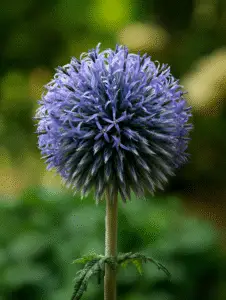 Globe ThistleEchinops ritroSpiky steel-blue spheres on silver stems — a drought-tough perennial that bees mob from J
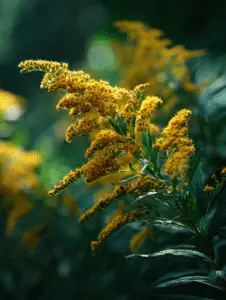 GoldenrodSolidago canadensis (Canada goldenrod); genus SolidagoA native North American prairie and meadow perennial bearing arching sprays of tiny golde
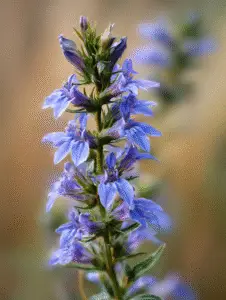 Great Blue LobeliaLobelia siphiliticaNative wetland perennial bearing dense spikes of vivid blue tubular flowers beloved by bu
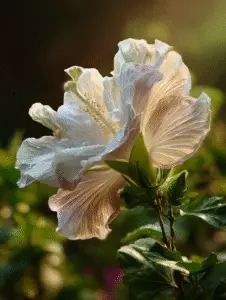 HibiscusHibiscus rosa-sinensisTropical Chinese hibiscus prized for large
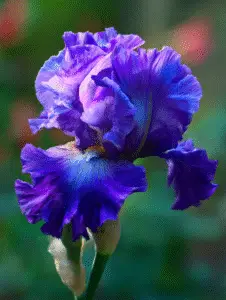 IrisIrisHardy rhizomatous perennial grown for showy, often fragrant blooms in late spring
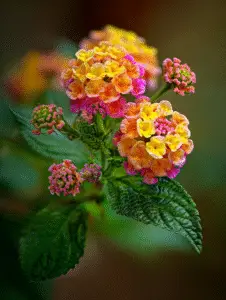 LantanaLantana camaraHeat-defying clusters that shift color as each floret matures
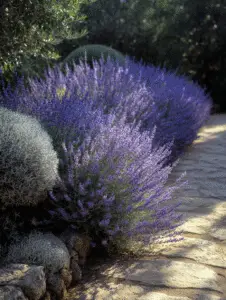 LavenderLavandula angustifoliaAromatic Mediterranean subshrub with grey-green foliage and fragrant purple-blue flower s
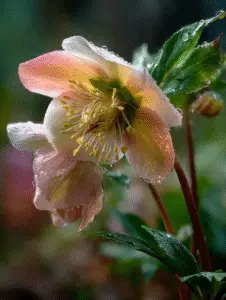 Lenten Rose (Hellebore)Helleborus × hybridus (syn. H. orientalis hybrids)Winter-tough shade perennial with nodding
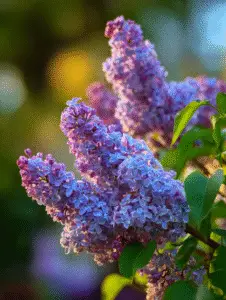 LilacSyringa vulgarisCold-hardy, intensely fragrant spring-blooming shrub prized for its dense purple, white
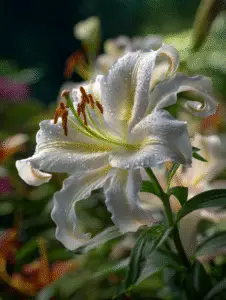 Lily (true lily)Lilium spp. (genus Lilium; includes Oriental hybrids, Asiatic hybrids, L. longiflorum, L. orientalis 'Stargazer')Summer-blooming bulb; Oriental types richly fragrant
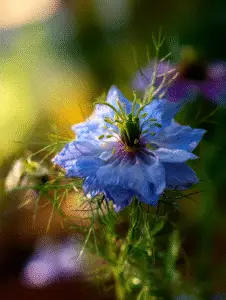 Love-in-a-MistNigella damascenaA cool-season annual prized for its spidery, thread-like foliage that envelops sky-blue
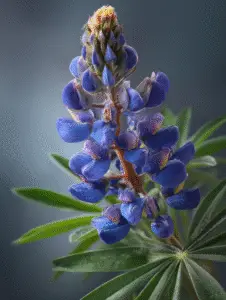 LupineLupinus polyphyllus (and Russell hybrids, Lupinus × hybridus)Tall, stately spires of pea-like flowers in every color of the cottage-garden rainbow
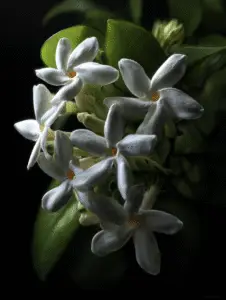 Madagascar JasmineStephanotis floribundaIntensely fragrant white bridal vine for conservatories, warm climates
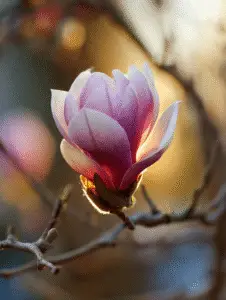 MagnoliaMagnolia grandifloraLarge broadleaf evergreen tree with glossy dark green leaves and very large
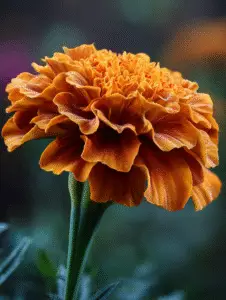 MarigoldTagetes erectaSun-loving annual with large pompom-like blooms in gold, orange, and yellow on aromatic
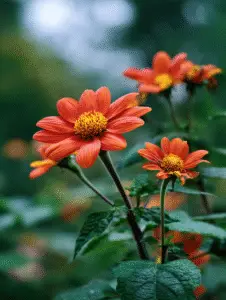 Mexican SunflowerTithonia diversifolia (page main text) / T. rotundifolia (page infographic)A fast-growing warm-season annual bearing vivid orange-red daisy-like flowers that blaze
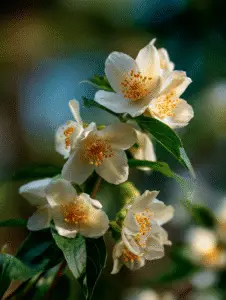 Mock OrangePhiladelphus coronarius / P. x virginalisA classic fragrant shrub with pure-white
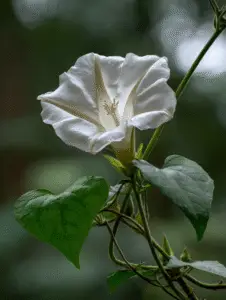 MoonflowerIpomoea albaA night-blooming tropical vine with giant
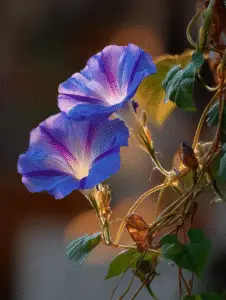 Morning GloryIpomoea purpurea / Ipomoea tricolorVigorous twining annual vine bearing trumpet-shaped blooms in vivid blues, purples, pinks
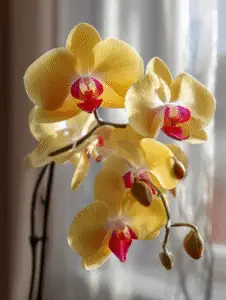 Moth OrchidPhalaenopsisAn epiphytic tropical orchid grown almost exclusively as a houseplant
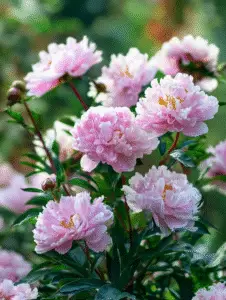 PeonyPaeonia lactifloraA clump-forming herbaceous perennial prized for large
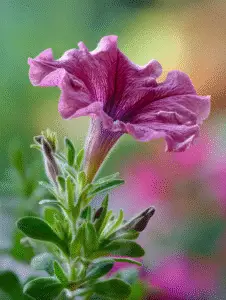 PetuniaPetunia x hybridaFree-flowering, often fragrant warm-season bedding and container annual
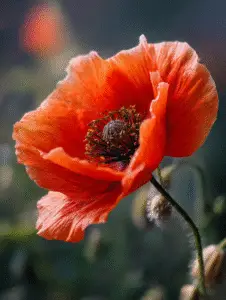 PoppyPapaverGenus of about 100 herbaceous annuals and perennials grown for showy, papery
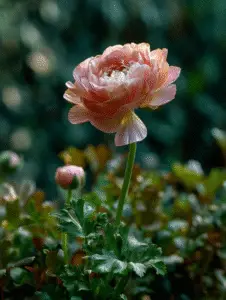 RanunculusRanunculus asiaticusPersian buttercup, prized for tightly ruffled, rose-like
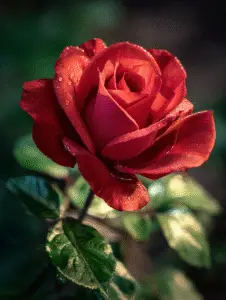 RoseRosaFragrant, full-sun garden shrub grown for its iconic blooms in nearly every color.
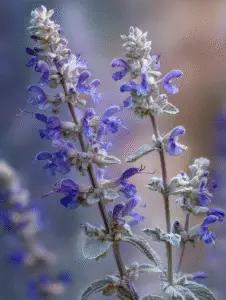 Russian SageSalvia yangii (syn. Perovskia atriplicifolia)Airy silver-stemmed perennial smothered in lavender-blue spires from midsummer to fall
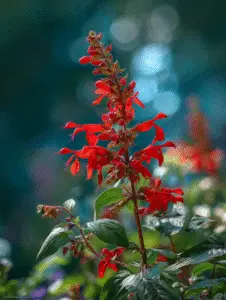 Scarlet SageSalvia coccineaA hummingbird magnet bearing brilliant red tubular blooms from early summer until frost
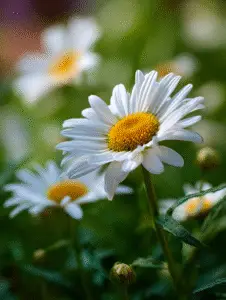 Shasta DaisyLeucanthemum x superbumClassic white-petaled perennial with golden yellow centers
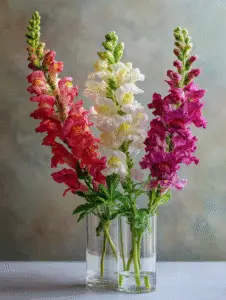 SnapdragonAntirrhinum majusCool-season garden annual with tall spikes of two-lipped snapping flowers in nearly every
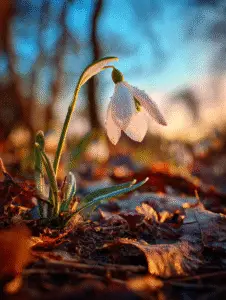 SnowdropGalanthus nivalisA low-growing late-winter to early-spring bulb bearing solitary
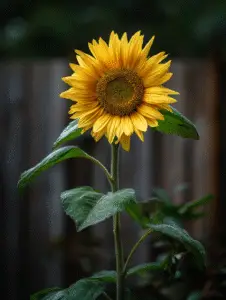 SunflowerHelianthus annuusTall, fast-growing annual with large daisy-like flower heads that follow the sun
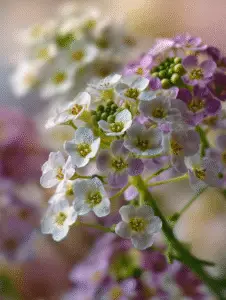 Sweet AlyssumLobularia maritimaA low, mat-forming annual prized for dense mounds of tiny
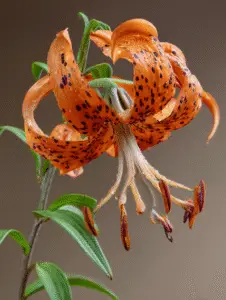 Tiger LilyLilium lancifoliumA vigorous, easy-to-grow Asian lily bearing pendulous
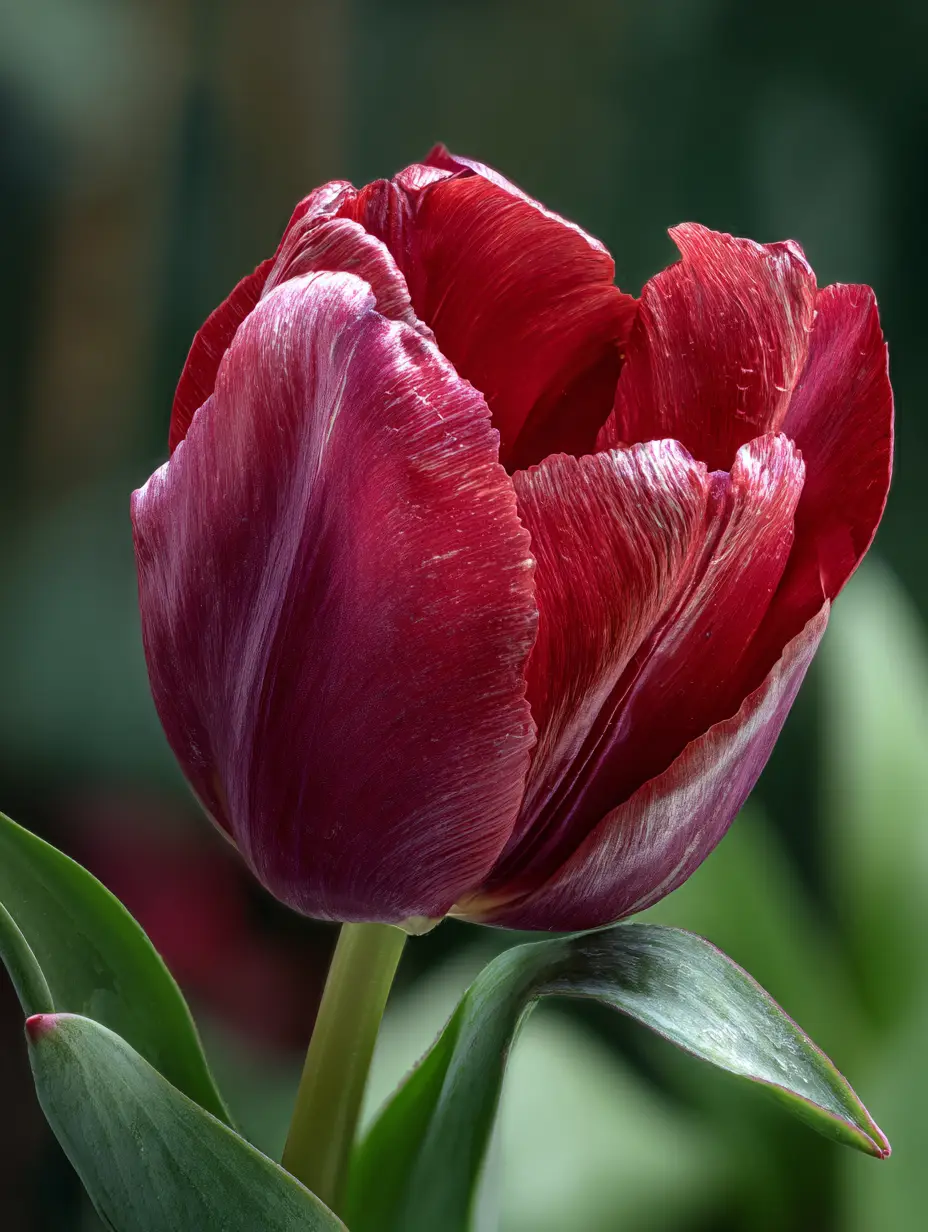 TulipTulipa spp. (incl. Tulipa gesneriana hybrids)Fall-planted, spring-blooming bulb; needs winter chill
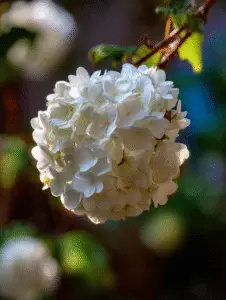 ViburnumViburnum spp. (genus; principal species include V. opulus, V. carlesii, V. x burkwoodii, V. plicatum, V. dentatum)A four-season genus of 150+ species valued for fragrant spring flower clusters
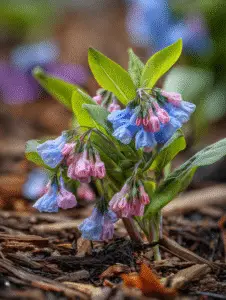 Virginia BluebellsMertensia virginicaSky-blue spring ephemeral that colonizes woodland floors and stream banks before vanishin
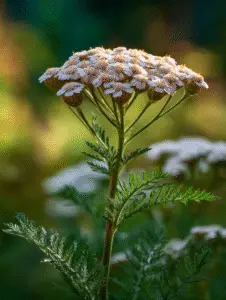 YarrowAchillea millefoliumA tough, aromatic perennial with flat-topped flower clusters in a wide color range
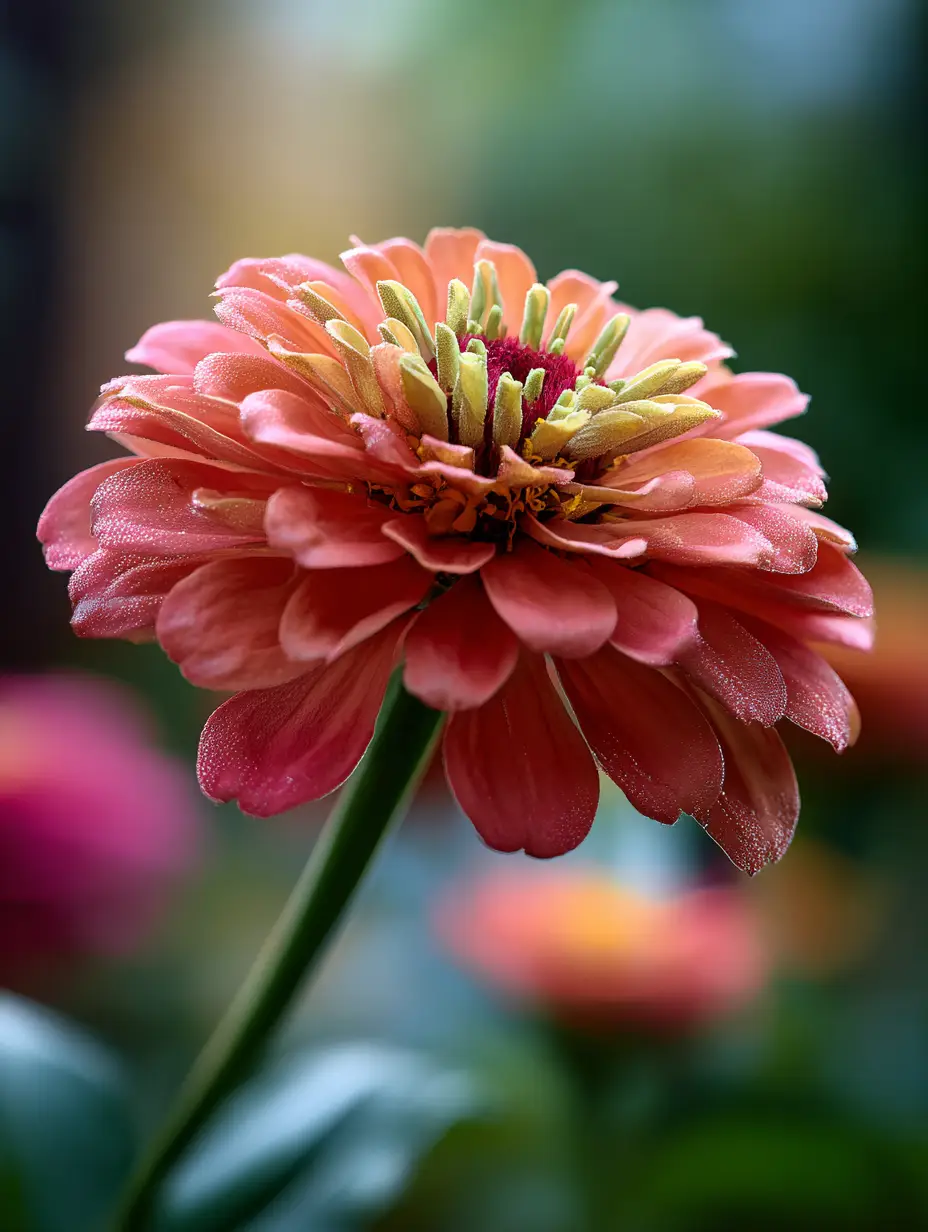 ZinniaZinnia elegansHeat-loving annual cut flower in the daisy family, prized for prolific
Put two or three side by side
Torn between a few favourites? Line them up and see the differences at a glance.
The Amen of Nature is always a flower.Oliver Wendell Holmes
Why flowers look, smell, and bloom the way they do
A garden looks like it is showing off for us. It is not. Almost every flower is really an advertisement, aimed at one tiny customer: the bee, bird, moth, or fly that carries its pollen. The colour, the smell, the shape, even the hour it opens, are all there to catch one kind of visitor. A few flowers even fake the smell of rotting meat to trick flies. Others hide glowing patterns only a bee can see. Once you know who a flower is for, you can almost read it like a sign.
This is a big part of the reason there are so many different types of flowers. There are thousands of pollinators, and each one likes its own colours, smells, and shapes, so over millions of years flowers spread out into countless forms to match them. The huge range of types of flowers in this guide is, in part, a huge range of customers.
The colours of flowers
Colour comes first, because it is the first thing a pollinator sees. A flower builds its colour from a few natural pigments: one family for reds, pinks and purples, another for yellows and oranges. White flowers work differently, scattering the light back rather than using a white pigment, the way snow looks white. Colour is also a message aimed at a particular eye. To a bee, red looks almost black, while birds see red beautifully, so a bright red flower is usually built for a bird, and a blue or purple one is usually calling a bee.
Tap a colour to see what it is made of and who it is really for.
The hardest colour for a plant to make, so true blue is rare and a real prize. Many flowers we call blue are really violet.
Who it is really forBees see blue and violet better than we do, so a true blue stands out to them.
A mix of the same red and blue pigments. Common and easy for a plant to make, even though it was once the most costly colour for dyers.
Who it is really forVery easy for a bee to see, which is why so many bee favourites, from lavender to alliums, are purple.
To a bee this looks almost black, but to a bird it shines. In the wild a true red flower is often a bird's flower. Garden reds like roses and tulips were bred for our eyes, and bees visit them happily.
Who it is really forBirds see red clearly where bees barely see it, so red is often a flower for hummingbirds.
A softer, gentler red, and one of the most common colours in any garden.
Who it is really forA broad, friendly signal that draws a wide range of insect visitors.
Made from carotenoids, the same pigments as carrots and autumn leaves. Warm and easy to spot against green.
Who it is really forStands out strongly against leaves, and draws both bees and butterflies.
The easiest colour for a plant to make, so it is everywhere, and the baseline the rarer colours are built around.
Who it is really forBees head straight for yellow, and many flowers add ultraviolet markings only a bee can see.
White comes from petals scattering the light, not from a white pigment, and many whites still carry ultraviolet patterns a bee can see.
Who it is really forMany white flowers open at night and lean on scent, to draw moths when pale petals show up best.
Why true blue is so rare
Fewer than one flower in ten is truly blue, and there is a good reason. Plants have no easy way to make blue. A flower has to take a reddish pigment and tune it just right, lining up the acidity, a few helper molecules, and a touch of metal all at once. Nudge any of it off and you get purple instead. You can watch it happen with a hydrangea: it turns blue in soil that frees up a metal called aluminium, and pink in soil that locks it away.
Why some flowers smell and others do not
Smell is the second invitation, for when colour is not enough, and it is timed to the visitor. Light, sweet scents drift through the day for bees and butterflies. Heavy night perfume pours from pale flowers like jasmine and moonflower, guiding moths through the dark. A few flowers pull a nasty trick: the giant rafflesia and the starfish-shaped stapelia smell like rotting meat on purpose, so flies turn up expecting a meal and leave dusted in pollen. Bird flowers usually carry little scent, because birds hunt by sight and barely use their noses.
Why flowers are shaped so differently
A flower's shape is a lock, and only the right visitor holds the key. A long, thin tube hides its nectar at the very bottom, where only a hummingbird's beak or a moth's long tongue can reach. A wide, open flower is the opposite, an easy landing pad for a bee or a beetle. Butterflies like a flat cluster they can stand on while they sip. The shape sets which visitor can feed, and saves the reward for the one that will carry the pollen on.
The hidden patterns only bees can see
Look closely and many flowers have lines or a dark centre pointing straight at the nectar, like the lights along a runway. The strangest part: some of these patterns are invisible to us, yet they glow under ultraviolet light, which bees can see and we cannot. A flower that looks plain yellow to you might show a bold target only a bee can read.
When flowers bloom
Timing is a signal too. A flower gains nothing by opening when its pollinator is asleep, or when every other plant is in bloom and the bees are spoilt for choice, so flowers spread across the calendar. Tap a season.
After a long winter, light and warmth come back, but the trees have not grown their leaves yet, so the ground is still bright. Spring bulbs are ready: they stored energy underground all winter, and now they shoot up and flower fast to grab the light and meet the first hungry bees before the leaves close overhead. That is why spring feels like everything opens at once.
The long, warm, busy season, with the most daylight and the most insects on the wing. With so many pollinators about, more flowers bloom now than at any other time, and they put on their biggest, boldest show to stand out from the crowd.
As days shorten and the air cools, most flowers are finishing and fewer pollinators are left. The late bloomers use that: they offer one of the last big meals of the year, with far less competition, and help bees and butterflies stock up before the cold.
Almost nothing flowers in the cold, and that is exactly the opening a few tough plants take. By flowering now they have any passing pollinator almost to themselves. Many are sweetly scented so they can still be found on a grey day.
Plant on purpose
Inside a flower
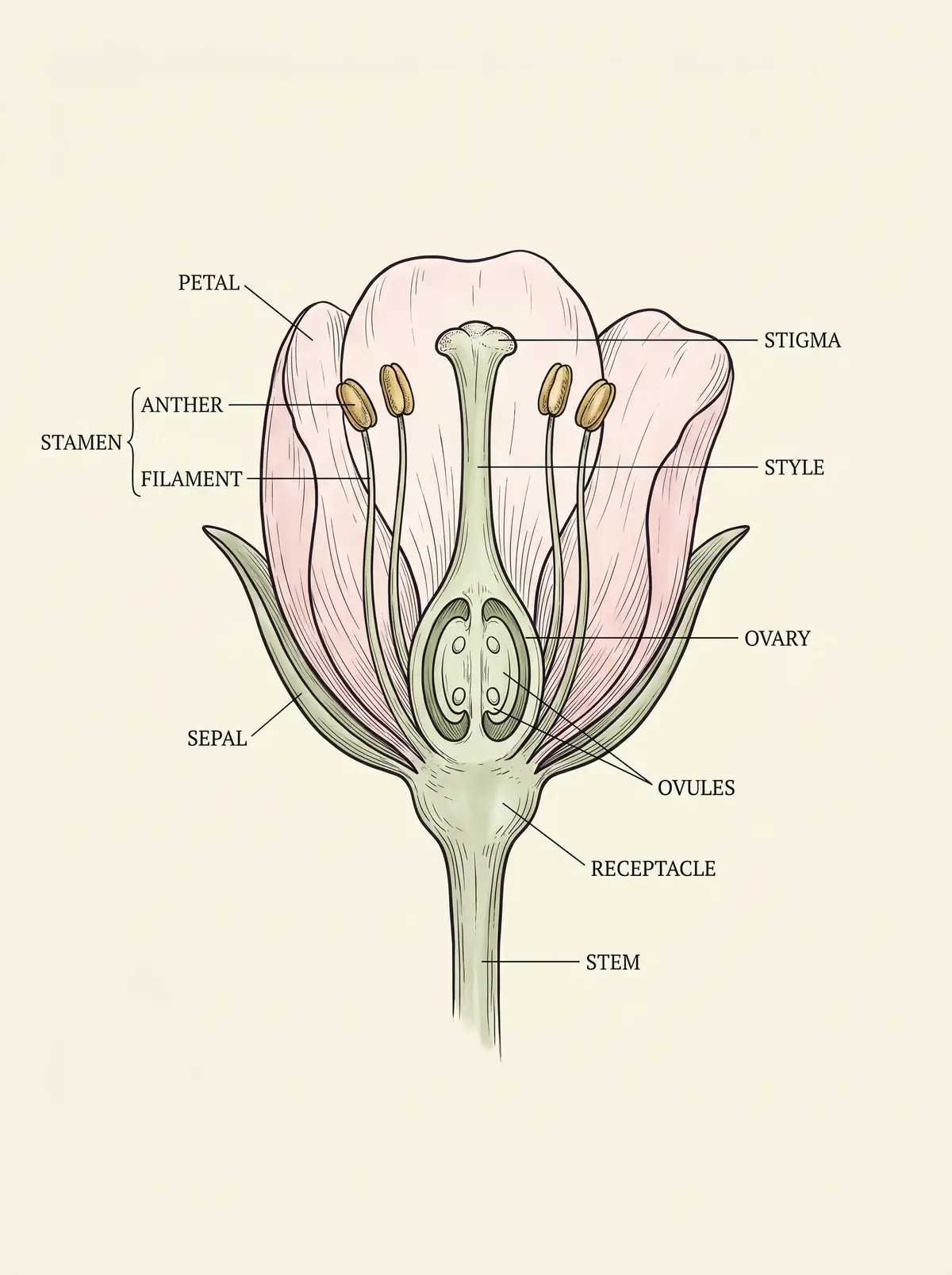
For all their variety, most flowers are built to the same plan. The same handful of parts appears, in some form, in the rose on a table and the weed in a pavement crack. Tap any part to see what it does.
The coloured part you notice first. Its whole job is to be seen, pulling a visitor in with colour and scent.
Nature loves exceptions: these are strong tendencies, not strict rules. Plenty of flowers welcome every visitor, some are pollinated by the wind, and a few make their colours with different pigments entirely.
Surprising flowers
Some blooms are worth knowing simply because they break the rules. Every fact below is checked against botanical sources such as Kew and Britannica.
Two different giants
The Rafflesia opens the largest single flower on Earth, up to a metre across and smelling of raw meat. The titan arum grows taller still, but its tower is a cluster of many tiny flowers, not one bloom.
Source: KewBeauty from a virus
The flame-streaked tulips that fuelled the 1600s craze did not get their patterns from breeding. A virus was quietly interfering with the petals and their pigment.
Source: BritannicaA rose worth millions
David Austin spent about fifteen years and a reported three million pounds breeding a single apricot rose, Juliet, before it ever reached a florist.
Source: Press reportsThe flower that turns to glass
The skeleton flower has white petals that become almost transparent when they get wet, then turn white again as they dry.
Source: Botanical sourcesThe crash that mostly was not
Historians who went looking found that tulip mania never really bankrupted Holland. The tales of ruined merchants were largely a later moral fable.
Source: SmithsonianA moth ordered in advance
Seeing an orchid with a remarkably long nectar spur, Darwin predicted a moth with a matching tongue must exist. It was found decades after his death.
Source: KewThe most expensive harvest
Saffron is the three hand-picked stigmas of a crocus flower. It takes around 150,000 blooms to fill a single kilogram.
Source: University extensionSmaller than a grain of rice
Watermeal, a rootless floating plant, is the smallest flowering plant in the world, and it bears the smallest fruit of any plant too.
Source: Library of CongressFrequently asked
Roses, sunflowers, gerbera daisies, snapdragons and orchids are listed as non toxic by the ASPCA, while true lilies and daylilies are dangerous to cats. Use the pet-safe filter above, and check the ASPCA database for any specific plant.
An annual lives for a single growing season and then dies, while a perennial survives the winter and returns for several years. A biennial, such as foxglove, makes leaves in its first year and flowers in its second.
Spring opens with bulbs such as daffodils and tulips, summer brings peonies, daylilies and coneflowers, and autumn closes with chrysanthemums and asters. Use the season tabs above to see each group at once.
Start with the spot rather than the flower. Match its light, your climate zone and what you want from the plant, then pick a flower that suits all three. Fighting a plant's natural preferences is the usual cause of failure.
Botanists have described more than four hundred thousand flowering plant species, but the ones people actually grow and gift come down to a few dozen, which is what this library focuses on.
Carnations, alstroemeria and chrysanthemums are known for a long vase life, often a week or more. Keep daffodils on their own at first, since their sap shortens the life of other stems.
Two more ways in
This library is about the flowers themselves. When you want to know what they say, or what to send and when, these are the next steps.
The language of flowers
What roses, lilies and the rest have come to mean, where those ideas began, and how much of it is really Victorian invention.
Coming soon OccasionsFlowers for every occasion
What to send for a birthday, a wedding, a new baby or a sympathy bouquet, and the thinking behind each choice.
Coming soon